
Ressources
Explorez une large gamme de ressources sur le GCED afin d’approfondir votre compréhension et de renforcer vos activités de recherche, de plaidoyer, d’enseignement et d’apprentissage.
96 résultats trouvés
 SDG In the Republic of Korea: Progress Report 2023 Année de publication: 2023 Auteur: Woohyun Chung | Haesik Jung | Yunjae Hwang | Dawoon Jung | Hyojung Han | Dokyun Kim | Jongho Ahn | Sangyoup Lee | Soeun Ahn | Jungwook Kim | Sangyun Lee | Jiyoung Lee | Sora Yi | Jewoo Hong | Miju Kim | Junghee Cho | Kyungah Koo | Yul Kwon Auteur institutionnel: Korea R. Statistics Research Institute | Statistics Korea It has been eight years since the Sustainable Development Goals (SDG) were adopted at the UN General Assembly, and nations began to work toward achieving them. Now we are halfway through the 2030 target period. As an authorized national focal point of SDG data, the Statistics Research Institute has been publishing a 『Sustainable Development Goals in the Republic of Korea: Progress Report』 annually, in keeping with their vision of providing support for ‘eviꠓdence-based decision-making’.『SDG in the Republic of Korea: Progress Report 2023』, released this, was designed as a compass identifying goals to be prioritized in policy implementation during the remaining period until 2030 to keep pace for achieving the SDGs. It is hoped that the report will help to point out the direction for policies responding to the crises and changes we are facing amid the COVID pandemic, the climate crisis, and war, through relevant indicators. 한국의 SDG 이행보고서 2023 Année de publication: 2023 Auteur: Woohyun Chung | Haesik Jung | Yunjae Hwang | Dawoon Jung | Hyojung Han | Dokyun Kim | Jongho Ahn | Sangyoup Lee | Soeun Ahn | Jungwook Kim | Sangyun Lee | Jiyoung Lee | Sora Yi | Jewoo Hong | Miju Kim | Junghee Cho | Kyungah Koo | Yul Kwon Auteur institutionnel: Statistics Research Institute 지속가능발전목표(SDG)가 유엔총회에서 채택되고 그 시작을 알린 지 올해 8년 차로, 2030년 목표 시점까지 절반의 시간이 지났습니다. 통계개발원은 한국의 SDG 데이터 책임기관으로 ‘증거 기반 의사결정 지원’이라는 비전하에 『한국의 SDG 이행보고서』를 매년 발간하고 있습니다. 올해 발간된 『한국의 SDG 이행보고서 2023』은 2030년까지 남은 기간 동안 어떤 목표에 우선순위를 두어 정책을 실행해야 SDG 달성이 가능한지를 보여 주는 나침반 역할로 기획되었습니다. 코로나19, 기후위기, 전쟁 등 격변의 시대에 우리가 직면한 위기와 변화를 지표로 보여 줌으로써 관련 정책의 방향을 제시해주리라 기대합니다. 본 저작물은 통계청 통계개발원에서 2023년 작성하여 공공누리 제3유형으로 개방한 '한국의 SDGs 이행보고서 2023(작성자:정우현)'을 이용하였으며, 해당 저작물은 통계청 통계개발원 홈페이지(https://kostat.go.kr/)에서 무료로 내려받으실 수 있습니다.
 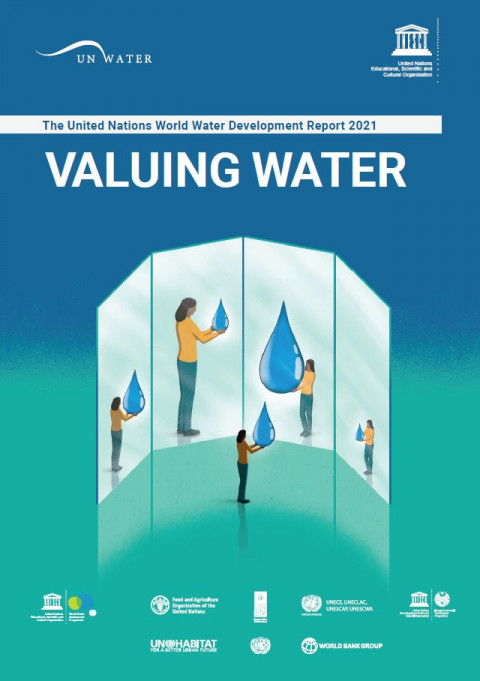 The United Nations World Water Development Report 2021: Valuing Water Année de publication: 2021 Auteur institutionnel: UNESCO World Water Assessment Programme (WWAP) The 2021 edition of the United Nations World Water Development Report focuses on valuing water. There is enough water for all provided we use and manage it efficiently. But we don’t. We invest too little, and ineffectively. We use too much water, creating scarcities. Quality is suffering and so is the environment.The value we place on water varies, depending upon who is using it, and why. Value can be a guide to what our goals should be, what actions are needed, and where we should invest. Many of our problems arise because we don’t value water highly enough; all too often water is not valued at all.This report explains various approaches to valuing water for environmental considerations, water-related infrastructure, drinking water, sanitation and hygiene. It looks at valuation issues in food and agriculture, business, industry, energy and financing. And it highlights the perspectives of different value systems and cultures, and associated social and gender-based considerations.
  Guidance on Integrating the Environment and Climate Change in Processes for United Nations Sustainable Development Cooperation Frameworks Année de publication: 2021 Auteur: Henrieta Martonakova Auteur institutionnel: Issue-based Coalition on Environment and Climate Change The guidance, which benefits from the diverse expertise of the 18 member organizations of the Coalition, looks at mainstreaming environmental and climate change considerations into the different stages of preparing the UNSDCF: The roadmap for a new cooperation frameworkThe common country analysisThe cooperation framework designThe cooperation framework implementationCooperation framework monitoring and evaluation The guidance looks deeper into mainstreaming the environment and climate change into a series of development priorities: human rights, including children’s rights and the rights of women; economic and trade development, including innovations, SMEs and decent work; food security and agriculture; infrastructure and sustainable use of resources, including energy, water and waste management; quality education; good health; good governance; and disaster reduction and conflict prevention.
 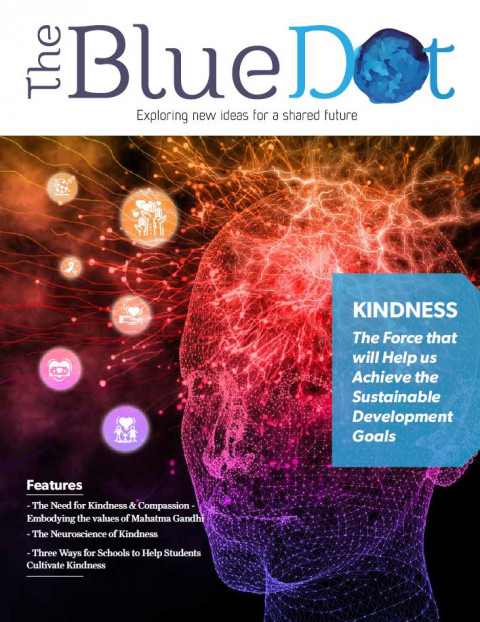 Kindness: The Force That Will Help Us Achieve the Sustainable Development Goals (The Blue Dot Issue 11, 2020) Année de publication: 2020 Auteur institutionnel: Mahatma Gandhi Institute of Education for Peace and Sustainable Development (MGIEP) In the eleventh issue of The Blue Dot, we focus on ‘Kindness’ – as the force that will help us achieve the Sustainable Development Goals, towards making the world more peaceful and sustainable – a better place to live in the future for our children. We hear from Ramesh Pokhriyal ‘Nishank’, Minister of Human Resource Development, Government of India on ‘The Need for Kindness and Compassion – Embodying the values of Mahatma Gandhi’, experts such as Zoran Josipovic on the neuroscience behind kindness; Michael Karlin and Brendran Ozawa-De Silve on the science and theory behind kindness, and from educators (Vicki Zakrzewski and John-Tyler Binfet) on how kindness can be practiced in our classrooms.Our cover story on ‘Kindness – the force to Achieve the Sustainable Development Goals’ discusses the biology of kindness, how kindness can help us achieve the SDGs and Kindness and SDGs and the Youth. Further, we have a hand-picked collection of youth stories on kindness, extracted from the 7,300+ stories we have from 120 countries around the world as part of UNESCO MGIEP’s #KindnessMatters for the SDGs youth campaign.
 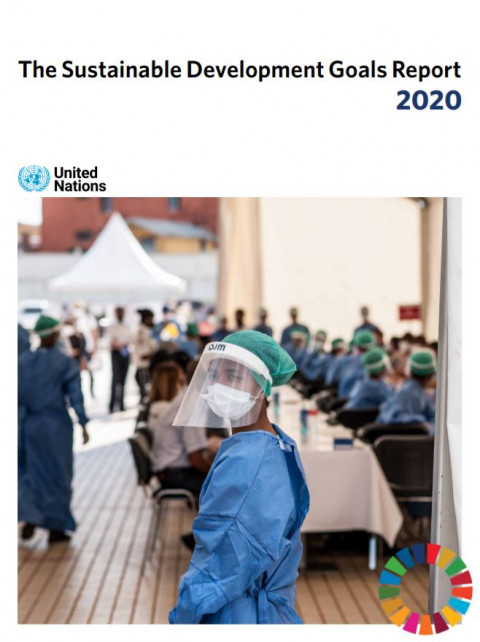 The Sustainable Development Goals Report 2020 Année de publication: 2020 Auteur institutionnel: United Nations (UN) The annual Sustainable Development Goals Report provides an overview of the world’s implementation efforts to date, highlighting areas of progress and areas where more action needs to be taken to ensure no one is left behind. Now, in only a short period of time, the COVID-19 pandemic has unleashed an unprecedented crisis, causing further disruption to SDG progress, with the world’s poorest and most vulnerable affected the most.Using the latest data and estimates, this annual stocktaking report on progress across the 17 Goals shows that it is the poorest and most vulnerable – including children, older persons, persons with disabilities, migrants and refugees – who are being hit the hardest by the effects of the COVID-19 pandemic. Women are also bearing the heaviest brunt of the pandemic’s effects.The report also shows that climate change is still occurring much faster than anticipated.
  Reviewing the Korean Sustainable Development Strategy and Policy in Response to COVID-19 Année de publication: 2021 Auteur: Soeun Ahn | Dokyun Kim | Hongrim Lee | Yoonseon Park | Jaehyuk Lee | Jungseok Lee | Hanwoom Hong | Woohyun Jung | Baeseok Jeon | Garim Jeon Auteur institutionnel: Korea Environment Institute (KEI) Through the ‘Sustainable Development Goals (SDGs)’, the United Nations (UN) has established tasks, including 17 policy goals and 169 targets, that civilization must resolve by 2030. It is recommended that each country build its own implementation mechanism, which sets its own policy goals and targets, tailored to its respective national context. South Korea established the ‘National Sustainable Development Goals (K-SDGs)’ in 2018, consisting of 17 policy goals and 122 targets. In 2020, the country prepared the Fourth Basic Plan for Sustainable Development (2021-2040). The K-SDGs were revised and supplemented in consideration of recent changes in conditions.This study aims to develop a national K-SDGs strategy by examining factors that threaten sustainable development, with a focus on the COVID-19 pandemic. 코로나19 대응 환경부문 국가 지속가능발전 전략개발 Année de publication: 2021 Auteur: 안소은 | 김도균 | 이홍림 | 박윤선 | 이재혁 | 이정석 | 홍한움 | 정우현 | 전배석 | 전가림 Auteur institutionnel: 한국환경연구원 본 보고서는 2021년 한국환경연구원(KEI)이 기획과제로 수행한 ‘포스트 코로나19 사회의 지속가능발전을 위한 환경정책 연구’의 지속가능 전략연구본부 세부과제 연구내용을 담고 있으며 세부과제 연구내용은 크게 ‘코로나19의 국가 지속가능발전목표(K-SDGs) 영향평가를 토대로 한 정책제언과 전략개발 (제1부)’과 ‘언택트 시대 시민참여를 통한 마을 지속가능발전 실천과제 도출과 시민참여 개선방향 제시 (제2부)’로 구분하였다. 종합결론에서는 제1부와 제2부의 연구결과를 종합하고 K-SDGs를 연결고리로 삼아 전문가 설문 조사 분석결과와 마을 지속가능발전 실천과제를 비교·해석하고 시사점을 도출하였다. * 본 저작물은 한국환경연구원에서 '2021'년에 작성하여 공공누리 제'4'유형으로 개방한 ‘코로나19 대응 환경부문 국가 지속가능발전 전략개발(작성자: 안소은 외)’를 이용하였으며 해당 저작물은 한국환경연구원 홈페이지(http://www.kei.re.kr)’에서 무료로 다운받으실 수 있습니다.
  Статистика Целей устойчивого развития в Казахстане Année de publication: 2023 Auteur institutionnel: ООН-женщины | Бюро национальной статистики Агентства по стратегическому планированию и реформам Республики Казахстан В публикации отражены данные о текущем состоянии и прогрессе в области устойчивого развития на основе имеющихся официальных данных и статистики по ЦУР с учетом гендерных аспектов. Сборник был представлен на национальном семинаре по распространению официальной статистики, организованном Бюро национальной статистики Казахстана и Европейской экономической комиссией ООН (ЕЭК ООН) 19-21 октября 2022 года.
 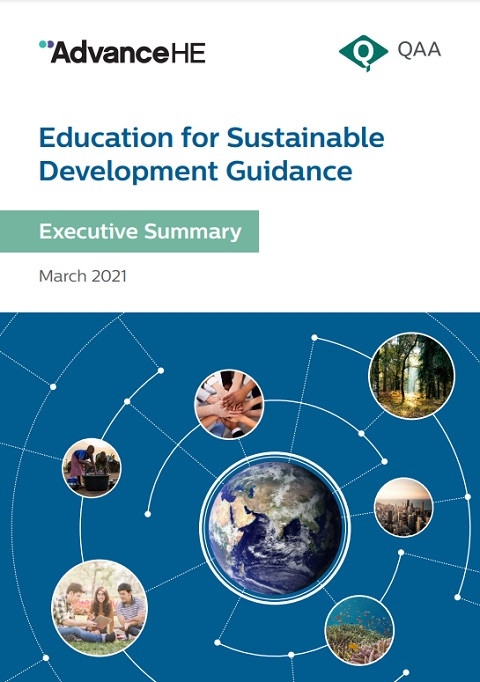 Education for Sustainable Development Guidance: Executive Summary Année de publication: 2021 Auteur institutionnel: Quality Assurance Agency for Higher Education (QAA) | Advance HE How was the guidance developed?In March 2021, QAA and Advance HE launched revised guidance intended to help UK higher education institutions incorporate ESD within their curricula, following on from the first edition in 2014.QAA and Advance HE brought together a group of experts representing academic, business and student communities, with the aim of supporting all students to acquire the skills necessary to develop values and take actions to transition society towards a sustainable future. The guidance gives advice and support on curriculum design, as well as teaching, learning and assessment approaches.Who is the guidance for?This guidance is primarily aimed at staff involved in curriculum design and course management and delivery, to support them in designing ESD into their courses. However, it is also likely to be of value to senior management teams, those with responsibility for quality assurance and enhancement, and staff involved in directing teaching and learning. It may also prove useful to staff responsible for extracurricular activities.How to access the guidanceAn Executive Summary provides an overview of the content, with the full guidance available for any staff member or student at a QAA Member institution on our Membership Resources Site. Also available for members is a resource to support students in engaging with their institution about ESD.