
Ressources
Explorez une large gamme de ressources sur le GCED afin d’approfondir votre compréhension et de renforcer vos activités de recherche, de plaidoyer, d’enseignement et d’apprentissage.
11 résultats trouvés
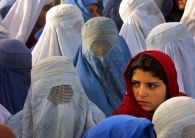 Women’s Education: Promoting Development, Countering Radicalism Année de publication: 2014 Auteur: Hedieh Mirahmadi Auteur institutionnel: World Organization for Resource Development and Education (WORDE) Increasing access to quality secular education can create better jobs for women and reduce some of the economic drivers of radicalization. Educated women can in turn play a pivotal role in inoculating their children and communities against the radical narratives used to recruit followers. Women’s Education: Promoting Development, Countering Radicalism Année de publication: 2014 Auteur: Hedieh Mirahmadi Auteur institutionnel: World Organization for Resource Development and Education (WORDE) Améliorer l'accès à une éducation laïque de qualité peut contribuer à la création de meilleurs emplois pour les femmes et réduire certains facteurs économiques de la radicalisation. Les femmes éduquées peuvent à leur tour jouer un rôle essentiel en protégeant leurs enfants et les communautés contre les récits radicaux utilisés pour recruter des adeptes.
  Address by Irina Bokova, Director-General of UNESCO, on the occasion of the Inaugural Lecture on: Diverse Societies, Inclusive Democracies: New Skills for a Sustainable World, Organized by the Mahatma Gandhi Institute of Education for Peace Année de publication: 2014 Auteur institutionnel: UNESCO. Director-General, 2009-2017 (Bokova, I.G.) This document is the address of Irina Bokova, Director-General of UNESCO, on the occasion of the inaugural lecture on: Diverse Societies, Inclusive Democracies: New Skills for a Sustainable World, organized by the Mahatma Gandhi Institute of Education for Peace in Delhi, India, 25 November 2014. She insisted the importance of social integration, the human rights for all and education for sustainable development. Address by Irina Bokova, Director-General of UNESCO, on the occasion of the Inaugural Lecture on: Diverse Societies, Inclusive Democracies: New Skills for a Sustainable World, Organized by the Mahatma Gandhi Institute of Education for Peace Année de publication: 2014 Auteur institutionnel: UNESCO. Director-General, 2009-2017 (Bokova, I.G.) Ce document est le discours de Irina Bokova, Directrice générale de l'UNESCO, à l'occasion de la conférence inaugurale sur: les sociétés diversifiées, les démocraties inclusives: De nouvelles compétences pour un monde durable, organisé par l'Institut Mahatma Gandhi d'Éducation pour la Paix à Delhi, Inde, le 25 Novembre 2014. Elle a insisté sur l'importance de l'intégration sociale, le droit de l'homme pour tous et éudcation pour le développement durable. 이리나 보코바 유네스코 사무총장의 취임 기념 공개 강연: 다양한 사회, 포괄적 민주주의: 지속가능한 세계를 위한 새로운 기술, ‘마하트마 간디 평화와 지속가능발전 교육연구소’(Mahatma Gandhi Institute of Education for Peace and Sustainable Development)주최, 2014년 11월 25일 인도, 델리. Année de publication: 2014 Auteur institutionnel: UNESCO. Director-General, 2009-2017 (Bokova, I.G.) 이 문서는 2014년 11월 25일, 인도 델리에서 ‘다양한 사회, 포괄적 민주주의: 지속가능한 세계를 위한 새로운 기술’을 주제로 ‘마하트마 간디 평화와 지속가능발전 교육연구소’(Mahatma Gandhi Institute of Education for Peace and Sustainable Development)가 주최한 이리나 보코바 유엔 사무총장의 취임 기념 공개 강연의 내용이다. 여기에서 그녀는 사회 통합의 중요성과 모든 사람을 위한 인권, 지속가능한 발전을 위한 교육을 주장했다. Gathering the voices: Disseminating the message of the Holocaust for the digital generation by applying an interdisciplinary approach The aim of the Gathering the Voices project is to gather testimonies from Holocaust survivors who have made their home in Scotland and to make these testimonies available on the World Wide Web. The project commenced in 2012, and a key outcome of the project is to educate current and future generations about the resilience of these survivors. Volunteers from the Jewish community are collaborating with staff and undergraduate students in Glasgow Caledonian University in developing innovative approaches to engage with school children. These multimedia approaches are essential, as future generations will be unable to interact in person with Holocaust survivors. By students being active participants in the project, they will learn more about the Holocaust and recognize the relevance of these testimonies in today’s society. Although some of the survivors have been interviewed about their journeys in fleeing from the Nazi atrocities, for all of the interviewees, this is the first time that they have been asked about their lives once they arrived in the United Kingdom. The interviews have also focused on citizenship and integration into society. The project is not yet completed, and an evaluation will be taking place to measure the effectiveness of the project in communicating its message to the public. (By the author) Currículos escolares y sus orientaciones sobre historia, sociedad y política: significados para la cohesión social en Latinoamérica Année de publication: 2009 Auteur: Cristián Cox | Robinson Lira | Renato Gazmuri Auteur institutionnel: Uqbar Editores | Elsevier The purpose of this work is to analyse the results of the curricula reform that took place from 1999 to 2000 in regards to the role of schools in providing a model for social integration or cohesion among all groups and social strata. The analysis and critical reflection is based on the assessment done on the curricula for citizenship formation in primary and secondary education in seven countries: Argentina, Brazil, Colombia, Chile, Guatemala, Mexico, and Peru. The main question being answered whether the patterns observed in the different curricula contribute to social cohesion. Les programmes scolaires et des conseils sur l'histoire, la société et la politique: significations pour la cohésion sociale en Amérique latine Année de publication: 2009 Auteur: Cristián Cox | Robinson Lira | Renato Gazmuri Auteur institutionnel: Uqbar Editores | Elsevier Le but de ce travail est d'analyser les résultats de la réforme des programmes d'études qui a eu lieu de 1999 à 2000 en ce qui concerne le rôle des écoles dans la fourniture d'un modèle d'intégration sociale ou la cohésion entre tous les groupes et les couches sociales. L'analyse et la réflexion critique est basée sur l'évaluation faite sur les programmes d'études pour la formation de la citoyenneté dans l'enseignement primaire et secondaire dans sept pays: l'Argentine, le Brésil, la Colombie, le Chili, le Guatemala, le Mexique et le Pérou. La question principale étant répondu si les tendances observées dans les différents programmes contribuent à la cohésion sociale. Currículos escolares y sus orientaciones sobre historia, sociedad y política: significados para la cohesión social en Latinoamérica Année de publication: 2009 Auteur: Cristián Cox | Robinson Lira | Renato Gazmuri Auteur institutionnel: Uqbar Editores | Elsevier The purpose of this work is to analyse the results of the curricula reform that took place from 1999 to 2000 in regards to the role of schools in providing a model for social integration or cohesion among all groups and social strata. The analysis and critical reflection is based on the assessment done on the curricula for citizenship formation in primary and secondary education in seven countries: Argentina, Brazil, Colombia, Chile, Guatemala, Mexico, and Peru. The main question being answered whether the patterns observed in the different curricula contribute to social cohesion. Education, diversité et cohésion sociale en Méditerranée occidentale Année de publication: 2010 Auteur: Sobhi Tawil | Abdeljalil Akkari | Bouthaïna Azami Auteur institutionnel: UNESCO La diversité culturelle constitue une caractéristique essentielle des différentes sociétés de la région de la Méditerranée occidentale où une multitude de traditions religieuses et culturelles se sont côtoyées et réciproquement influencées, créant ainsi une mosaïque sociale particulièrement intéressante. Or, la diversité, source de créativité et d'enrichissement culturel, peut aussi amener à renforcer les tensions sociales et creuser les divisions, menaçant ainsi la cohésion sociale à l'intérieur des sociétés comme entre les pays de la région. En effet, des événements récents ont attiré l'attention sur des tensions sociales et politiques liées à l'identité et à la cohésion sociale dans un contexte de mondialisation, d’accroissement des disparités des niveaux de développement économique entre les deux rives de la Méditerranée occidentale et de diversification grandissante des flux migratoires, contexte trop souvent marqué, par ailleurs, par une exacerbation du phénomène de l’exclusion sociale, de la montée de la xénophobie et de l’extrémisme religieux. Conscients de l’importance de la contribution essentielle de l’éducation pour promouvoir un dialogue interculturel axé sur les principes d’équité, de justice, et de respect de la dignité et de la diversité culturelle, la Chaire UNESCO Droits de l’homme et éthique de la coopération internationale de l’Université de Bergame, le Bureau multipays de l’UNESCO à Rabat, et l’ISESCO ont conjointement lancé, en 2007, le projet Education, diversité et cohésion sociale en Méditerranée occidentale. Le projet s’inscrit dans une dynamique de recherche, de dialogue et d’action, renforçant ainsi les efforts de chacun des trois partenaires visant à promouvoir la culture de la justice et de la paix. Cette recherche propose de nouveaux éclairages sur le rôle des systèmes éducatifs nationaux dans la promotion du respect de la diversité et le renforcement de la cohésion sociale, et esquisse des pistes d’action et de coopération. Nous formons le vœu que cet ouvrage commun, fruit des travaux de recherche se rapportant au projet, puisse contribuer à la promotion du respect de la diversité et de la cohésion sociale en Méditerranée occidentale.