
Ressources
Explorez une large gamme de ressources sur le GCED afin d’approfondir votre compréhension et de renforcer vos activités de recherche, de plaidoyer, d’enseignement et d’apprentissage.
7 résultats trouvés
 العوامل الخارجية المؤثرة في الحوكمة والتوجهات الإستر اتيجية لمؤسسات التعليم العالي في دولة الإمارات العربية المتحدة Année de publication: 2022 Auteur: Ghassan A. Al-Qaimari Auteur institutionnel: University of Fujairah منذ نشأتها في عام 1971، عملت دولة الإمارات العربية المتحدة على تأسيس نظام حديث ومتنوع للتعليم العالي. وفي فترة زمنية وجيزة، تغلبت دولة الإمارات العربية المتحدة على العديد من العقبات لتبرز كمركز تعليمي مهم في المنطقة، جاذب للطلاب وللأكاديميين ولمؤسسات التعليم العالي الأجنبية الراغبة في الحضور في هذه المنطقة من العالم. في هذا البحث نقوم بتوصيف التعليم العالي في دولة الإمارات العربية المتحدة: نصف أنواع مؤسسات التعليم العالي في الدولة، والهيئات الرسمية المنظمة للتعليم العالي، ونتحدث عن رؤية قيادة الدولة للبحث العلمي ولتطور المؤسسات التعليمية كما تم التعبير عنها في الأجندات الوطنية المتعلقة بالتكنولوجيا والبحث العلمي والتعليم العالي، وكيفية تأثر حوكمة مؤسسات التعليم العالي بهذه العوامل. يركز البحث على مواكبة مؤسسات التعليم للتحديات المستقبلية للتطور المتسارع في العلوم والتكنولوجيا، ما يعرف اليوم بالثورة الصناعية الرابعة، وكيف ستؤثر هذه الثورة التي بدأت ملامحها بالتبلور على التوجهات الإستراتيجية للمؤسسات التعليمية وعلى حوكمة مؤسسات التعليم العالي في دولة الإمارات العربية المتحدةفي القرن الحادي والعشرين. External Factors Affecting the Governance and Strategic Directions of Higher Education Institutions in the United Arab Emirates Année de publication: 2022 Auteur: Ghassan A. Al-Qaimari Auteur institutionnel: University of Fujairah Since its inception in 1971, the UAE has worked to establish a modern and diverse system of higher education. In a short period of time, the UAE overcame many obstacles to emerge as an important educational center in the region, attracting foreign students, academics, and higher education institutions wishing to be present in this region of the world. In this research, we describe higher education in the United Arab Emirates: we describe the types of higher education institutions in the country, and the official bodies regulating higher education (Regulators), and we talk about the vision of the country's leadership for scientific research and the development of educational institutions, as expressed in the National Agendas related to technology and scientific research and higher education. How is the governance of higher education institutions affected by these factors? The research focuses on the educational institutions’ keeping pace with the future challenges of the rapid development of science and technology, what is known today as the Fourth Industrial Revolution, and how this revolution, whose features have begun to take shape, will affect the strategic directions of educational institutions and the governance of higher education institutions in the UAE in the twenty-first century.
  Global Alliance for Literacy within the Framework of Lifelong Learning (GAL): Strategy 2020–2025 Année de publication: 2020 Auteur institutionnel: UNESCO Institute for Lifelong Learning (UIL) This strategy presents GAL’s vision, mission, goals and objectives for the period from 2020 to 2025. It builds upon GAL’s achievements from 2016 and 2019, and upon UNESCO’s previous initiatives supporting youth and adult literacy, including the UN Literacy Decade (2003–2012), Literacy Initiative for Empowerment (LIFE) from 2006 to 2015, and the 2015 Recommendation on Adult Learning and Education (RALE).
 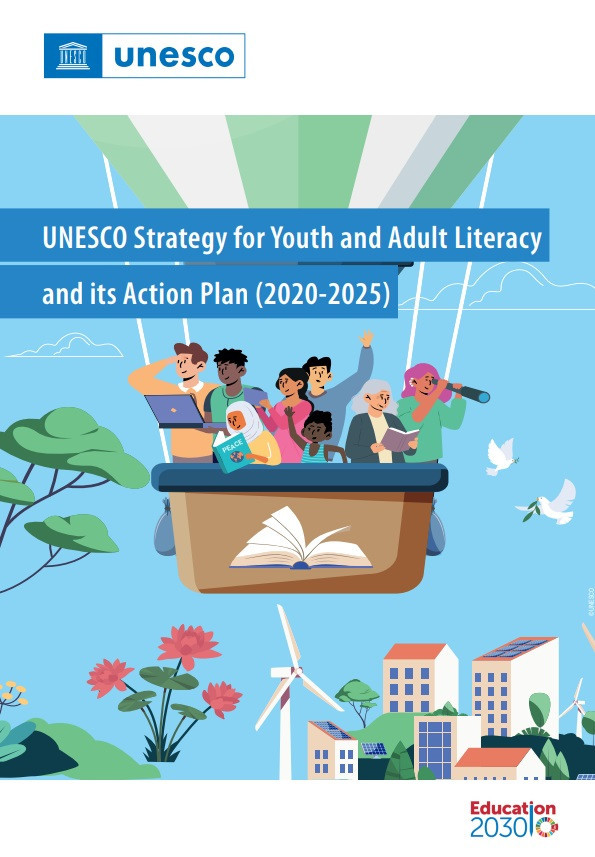 UNESCO Strategy for Youth and Adult Literacy and its Action Plan (2020-2025) Année de publication: 2023 Auteur institutionnel: UNESCO I. Introduction1. The international community has set an ambitious 2030 Agenda for Sustainable Development1, with education and learning central to its achievement. The vision of the Incheon Declaration2, Education 2030, is fully captured by Sustainable Development Goal 4 (SDG4) “ensure inclusive and equitable quality education and promote lifelong learning opportunities for all”. Education 2030 devotes considerable attention to literacy and adult learning including through Target 4.6 and related indicative strategies.2. By 205 EX/Decision 6.III, the Executive Board requested the Director-General to review, update and improve the vision and strategy for literacy to contribute to SDG 4 – Education 2030, and to present it at its 207th session, with a view to transmitting it to the General Conference at its 40th session. The present document therefore contains the draft UNESCO Strategy for Youth and Adult Literacy (2020- 2025). The Strategy was developed through an inclusive and participatory process, including research and analysis of key trends, online consultation of Member States and expert meetings.
 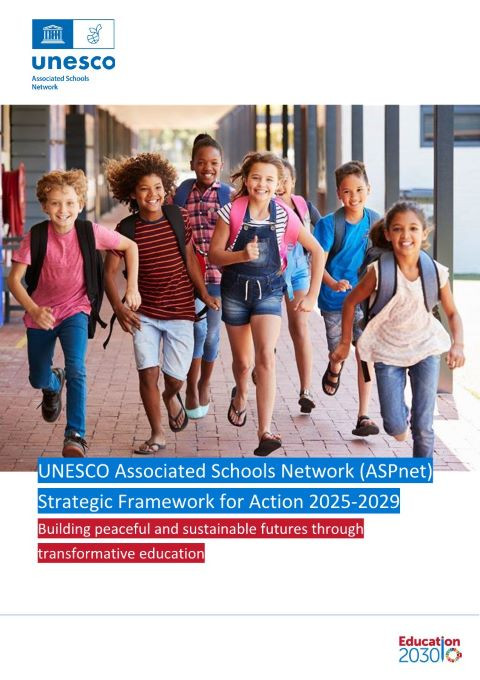 UNESCO Associated Schools Network (ASPnet) Strategic Framework for Action 2025-2029: Building Peaceful and Sustainable Futures through Transformative Education Année de publication: 2025 Auteur institutionnel: UNESCO The ASPnet Strategic Framework explains how UNESCO's pioneering Associated Schools Network (ASPnet) contributes to the achievement of UNESCO’s strategic objectives for Education. This Framework outlines the key thematic areas, innovative educational approaches, and the anticipated outcomes of this dynamic community of educational innovators. It also delineates the roles and responsibilities of its primary stakeholders. The three thematic areas are : "Peace through Global Citizenship Education," "Education for Sustainable Development," and "Intercultural Learning and Appreciation of Cultural Diversity and Heritage." Through initiatives in these areas, ASPnet members inspire and empower teachers, principals, students, families, education professionals, and policymakers to champion transformative education. This prepares learners to become responsible global citizens in an ever-evolving and complex world. Ultimately, the goal is for all participants in this ecosystem to learn from one another and promote international understanding. Red de Escuelas Asociadas de la UNESCO (RedPEA) Marco Estratégico de Acción 2025-2029 : construyendo futuros pacíficos y sustentables a través de la educación transformadora Année de publication: 2025 Auteur institutionnel: UNESCO El Marco Estratégico de la RedPEA explica cómo la pionera Red de Escuelas Asociadas de la UNESCO contribuye a la consecución de los objetivos estratégicos de la UNESCO en materia de educación. Este Marco esboza las áreas temáticas clave, los enfoques educativos innovadores y los resultados previstos por parte de esta dinámica comunidad de innovadores educativos. También delimita las funciones y responsabilidades de sus principales actores. Las tres áreas temáticas son : «La paz mediante la educación para la ciudadanía mundial», “La educación para el desarrollo sostenible” y “El aprendizaje intercultural y la apreciación de la diversidad y el patrimonio culturales”. A través de iniciativas en estas áreas, los miembros de la RedPEA inspiran y capacitan a docentes, directores, estudiantes, familias, profesionales de la educación y funcionarios públicos para defender una educación transformadora. Esto prepara a los alumnos para convertirse en ciudadanos globales responsables en un mundo complejo y en constante evolución. En última instancia, el objetivo es que todos los participantes en este ecosistema aprendan unos de otros y promuevan el entendimiento internacional. Red de Escuelas Asociadas de la UNESCO (RedPEA) Marco Estratégico de Acción 2025-2029 : construyendo futuros pacíficos y sustentables a través de la educación transformadora Année de publication: 2025 Auteur institutionnel: UNESCO Le Cadre stratégique du réSEAU explique comment le Réseau des écoles associées de l’UNESCO (réSEAU), pionnier en la matière, contribue à la réalisation des objectifs stratégiques de l’UNESCO pour l’éducation. Ce Cadre définit les principaux axes thématiques, les approches éducatives innovantes ainsi que les résultats attendus de cette communauté dynamique d’innovateurs en matière d’éducation. Il précise également les rôles et responsabilités de ses principaux acteurs. Les trois axes thématiques sont : « La construction de la paix par l’éducation à la citoyenneté mondiale », « L’éducation au développement durable » et « L’apprentissage interculturel et l’appréciation de la diversitéculturelle et du patrimoine ». À travers des initiatives dans ces domaines, les membres du réSEAU inspirent et renforcent les capacités autonomisent des enseignants, des chefs d’établissement, des élèves, des familles, des professionnels de l’éducation et des décideurs afin qu’ils portent une éducation transformatrice. Cela prépare les apprenants à devenir des citoyens du monde responsables dans un monde contexte mondial en constante évolution et de plus en plus complexe. En définitive, l’objectif est que tous les acteurs de cet écosystème puissent apprendre les uns des autres et promouvoir la compréhension internationale..