
Ressources
Explorez une large gamme de ressources sur le GCED afin d’approfondir votre compréhension et de renforcer vos activités de recherche, de plaidoyer, d’enseignement et d’apprentissage.
195 résultats trouvés
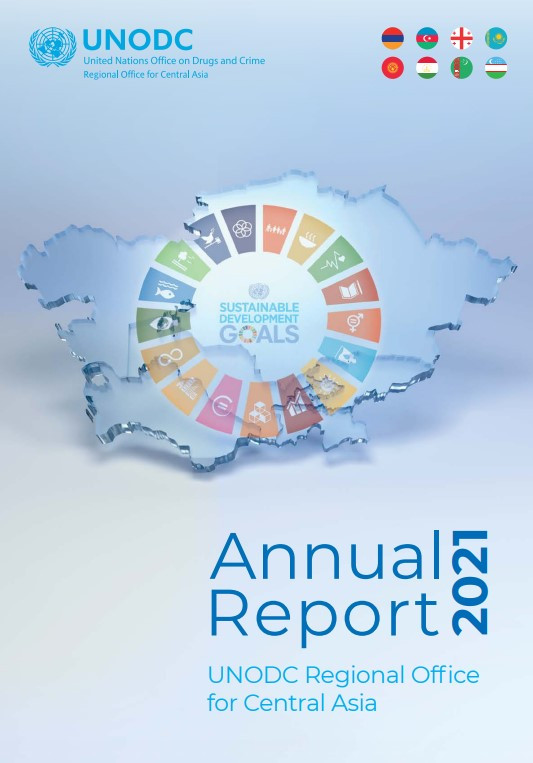 Annual Report for 2021 (UNODC Regional Office in Central Asia) Année de publication: 2022 Auteur institutionnel: UN. Office on Drugs and Crime (UNODC) This Annual Report provides an account of the main results achieved by the United Nations Office on Drugs and Crime, Regional Office for Central Asia (UNODC ROCA), in 2021. UNODC has stepped up efforts to help people in these challenging times, addressing emerging threats in line with human rights and gender equality standards, and the rule of law. Through our strategic interventions, we have contributed to strengthening peace, preventing conflict, and tackling the root causes and drivers of instability and violence.
  Education, Development and Citizenship in Latin America: Proposals for the Debate Année de publication: 2011 Auteur: Alicia Barcena | Narcis Serra Auteur institutionnel: Naciones Unidas. Comisión Económica para América Latina y el Caribe (CEPAL) | Centro de Estudios y Documentación Internacionales de Barcelona (CIDOB) Through ADI, an initiative promoted by CIDOB, the Ibero-American General Secretariat (SEGIB) and the Economic Commission for Latin America and the Caribbean (ECLAC), with the support of various sponsoring companies, it is intended to encourage academic debate along with the political debate on diverse issues crucial for the region. Through a rigorous analysis of the social, economic and political reality carried out by academics, public policymakers and other key actors in the development process in Latin America, the aim is to offer recommendations that make economic growth compatible with well-being of the majorities. This publication constitutes the fifth volume of the series and is the result of the willingness of the participating institutions to disseminate, as much as possible, the ideas and discussions that emerged in the seminar. Its reading is a fundamental element to understand the current state of education in the region, as well as the possibilities that exist in this area to continue advancing in inclusion and development.
 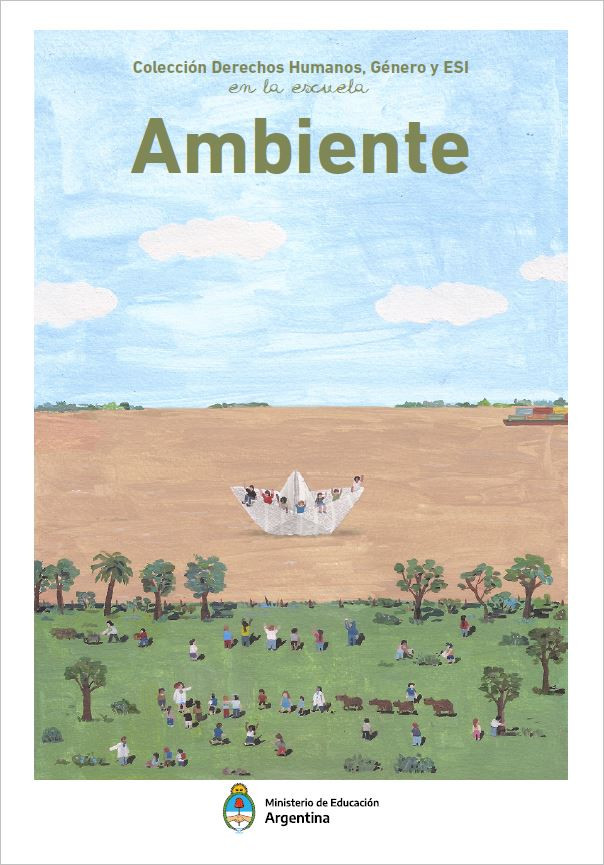 Environment: Human Rights, Gender and Comprehensive Sex Education at School Collection Année de publication: 2021 Auteur institutionnel: Ministry of Education, Argentina This material invites us to reflect on the environment at school with the aim of accompanying and contributing to the construction of educational institutions committed to environmental education, which are guarantors and promoters of rights. From a pedagogical and democratic approach, debates, theoretical tours and case studies on environmental problems are updated.
  Pan-African forum: sources and resources for a culture of peace Année de publication: 2013 Auteur institutionnel: African Union The Pan-African Forum “ Sources and resources for a culture of peace” was held in Luanda, Angola, from 26 to 28 March 2013, and was jointly organized by UNESCO, the African Union and the Government of Angola, under the High Patronage of H. E. Mr José Eduardo dos Santos, President of the Republic of Angola. This forum was the result of a close cooperation between UNESCO and the African Union, one of their main objectives being building peace in Africa, through the promotion of a culture of peace based on the intrinsic values of African societies. The Republic of Angola Government, through its President of the Republic H. E. Mr José Eduardo dos Santos, resolutely engaged in this process with major financial and technical support for the organization of the Forum in the Angolan capital city. As indicated in the Action Plan adopted by the participants in plenary (Annex I), recommendations made during the Forum are directed at all components of African society : political leaders, national and regional institutions, civil society, community associations, youth movements and women’s organizations, religious and traditional leaders, entrepreneurs and leaders from the private sector, etc. The implementation of the Action Plan will be continuously monitored by the two institutions that jointly organized the Luanda Forum, the African Union and UNESCO. Representatives from the 55 African countries participating in the Forum will both contribute to the proposal for action by bringing their national experience and take the lead in the follow‐up of the recommendations made at country level. In order to ensure this follow‐up it will be important to link together the participants by the creation of an African Network for the Promotion of a Culture of Peace and Non‐violence. The representatives of African countries will play the role of focal points of the awareness campaign at the national level. Finally, the agenda of the Forum includes a plan to hold a roundtable on the establishment of a multi-stakeholder partnership for action. Organized with the participation of regional institutions, public and private economic actors as well as representatives of Governments and Civil Society, this session will be the occasion to launch a continental and lasting Movement for the promotion of a culture of peace. For this round table and for the Campaign, the stakeholders can now witness the action as their Foundation / Company / Institution / Organization leads to help in building the defence of peace in the minds of men and women and ensure that peace is a reality: "Make Peace Happen".
 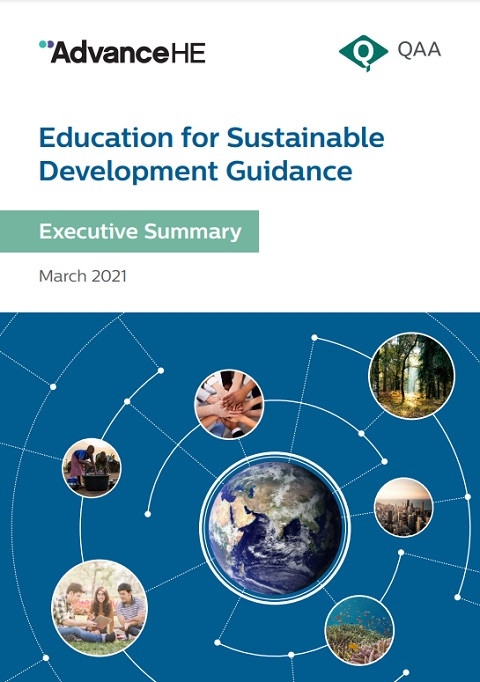 Education for Sustainable Development Guidance: Executive Summary Année de publication: 2021 Auteur institutionnel: Quality Assurance Agency for Higher Education (QAA) | Advance HE How was the guidance developed?In March 2021, QAA and Advance HE launched revised guidance intended to help UK higher education institutions incorporate ESD within their curricula, following on from the first edition in 2014.QAA and Advance HE brought together a group of experts representing academic, business and student communities, with the aim of supporting all students to acquire the skills necessary to develop values and take actions to transition society towards a sustainable future. The guidance gives advice and support on curriculum design, as well as teaching, learning and assessment approaches.Who is the guidance for?This guidance is primarily aimed at staff involved in curriculum design and course management and delivery, to support them in designing ESD into their courses. However, it is also likely to be of value to senior management teams, those with responsibility for quality assurance and enhancement, and staff involved in directing teaching and learning. It may also prove useful to staff responsible for extracurricular activities.How to access the guidanceAn Executive Summary provides an overview of the content, with the full guidance available for any staff member or student at a QAA Member institution on our Membership Resources Site. Also available for members is a resource to support students in engaging with their institution about ESD.
 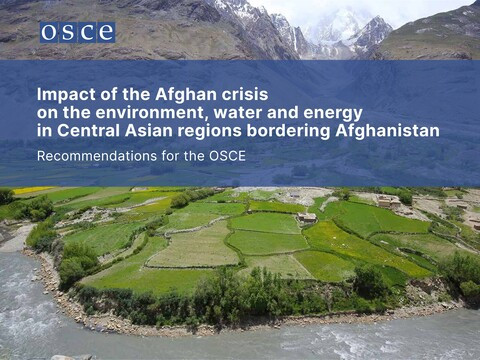 Impact of the Afghan Crisis on the Environment, Water and Energy in Central Asian Regions Bordering Afghanistan Année de publication: 2023 Auteur institutionnel: Organization for Security and Co-operation in Europe (OSCE) Development projects in Central Asia are diverse. In 2021, the Interstate Commission on Sustainable Development of Central Asia adopted the Central Asian Sustainable Development Program till 2030, while a regional climate adaptation strategy is being developed. Afghanistan is not involved in regional environmental and water processes. The results and lessons from the development projects could be useful in tackling the effects of the Afghan crisis.
  Summit of the Future Outcome Document: Pact for the Future, Global Digital Compact, and Declaration on Future Generations Année de publication: 2024 Auteur institutionnel: United Nations (UN) At the Summit of the Future on 22 September 2024, world leaders adopted a Pact for the Future that includes a Global Digital Compact and a Declaration on Future Generations. This Pact is the culmination of a years-long process to adapt international cooperation to the realities of today and the challenges of tomorrow. The hard work of implementation begins immediately. The adoption of the Pact demonstrates that countries are committed to an international system with the United Nations at its center. Leaders set out a clear vision of a multilateralism that can deliver on its promises, is more representative of today’s world and draws on the engagement and expertise of governments, civil society and other key partners.
  Summit of the Future Outcome Document: Pact for the Future, Global Digital Compact and Declarations on Future Generations Année de publication: 2024 Auteur institutionnel: United Nations (UN) World leaders adopt a Pact for the Future that includes a Global Digital Compact and a Declaration on Future Generations (A/RES/79/1). The Pact covers a broad range of themes including peace and security, sustainable development, climate change, digital cooperation, human rights, gender, youth and future generations, and the transformation of global governance. Fórum Panafricano: fundamentos e recursos para uma cultura de paz Année de publication: 2013 Auteur institutionnel: African Union The Pan-African Forum “ Sources and resources for a culture of peace” was held in Luanda, Angola, from 26 to 28 March 2013, and was jointly organized by UNESCO, the African Union and the Government of Angola, under the High Patronage of H. E. Mr José Eduardo dos Santos, President of the Republic of Angola. This forum was the result of a close cooperation between UNESCO and the African Union, one of their main objectives being building peace in Africa, through the promotion of a culture of peace based on the intrinsic values of African societies. The Republic of Angola Government, through its President of the Republic H. E. Mr José Eduardo dos Santos, resolutely engaged in this process with major financial and technical support for the organization of the Forum in the Angolan capital city. As indicated in the Action Plan adopted by the participants in plenary (Annex I), recommendations made during the Forum are directed at all components of African society : political leaders, national and regional institutions, civil society, community associations, youth movements and women’s organizations, religious and traditional leaders, entrepreneurs and leaders from the private sector, etc. The implementation of the Action Plan will be continuously monitored by the two institutions that jointly organized the Luanda Forum, the African Union and UNESCO. Representatives from the 55 African countries participating in the Forum will both contribute to the proposal for action by bringing their national experience and take the lead in the follow‐up of the recommendations made at country level. In order to ensure this follow‐up it will be important to link together the participants by the creation of an African Network for the Promotion of a Culture of Peace and Non‐violence. The representatives of African countries will play the role of focal points of the awareness campaign at the national level. Finally, the agenda of the Forum includes a plan to hold a roundtable on the establishment of a multi-stakeholder partnership for action. Organized with the participation of regional institutions, public and private economic actors as well as representatives of Governments and Civil Society, this session will be the occasion to launch a continental and lasting Movement for the promotion of a culture of peace. For this round table and for the Campaign, the stakeholders can now witness the action as their Foundation / Company / Institution / Organization leads to help in building the defence of peace in the minds of men and women and ensure that peace is a reality: "Make Peace Happen".
 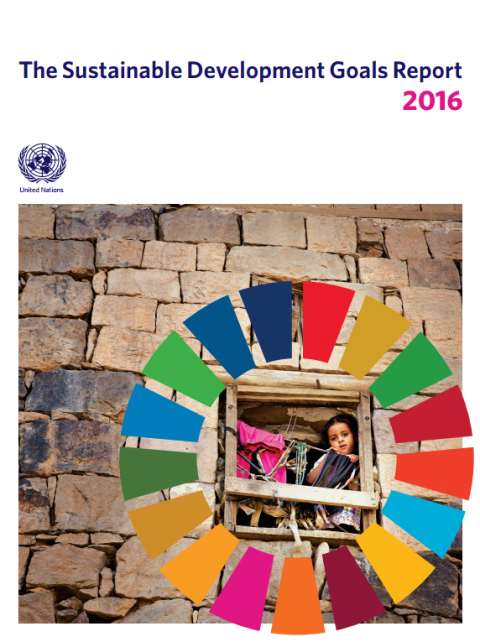 The Sustainable development goals report 2016 Année de publication: 2016 Auteur institutionnel: United Nations (UN) This inaugural report on the global Sustainable Development Goals (SDGs) is a first accounting of where the world stands at the start of our collective journey to 2030. The report analyses selected indicators from the global indicator framework for which data are available as examples to highlight some critical gaps and challenges. The list of SDG indicators agreed upon by the UN Statistical Commission in March 2016 will be subject to refinements and improvements as methods and data availability improve. Every journey has a beginning and an end. Plotting that journey and establishing key milestones along the way requires accessible, timely and reliable disaggregated data. The data requirements for the global indicators are almost as unprecedented as the SDGs themselves and constitute a tremendous challenge to all countries. Nevertheless, fulfilling these requirements through building national statistical capacity is an essential step in establishing where we are now, charting a way forward and bringing our collective vision closer to reality