
Ressources
Explorez une large gamme de ressources sur le GCED afin d’approfondir votre compréhension et de renforcer vos activités de recherche, de plaidoyer, d’enseignement et d’apprentissage.
195 résultats trouvés
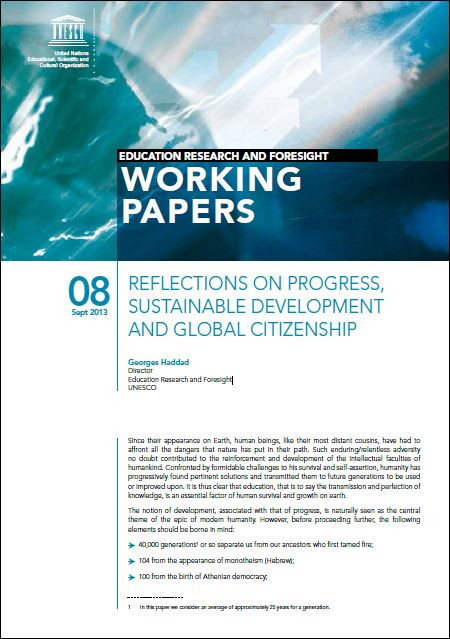 Reflections on Progress, Sustainable Development and Global Citizenship Année de publication: 2013 Auteur: Georges Haddad Auteur institutionnel: UNESCO The arguments developed in this concise presentation demonstrate that sustainable development, progress and global citizenship, efficiently embedded in the context of the Knowledge Society, undeniably participate in the development of the New Humanism promoted by the Director-General of UNESCO, and which we all agree to consider essential for the wealth and prosperity of Humanity in an agreeable, peaceful and friendly common environment.
  Quality Physical Education (QPE): guidelines for policy makers Année de publication: 2015 Auteur: Nancy, McLennan | Jannine, Thompson Auteur institutionnel: UNESCO A key feature of the Post-2015 Development Agenda is sustainable development. Sustainable development starts with safe, healthy, well-educated children. Participation in quality physical education (QPE), as part of a rounded syllabus, enhances young peoples’ civic engagement, decreases violence and negative patterns of behaviour, and improves health awareness. The UNESCO QPE Policy Package is an original piece of work, which draws upon results from extensive global research (including the Worldwide Survey of School Physical Education). These guidelines, designed for global application and local adaptation, provide a means of analysing current policy through practical guidance and a ‘how-to’ approach. The materials have been developed in consultation with key partners including the European Commission, the International Council for Sport Science and Physical Education (ICSSPE), UNDP, UNICEF, UNOSDP and WHO.
 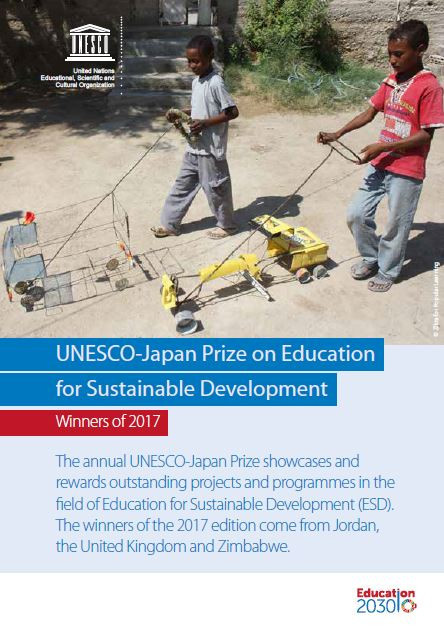 UNESCO-Japan Prize on Education for Sustainable Development: Winners of 2017 Année de publication: 2017 Auteur institutionnel: UNESCO The annual UNESCO-Japan Prize showcases and rewards outstanding projects and programmes in the field of Education for Sustainable Development (ESD).The winners of the 2017 edition come from Jordan, the United Kingdom and Zimbabwe.Among this year’s winners are a school, business and a non-profit organization, promoting ESD, respectively, at the local, regional and global level: Sihlengeni Primary School from the Republic of Zimbabwe; the social enterprise Zikra from the Hashemite Kingdom of Jordan; and the Hard Rain Project from the United Kingdom of Great Britain and Northern Ireland. Each of them will receive an award of USD 50,000.The Director-General of UNESCO and the Japanese Minister of Education will award the Prize to the three laureates in a ceremony at UNESCO Headquarters in Paris on 3 November 2017, during the 39th session of the General Conference.
 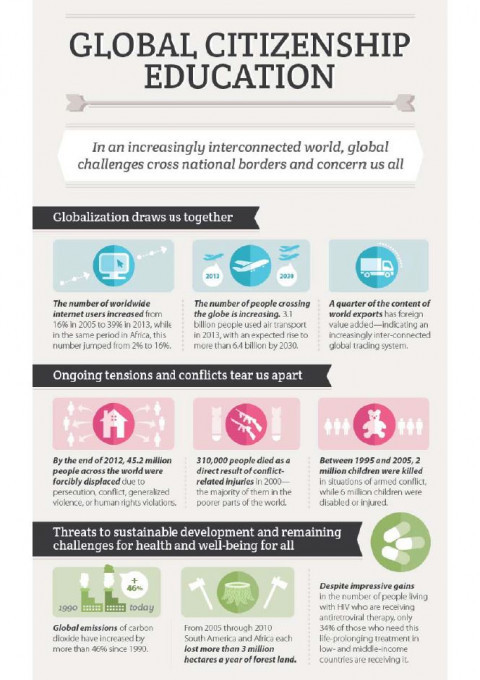 Global Citizenship Education infographic Année de publication: 2014 Auteur institutionnel: UNESCO In an increasingly interconnected world, global challenges cross national borders and concern us all. With issues like these threatening human and environmental well-being, we need to re-think the role and relevance of education. We need Global Citizenship Education. Global Citizenship Education is transformative. What are the barriers to this kind of education? What needs to change in education? What is UNESCO doing? What can you do?
 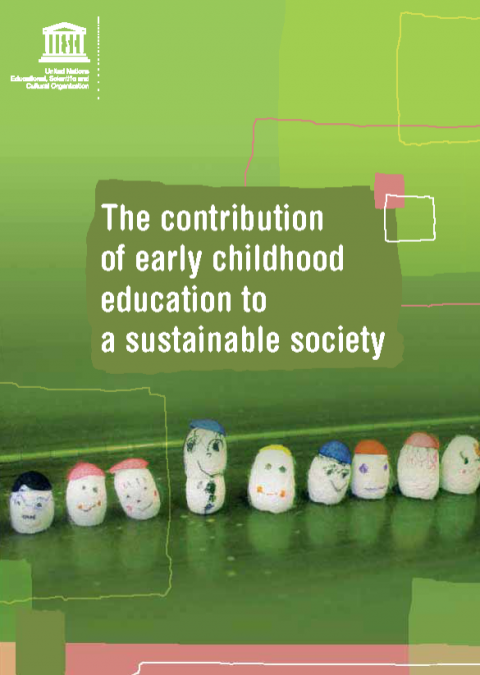 The contribution of early childhood education to a sustainable society Année de publication: 2008 Auteur institutionnel: UNESCO This report originates from the international workshop, ‘The Role of Early Childhood Education for a Sustainable Society’, jointly organized in Göteborg, Sweden, by Göteborg University, Chalmers University of Technology and the City of Göteborg, from 2 to 4 May 2007. It was attended by thirty-five participants from sixteen different countries (see ‘List of Participants’). The workshop was a follow-up to the international conference on education for sustainable development, ‘Learning to Change Our World’, held in May 2004, in Göteborg. It was one of four preparatory workshops leading to another international conference on education for sustainable development, to be organized in 2008 or 2009, in the same city. The aim of the four workshops is to discuss promoters and barriers related to learning for sustainability, and to propose recommendations for the upcoming international conference. The present workshop was conceived for the following reasons. First, our societies urgently require new kinds of education that can help prevent further degradation of our planet, and that foster caring and responsible citizens genuinely concerned with and capable of contributing to a just and peaceful world. Second, these new kinds of education must be available to all – not only a handful of people – and take place in various settings, including families and communities. Third, they must begin in early childhood, as the values, attitudes, behaviours and skills acquired in this period may have a long-lasting impact in later life. Thus, early childhood education clearly has an important place in the efforts to bring about sustainable development.
 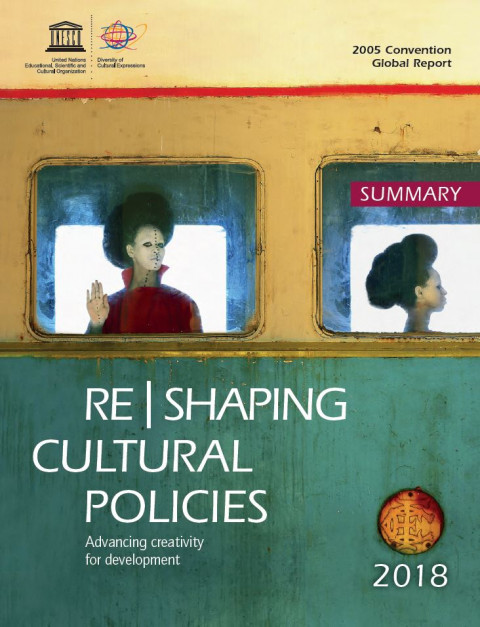 [Summary] Re|shaping Cultural Policies: Advancing Creativity for Development; 2005 Convention Global Report, 2018: Summary Année de publication: 2017 Auteur institutionnel: UNESCO The Global Report series has been designed to monitor the implementation of the UNESCO Convention on the Protection and Promotion of the Diversity of Cultural Expressions (2005). It also provides evidence of how this implementation process contributes to attaining the United Nations 2030 Sustainable Development Goals and targets.The 2018 Global Report analyses progress achieved in implementing the 2005 Convention since the first Global Report was published in 2015.Grounded in the analysis of the Quadrennial Periodic Reports submitted by Parties to the Convention and relevant new findings, this report examines how the 2005 Convention has inspired policy change at the global and country level in ten areas of monitoring. It puts forward a set of policy recommendations for the future, addressing the adaptation of cultural policies to rapid change in the digital environment, based on human rights and fundamental freedoms.When deployed together, the two editions of the Global Report are beginning to produce new and valuable evidence to inform cultural policy making and advance creativity for development.
 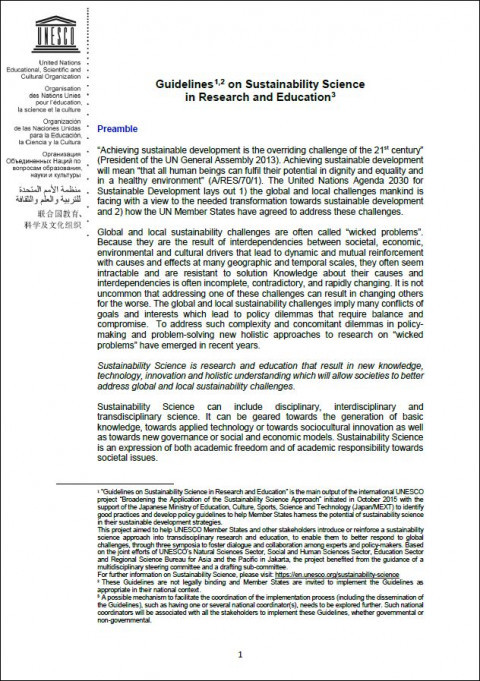 Guidelines on Sustainability Science in Research and Education Année de publication: 2017 Auteur institutionnel: UNESCO “Guidelines on Sustainability Science in Research and Education” is the main output of the international UNESCO project “Broadening the Application of the Sustainability Science Approach” initiated in October 2015 with the support of the Japanese Ministry of Education, Culture, Sports, Science and Technology (Japan/MEXT) to identify good practices and develop policy guidelines to help Member States harness the potential of sustainability science in their sustainable development strategies.This project aimed to help UNESCO Member States and other stakeholders introduce or reinforce a sustainability science approach into transdisciplinary research and education, to enable them to better respond to global challenges, through three symposia to foster dialogue and collaboration among experts and policy-makers. Based on the joint efforts of UNESCO’s Natural Sciences Sector, Social and Human Sciences Sector, Education Sector and Regional Science Bureau for Asia and the Pacific in Jakarta, the project benefited from the guidance of a multidisciplinary steering committee and a drafting sub-committee.For further information on Sustainability Science, please visit: https://en.unesco.org/sustainability-science
 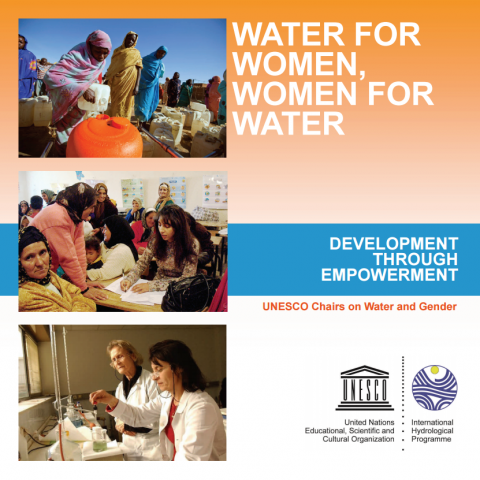 Water for Women, Women for Water: UNESCO's Chairs on Water and Gender Année de publication: 2014 Auteur institutionnel: منظمة الأمم المتحدة للتربية والعلم والثقافة (UNESCO) The access to sufficient, safe and affordable water is a basic human right. It calls for governments, institutions, corporations and public and private organizations involved in the water sector to eliminate various forms of discrimination in the access, management and decision‐making processes involving water resources. Within the framework of the UNITWIN/UNESCO Chairs Programme, UNESCO has established five Chairs seeking to promote the engagement of women in sustainable development and water resource management. These Chairs integrate the UNESCO Water Family, consisting of the International Hydrological Programme (IHP), water‐related Centers’, the UNESCO‐IHE Institute for Water Education, the World Water Assessment Programme (WWAP), and a total of 35 UNESCO Chairs and UNITWIN Networks.Located in Brazil, Côte d’Ivoire, Morocco, Togo and the Dominican Republic, the Chairs are based in institutions of research and higher education, working actively to develop human resources, build solutions, and share scientific and practical knowledge. They work in partnership with other academic institutions, as well as public and private organizations. They also pave the way for the research and higher education communities to join forces with UNESCO in an effort to achieve internationally agreed Development Goals and targets. With a high appreciation for the Chairs’ great potential for impact, IHP has strongly encouraged their projects and initiatives, as well their involvement in other focal areas of the Eighth Phase of IHP, in order to strengthen water security, enhance tertiary and technical water education and respond to the needs of communities, with a special focus on women’s needs. With their inception in 2006, the UNESCO Chairs on Water and Gender have built a remarkable combination of knowledge and experience in their area of expertise. Through their actions, the Chairs have successfully fostered cooperation and exchange of information among different institutions of higher education; conducted research and training activities on gender‐related issues, water and natural sciences; established networks between professionals, governmental, non‐governmental and private organizations; created new approaches to deal with the water‐related needs of local communities and succeeded in increasing participation, leadership and the role of women in the water sector.As a general goal, the Chairs strive to enhance women’s capacities through motivation, engagement, development of skills and education. They have been active in organizing learning courses, training sessions, workshops, conferences and a diverse range of research and community projects. The following pages present a detailed overview of the five Chairs and their goals, activities, and initiatives.
 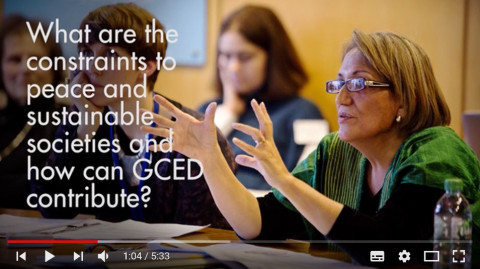 [Video] Second UNESCO Forum on Global Citizenship Education Année de publication: 2015 Auteur institutionnel: UNESCO Highlights of the Second UNESCO Forum on Global Citizenship Education (GCED) Building peaceful and sustainable societies: preparing for post-2015 (28-30 January 2015,UNESCO HQ, Paris). The Forum was organized by the Division for Teaching, Learning and Content, Education Sector, UNESCO, with the support of Austria, the Sultanate of Oman and the Republic of Korea, and the UN Secretary-General’s Global Education First Initiative (GEFI).
  Analysis of Determinants of a Measure of Sustainability Literacy Année de publication: 2017 Auteur: Aurélien Decamps Auteur institutionnel: UNESCO This paper highlights the contribution of the Sulitest to analyse the determinants of sustainability literacy in higher education. Sulitest is an open online training and assessment tool designed to assess and improve sustainability literacy. It is a multi-stakeholder initiative supported by several UN agencies and academic networks. Based on collaboration through the volunteer contribution of an international community, this tool aims to be internationally recognized and locally relevant by addressing global as well as local issues. With a growing community of more than 500 higher education institutions and other organizations from more than 50 countries, Sulitest begins to be recognized as a standard to assess and improve sustainability literacy. As the use of the tool is expanding, the data collected provides tangible indicators to map the current level of sustainability literacy and to monitor progress over time.