
Ressources
Explorez une large gamme de ressources sur le GCED afin d’approfondir votre compréhension et de renforcer vos activités de recherche, de plaidoyer, d’enseignement et d’apprentissage.
195 résultats trouvés
 Guidance Note on Uzbekistan Green Taxonomy Année de publication: 2023 Auteur institutionnel: World Bank This Guidance Note serves to support the government of Uzbekistan in the design of a national Green Taxonomy. A green taxonomy sets out rules for classifying environmentally sustainable activities and can be instrumental inthe transition to a Green Economy by guiding policies and public resource flows, and influencing the private sector’s investment response. The Guidance Note discusses methodological choices for the taxonomy and their policy implications, reviews existing international practices, and recommends a model taxonomy and roadmap for further development of the taxonomy. A key message in the note is the importance of setting clear strategic goals that will inform the selection of the taxonomy’s environmental objectives and its other features. Also discussed are theinstitutional arrangements to coordinate the actions and inputs of multiple stakeholders during the development process of the taxonomy, and the importance of strong oversight and consistent enforcement of taxonomy rules by a competent regulatory body.
  Report on Improving the Care System in the Republic of Uzbekistan: A Path to Economic Growth, Poverty Reduction and Improved Quality of Life Année de publication: 2024 Auteur: Maigul Nugmanova | Adiba Nuruddinova Auteur institutionnel: UNDP Uzbekistan This Report explores the crucial role of care system policies in sustainable equitable economic growth, poverty reduction, and improved quality of life, aligning with UN Sustainable Development Goals. Conducted within the framework of the initiative of UNDP in Uzbekistan, the study aims to analyze current care provision, identify critical points, and propose recommendations for an inclusive and sustainable care economy, contributing to overall economic growth and reducing regional inequalities.
 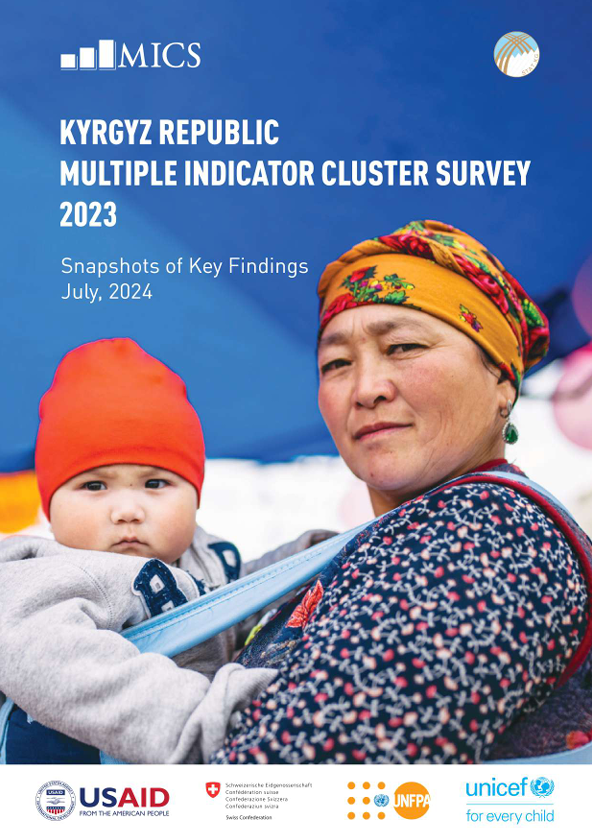 Kyrgyz Republic Multiple Indicator Cluster Survey 2023: Snapshots of Key Findings July, 2024 Année de publication: 2024 Auteur institutionnel: National Statistical Committee of the Kyrgyz Republic | UNICEF Kyrgyzstan | United Nations Population Fund (UNFPA) | United States Agency for International Development (USAID) | Government of Switzerland The 5th round of Multiple Indicator Cluster Survey (MICS) covers 7,200 households across Kyrgyzstan, measuring 185 indicators related to healthcare, education, and social protection for women and children. MICS 2023 produced data for 32 global Sustainable Development Goal (SDG) indicators, disaggregated by key characteristics such as gender, age, geographic location, income level and disability.
 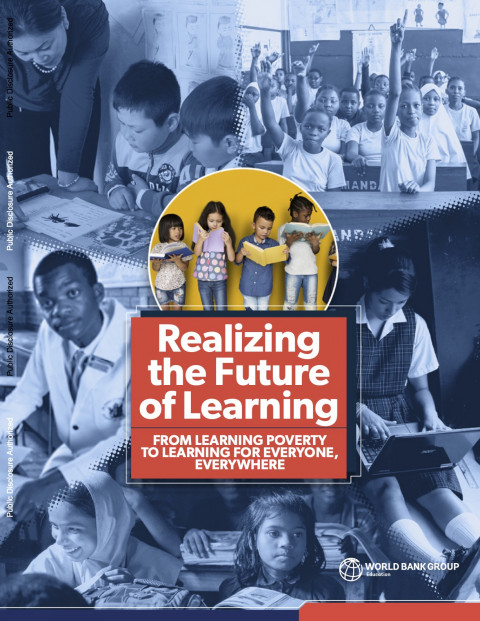 Realizing the Future of Learning: From Learning Poverty to Learning for Everyone, Everywhere Année de publication: 2020 Auteur: Jaime Saavedra | Cristian Aedo | Omar Arias | Adelle Pushparatnam | Halsey Rogers | Marcela Gutierrez Bernal Auteur institutionnel: World Bank Education is a right with immense inherent value. As an essential building block for a country’s human capital, it is also a key driver of growth, competitiveness, and economic development. For societies to be inclusive and fair, they need to prepare all their children to succeed as citizens and give them the tools to participate in their countries’ development. This has become increasingly challenging, because students must have the skills and competencies to adapt and be successful in a rapidly changing, uncertain world, especially as the world grapples with the effects of the COVID19 pandemic. At the same time, our understanding of how children best learn and what the most effective education delivery mechanisms are has grown. Armed with this knowledge, countries that are serious about living up to this challenge will invest in their people to build their human capital; take action to show that learning really matters to them; and commit not only the financial, but also the political and managerial resources necessary to build an education system that serves all with quality. Urgent action is needed to realize a new vision for education: one in which learning happens for everyone, everywhere. Too many education systems are not delivering even basic skills for all children, let alone preparing them for the demanding world they will live in as adults. As the World Bank expands its support for countries to invest more, and more effectively, in education, it has developed a renewed policy approach to address the educational challenges of today while helping countries lay the groundwork to seize tomorrow’s opportunities. The Bank’s 2018 World Development Report urged action to address the global learning crisis and examined the policies needed to tackle it (World Bank 2018a). To support efforts to improve foundational learning, last year the Bank launched a global target: to cut the Learning Poverty rate—the fraction of 10-year-olds in low- and middle-income countries who cannot read and understand an age-appropriate text—at least in half by 2030 (World Bank 2019a). It was also a recognition of the severity of the learning crisis that we are living through: that more than half of children lack these fundamental skills at the end-of-primary age shows that their future is at stake. And now the pandemic has generated a crisis within a crisis.
 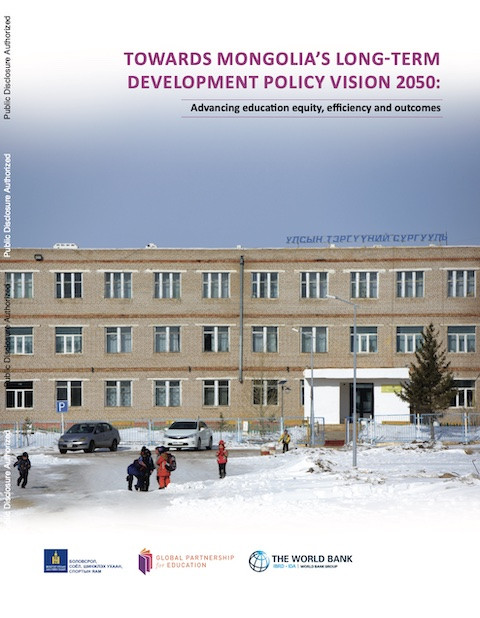 Towards Mongolia’s Long-Term Development Policy Vision 2050: Advancing Education Equity, Efficiency and Outcomes Année de publication: 2020 Auteur institutionnel: Mongolia Ministry of Education, Culture, Science and Sports | World Bank This report seeks to synthesize and analyze education outcomes with a view of identifying the main priorities for strengthening the education sector in support of Mongolia’s Sustainable Development Vision 2050. The report highlights data and findings generated from a series of source reports (see bibliography) related to the goals and targets set out in the Vision 2050. The report is composed of six thematic chapters: Access; Equity; Internal Efficiency, Education Cost and Finance; External Efficiency; Management. Each chapter will include an overview of the current situation and recent development with a focus on, key achievements and persistent challenges. As a synthesis report, the information on each topic is not exhaustive but rather seeks to present key findings. Specific activities highlighted in the Vision 2050 have been included at the beginning of each chapter and a complete mapping by activity is annexed (Annex 1. Vision 2050 Chapter mapping). This synthesis report draws on conclusions, finding, data and surveys produced in collaboration with MECSS by the Asian Development Bank, the Global Partnership for Education and the World Bank. The synthesis also draws from key UNESCO reports. The scope, research, and focus of the source reports differ, and precise findings are, on occasions, incongruent however the overall conclusions are fundamentally compatible. Whereas most of the source reports focus on one or two key stages, the synthesis report seeks to extract cross-cutting and/or recurring challenges that have an impact, positive or negative, on equity, efficiency and outcomes which ultimately may contribute to the implementation of Vision 2050. Mongolia’s State Education Policy (2014-2024) states: ‘Education is the main key factor of each citizen’s lifelong support and guarantee of life quality, and of the State’s societal and economical, science and technological development, and guarantee of national independence and security. Mongolian State shall develop education as a leading sector in society’.
  Changing Minds, Not the Climate: UNESCO Mobilizes to Address the Climate Crisis Année de publication: 2019 Auteur institutionnel: UNESCO The climate crisis is the challenge of the century. Scientific reports, including those of UNESCO, one after another describe increasingly pessimistic scenarios. All experts agree on one thing: we are in a race against time. A race to try to reserve our natural habitat in all of its beauty and diversity, to protect our ecosystems and natural resources and to pass them on to future generations. A race to mitigate the destructive effects of climate change and find the most appropriate innovative solutions.The disruptions caused by climate change are already part of our daily lives and trigger social, political, geopolitical and humanitarian upheavals. The climate crisis is not only threatening our ecosystems, it is also undermining fundamental rights, widening inequalities and creating new injustices. That is why ethical imperative must guide our action. Beyond the political and legal agreements essential to preparing for the future, change involves a shift in mindset, a different way of considering the place of humans in nature. This challenge mobilizes all resources, including education, research and creativity. It is an ethical and humanistic commitment. This is UNESCO’s mandate, and it is a matter of urgency.
  Reflect–Share–Act: A Guide to Community-based Education for Sustainable Development Année de publication: 2021 Auteur institutionnel: UNESCO | UNESCO Bangkok This guidebook aspires to build a community where learning for sustainable development takes place everywhere for everyone as an ongoing practice. It introduces you to Reflect-Share-Act, a process to discover and define sustainable development in your own contexts together with others in your community. The guide compiles resources that can support this learning process, including stories of various communities’ actual experiences of Reflect-Share-Act.
 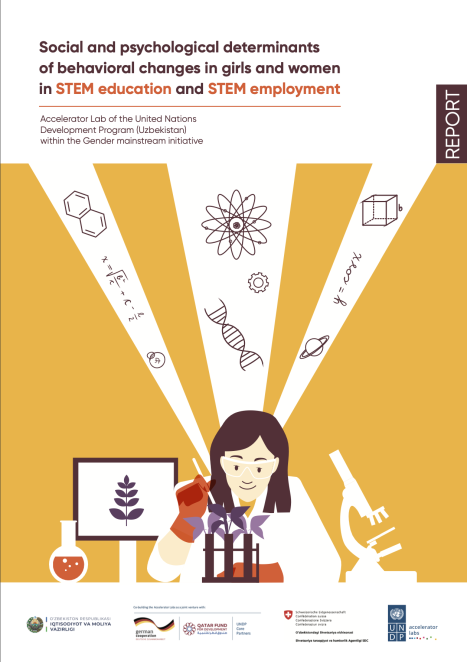 Social and Psychological Determinants of Behavioral Changes in Girls and Women in STEM Education and STEM Employment Année de publication: 2023 Auteur: Victoria Alekseeva | Marietta Karamyan The objective of the research presented in the report is to examine the social and psychological determinants of behavioral change in girls and women in STEM professions to develop recommendations for engaging them in the professional field.
  Political Leadership for Sustainable Development: Why Do the Global Goals Matter to Local Councillors, and Why Do Local Councillors Matter for the Global Goals?; Training Manual Année de publication: 2021 Auteur: Maeve Bateman | Jihyun Kim Auteur institutionnel: Irish Development Education Association (IDEA) | Bridge 47 Our Bridge 47 Consortium Member, IDEA, partnered with Women for Election, a not-for-profit, non-partisan organisation which trains and supports women in Ireland to run for politics.In 2019 and 2020 this partnership developed and delivered training programmes for women Councillors on ‘Political Leadership for Sustainable Development: Why Do the Global Goals Matter to Local Councillors, and Why Do Local Councillors Matter for the Global Goals?’This training manual is to provide guidelines for any civil society organisations that would like to engage with local politicians on how to inspire, support and equip them as leaders for sustainable development who are ready to participate in and implement the localisation of the Sustainable Development Goals.
  Reimagining Our Futures Together: A New Social Contract for Education Année de publication: 2021 Auteur institutionnel: International Commission on the Futures of Education | UNESCO Our humanity and planet Earth are under threat. The pandemic has only served to prove our fragility and our interconnectedness. Now urgent action, taken together, is needed to change course and reimagine our futures. This report by the International Commission on the Futures of Education acknowledges the power of education to bring about profound change. We face a dual challenge of making good on the unfulfilled promise to ensure the right to quality education for every child, youth and adult and fully realizing the transformational potential of education as a route for sustainable collective futures. To do this, we need a new social contract for education that can repair injustices while transforming the future.This new social contract must be grounded in human rights and based on principles of non-discrimination, social justice, respect for life, human dignity and cultural diversity. It must encompass an ethic of care, reciprocity, and solidarity. It must strengthen education as a public endeavour and a common good.This report, two years in the making and informed by a global consultation process engaging around one million people, invites governments, institutions, organizations and citizens around the world to forge a new social contract for education that will help us build peaceful, just, and sustainable futures for all.The visions, principles, and proposals presented here are merely a starting point. Translating and contextualizing them is a collective effort. Many bright spots already exist. This report attempts to capture and build on them. It is neither a manual nor a blueprint but the opening up of a vital conversation.