
Ressources
Explorez une large gamme de ressources sur le GCED afin d’approfondir votre compréhension et de renforcer vos activités de recherche, de plaidoyer, d’enseignement et d’apprentissage.
340 résultats trouvés
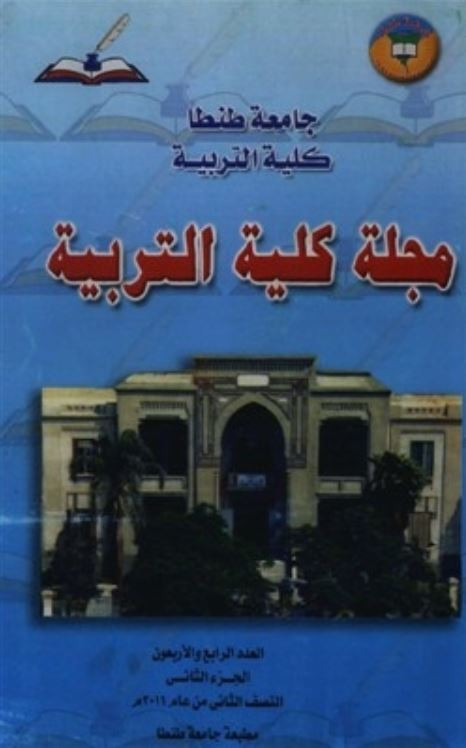 تطوير سياسات التعليم والتدريب لتعليم الكبار من أجل تنمية مستدامة: دراسة حالة دولة الكويت Année de publication: 2017 Auteur: Sabika Hussain Bursli Auteur institutionnel: Tanta University في هذه المقالة ، يعرض المؤلف حالة الكويت فيما يتعلق بتعليم الكبار. يحلل المقال السياسات الكويتية الحالية المتعلقة بتعليم الكبار في ضوء متطلبات التنمية المستدامة. Developing Adult Education and Training Policies for Sustainable Development: A Case Study of the State of Kuwait Année de publication: 2017 Auteur: Sabika Hussain Bursli Auteur institutionnel: Tanta University In this article, the author presents the case of Kuwait in relation to adult education. The article analyzes the current Kuwaiti policies related adult education in light of sustainable development requirements.
 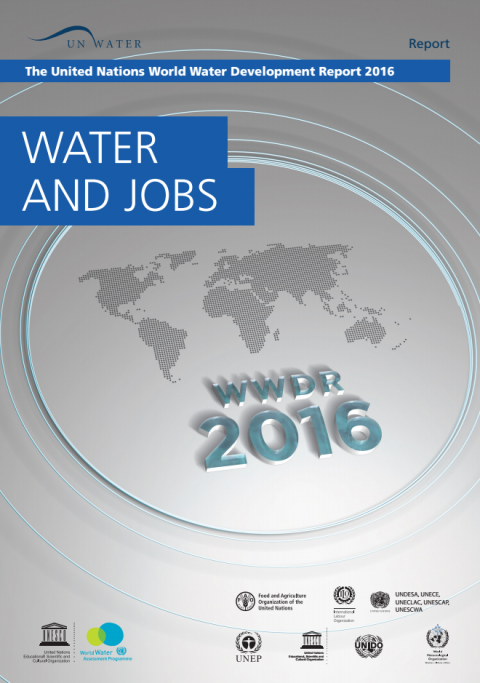 Rapport mondial des Nations Unies sur la mise en valeur des ressources en eau 2016: l'eau et l'emploi Année de publication: 2016 Auteur institutionnel: UNESCO Three out of four jobs worldwide rely on water. As such, water shortages and lack of access may limit economic growth in the years to come, according to the World Water Development Report 2016. From its collection, through various uses, to its ultimate return to the natural environment, water is a key factor in the development of job opportunities either directly related to its management (supply, infrastructure, wastewater treatment, etc.) or in economic sectors that are heavily water-dependent such as agriculture, fishing, power, industry and health. In its analysis of the economic impact of access to water, the report cites numerous studies that show a positive correlation between investments in the water sector and economic growth. It also highlights the key role of water in the transition to a green economy.
  Educación para el desarrollo sostenible: aportes didácticos para docentes del Caribe Année de publication: 2008 Auteur: Gillian Cambers | Grace Chapman | Paul Diamond | Lorna Down | Anthony D. Griffith | Winthrop Wiltshire Auteur institutionnel: UNESCO Santiago The publication “Teachers’ Guide for Education for Sustainable Development in the Caribbean” is geared towards regional teacher-trainers and teachers active at every level of education. Its purpose is two-fold: contribute to the integration of education for sustainable development into teaching practices through education initiatives, originally implemented in the Caribbean that may be feasible to replicate in the various classrooms, schools and communities; promote reflection, discussion and creation of innovative practices that involve all teachers in Decade activities and contribute to the making of sustainable societies. This document illustrates how different wills can come together moved by a desire to materialise common projects. Thus, this effort represents the work of regional specialists working in close cooperation with UNESCO Regional Bureau for Education in Latin America and the Caribbean, as well as the financial support of the Government of Japan.
 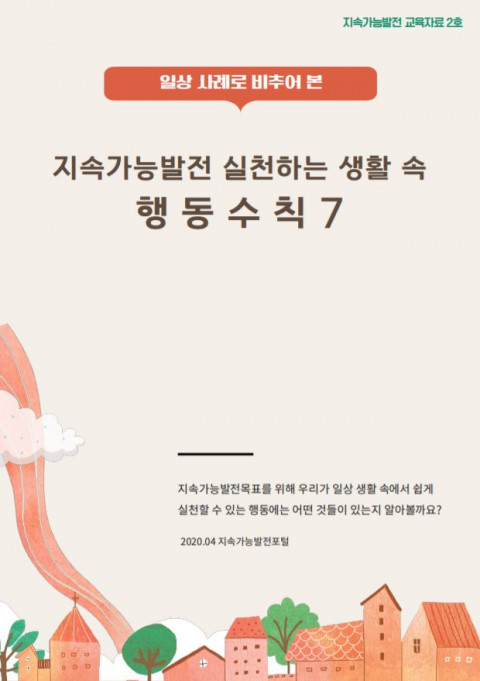 일상 사례로 비추어 본 지속가능발전 실천하는 생활 속 행동수칙 7 (지속가능발전 교육자료 2호) Année de publication: 2020 Auteur institutionnel: 지속가능발전포털 | 대한민국 환경부 지속가능발전목표를 위해 우리가 일상 생활 속에서 쉽게 실천할 수 있는 행동에는 어떤 것들이 있는지 7가지 행동수칙으로 정리하였다.행동수칙1. 교통, 2. 에너지 절약, 3. 물 아껴쓰기, 4. 음식물 쓰레기 줄이기, 5. 장바구니 이용하기, 6. 분리수거하기, 7. 나무 심기
 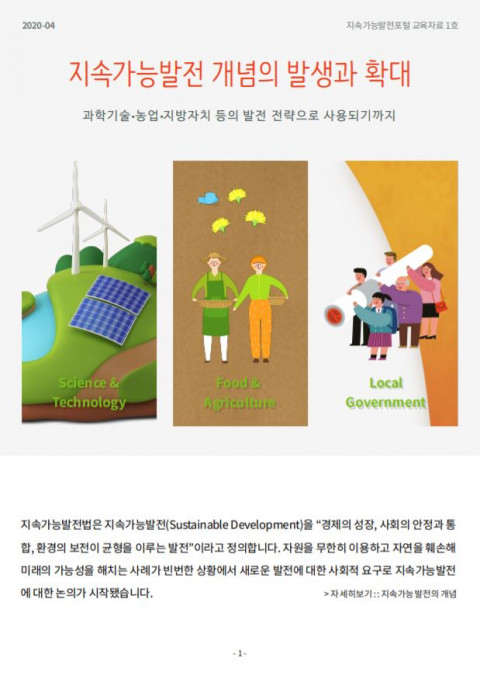 지속가능발전 개념의 발생과 확대: 과학기술·농업·지방자치 등의 발전 전략으로 사용되기까지 (지속가능발전포털 교육자료 1호) Année de publication: 2020 Auteur institutionnel: 지속가능발전포털 | 대한민국 환경부 지속가능발전 개념의 발생과 확대에 대해서 알아보고 과학기술, 농업, 지방자치에의 적용과 연관성에 대해 쉽게 설명하고 있는 지속가능발전포털 교육자료 1호이다.
 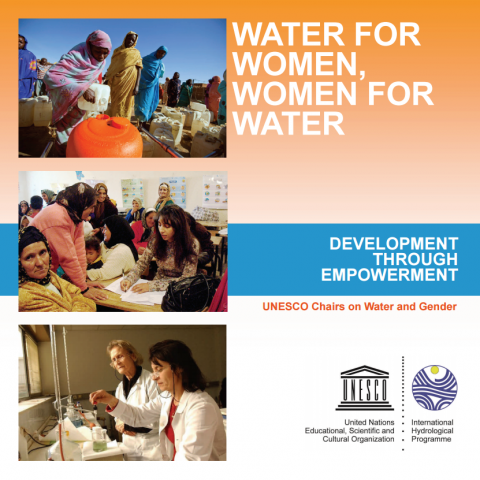 Water for Women, Women for Water: UNESCO's Chairs on Water and Gender Année de publication: 2014 Auteur institutionnel: UNESCO The access to sufficient, safe and affordable water is a basic human right. It calls for governments, institutions, corporations and public and private organizations involved in the water sector to eliminate various forms of discrimination in the access, management and decision‐making processes involving water resources. Within the framework of the UNITWIN/UNESCO Chairs Programme, UNESCO has established five Chairs seeking to promote the engagement of women in sustainable development and water resource management. These Chairs integrate the UNESCO Water Family, consisting of the International Hydrological Programme (IHP), water‐related Centers’, the UNESCO‐IHE Institute for Water Education, the World Water Assessment Programme (WWAP), and a total of 35 UNESCO Chairs and UNITWIN Networks.Located in Brazil, Côte d’Ivoire, Morocco, Togo and the Dominican Republic, the Chairs are based in institutions of research and higher education, working actively to develop human resources, build solutions, and share scientific and practical knowledge. They work in partnership with other academic institutions, as well as public and private organizations. They also pave the way for the research and higher education communities to join forces with UNESCO in an effort to achieve internationally agreed Development Goals and targets. With a high appreciation for the Chairs’ great potential for impact, IHP has strongly encouraged their projects and initiatives, as well their involvement in other focal areas of the Eighth Phase of IHP, in order to strengthen water security, enhance tertiary and technical water education and respond to the needs of communities, with a special focus on women’s needs. With their inception in 2006, the UNESCO Chairs on Water and Gender have built a remarkable combination of knowledge and experience in their area of expertise. Through their actions, the Chairs have successfully fostered cooperation and exchange of information among different institutions of higher education; conducted research and training activities on gender‐related issues, water and natural sciences; established networks between professionals, governmental, non‐governmental and private organizations; created new approaches to deal with the water‐related needs of local communities and succeeded in increasing participation, leadership and the role of women in the water sector.As a general goal, the Chairs strive to enhance women’s capacities through motivation, engagement, development of skills and education. They have been active in organizing learning courses, training sessions, workshops, conferences and a diverse range of research and community projects. The following pages present a detailed overview of the five Chairs and their goals, activities, and initiatives. The United Nations world water development report 2016: water and jobs Année de publication: 2016 Auteur institutionnel: UNESCO Three out of four jobs worldwide rely on water. As such, water shortages and lack of access may limit economic growth in the years to come, according to the World Water Development Report 2016. From its collection, through various uses, to its ultimate return to the natural environment, water is a key factor in the development of job opportunities either directly related to its management (supply, infrastructure, wastewater treatment, etc.) or in economic sectors that are heavily water-dependent such as agriculture, fishing, power, industry and health. In its analysis of the economic impact of access to water, the report cites numerous studies that show a positive correlation between investments in the water sector and economic growth. It also highlights the key role of water in the transition to a green economy. Informe de las Naciones Unidas sobre el desarrollo de los recursos hídricos en el mundo 2016: agua y empleo Année de publication: 2016 Auteur institutionnel: UNESCO Three out of four jobs worldwide rely on water. As such, water shortages and lack of access may limit economic growth in the years to come, according to the World Water Development Report 2016. From its collection, through various uses, to its ultimate return to the natural environment, water is a key factor in the development of job opportunities either directly related to its management (supply, infrastructure, wastewater treatment, etc.) or in economic sectors that are heavily water-dependent such as agriculture, fishing, power, industry and health. In its analysis of the economic impact of access to water, the report cites numerous studies that show a positive correlation between investments in the water sector and economic growth. It also highlights the key role of water in the transition to a green economy.
 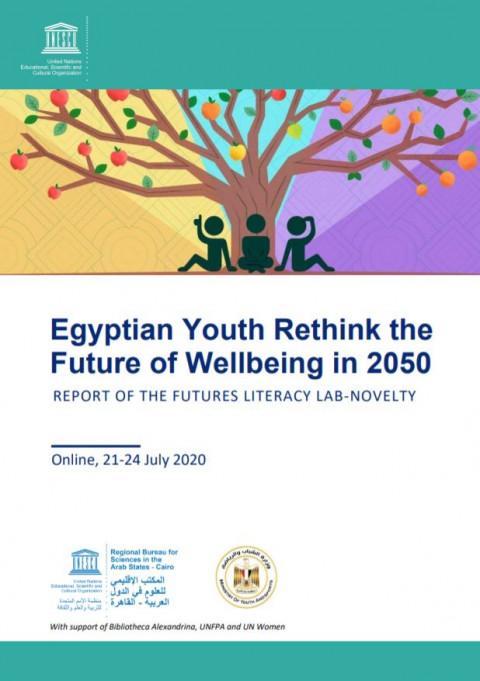 Egyptian Youth Rethink the Future of Wellbeing in 2050: Report of the Futures Literacy Lab-novelty; Online, 21-24 July 2020 Année de publication: 2020 Auteur institutionnel: UNESCO Cairo The UNESCO (Cairo Office and Research, Policy and Foresight Section) and the Egyptian Ministry of Youth and Sport, with support of Bibliotheca Alexandrina, UNFPA and UN Women, organized a Futures Literacy Laboratory - Novelty (FLL-N) entitled “Egyptian Youth Rethink the Future of Wellbeing in 2050”. Held online during 21-24 July 2020, and deploying the latest advances in anticipatory systems thinking and collective intelligence processes, the Lab brought together around 30 persons from across Egypt for 8-hours intensive work spread over a week’s time.Thirty young participants explored the topic of ‘wellbeing’ in Egypt in 2050 using a tool called the Futures Literacy Lab-Novelty (FLL-N). Wellbeing is an open concept that invites many different ways of defining what it means to ‘live well’. The participants engaged in learning-by-doing activities that exercised their imaginations, exploring questions like, how do people in 2050 in Egypt describe ‘wellbeing’? What is daily life like such that people in 2050 believe that they have achieved ‘wellbeing’? By working together to imagine the future this Lab provided an opportunity to better understand the origins of what we imagine, why and how we create the images of the future, and crucially the powerful influence such images have on our fears and hopes, perceptions and choices.