
Ressources
Explorez une large gamme de ressources sur le GCED afin d’approfondir votre compréhension et de renforcer vos activités de recherche, de plaidoyer, d’enseignement et d’apprentissage.
141 résultats trouvés
 MDG #2: Education Année de publication: 2014 Auteur institutionnel: United Nations (UN) Malala Yousafzai was shot and almost killed by Taliban militants in Pakistan on her way home from school, yet her survival only made her a greater global advocate for universal education.
 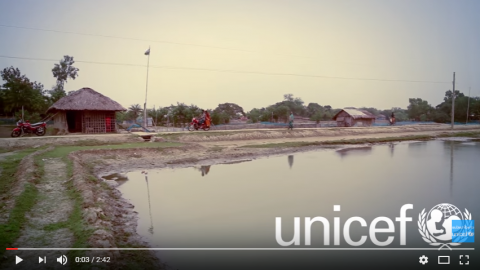 Bridging the education gap in Bangladesh Année de publication: 2015 Auteur institutionnel: United Nations Children's Fund (UNICEF) “If this school didn’t exist, I wouldn’t be here… I would be forced to work,” Mohammed, 13, says. Mohammed attends an ability-based learning school in Shyamnagar, Bangladesh supported by UNICEF’s Let Us Learn initiative. Many children in Bangladesh are out of school because they never enrolled or dropped out, largely due to poverty and child labour.
  School for all: experiences of municipal public schools with inclusion of students with disabilities, ASD, GDD and high ability/giftedness Année de publication: 2017 Auteur: Carla Mauch | Wagner Santana Auteur institutionnel: UNESCO Brasilia This publication is the result of a research project entitled Good Practices in Inclusive Education: the experience of Brazilian municipalities with the inclusion of students with disabilities, Autism Spectrum Disorder (ASD), Global Developmental Disorder (GDD) and of high ability/giftedness students (Boas Práticas em Educação Inclusiva: a experiência de municípios brasileiros na inclusão de alunos com deficiência, transtornos do espectro autista (TEA), transtorno global do desenvolvimento (TGD) e altas habilidades/superdotação). The study set out to identify and analyse the practices of municipal public-school networks in Brazil concerning the educational inclusion of students with disabilities, ASD and GDD, as well as gifted/talented students. The initiative arose out of a will to subsidise and strengthen processes for the formulation and implementation of policies, programmes and projects aligned with the principles of the Convention on the Rights of Persons with Disabilities (United Nations, 2006; Brazil, 2009) and the National Special Education Policy in the Perspective of Inclusive Education (Política Nacional de Educação Especial na Perspectiva da Educação Inclusiva) (Brasil. MEC/SEESP, 2008c). It is important to point out that those normative frameworks bring principles and presuppositions that have been reaffirmed in more recent documents such as the Incheon Declaration (World Education Forum, UNESCO, 2015) and the Sustainable Development Goals (SDG) (United Nations, 2015).
  Asia-Pacific Education 2030: SDG 4 Midterm Review Année de publication: 2024 Auteur institutionnel: UNESCO Institute for Statistics (UIS) | UNESCO Bangkok This publication marks the conclusion of the collaborative national midterm reviews of SDG 4 achievement in the Asia-Pacific. More importantly, it represents the beginning of the final sprint to the 2030 finish line. It also serves as a comprehensive analytical and policymaking tool for all stakeholders in the region to reflect and be better prepared for the second half of the journey. At the midway point of implementing the Education 2030 Agenda, we are observing both challenges and progress in achieving Sustainable Development Goal 4 (SDG 4) in the Asia-Pacific. The region, overall, has made advances in reaching the globally and regionally most important targets under SDG 4, yet it is still far from delivering the common commitment of the Education 2030 Agenda, to ‘ensure inclusive and equitable quality education and promote lifelong learning opportunities for all’. Eight years into implementation, the Asia-Pacific has shown progress, especially in improving access to lower levels of basic education, as well as expanding early childhood education (ECE). Across most subregions of Asia and the Pacific, over 95% of primary school students complete primary education within the expected timeframe, while more than 80% of children one year before the official primary entry age are enrolled in organized early childhood education. However, participation in education is only one part of the puzzle, and the quality of learning, evidenced by limited data for the Asia-Pacific region on learning outcomes, remains concerning. More than half of students in Eastern and South-Eastern Asia do not reach the minimum proficiency level in mathematics at the end of lower secondary education. Overall and from a regional perspective, with priorities having accelerated in ECE, primary education reaching universal participation, and higher education being consistently regarded as prestigious to accomplish, secondary education is currently the weakest link apart from the chronically undervalued technical vocational education and training path. Fulfilling our commitment to the Education 2030 Agenda and leaving no one behind is not an easy endeavour and we need everyone on board in this unprecedented, yet necessary feat. This publication is meant to facilitate taking stock of the current situation and accelerate focused advances on the most relevant education topics for the Asia-Pacific region.
 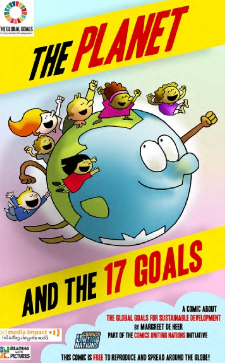 The Planet and the 17 Goals Auteur: Margreet De Heer Auteur institutionnel: United Nations Children's Fund (UNICEF) UNICEF has teamed up with the Comics UnitingNations initiative to use the creative and exciting medium of comics to bring the messages of sustainable development to comics fans globally! Comics have been developed by world renown illustrators, writers and comics developers from around the world.Dutch illustrator Margreet de Heer has lent her talents to the Comics United Nations project to help inform children and youth about the new global goals.
 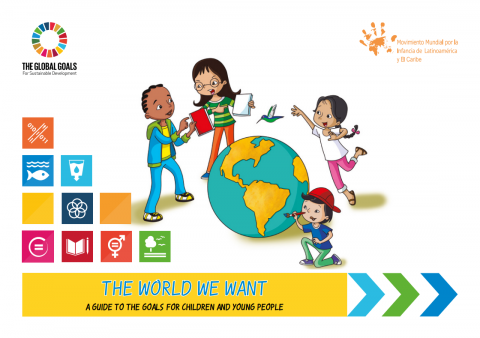 The World We Want: A Guide to the Goals for Children and Young People Année de publication: 2015 Auteur: Dora Bardales | Paola Arenas Auteur institutionnel: Global Movement for Children of Latin America and Caribbean | United Nations Children's Fund (UNICEF) The purpose of this guide is to help children and young people understand the Sustainable Development Goals, how they impact their life and what they can do every day to help their government achieve the Goals.
  The Road to the SDGs: A discussion with students Année de publication: 2015 Auteur institutionnel: United Nations Children's Fund (UNICEF) Animated video to help children learn about important concepts for people and planet as covered in the Sustainable Development Goals (SDGs) Le chemin vers les objectifs de developpement durable Année de publication: 2015 Auteur institutionnel: United Nations Children's Fund (UNICEF) Animated video to help children learn about important concepts for people and planet as covered in the Sustainable Development Goals (SDGs) El camino hacia los Objetivos de Desarrollo Sostenible Année de publication: 2015 Auteur institutionnel: United Nations Children's Fund (UNICEF) Animated video to help children learn about important concepts for people and planet as covered in the Sustainable Development Goals (SDGs)
 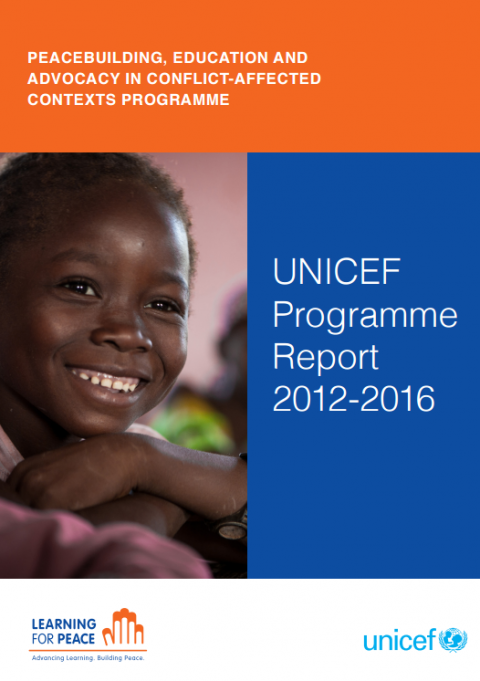 Peacebuilding, education and advocacy in conflict-affected contexts programme; UNICEF Programme Report 2012-2016 Année de publication: 2016 Auteur institutionnel: United Nations Children's Fund (UNICEF) UNICEF’s Programme Report 2012–2016 is organized into two parts. Part 1 provides evidence of what works and does not work in peacebuilding efforts, situating the Learning for Peace programme as a case study within the larger global discussion around peace and security. Part 2 accounts for the activities implemented and results emerging from the programme against its results framework and financial input, and includes a description of support for gender-sensitive, responsive and transformative programmatic approaches.