
Ressources
Explorez une large gamme de ressources sur le GCED afin d’approfondir votre compréhension et de renforcer vos activités de recherche, de plaidoyer, d’enseignement et d’apprentissage.
23 résultats trouvés
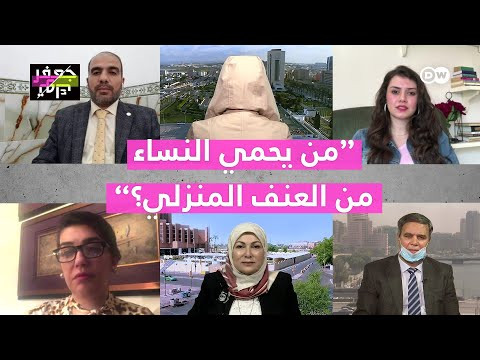 Domestic Violence Escalated in the Time of Corona ... Who Protects Women? Année de publication: 2020 Auteur: Jaafar Abdul Karim Auteur institutionnel: DW Jaafar Talk A program of DW TV broadcasting from Berlin. The program talks about the physical violence experienced by some women in the Arab world during the time of the new Corona virus. The program is characterized by its review of multiple cases of violence during quarantine, and seeks to discuss the causes and solutions to this issue. تصاعد العنف المنزلي في زمن كورونا... من يحمي النساء؟ Année de publication: 2020 Auteur: Jaafar Abdul Karim Auteur institutionnel: DW Jaafar Talk أحد برامج تلفزيون DW والذي يبث من برلين. يتحدث البرنامج عن العنف الجسدي الذي تتعرض له بعض النساء في الوطن العربي في زمن فيروس كورونا المستجد. يتميز البرنامج باستعراضه لحالات متعددة تعرضت للعنف وقت الحجر الصحي، ويسعى لمناقشة الاسباب والحلول لهذه القضية.
  Policy Brief: The Impact of Covid-19 on Women Année de publication: 2020 Auteur institutionnel: United Nations Entity for Gender Equality and the Empowerment of Women (UN Women) | United Nations (UN) The year 2020, marking the twenty-fifth anniversary of the Beijing Platform for Action, was intended to be ground-breaking for gender equality. Instead, with the spread of the COVID-19 pandemic, even the limited gains made in the past decades are at risk of being rolled back. The pandemic is deepening pre-existing inequalities, exposing vulnerabilities in social, political and economic systems which are in turn amplifying the impacts of the pandemic.Across every sphere, from health to the economy, security to social protection, the impacts of COVID-19 are exacerbated for women and girls simply by virtue of their sex.This policy brief by the UN Secretary-General explores how women and girls’ lives are changing in the face of COVID-19, and outlines suggested priority measures to accompany both the immediate response and longer-term recovery efforts.
 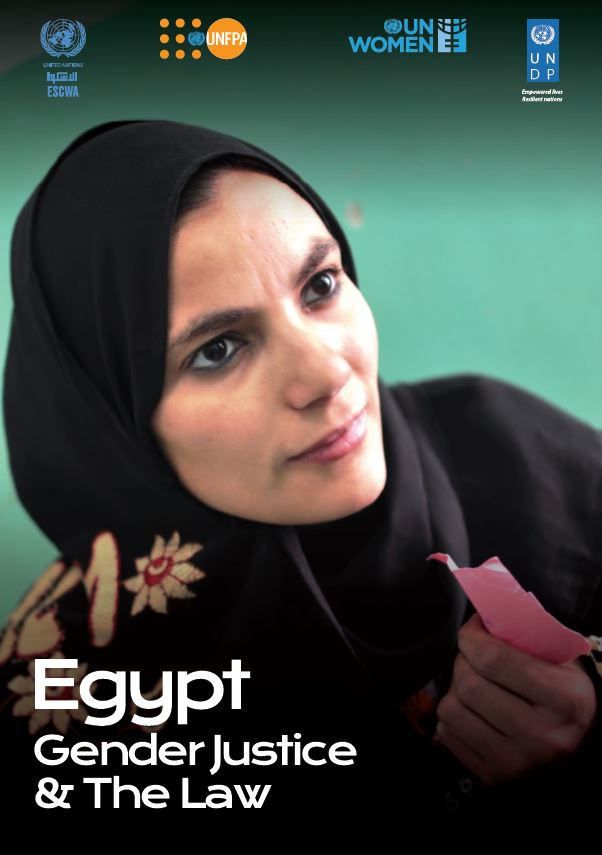 Egypt: Gender Justice and the Law Année de publication: 2018 Auteur institutionnel: United Nations Development Programme (UNDP) The United Nations Development Program, in cooperation with UN Women, the United Nations Population Fund and the Economic and Social Commission for Western Asia (ESCWA), has conducted a study on gender justice and the law. The study aims to provide an integrated assessment of laws and policies affecting gender justice and protection from gender-based violence. Gender in the Arab States Region This file focuses on Egypt. مصر: عدالة النوع الاجتماعي والقانون Année de publication: 2018 Auteur institutionnel: United Nations Development Programme (UNDP) قام برنامج الأمم المتحدة الإنمائي – بالتعاون مع هيئة الأمم المتحدة للمرأة وصندوق الأمم المتحدة للسكان واللجنة الاقتصادية والاجتماعية لغرب آسيا )الإسكوا( بإجراء دراسة حول عدالة النوع الاجتماعي والقانون. وتهدف الدراسة إلى تقديم تقييم متكامل للقوانين والسياسات المؤثرة على عدالة النوع الاجتماعي والحماية من العنف القائم على النوع الاجتماعي في منطقة الدول العربية. هذا الملف يركز على مصر.
 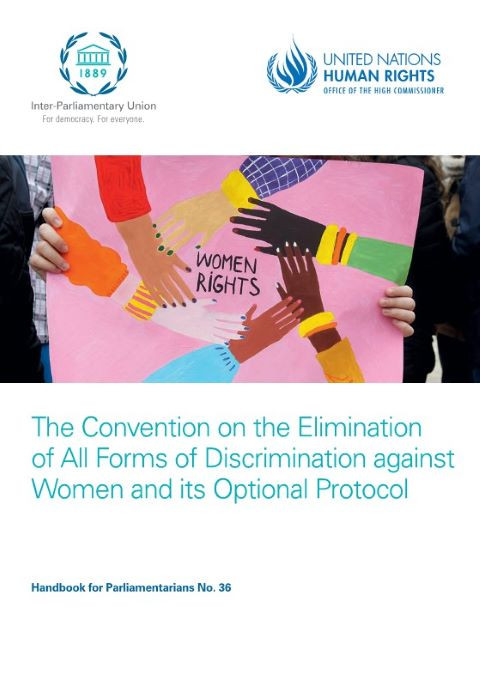 The Convention on the Elimination of All Forms of Discrimination against Women and its Optional Protocol: Handbook for Parliamentarians No. 36; Revised edition Année de publication: 2023 Auteur institutionnel: Inter-Parliamentary Union (IPU) | UN. Office of the United Nations High Commissioner for Human Rights (UN. OHCHR) More than four decades after its adoption, the Convention on the Elimination of All Forms of Discrimination against Women remains an essential and ambitious guide for achieving gender equality across the board – from the family and the classroom to executive boards and political leadership roles. Despite considerable progress since the Convention came into force, no country can yet claim to have fully achieved gender equality. This revised edition of The Convention on the Elimination of All Forms of Discrimination against Women and its Optional Protocol: Handbook for Parliamentarians is a joint collaboration undertaken by the Inter-Parliamentary Union (IPU) and the Office of the United Nations High Commissioner for Human Rights (OHCHR). La Convention sur l’élimination de toutes les formes de discrimination à l’égard des femmes et son Protocole facultatif: Manuel à l'intention des parlementaires; édition révisée Année de publication: 2023 Auteur institutionnel: Inter-Parliamentary Union (IPU) | UN. Office of the United Nations High Commissioner for Human Rights (UN. OHCHR) Plus de quarante ans après son adoption, la Convention sur l’élimination de toutes les formes de discrimination à l’égard des femmes reste un cadre essentiel et ambitieux de promotion de l’égalité des sexes dans tous les domaines – depuis le contexte familial et scolaire jusque dans les conseils d’administration et les sphères dirigeantes de la politique. Si des progrès considérables ont été accomplis depuis l’entrée en vigueur de la Convention, aucun pays ne peut encore prétendre avoir atteint une égalité pleine et entière entre les hommes et les femmes.Au cours des vingt dernières années, une relation très étroite s’est développée entre le Comité pour l’élimination de la discrimination à l’égard des femmes – organe conventionnel chargé de contrôler l’application de la Convention – et l’Union interparlementaire (UIP). Grâce à cette collaboration, des parlementaires du monde entier ont approfondi leur connaissance de la Convention et se sont, en nombre croissant, impliqués dans l’important exercice d’établissement du de rapports périodiques au Comité qui rend compte de la mise en œuvre de la Convention au niveau national. Nombre de parlementaires ont posé des questions au gouvernement, ont proposé ou modifié des lois, mené des opérations de sensibilisation dans leurs circonscriptions et se sont engagés auprès de l’Organisation des Nations Unies pour réduire l’écart entre les promesses de la Convention et la réalité qui est celle des femmes et des filles au quotidien. La Convención sobre la eliminación de todas las formas de discriminación contra la mujer y su Protocolo Facultativo: Manual para Parlamentarios nº 36; edición revisada Année de publication: 2023 Auteur institutionnel: Inter-Parliamentary Union (IPU) | UN. Office of the United Nations High Commissioner for Human Rights (UN. OHCHR) Más de cuatro décadas después de su adopción, la Convención sobre la eliminación de todas las formas de discriminación contra la mujer continúa siendo una guía esencial y ambiciosa para lograr la igualdad de género de forma generalizada, desde la familia y las aulas hasta los consejos ejecutivos y los cargos de liderazgo político. Pese a los considerables avances que se han alcanzado desde la entrada en vigor de la Convención, ningún país puede reivindicar aún haber logrado plenamente la igualdad entre los géneros.Los progresos conseguidos en materia de derechos humanos de la mujer y de igualdad de género están en un grave riesgo de invertirse fruto de diversas crisis, que abarcan desde la pandemia de COVID-19 y la triple crisis planetaria relativa al cambio climático, la contaminación y la pérdida de biodiversidad, hasta los conflictos armados y el desplazamiento, y el alza del autoritarismo. La igualdad de género es un elemento fundamental del desarrollo sostenible y la paz. Las dificultades actuales no se pueden sortear si las mujeres —que constituyen la mitad de la población mundial— quedan excluidas de una participación y un liderazgo plenos y equitativos en los ámbitos económico, político y social. Por lo tanto, la Convención sigue actuando de pilar sólido para desarrollar un mundo más resiliente y sociedades más inclusivas.
 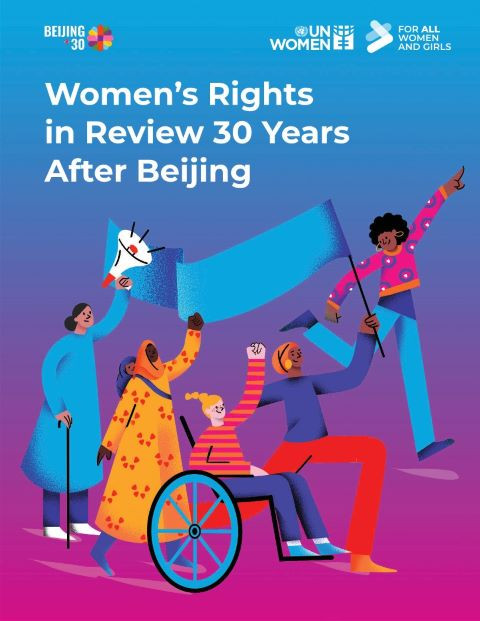 Women’s Rights in Review 30 Years after Beijing Année de publication: 2025 Auteur institutionnel: United Nations Entity for Gender Equality and the Empowerment of Women (UN Women) In 2025, the world celebrates 30 years of achievement on the Beijing Declaration and Platform for Action, a visionary 1995 plan agreed by 189 governments to achieve the equal rights of all women and girls. The UN Secretary-General’s report on the 30-year review and appraisal of the Beijing Declaration and Platform for Action reflects global, regional, and national reviews of 159 countries, summarizing progress and priorities for further action. It finds that many countries have made strides on gender equality and women’s empowerment, from banning discrimination in employment to adopting gender-responsive climate action plans. Innovation is accelerating progress, and opportunities are opening to scale up proven strategies. Yet gender discrimination remains deeply embedded in all economies and societies, imposing chronic constraints on the rights and hopes of women and girls.
  التمييز على أساس الجنس.. هل المرأة هي الضحية دوماً؟ Année de publication: 2017 Auteur institutionnel: DW TV بعد سنوات طويلة من الصمت أقدمت ممثلات وعارضات أزياء شهيرات على كسر حاجز الخوف وكشفن عن انتهاكات المنتج الشهير هارفي واينستين بحقهن. هذه الفضيحة دفعت بمئات الآلاف من النساء إلى نشر قصصهن المؤلمة في شبكات التواصل. فأين يبدأ التمييز الجنسي؟ وما مدى تفشي هذه الظاهرة في الواقع؟ وهل المرأة هي دائماً الضحية؟ هذه الأسئلة يتم مناقشها في هذا البرنامج.