
Ressources
Explorez une large gamme de ressources sur le GCED afin d’approfondir votre compréhension et de renforcer vos activités de recherche, de plaidoyer, d’enseignement et d’apprentissage.
1,329 résultats trouvés
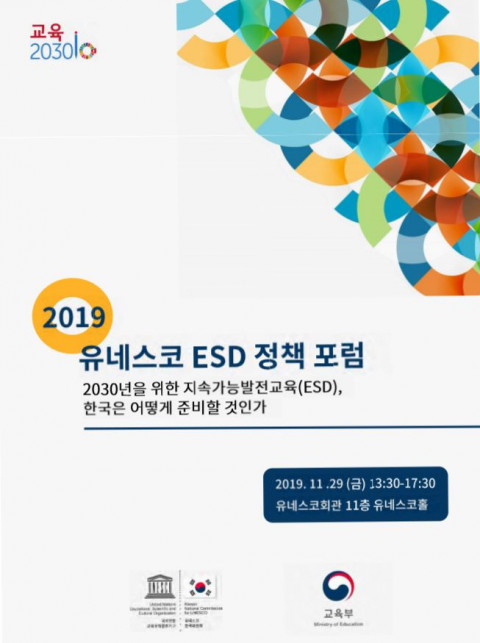 2019 유네스코 ESD 정책 포럼: 2030년을 위한 지속가능발전교육(ESD), 한국은 어떻게 준비할 것인가 Année de publication: 2019 Auteur institutionnel: 대한민국 교육부 | 유네스코한국위원회 2019년 11월에 유네스코한국위원회(ESD한국위원회)에서 주최한 '2019 유네스코 지속가능발전교육 정책 포럼'의 자료집으로 행사개요와 토론자료, 지속가능발전교육에 대한 부록을 수록하고 있다.2030년을 위한 지속가능발전교육(ESD), 한국은 어떻게 준비할 것인가를 주제로 ESD for 2030 체계 수립 및 이행 준비에 대한 국제사회 최신 동향 공유, 국가 이니셔티브 구축 관련 한국 차원의 정책적 준비 및 운영 체계 수립 방안 논의, GAP 참여기관 등 국내 ESD 이행 핵심 주체별 활동 내용 공유 및 제언 등이 주요 내용이다.
 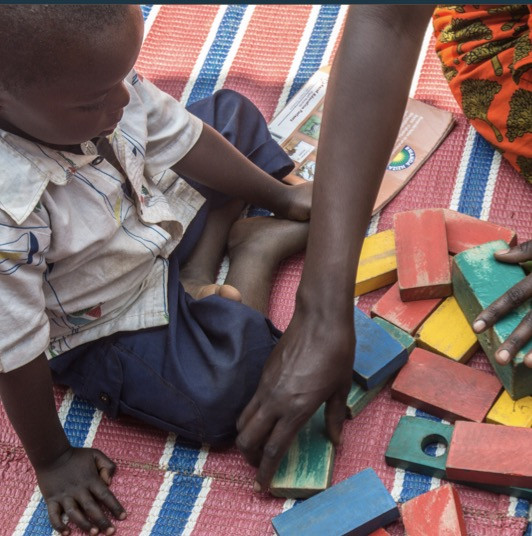 Promoting Climate-Sensitive Early Childhood Care and Education in Emergencies Année de publication: 2023 Auteur institutionnel: Inter-agency Network for Education in Emergencies (INEE) This brief addresses a gap in climate change and education literature: young children who are affected by crises. Climate mitigation and adaptation efforts often exclude early childhood care and education (ECCE), especially in crises and emergencies. Therefore, the brief outlines multisectoral ECCE interventions that can serve as solutions to broader climate change mitigation and adaptation goals. These interventions look at long-term solutions that reduce children’s exposure to climate change risks. The aim of these long-term solutions is to create new climate-adapted ways of thinking, being, and doing by focusing on care – for each other and for the earth – and by building climate resilience among children and their supporting care systems. Promouvoir l’éducation et la protection de la petite enfance en situations d’urgence sensibles au climat Année de publication: 2023 Auteur institutionnel: Inter-agency Network for Education in Emergencies (INEE) Ce document est destiné au secteur de l’éducation en situations d’urgence, mais il est pertinent pour toutes celles et ceux qui s’intéressent aux questions relatives aux enfants, car le changement climatique affecte le développement de l’enfant dans tous les contextes. Les approches présentées dans ce document peuvent aider les systèmes éducatifs dans des contextes non urgents à être mieux préparés et résilients face au climat. C’est pourquoi ce document décrit les interventions multisectorielles en matière d’EPPE qui peuvent servir de solutions à des objectifs plus larges d’atténuation du changement climatique et d’adaptation au changement climatique. Ces actions visent à trouver des solutions à long terme pour réduire l’exposition des enfants aux risques liés au changement climatique. L’objectif de ces solutions à long terme est de créer de nouvelles façons de penser, d’être et d’agir adaptées au climat, en se concentrant sur l’attention portée aux autres et à la Terre, et en renforçant la résilience climatique des enfants et des systèmes de prise en charge qui les soutiennent. تعزيز الرعاية والتعليم للطفولة المبكرة للتجاوب مع التغيرات المناخية في حالات الطوارئ Année de publication: 2023 Auteur institutionnel: Inter-agency Network for Education in Emergencies (INEE) يتناول هذا الملخص فجوة في أدبيات تغير المناخ والتعليم: الأطفال الصغار المتأثرون بالأزمات. غالبًا ما تستبعد جهود التخفيف من آثار المناخ والتكيف معه رعاية الطفولة المبكرة والتعليم، لا سيما في الأزمات وحالات الطوارئ. لذلك، يحدد الملخص التدخلات متعددة القطاعات في مجال رعاية وتعليم الطفولة المبكرة التي يمكن أن تكون بمكانة حلول لأهداف أوسع للتخفيف من تغير المناخ والتكيف معه. يبحث هذا الملخص في الحلول طويلة الأجل التي تقلل تعرض الأطفال لأخطار تغير المناخ. ويهدف هذا بدوره إلى إنشاء طرق جديدة متكيفة مع المناخ للتفكير والوجود والعمل من خلال التركيز على الرعاية - لبعضنا البعض وللأرض -،ومن خلال ناءي المرونة المناخية بين الأطفال وأنظمة الرعاية الداعمة لهم. يتناول هذا الملخص فجوة في أدبيات تغير المناخ والتعليم: الأطفال الصغار المتأثرون بالأزمات. غالبًا ما تستبعد جهود التخفيف من آثار المناخ والتكيف معه رعاية الطفولة المبكرة والتعليم، لا سيما في الأزمات وحالات الطوارئ. لذلك، يحدد الملخص التدخلات متعددة القطاعات في مجال رعاية وتعليم الطفولة المبكرة التي يمكن أن تكون بمكانة حلول لأهداف أوسع للتخفيف من تغير المناخ والتكيف معه. يبحث هذا الملخص في الحلول طويلة الأجل التي تقلل تعرض الأطفال لأخطار تغير المناخ. ويهدف هذا بدوره إلى إنشاء طرق جديدة متكيفة مع المناخ للتفكير والوجود والعمل من خلال التركيز على الرعاية - لبعضنا البعض وللأرض -،ومن خلال ناءي المرونة المناخية بين الأطفال وأنظمة الرعاية الداعمة لهم.
  Curriculum development and review for democratic citizenship and human rights education Année de publication: 2015 Auteur: Felisa Tibbitts Auteur institutionnel: Council of Europe Education for democratic citizenship and human rights education (EDC/HRE) are educational areas that contribute fundamentally to our ability to live together in communities, in countries and as neighbours across national borders. They also help to enable a flourishing global community. The wider aim of EDC/HRE is the establishment of sustainable and participative forms of democracy based on respect for human rights and good governance. As such, EDC/HRE is a public good and an ongoing investment for producing societies characterised by human rights principles such as non-discrimination, inclusion and participation, and the rule of law. The central purpose of this resource is to support the development of education policies and curricula in schools that support and promote young people’s participation in democratic life. As such, EDC/HRE is inevitably in an ongoing state of development and review. This resource aims to support the work of education leaders and curriculum developers in integrating EDC/HRE within curriculum systems and to encourage the engagement of stakeholders in supporting such efforts. Élaboration et examen d'un curriculum pour la citoyenneté démocratique et l'éducation aux droits de l'homme Année de publication: 2015 Auteur: Felisa Tibbitts Auteur institutionnel: Conseil de l'Europe La plupart des jeunes grandissent en apprenant les leçons de vie des soins, de la solidarité, de la responsabilité et de la justice en s'engageant quotidiennement auprès des familles, des amis, des écoles et des institutions communautaires. L'éducation à la citoyenneté démocratique et l'éducation aux droits de l'homme (EDC / EDH) sont des domaines éducatifs qui contribuent fondamentalement à notre capacité à vivre ensemble dans les communautés, dans les pays et comme voisins à travers les frontières nationales. Ils aident également à favoriser une communauté mondiale florissante. L'objectif plus large d'EDC / EDH est l'instauration de formes de démocratie durables et participatives fondées sur le respect des droits de l'homme et la bonne gouvernance. À ce titre, l'EDC / EDH est un bien public et un investissement permanent pour des sociétés productrices caractérisées par des principes relatifs aux droits de l'homme tels que la non-discrimination, l'inclusion et la participation et l'état de droit. L'objectif central de cette ressource est d'appuyer l'élaboration de politiques et de programmes éducatifs dans les écoles qui soutiennent et encouragent la participation des jeunes à la vie démocratique. À ce titre, EDC / EDH est inévitablement dans un état de développement et d'examen permanent. Cette ressource vise à appuyer le travail des leaders de l'éducation et des concepteurs de programmes d'études pour intégrer EDC / EDH dans les systèmes curriculaires et encourager l'engagement des parties prenantes à soutenir ces efforts. Разработка и пересмотр учебных программ по воспитанию демократической гражданственности и образованию в области прав человека Année de publication: 2015 Auteur: Felisa Tibbitts Auteur institutionnel: Council of Europe Воспитание демократической гражданственности и образование в об-ласти прав человека необходимы для построения мирного, устойчивого и инклюзивного общеcтва, основанного на уважении прав человека каждой личности. Повышение качества образовательной политики в сфере воспитания демократической гражданственности и образования в области прав человека является важнейшим направлением работы Совета Европы, Организации Объединенных Наций по вопросам образования, науки и культуры, Бюро по демократическим институтам и правам человека Организации по бе-зопасности и сотрудничеству в Европе и Организации американских государств. Эти организации совместно подготовили настоящую публикацию, с тем чтобы оказать поддержку государствам-членам и государствам-участникам в выпол-нении ими своих обязательств, касающихся содействия образованию в области прав человека и демократической гражданственности и улучшения доступа к качественному образованию для всех лиц. Помимо этого, данная публикация является вкладом в глобальную инициативу Генерального секретаря ООН Пан Ги Муна «Образование прежде всего», начатую в 2012 году. Эта инициатива определила содействие воспитанию глобальной гражданственности как один из трех важнейших приоритетов образования, тем самым создав дополнитель-ный стимул для действий в данной области и послав ясный сигнал о поддержке работникам сферы образования во всем мире.
  UNESCO Framework for Culture and Arts Education: Implementation Guidance Année de publication: 2025 Auteur institutionnel: UNESCO Culture and the arts are integral to inclusive, equitable and quality education. They nurture creativity, critical thinking, and respect for cultural diversity, empowering learners to engage meaningfully with the world and to build more just, sustainable and peaceful societies. Yet, countries have not systematically incorporated culture and arts education across all levels of education. This Implementation guidance for the UNESCO Framework for Culture and Arts Education is a collective invitation to reimagine education by placing culture and the arts at its heart and advancing a transformative vision of education for all.Through a holistic approach, the Guidance supports the integration of culture and the arts across formal, non-formal and informal education, throughout life. It offers practical orientations to help Member States fulfil the commitment enshrined in the UNESCO Framework for Culture and Arts Education, adopted by Ministers of Culture and Education in 2024. With a global perspective, this Guidance will equip policy-makers, educators and cultural actors in developing inclusive, context-relevant policies, curricula and learning environments.The Guidance is a milestone on a shared journey, inviting countries to harness their cultural strengths, respond to emerging challenges, and work together towards a more inclusive education for all.
 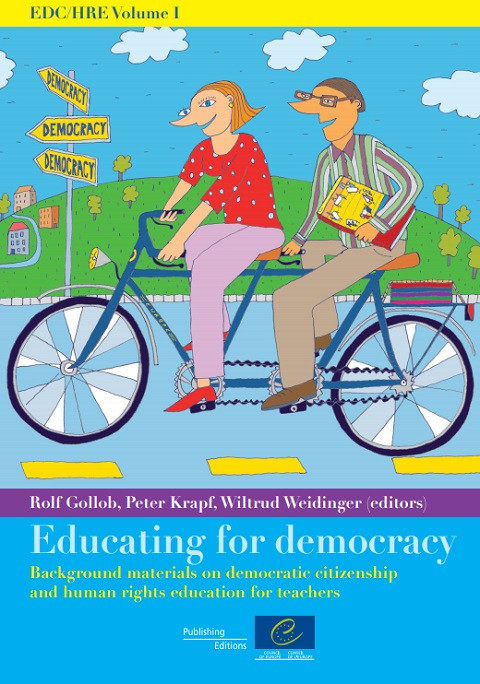 Educating for Democracy: Background Materials on Democratic Citizenship and Human Rights Education for Teachers Année de publication: 2010 Auteur: Rolf Gollob | Peter Krapf | Ólöf Ólafsdóttir | Wiltrud Weidinger Auteur institutionnel: Council of Europe The objective of this manual is to support teachers and practitioners in Education for Democratic Citizenship and Human Rights Education (EDC/HRE). It addresses key questions about EDC and HRE, including competences for democratic citizenship, the objectives and basic principles of EDC/HRE, and a whole school approach to education for democracy and human rights. The manual consists of three parts. Part I outlines the basic principles of EDC/HRE as far as they are helpful and meaningful for the practitioner. Part II gives guidelines and tools to design, support and assess the students’ processes of constructivist and interactive learning. Part III provides toolboxes for teachers and students in EDC/HRE. The other volumes in this series offer concrete teaching models and materials in EDC/HRE for pupils from elementary to upper secondary level. Eduquer à la démocratie: Matériaux de base sur l’éducation à la citoyenneté démocratique et aux droits de l’homme pour les enseignants Année de publication: 2010 Auteur: Rolf Gollob | Peter Krapf | Ólöf Ólafsdóttir | Wiltrud Weidinger Auteur institutionnel: Conseil de l'Europe Ce manuel a pour objectif d’accompagner les enseignants et les professionnels dans les domaines de l’éducation à la citoyenneté démocratique et de l’éducation aux droits de l’homme (ECD/EDH). Il aborde des questions clés au sujet de l’ECD et de l’EDH, y compris les compétences nécessaires à une citoyenneté démocratique, les objectifs et les principes fondamentaux de l’ECD/EDH ainsi qu’une approche scolaire globale de l’éducation à la démocratie et aux droits de l’homme. L’ouvrage est constitué de trois parties. La partie I expose les principes fondamentaux de l’ECD/EDH, dont l’utilité et l’intérêt pour les professionnels sont incontestables. La partie II présente des orientations et des outils pour concevoir, accompagner et évaluer les processus d’apprentissage constructif des élèves. La partie III contient des boîtes à outils, respectivement pour les enseignants et les élèves, dans le domaine de l’ECD/EDH. Les autres volumes de cette collection proposent des modèles ainsi que des supports d’apprentissage concrets pour l’ECD/EDH destinés aux élèves depuis le niveau élémentaire jusqu’au deuxième cycle du secondaire.