
Ressources
Explorez une large gamme de ressources sur le GCED afin d’approfondir votre compréhension et de renforcer vos activités de recherche, de plaidoyer, d’enseignement et d’apprentissage.
1,329 résultats trouvés
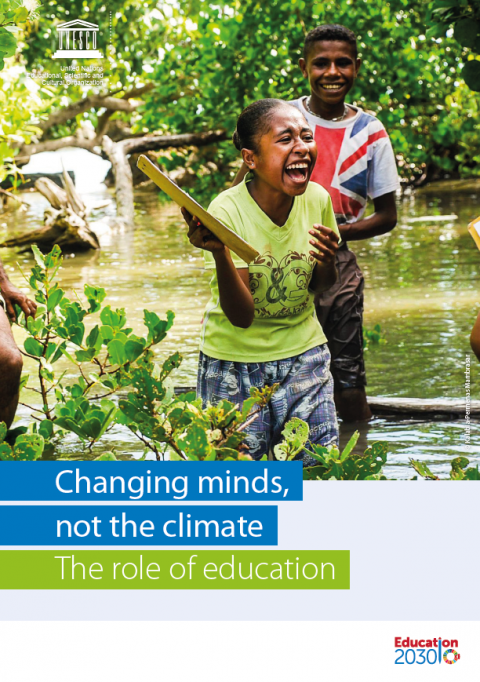 Changeons les esprits, pas le climat: le rôle de l’éducation Année de publication: 2017 Auteur institutionnel: UNESCO L’éducation est fondamentale afin de préparer les sociétés aux défis mondiaux que pose le changement climatique. Elle offre aux individus, aux communautés et au monde en général la compréhension, les compétences et les attitudes nécessaires pour construire des sociétés à faibles émissions, plus vertes et résilientes. L’éducation au développement durable (EDD) n’est pas un « supplément » mais plutôt une partie intégrante de toute stratégie visant à lutter contre les effets du changement climatique, à mettre en pratique un accord mondial et à atteindre les objectifs de développement durable (ODD). Elle permet de sensibiliser les personnes, favorise une prise de décision éclairée et donc le changement des comportements des individus. Cambiemos las mentalidades, no el clima: la función de la educación Année de publication: 2017 Auteur institutionnel: UNESCO La educación es la herramienta más eficaz para preparar a las sociedades para los desafíos globales que plantea el cambio climático, ya que proporciona a las personas, a las comunidades y al mundo en general los conocimientos, las competencias y las actitudes que se necesitan para construir unas sociedades sostenibles, de bajas emisiones y resilientes al cambio climático.La educación para el desarrollo sostenible (EDS) no es un “extra”, sino un componente esencial de cualquier estrategia para combatir los efectos del cambio climático, poner en práctica un acuerdo mundial y alcanzar los Objetivos de Desarrollo Sostenible (ODS). La EDS contribuye a concienciar y cambiar comportamientos y actitudes y permite a las personas tomar decisiones informadas sobre su vida.
  World Youth Report: Youth and the 2030 Agenda for Sustainable Development Année de publication: 2018 Auteur institutionnel: United Nations (UN) The World Youth Report on “Youth and the 2030 Agenda for Sustainable Development”, prepared by the United Nations Department of Economic and Social Affairs (UN DESA), examines the mutually supportive roles of the new agenda and current youth development efforts. The report provides insight into the role of young people in sustainable development in the context of the implementation of the 2030 Agenda for Sustainable Development and related frameworks, in particular, the Addis Ababa Action Agenda of the Third International Conference on Financing for Development and the World Programme of Action for Youth.The Report considers the role the 2030 Agenda can play in enhancing youth development efforts and examines how evidence-based youth policies can help accelerate youth-related objectives. It explores the critical role young people have in the implementation of sustainable development efforts at all levels. 세계청소년보고서: 청소년과 2030 지속가능발전 의제 Année de publication: 2018 Auteur institutionnel: United Nations (UN) UN 경제사회국이 작성한 『세계청소년보고서: 청소년과 2030 지속가능발전 의제(World Youth Report: Youth and the 2030 Agenda for Sustainable Development)』는 청소년 개발에 대한 현재의 노력과 새로운 의제 간의 상호 보완적인 역할을 다루고 있습니다. UN 경제사회국은 경제, 사회 및 환경 분야 글로벌 정책과 국가적 실천 사이의 연결고리를 제공하고 있습니다. 2년마다 발간되는 본 보고서는 회원국 및 기타 이해관계자들이 청소년 문제 해결에 대한 진전 사항을 파악하고, 정책과 현실의 격차를 평가하고, 가능한 정책 대안을 마련하기 위한 정보와 분석 결과를 제공합니다.본 보고서는 2030 지속가능발전 의제 및 관련 프레임워크 이행의 맥락, 특히 제3차 개발재원총회 아디스아바바 행동의제 (Ababa Action Agenda of the Third International Conference on Financing for Development) 및 세계청소년행동계획 (World Programme of Action for Youth) 의 이행과 관련하여 지속가능발전을 위한 청소년의 역할에 대한 통찰을 제시합니다. 2030 의제는 청소년개발 노력을 증진하고 증거기반(evidence ― based) 청소년정책이 청소년 목표 증진에 이바지하는 바를 검토하는 데 있어 중요한 역할을 할 수 있습니다. 본 보고서는 이를 통해 모든 수준에서의 지속가능발전 이행에 있어 결정적으로 중요한 청소년의 역할을 살펴봅니다.
  Literacy for Empowerment and Transformation: Report of the Secretary-General Année de publication: 2024 Auteur institutionnel: United Nations | UNESCO The present report is submitted in fulfilment of the request made by the General Assembly, in its resolution 77/192, that the Secretary-General, in cooperation with the Director General of the United Nations Educational, Scientific and Cultural Organization (UNESCO), submit to the Assembly at its seventy-ninth session a report on the implementation of the resolution. The Assembly also invited UNESCO to continue its mandated role to lead and coordinate the Education 2030 Agenda and requested UNESCO to continue its coordinating and catalysing role through the implementation of the strategy of the Global Alliance for Liter acy and by continuing to provide support to Member States. The present report provides an overview of the global literacy landscape, highlighting progress, key challenges and recommendations for further promotion of literacy as part of the 2030 Agenda for Sustainable Development, the follow-up to the Transforming Education Summit and beyond.
 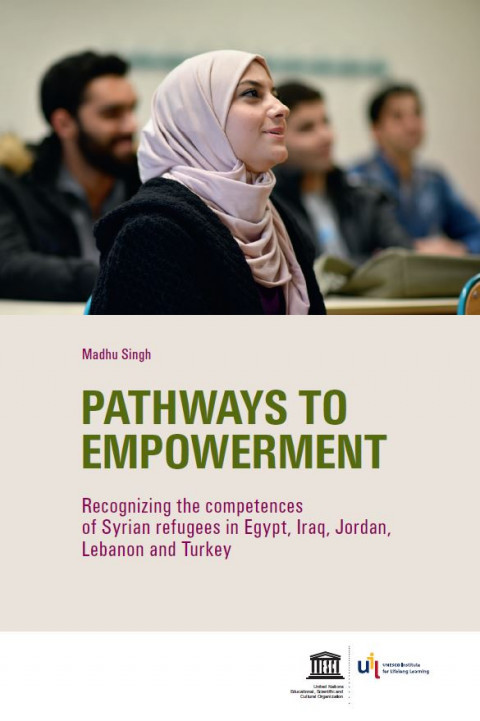 Pathways to Empowerment: Recognizing the Competences of Syrian Refugees in Egypt, Iraq, Jordan, Lebanon and Turkey Année de publication: 2018 Auteur: Madhu Singh Auteur institutionnel: UNESCO Institute for Lifelong Learning (UIL) For Syrian refugees living in Egypt, Iraq, Jordan, Lebanon and Turkey, recognition is a transformative mechanism that can help them enter or re-enter education, integrate into the world of work and participate fully in their host communities. However, while policy-makers in the region have prioritized the recognition, validation and accreditation of non-formal and informal learning, it remains a major challenge to develop systems that do this effectively. Pathways to Empowerment lays the essential groundwork for such a system, urging governments to develop comprehensive national strategies rather than ad hoc projects to recognize the competences of Syrian refugees. Its recommendations will contribute to dialogue between national authorities and social partners, and guide policy actions and RVA practices both in the region and in other parts of the world where recognition of refugees’ learning is a critical issue.
 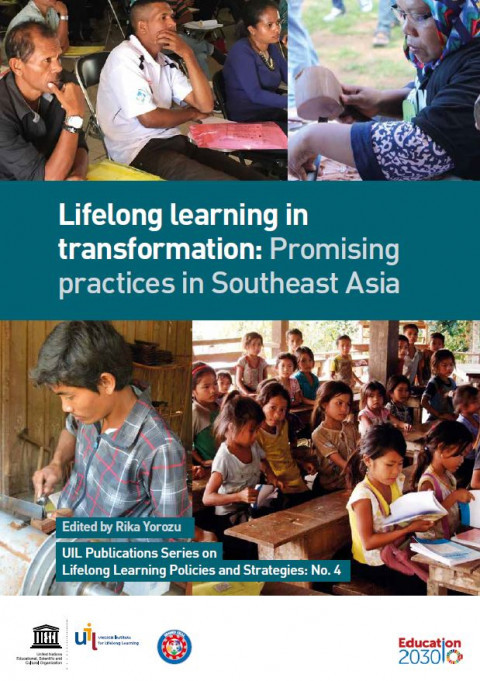 Lifelong Learning in Transformation: Promising Practices in Southeast Asia Année de publication: 2017 Auteur: Rika Yorozu Auteur institutionnel: UNESCO Institute for Lifelong Learning (UIL) This report is an outcome of a project on building a lifelong learning agenda in Southeast Asian countries, which aims to address the region’s remaining educational challenges in ensuring ‘inclusive and equitable quality education and promot[ing] lifelong learning opportunities for all’ (Goal 4 of the 2030 Agenda for Sustainable Development). By sharing promising policies and practices in implementing integrated lifelong learning from different perspectives, countries can learn from one another and move their visions for lifelong learning fully into practice. The publication documents a variety of promising practices from 11 countries, focusing particularly on the features critical to the promotion of lifelong learning for all; namely, inclusive and gender-responsive teaching and learning practices, recognition of learning outcomes from non-formal and informal learning, collaboration between social and economic development sectors and coherent national government policies and strategies. The report comprises three main sections: a reflection on lifelong learning in international and national documents, a collection of good practice drawn from their national reports, and a set of recommendations for policies and programmes promoting lifelong learning. It is hoped that these recommendations will stimulate discussion and new developments, in both policy and practice, in the region.
 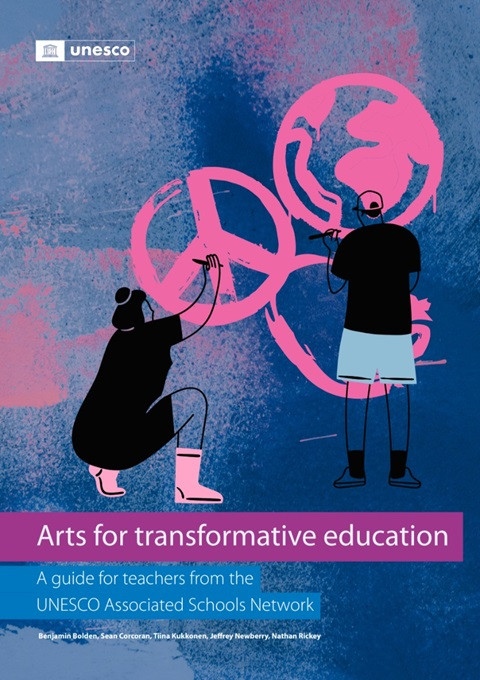 Arts for Transformative Education: A Guide for Teachers from the UNESCO Associated Schools Network Année de publication: 2024 Auteur: Benjamin Bolden | Sean Corcoran | Tiina Kukkonen | Jeffrey Newberry | Nathan Rickey Auteur institutionnel: UNESCO | Canadian Commission for UNESCO UNESCO’s vision of transformative education involves building learners’ capacities and empowering them to take action for a more peaceful and sustainable world. The arts offer tremendous potential for supporting learning that transforms individuals and communities. To fully realize that potential, teachers need to structure and support educational experiences that optimize what students will take away from them. This guide presents the research-informed Arts for Transformative Education model, a pioneering approach and thinking tool for teachers. The model was developed from data provided by over 600 teachers of the UNESCO Associated Schools network from 39 countries. The publication presents Learning Experience Descriptions and Snapshots illustrating how the model functions in real-world projects from around the globe, as well as Guidelines for Teachers outlining a step-by-step process for activating arts learning to empower transformative education.
  Greening Communities Guidance: Lifelong Learning for Climate and Sustainability Action Année de publication: 2025 Auteur institutionnel: UNESCO Institute for Lifelong Learning (UIL) | World Organization of the Scout Movement Climate change poses a serious threat to communities around the world, compelling us to protect vulnerable lives and shape resilient futures. By nurturing lifelong learning and empowering local initiatives, communities can drive transformative change – amplifying local efforts into global impact.Green communities are municipalities of any size that embrace lifelong learning to empower individuals to take meaningful climate and sustainability action. This is achieved by extending climate education beyond the classroom and offering learning opportunities in non-formal and informal settings – rooted in and responsive to local culture and context. By engaging learners of all ages across a variety of learning environments, residents of green communities are equipped to take informed, proactive and responsible action for the climate and environment, contributing to more sustainable living.The sections of this document provide an overview of the diverse learners, learning spaces and educational approaches that can contribute to greening communities. It outlines practical steps for developing a comprehensive green learning strategy and action plan that mobilizes learners of all generations in climate and sustainability efforts.Municipal governments, along with a wide range of local stakeholders and change agents in both urban and rural areas, are invited to use this guidance to foster green communities through a lifelong learning lens.Together, let’s green our communities!
  SDG4 - 교육 2030: 포용성과 교육에 관한 연구 Année de publication: 2019 Auteur: 임후남 | 이대식 | 류방란 | 박성호 | 김혜자 | 윤선애 | 조혜승 Auteur institutionnel: 한국교육개발원 이 연구는 한국 교육의 포용성 실태 및 수준을 분석하고, 포용적 교육의 목표를 실현하기 위해 정책적 개선이 필요한 과제가 무엇인지를 제안하는 것을 목적으로 하였다.포용적 교육 관련 이론들을 탐구하는 한편, 포용적 교육의 개념과 요소, 유사 개념들에 대한 논의를 고찰하였다. 논의를 종합하면, 포용적 교육은 모든 학생이 처한 상황과 조건, 특성과 요구를 반영한 동등한 양질의 교육 기회와 권리를 보장하고, 이를 통해 공동체의 지속가능한 발전 또한 보장하는 교육을 지향한다. 이는 기존의 공정성 및 형평성 교육을 계승한 것이며, 그 대상 및 가치와 지향을 확장한 것이다. 포용적 교육은 “누구도 소외(배제)되지 않고, 다양한 개인의 요구와 특성(차이)을 고려한 유연한 교육과정을 통해 성, 민족(인종), 경제력 등에 따라 차별받지 않고, 공동체의 지속가능한 발전과 웰빙에 기여할 수 있는 개인으로 성장할 수 있도록 하는 교육”이라고 정의될 수 있다. 포용적 교육은 취약계층 중심의 정책목표를 전체(누구나)로 확대하고, 교육의 접근, 참여를 넘어서 성취의 격차와 차별의 철폐를 강조한다.