
Ressources
Explorez une large gamme de ressources sur le GCED afin d’approfondir votre compréhension et de renforcer vos activités de recherche, de plaidoyer, d’enseignement et d’apprentissage.
1,329 résultats trouvés
 [Résumé] Repenser nos futurs ensemble: Un nouveau contrat social pour l’éducation Année de publication: 2021 Auteur institutionnel: International Commission on the Futures of Education | Organisation des Nations Unies pour l'éducation, la science et la culture (UNESCO) Devant la menace qui pèse sur les futurs communs de l’humanité et de la planète Terre, il est devenu urgent d’entreprendre une action commune pour changer de cap et repenser nos futurs. Des responsabilités nouvelles, pressantes et importantes incombent notamment à l’éducation, un secteur qui a été et continue d’être un puissant vecteur de changement positif. Publié par la Commission internationale sur Les futurs de l’éducation, le présent rapport est le résultat d’une consultation mondiale qui a mobilisé près d’un million de personnes. Il invite les gouvernements, les institutions, les organisations et les citoyens à travers le monde à élaborer un nouveau contrat social pour l’éducation qui nous aidera à construire, ensemble et pour tous, des futurs pacifiques, justes et durables. À travers un examen approfondi de différentes questions ayant trait aux technologies numériques, au changement climatique, au recul démocratique, à la polarisation sociétale et à l’avenir incertain du marché du travail, ce rapport entend non seulement lancer un débat ouvert sur l’éducation pour susciter la réflexion, mais aussi inciter chacun d’entre nous à agir ; son argument central étant que grâce à des millions d’actes individuels et collectifs de courage, de leadership, de résistance, de créativité et d’intérêt pour autrui, nous parviendrons à changer de cap et à transformer l’éducation pour favoriser l’avènement de futurs justes, équitables et durables. [Резюм] Совместное переосмысление наших перспектив: Новый социальный договор в интересах образования Année de publication: 2021 Auteur institutionnel: International Commission on the Futures of Education | Организация Объединенных Наций по вопросам образования, науки и культуры (UNESCO) Все человечество и планета Земля находятся под угрозой. Для изменения ситуации и переосмысления будущего необходимы безотлагательные действия, предпринятые каждым из нас. Перед образованием, которое уже давно признано влиятельным фактором позитивных изменений, стоит новая, срочная и важная задача. Данный доклад Международной комиссии по Перспективам образования, основанный на глобальном процессе консультаций с участием около миллиона человек, предлагает правительствам, учреждениям, организациям и гражданам всего мира заключить новый общественный договор в области образования, который поможет нам построить мирные отношения, создавая справедливое и устойчивое будущее вместе и для каждого. В докладe подробно рассматриваются цифровые технологии, изменение климата, отсутствие успеха в достижении демократии и поляризация общества, а также неопределенные перспективы трудоустройства. Доклад направлен не только на то, чтобы стимулировать обсуждение о вопросах образования и побудить к размышлениям, но и на то, чтобы призвать каждого из нас к активным действиям. Основная его идея заключается в том, что только через миллионы индивидуальных и коллективных актов мужества, лидерства, сопротивления, творчества и заботы мы сможем изменить курс и преобразить систему образования для построения справедливого, равноправного и устойчивого будущего. [摘要] 一起重新构想我们的未来:为教育打造新的社会契约 Année de publication: 2021 Auteur institutionnel: International Commission on the Futures of Education | 联合国教科文组织 (UNESCO) 人类和地球正受到威胁。我们需要共同采取紧急行动,改变发展方向,重新构 想我们的未来。长期以来,教育都被认为是促进积极变革的强大力量,而现在教育 面临着全新的、紧迫的和重要的任务。“教育的未来”国际委员会的这份报告在约 百万人参与的全球协商进程的基础上,邀请世界各地的政府、机构、组织和公民出 谋划策,为教育缔结一项新的社会契约,齐心协力地建设一个面向所有人的和平、 公正和可持续的未来。 报告深入探讨了数字技术、气候变化、民主滑坡、社会两极分化以及不确定的 工作前景等问题,其目的不仅仅是让每个人参与教育对话,引发思考,而且要鞭策 我们每个人都采取行动。报告认为,只有通过数以百万计的个人和集体,凭借行动 力、领导力、抗压力、创造力和关爱力,我们才能改变发展方向,实现教育转型, 最终建设一个公正、公平和可持续的未来。
  De l’accès à l’autonomisation: Outils opérationnels pour promouvoir l’égalité des genres dans et par l’éducation Année de publication: 2021 Auteur institutionnel: UNESCO Ce guide a été conçu pour renforcer la capacité individuelle et institutionnelle à intégrer de manière efficace l’égalité des genres aux programmes éducatifs. Ce guide a été préparé pour l’ensemble du personnel du Secteur de l’éducation de l’UNESCO, notamment pour celles et ceux travaillant au Siège, dans les bureaux hors Siège/régionaux/multipays et dans les instituts, ainsi que pour les partenaires d’exécution. Ce guide fournit des outils d’orientation et opérationnels pour intégrer efficacement le genre à tous les programmes relatifs à l’éducation. La première partie est une présentation succincte des concepts clés de l’égalité des genres dans et par l’éducation, et un aperçu de la manière dont l’égalité des genres dans l’éducation s’inscrit dans la vision de l’UNESCO et dans les objectifs fixés au niveau international. La deuxième partie fournit des conseils pratiques sur la manière d’intégrer l’égalité des genres aux programmes éducatifs, d’élaborer des programmes transformateurs et, enfin, de suivre et d’évaluer les résultats en matière de genre dans les programmes éducatifs.
 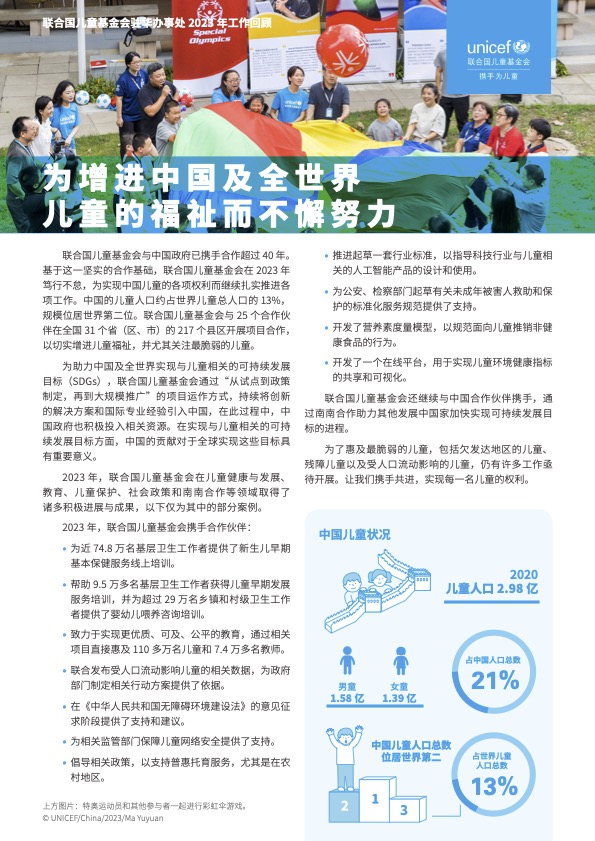 为增进中国及全世界儿童的福祉而不懈努力: 联合国儿童基金会驻华办事处2023年工作回顾 Année de publication: 2024 Auteur institutionnel: 联合国儿童基金会 联合国儿童基金会与中国政府已携手合作超过40年。基于这一坚实的合作基础,联合国儿童基金会在2023年笃行不怠,为实现中国儿童的各项权利而继续扎实推进各项工作。中国的儿童人口约占世界儿童总人口的13%,规模位居世界第二位。联合国儿童基金会与25个合作伙伴在全国31个省(区、市)的217个县区开展项目合作,以切实增进儿童福祉,并尤其关注最脆弱的儿童。为助力中国及全世界实现与儿童相关的可持续发展目标(SDGs),联合国儿童基金会通过“从试点到政策制定,再到大规模推广”的项目运作方式,持续将创新的解决方案和国际专业经验引入中国,在此过程中,中国政府也积极投入相关资源。在实现与儿童相关的可持续发展目标方面,中国的贡献对于全球实现这些目标具有重要意义。2023年,联合国儿童基金会在儿童健康与发展、教育、儿童保护、社会政策和南南合作等领域取得了诸多积极进展与成果,以下仅为其中的部分案例。2023年,联合国儿童基金会携手合作伙伴:为近74.8万名基层卫生工作者提供了新生儿早期基本保健服务线上培训。帮助9.5万多名基层卫生工作者获得儿童早期发展服务培训,并为超过29万名乡镇和村级卫生工作者提供了婴幼儿喂养咨询培训。致力于实现更优质、可及、公平的教育,通过相关项目直接惠及110多万名儿童和7.4万多名教师。联合发布受人口流动影响儿童的相关数据,为政府部门制定相关行动方案提供了依据。在《中华人民共和国无障碍环境建设法》的意见征求阶段提供了支持和建议。为相关监管部门保障儿童网络安全提供了支持。倡导相关政策,以支持普惠托育服务,尤其是在农村地区。推进起草一套行业标准,以指导科技行业与儿童相关的人工智能产品的设计和使用。为公安、检察部门起草有关未成年被害人救助和保护的标准化服务规范提供了支持。开发了营养素度量模型,以规范面向儿童推销非健康食品的行为。开发了一个在线平台,用于实现儿童环境健康指标的共享和可视化。联合国儿童基金会还继续与中国合作伙伴携手,通过南南合作助力其他发展中国家加快实现可持续发展目标的进程。为了惠及最脆弱的儿童,包括欠发达地区的儿童、残障儿童以及受人口流动影响的儿童,仍有许多工作亟待开展。让我们携手共进,实现每一名儿童的权利。
  [요약본] 2023 세계 교육 현황 보고서 요약본: 교육 분야에서의 기술; 누구를 위한 도구인가? Année de publication: 2023 Auteur institutionnel: 유네스코 | 세계교육현황보고서팀 교육 분야에서 기술의 역할은 오랫동안 격렬한 논쟁을 불러일으켜 왔다. 기술은 지식을 민주화할 것인가, 선택된 소수가 정보를 통제함으로써 민주주의를 위협할 것인가? 기술은 무한한 기회를 제공할 것인가, 돌이킬 수 없이 기술에 종속되는 미래로 이끌 것인가? 기술은 공평한 경쟁의 장을 제공할 것인가, 불평등을 악화시킬 것인가? 기술은 아이들을 가르치는 데 사용되어야 할 것인가, 아이들의 발달에 위험 요소가 될 것인가? 이러한 논쟁은 코로나19로 인한 휴교와 생성형 인공지능의 등장으로 더욱 고조되고 있다. 하지만 개발자가 의사결정권자보다 한 발 앞서 있는 경우가 많기 때문에 교육 기술에 대한 연구는 복잡하다. 강력하고 공정한 증거가 부족하다. 사회는 기술을 해결책으로서 선택하기 전에 교육에 대해 올바른 질문을 던지고 있는가? 사회는 기술이 가져다줄 이익을 모색하는 동시에 기술의 위험을 인식하고 있는가 정보통신기술은 소외된 학습자에게 다가가고 더 많은 지식을 매력적이고 저렴한 포맷으로 보급한다는 측면에서 형평성과 포용성을 뒷받침할 잠재력을 갖고 있다. 특정한 상황과 일부 학습 유형에서 기술은 교수 및 학습의 기초 역량을 질적으로 향상시킬 수 있다. 어떤 경우에서든 디지털 역량은 기초 역량 패키지의 일부가 되었다. 또한 디지털 기술은 관리를 지원하고 효율성을 높여 더 많은 양의 교육 데이터를 처리하는 데 도움이 될 수 있다. 동시에 기술은 완전히 해롭지는 않더라도 일부를 배제하거나 일부에게 부적절하거나 부담을 줄 수도 있다. 따라서 정부는 모두를 위한 교육에 공평하게 접근할 수 있도록 적절한 환경을 보장하고, 학습자를 부정적인 영향으로부터 보호하기 위해 기술 사용을 규제하고 교사들을 준비시켜야 한다. 본 보고서는 적절하고 공평하며 측정 가능하고 지속 가능한 증거를 바탕으로 기술을 교육에 도입해야 한다고 권장하고 있다. 다시 말해, 기술 사용은 학습자의 최선의 이익을 고려해야 하며, 교사와의 대면적 상호작용을 보완해야 한다. 기술은 이러한 조건에 따라 사용되는 도구로 인식되어야 한다. [резюме] ВСЕМИРНЫЙ ДОКЛАД ПО МОНИТОРИНГУ ОБРАЗОВАНИЯ РЕЗЮМЕ 2023: Технологии в образовании; НА ЧЬИХ УСЛОВИЯХ? Année de publication: 2023 Auteur institutionnel: UNESCO | Global Education Monitoring Report Team Вопрос о роли технологий в образовании уже давно вызывает бурные дискуссии. Способствуют ли они распространению знаний или же ставят под угрозу доступ к ним, позволяя избранному кругу лиц контролировать информацию? Открывают ли они безграничные возможности или же безвозвратно ведут нас к зависимому от технологий будущему? Уравнивают ли они возможности или же усугубляют неравенство? Следует ли использовать их при воспитании детей младшего возраста или же существуют риски для нормального развития детей? Закрытие школ в связи с пандемией COVID-19 и развитие генеративного искусственного интеллекта придали новый импульс обсуждению этих вопросов. Однако учитывая, что разработчики технологий зачастую идут на шаг впереди ответственных за принятие решений лиц, исследования в области образовательных технологий сопряжены с определенными трудностями. Надежных, объективных данных крайне мало. Задается ли общество правильными вопросами об образовании, прежде чем прибегнуть к помощи технологий? Информационно-коммуникационные технологии способны содействовать обеспечению справедливости и инклюзивности с точки зрения охвата находящихся в неблагоприятном положении учащихся и более широкого распространения знаний в удобных и доступных форматах. В определенных условиях и в рамках некоторых видов обучения они могут повышать качество преподавания и изучения базовых навыков. Так или иначе, цифровые компетенции становятся неотъемлемой частью набора базовых навыков. Цифровые технологии также могут способствовать управлению и повышению эффективности, помогая обрабатывать большие объемы данных об образовании. В то же время технологии могут приводить к изоляции, не соответствовать потребностям и быть обременительными, а иногда даже вредными. Правительства должны создавать надлежащие условия для обеспечения справедливого доступа к образованию для всех, регулировать использование технологий, с тем чтобы защитить учащихся от их негативного воздействия, и заниматься подготовкой учителей. В данном докладе рекомендуется внедрять технологии в образование на основании данных, подтверждающих их целесообразность, соответствие принципам справедливости, применимость и устойчивость. Иными словами, они должны использоваться с учетом интересов учащихся и в качестве дополнения к образованию, основанному на человеческом взаимодействии. Их следует рассматривать как инструмент, использование которого должно осуществляться на этих условиях. Во Всемирном докладе по мониторингу образования 2023 года приводится анализ того, что еще предстоит сделать для достижения к 2030 году целей в области образования, в то время, когда мир находится на полпути к установленному сроку. Образование играет не последнюю роль в технологическом прогрессе, однако оно также имеет решающее значение для достижения других целей в области развития. [摘要] 《全球教育监测报告》摘要 2023: 技术运用于教育; 谁来做主? Année de publication: 2023 Auteur institutionnel: UNESCO | Global Education Monitoring Report Team 技术在教育中的角色长期以来一直引发激烈的争论。它是民主化知识的推动者,还是通过允许少数人控制信息而威胁民主?它提供无限机会,还是导致依赖技术的未来无法回头?它能够实现平等竞争,还是加剧不平等?应该在教授幼儿时使用,还是存在对其发展的风险?这场辩论受到了COVID-19疫情导致的学校关闭以及生成人工智能的出现的影响。 但由于开发者往往领先于决策者一步,教育技术的研究变得复杂。坚实、公正的证据相当稀缺。在将技术视为解决方案之前,社会是否正在就教育问题提出正确的问题?在追求技术的好处时是否意识到其中的风险? 信息和通信技术有潜力支持平等和包容,以实现与弱势学习者的接触和以引人入胜且经济实惠的方式传播更多知识。在某些情况下,对于某些类型的学习,它可以提高教学质量和学习基本技能。无疑,数字技能已成为基本技能包的一部分。数字技术还可以支持管理并提高效率,帮助处理更大量的教育数据。 然而,技术也可能造成排斥,并且可能是无关紧要且繁重的,甚至是有害的。政府需要确保创造适当的条件,为所有人提供公平的教育机会,对技术使用进行监管,以保护学习者免受其负面影响,并为教师做好准备。 本报告建议,在基于证据表明其适当、公平、可扩展和可持续的情况下引入技术到教育中。换句话说,其使用应符合学习者的最佳利益,并应与教师的面对面互动相辅相成。应将其视为一种工具,以这些条件来使用。 到2023年全球教育监测报告截止期限的中途,评估了实现2030年教育目标仍需走多远。教育是实现其他发展目标的关键,尤其是技术进步的目标。
 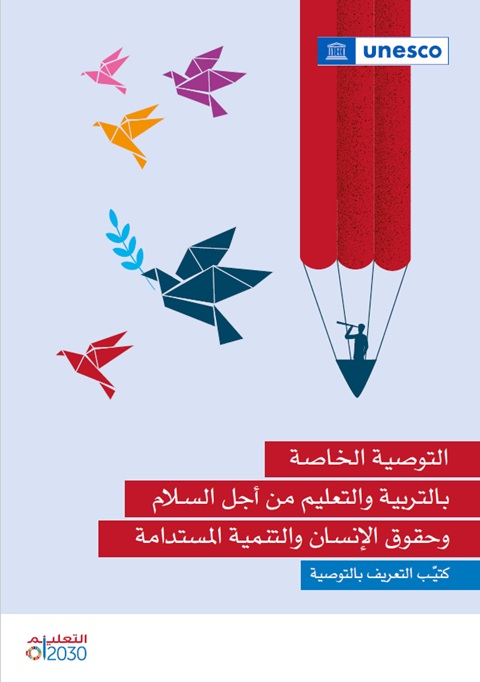 التوصية الخاصة بالتربية والتعليم من أجل السلام وحقوق الإنسان والتنمية المستدامة: دليل تفسيري Année de publication: 2024 Auteur institutionnel: UNESCO ويقدّم هذا الكتيّب تعريفاً بالتوصية بصيغتها المعدّلة ويبيّن مضمون التوصية ويوضح لمختلف الجهات المعنية بالتربية والتعليم كيفية استخدامها بطريقة عملية في عملها اليومي.
 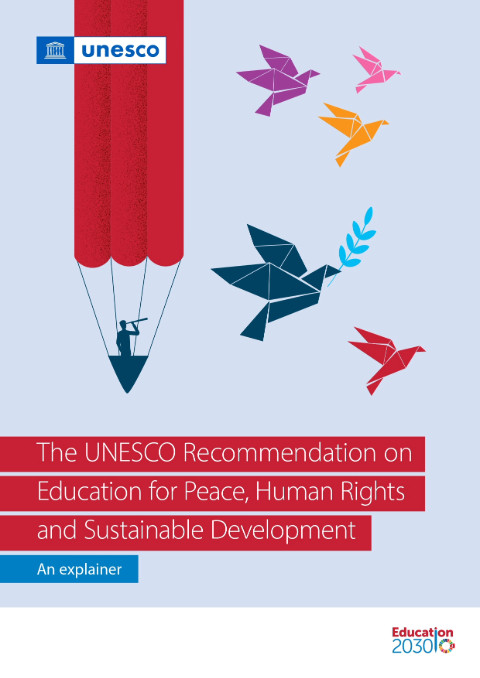 The Recommendation on Education for Peace, Human Rights and Sustainable Development: An Explainer Année de publication: 2024 Auteur institutionnel: UNESCO This is an explainer brochure of the new UNESCO Recommendation on Education for Peace and Human Rights, International Understanding, Cooperation, Fundamental Freedoms, Global Citizenship and Sustainable Development, which is commonly referred to as the Recommendation on Education for Peace, Human Rights and Sustainable Development, about its purpose, history, content and potential to bring about necessary change.