
Ressources
Explorez une large gamme de ressources sur le GCED afin d’approfondir votre compréhension et de renforcer vos activités de recherche, de plaidoyer, d’enseignement et d’apprentissage.
1,364 résultats trouvés
 Human Rights Storytelling: Manual for the Educators Année de publication: 2018 Auteur institutionnel: Huristo Project Consortium Huristo project developed a methodology about awareness and advocacy about the European Human Rights Charter as a part of global citizenship education with low skilled adult learners (refugees and migrants living in the city and natives living in rural places). This methodology is based on digital storytelling: participants work on personal narratives illustrating different topics of the charter.The main result for the adult learners are increased digital skills, reading and writing skills, awareness about the Human Rights Charter and European citizenship. The work on the Charter and the personal narratives also improve participants’ analytic media literacy, interpersonal and intercultural skills, but also core skills for employability, such as teamwork, problem solving, learning to learn and communication. Additionally, the adult trainers who are involved increase their teaching skills using digital media and the methodology of digital storytelling in particular.In the HURISTO project trainers start with the stories of the participants, and afterwards the stories are linked to articles of the Charter. To do so, the methodology is using two concepts:1) PHOTOLANGUAGE SET: a set of 30 flashcards for students with photos that illustrate the European Charter of Human Rights. They have been created as a tool to start up conversations about human rights in Europe and the situations in which these rights may be at risk. Based on these discussions and the sharing of stories, each participant chooses one photo out of the flashcards, as a starting point for a digital story. The HURISTO Photolanguage set for educators contains guidelines for educators who want to use it in a human rights digital storytelling workshop with adult learners.2) STORY CIRCLES: in different rounds participants share their stories with the group and develop them together into short stories for their film.
 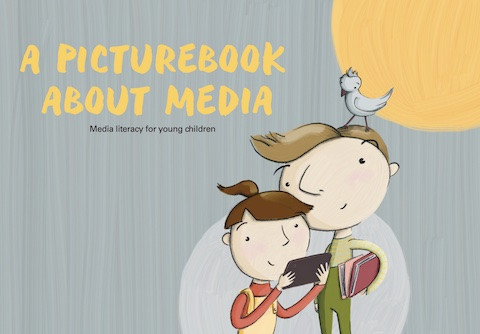 A Picture Book About Media: Media Literacy For Young Children Année de publication: 2018 Auteur: Alma Čakmazović Auteur institutionnel: United Nations Children's Fund (UNICEF) Media literacy helps to form the habit of appraising media contents and to develop the skills of expression necessary for critical thinking. Today, it represents education for life, human values, active citizenship and responsible media practices.This picturebook is devoted to children, parents, foster parents and educators. Its purpose is to give the youngest children the chance to understand media through one of the first lessons in media literacy, one about the difference between the media world and the real world.
  Global Gender Gap Report 2021: Insight Report, March 2021 Année de publication: 2021 Auteur institutionnel: World Economic Forum The report is a measure of gender gap on four parameters: economic participation and opportunity, educational attainment, health and survival, and political empowerment. The index has benchmarked 156 nations across the globe in 2021. The data show that it will take 135.6 years to bridge the gender gap worldwide and the pandemic has impacted women more severely than men. The gap is the widest on the political empowerment dimension with economic participation and opportunity being next in line. However, the gap on educational attainment and health and survival has been practically bridged.
 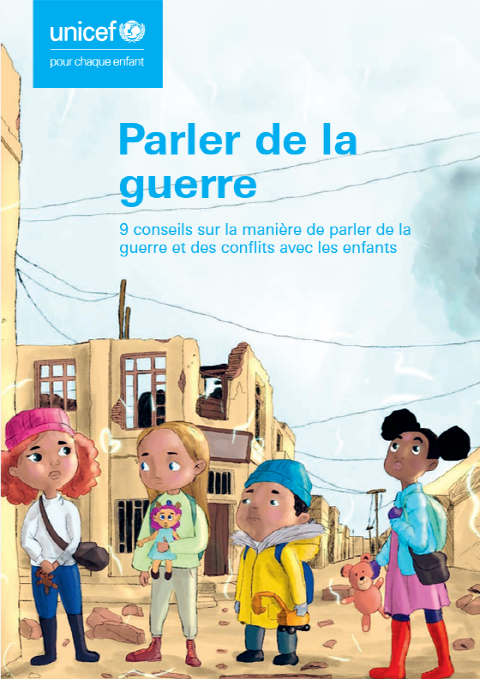 Parler de la guerre: 9 conseils sur la manière de parler de la guerre et des conflits avec les enfants Année de publication: 2023 Auteur institutionnel: United Nations Children's Fund (UNICEF) La guerre est un sujet difficile, souvent lié à des images ou informations perturbantes, en particulier pour les enfants. Comment les parents, les proches et les enseignants doivent-ils/elles se comporter et comment peuvent-ils/elles apaiser les craintes des enfants ?Peur, tristesse, colère, nervosité : ces sentiments ainsi que d’autres peuvent survenir lorsqu’une guerre ou un conflit fait les gros titres. Dès que les enfants ont besoin de sécurité et de protection, ils/elles se tournent vers leurs parents, proches et enseignants - encore plus en périodes de crise. Vous trouverez ici neuf conseils sur la manière de communiquer avec les enfants, les soutenir et leur apporter du réconfort.
 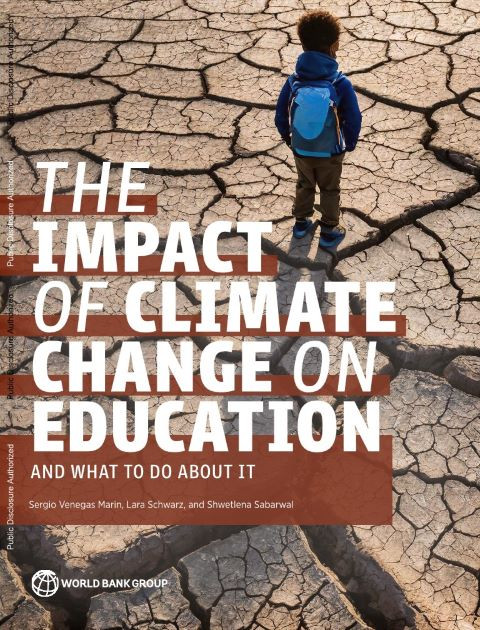 The Impact of Climate Change on Education and What to Do about It Année de publication: 2024 Auteur: Sergio Venegas Marin | Lara Schwarz | Shwetlena Sabarwal Auteur institutionnel: International Bank for Reconstruction and Development | World Bank Education can be the key to ending poverty in a livable planet, but governments must act now to protect it. Climate change is increasing the frequency and intensity of extreme weather events such as cyclones, floods, droughts, heatwaves and wildfires. These extreme weather events are in turn disrupting schooling; precipitating learning losses, dropouts, and long-term impacts. Even if the most drastic climate mitigation strategies were implemented, extreme weather events will continue to have detrimental impacts on education outcomes.
 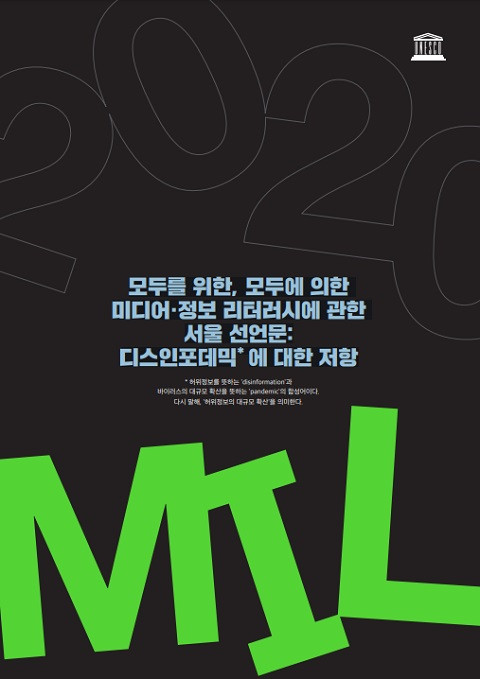 Seoul Declaration on Media and Information Literacy for Everyone and by Everyone: A Defence Against Disinfodemics Année de publication: 2020 Auteur institutionnel: UNESCO On the 10th anniversary of Global Media and Information Literacy Week, stakeholders from all over the world gave a resounding affirmation as to the urgency to strengthen people’s media and information literacy competencies. The number of celebratory events increased from one hundred events in 2019 to over three hundred events in 2020.The outcomes of the deliberations in the Feature Conference and Youth Agenda Forum have been immortalized in the Seoul Declaration on Media and Information Literacy for Everyone and by Everyone: A Defence against Disinfodemics. This Seoul Declaration benefited from a consultation with close to one thousand registered participants.Through the Seoul Declaration, partners and participants called for media and information literacy for all. They:Emphasized that “media and information literacy (MIL) is a core competency for addressing the disinfodemic, and that MIL also contributes to access to information, freedom of expression, protection of privacy, prevention of violent extremism, promotion of digital security and combating hate speech and inequality”.Recognized “UNESCO’s effort to promote a Global MIL Cities Framework to stimulate creative learning about MIL in city spaces and the involvement of non-traditional actors in promoting MIL”.Called on duty bearers at the national to city levels to “commit to advancing ‘Media and Information Literacy for Everyone and by Everyone’ through policy and resource allocation across all relevant areas, including education, health, elections, child protection, climate, gender equality, governance and regulation, to mention some examples”.Urged technological intermediaries to “play an accountable role, through institutionalized multi-stakeholder systems, as part of the social endeavor to tackle disinformation and to build communities that are media and information literate”.Requested UNESCO, in cooperation with other UN Agencies, to “maintain a focus on inclusion of disadvantaged groups in MIL engagements, and to continue to foster gender equality in relation to MIL.” 모두를 위한, 모두에 의한 미디어·정보 리터러시에 관한 서울 선언문: 디스인포데믹에 대한 저항 Année de publication: 2020 Auteur institutionnel: 유네스코 2020년 글로벌 미디어·정보리터러시(MIL) 주간 대표회의 및 청년포럼의 결과문서로 채택된 서울선언문이다. 본 선언문에서는 MIL의 중요성을 강조하고, 각각의 이해관계자가 MIL 역량 증진을 위해 실천할 수 있는 구체적인 행동을 담고 있다.
 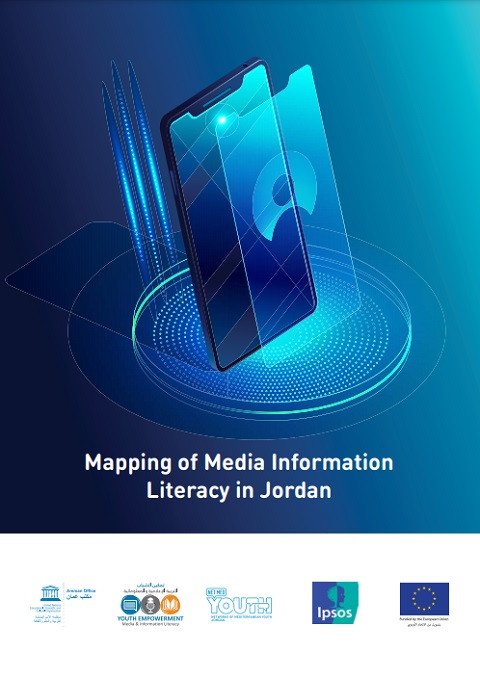 Mapping of Media Information Literacy in Jordan Année de publication: 2018 Auteur institutionnel: UNESCO Amman This study has come out as results of conducting a regional mapping exercise in Jordan to identify organizations that operate in the field of MIL to:understand the general landscape of MIL in Jordan to pinpoint areas in which UNESCO should intervene,identify different stakeholders that operate in the field of MIL and understand the scope of their work in terms of activities, region and target,determine the areas of MIL that are considered priorities by organizations,identify the key skills covered by the different initiatives and the nature of these activities,determine the challenges organizations are facing in implementing MILThe results of the study revealed that organizations exhibit considerable enthusiasm for the field of MIL and consider the competencies that fall within its scope as paramount in building a society that is empowered to successfully navigate the increasingly complex media sphere and use this knowledge to further contribute to the societal, cultural, educational and scientific development.
  Hate Speech, Propaganda and Disinformation in Albanian Media Année de publication: 2020 Auteur: Ilda Londo Auteur institutionnel: South East European Network for Professionalization of Media (SEENPM) | Peace Institute | Albanian Media Institute The purpose of this paper is to highlight the main models and elements that media in Albania manifest regarding hate speech, propaganda and disinformation and also to identify ways of countering these narratives. The research focuses mainly on online media, as they are identified as the main carriers of disinformation and hate speech, with a few exceptions, but traditional media are also present.This publication was produced within project Resilience: Civil Society for Media Free of Hate and Disinformation,run by South East European Network for Professionalization of Media (SEENPM).Reasearch is available in English and Albanian.
 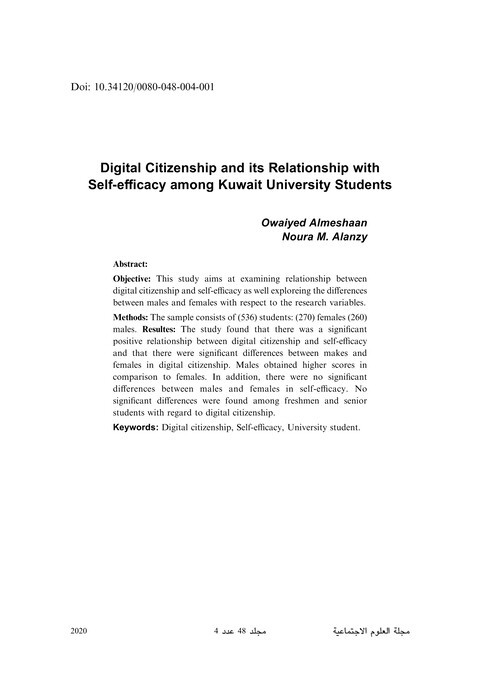 Digital Citizenship and Its Relationship With Self-Efficacy Among Kuwait University Students (Journal of Social Sciences; vol.48, no.4) Année de publication: 2020 Auteur: Owaiyed Almeshaan | Noura Alanzy Auteur institutionnel: Kuwait University This study aims at examining relationship between digital citizenship and self-efficacy as well exploring the differences between males and females with respect to the research variables.Methods: The sample consists of (536) students: (270) females (260) males. Results: The study found that there was a significant positive relationship between digital citizenship and self-efficacy and that there were significant differences between males and females in digital citizenship. Males obtained higher scores in comparison to females. In addition, there were no significant differences between males and females in self-efficacy. No significant differences were found among freshmen and senior students with regard to digital citizenship.