
Ressources
Explorez une large gamme de ressources sur le GCED afin d’approfondir votre compréhension et de renforcer vos activités de recherche, de plaidoyer, d’enseignement et d’apprentissage.
1,329 résultats trouvés
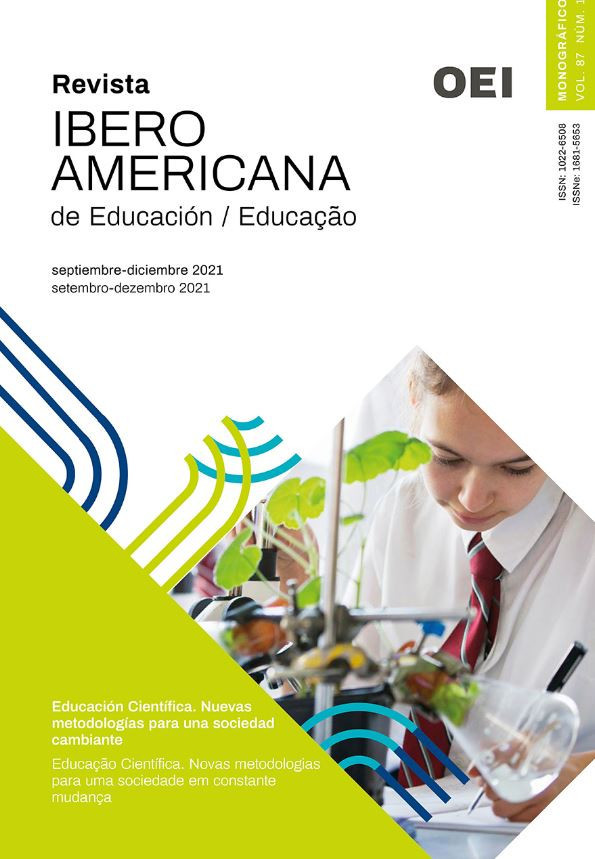 Scientific Education: New Methodologies for a Changing Society (Iberoamerican Journal of Education; vol. 87, no. 1) Année de publication: 2021 Auteur: F. Javier Perales | David Aguilera Auteur institutionnel: Organization of Ibero-American States for Education, Science and Culture (OEI) A society as changing as ours needs changes (innovations) and adaptations in the educational field that allow academics to be combined with social demands. We believe that this first monograph is representative of the richness and diversity of the proposals received which, in turn, constitute a sample of the strength of the community of teachers and researchers in their desire to make science education an attractive and efficient for new generations. Educación científica: Nuevas metodologías para una sociedad cambiante (Revista Ibero-americana de Educação; vol. 87, núm. 1) Année de publication: 2021 Auteur: F. Javier Perales | David Aguilera Auteur institutionnel: Organización de Estados Iberoamericanos para la Educación, la Ciencia y la Cultura (OEI) Una sociedad tan cambiante como la nuestra necesita de cambios (innovaciones) y adaptaciones en el ámbito educativo que permitan compaginar lo académico con las demandas sociales. Este primer monográfico estimamos que resulta representativo de la riqueza y diversidad de las propuestas recibidas que, a su vez, constituyen un muestrario de la pujanza de la comunidad de docentes e investigadores en su afán de hacer de la enseñanza de las ciencias una oferta atractiva y eficiente para las nuevas generaciones.
  Girls’ Education and Climate Change: Investing in Education for Resilience Année de publication: 2021 Auteur institutionnel: Inter-agency Network for Education in Emergencies (INEE) This brief was developed to support dissemination of key messages in Mind the Gap 2: Seeking Safe and Sustainable Solutions for Girls’ Education in Crises. It provides an overview of evidence and gaps on the relationship between girls’ education and climate crises, and recommends actions to mitigate the impacts of climate change on girls’ education and promote resilience. تعليم الفتيات وتغيّر المناخ: الاستثمار في التعليم من أجل القدرة على التأقلم Année de publication: 2021 Auteur: Inter-agency Network for Education in Emergencies (INEE) Auteur institutionnel: Inter-agency Network for Education in Emergencies (INEE) تم تطوير هذا الملّخص لدعم نشر الرسائل الرئيسية في إدراك الفجوة 2: البحث عن حلول آمنة ومستدامة لتعليم الفتيات في الأزمات. يقدم نظرة عامة على الأدلة والثغرات في العلاقة بين تعليم الفتيات وأزمات المناخ ، ويوصي باتخاذ إجراءات للتخفيف من آثار تغيّر المناخ على تعليم الفتيات وتعزيز المرونة.
 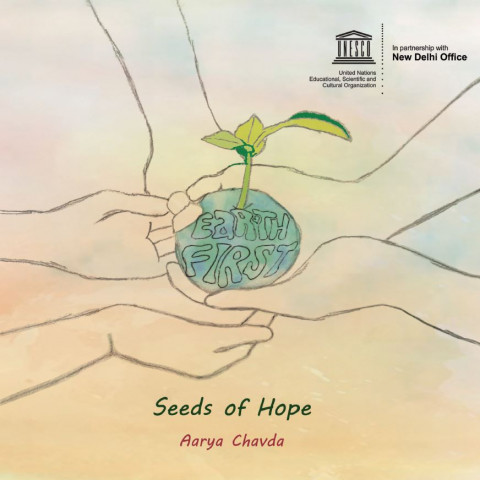 Seeds of Hope Année de publication: 2020 Auteur: Aarya Chavda Auteur institutionnel: UNESCO At an age of 10, author and illustrator of her 3 books, Aarya Chavda extends her support by donating her art proceeds to fundraise for the welfare of underpriviledge Cancer patients.Through her campaign on 'Preservation of Cultural Heritage', She also demonstrates her commitment and contributes in spreading awareness through her programs at government and private institutions.In this series of narrative illustrations, she portrays that climate change will not occur at some point in the distance future - "It is happening her and now". She urges everyone to treasure this thought of saving our planet for the future generation.
 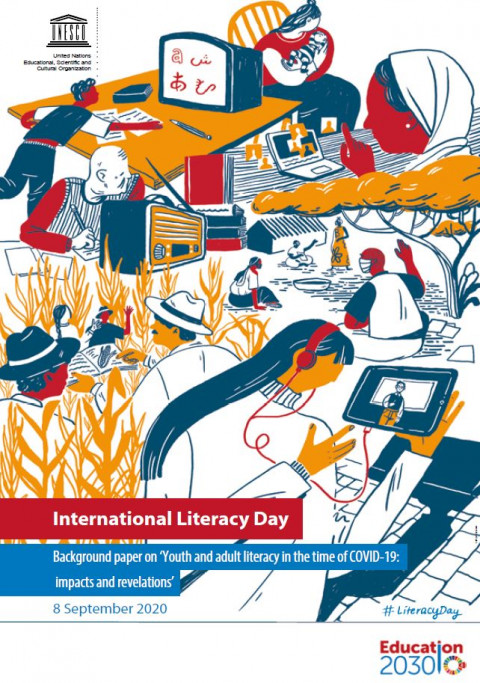 International Literacy Day: Background Paper on 'Youth and Adult Literacy in the Time of COVID-19; Impacts and Revelations' Année de publication: 2020 Auteur institutionnel: UNESCO Specially prepared on the occasion of International Literacy Day 2020, this background paper illustrates the impact of the COVID-19 crisis on youth and adult literacy, based on the limited information that is currently available. It provides five regional snapshots and identifies preliminary lessons learned thus far, while aiming to inspire continued reflection and subsequent action. It also makes the case for the ongoing importance of advancing youth and adult literacy, a priority that was already neglected even before the pandemic but which deserves all our attention. ILD 2020 thus seeks to trigger reimaginations of literacy teaching and learning in the COVID-19 crisis and beyond, with a particular focus on the role of educators.
 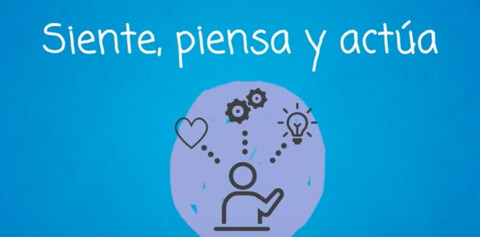 Thinking Beyond What I See: What Is Critical Thinking? Année de publication: 2018 Auteur institutionnel: Siente, Piensa y Actua This video is intended to exemplify critical thinking. We also share some strategies that will allow you to promote it in boys and girls. Pensando más allá de lo que veo: ¿Qué es el pensamiento crítico? Année de publication: 2018 Auteur institutionnel: Siente, Piensa y Actua Este video tiene la finalidad de ejemplificar el pensamiento crítico. Además te compartimos algunas estrategias que te permitirán promoverlo en niños y niñas.
 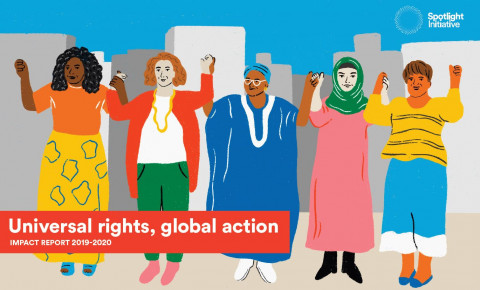 Universal Rights, Global Action: Impact Report 2019-2020 Année de publication: 2020 Auteur institutionnel: Spotlight Initiative Universal rights, global action is a shortened, visual adaptation of the 2019 Global Annual Narrative Progress Report. The Spotlight Initiative is a global, multi-year partnership between the European Union and the United Nations to eliminate all forms of violence against women and girls by 2030. This report outlines the Spotlight Initiative’s key signature results from 2019.The 32-page document highlights the ways the Spotlight Initiative country and regional programmes have meaningfully reached women and girls, including those facing multiple and intersecting forms of discrimination.
 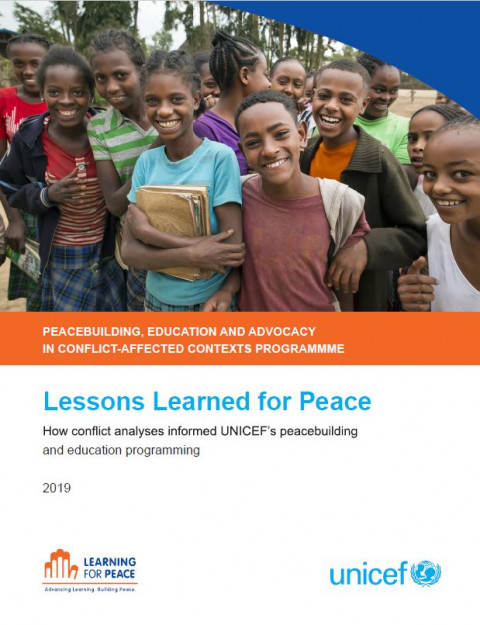 Lessons Learned for Peace Année de publication: 2019 This resource is part of a collection of resources compiled by UNICEF’s 2012-2016 Peacebuilding, Education and Advocacy Programme (PBEA), known as Learning for Peace, which was funded by the Government of the Netherlands. The purpose of Lessons Learned for Peace is to share UNICEF’s experience in conducting conflict analyses as a prerequisite for social services programming in fragile and conflict-affected contexts. As part of UNICEF’s Peacebuilding, Education and Advocacy programme, supported by the Government of the Netherlands from 2012-2016, UNICEF commissioned conflict analyses in 14 countries that informed education and other social services interventions at the system, institutional, community and individual levels. The challenges, opportunities and lessons-learned of conflict analysis research in fragile and post-conflict contexts are illustrated and discussed.