
Ressources
Explorez une large gamme de ressources sur le GCED afin d’approfondir votre compréhension et de renforcer vos activités de recherche, de plaidoyer, d’enseignement et d’apprentissage.
1,364 résultats trouvés
 세계시민교육역량에 대한 예비유아교사와 유아교사의 인식에 관한 연구 (Global Creative Leader: Education & Learning; Vol. 9, No. 4) Année de publication: 2019 Auteur: 이효정 | 김갑순 Auteur institutionnel: 숭실대학교 영재교육연구소 본 연구는 세계시민교육역량에 대한 예비유아교사와 유아교사의 인식에 관한 연구로 예비유아교사와 유아교사의 세계시민교육역량 강화를 위한 교사교육의 방향을 제시하는데 그 목적이 있다. 이를 위해 연구대상은 서울과 인천에서 4년제 유아교육과 4학년에 재학 중인 예비유아교사 200명과 24개의 유아교육기관에 재직 중인 유아교사 200명을 선정하였다. 연구기간은 2018년 9월 11일부터 일주일이며, 연구자가 직접 설문지를 배부 및 회수하는 설문조사를 실시하였다. 연구결과 첫째, 예비유아교사와 유아교사 모두 유아세계시민교육역량에 비해 세계시민역량을 다소 높게 인식하고 있었다. 보다 구체적으로 예비유아교사는 세계시민교육역량의 하위요인인 세계시민역량과 유아세계시민교육역량 모두에서 유아교사 보다 높게 인식하는 것으로 나타났다. 둘째, 세계시민교육을 경험한 예비유아교사는 세계시민역량과 유아세계시민교육역량 모두에서 그렇지 않은 예비유아교사 보다 높게 인식하는 것으로 나타났다. 반면, 세계시민교육을 경험한 유아교사는 세계시민역량과 유아세계시민교육역량 모두에서 인식의 차이가 나타나지 않았다. 본 연구는 세계시민교육에 대한 예비유아교사와 유아교사의 인식을 밝혀냄으로서 실제로 유아교사 양성과정의 교사교육과정과 유아교육현장에서 이루어지는 교사재교육 과정을 어떻게 구안해야 하는지에 대한 정보를 제공할 것으로 기대한다. Perception on Global Citizenship Education Competence between Pre-service Teachers and In-service Teachers in Kindergarten (Global Creative Leader: Education & Learning; Vol. 9, No. 4) Année de publication: 2019 Auteur: Hyojeong Lee | Kabsoon Kim Auteur institutionnel: Soongsil University. Research Institute for Gifted & Talented Education The purpose of this study was to establish the direction of teacher education based on global citizenship education competence studying the perception of pre-service teachers and in-service teachers on global citizenship education competence. The 2018 survey was conducted for a week beginning September 11. The respondents who were 200 pre-service teachers and 200 in-service teachers were selected from Seoul and Incheon. The researcher distributed and collected the questionnaire directly. The results of the study were as follows. First, pre-service teachers showed higher cognition than in-service teacher in both global citizenship competence and early childhood global citizenship competence. Second, among pre-service teachers, ones who had experienced global citizenship education showed higher cognition level in both categories than others. On the other hand, in-service teachers who had experienced global citizenship education did not show any difference of cognition in both global citizenship competence and early childhood global citizenship competence. This study was expected to reveal the perceptions of pre-service teachers and when training teachers, the data provided more specific details for early childhood educator curriculums about global citizenship education.
  일상 사례로 비추어 본 지속가능발전을 위한 생활 속 우리의 실천: 어린이용 (지속가능발전 교육자료 2호) Année de publication: 2020 Auteur institutionnel: 지속가능발전포털 | 대한민국 환경부 지속가능발전목표를 위해 우리가 일상 생활 속에서 쉽게 실천할 수 있는 행동에는 어떤 것들이 있는지 6가지 행동수칙으로 정리하였다.행동수칙1. 교통, 2. 에너지 절약, 3. 물 아껴쓰기, 4. 장바구니 이용하기, 5. 분리수거하기, 6. 나무 심기
 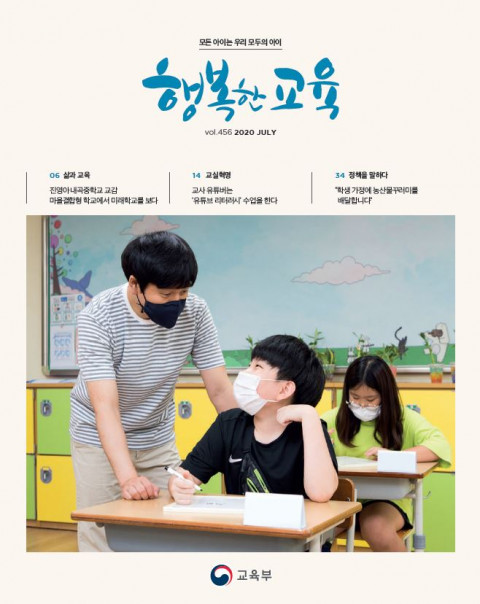 행복한 교육 2020년 7월호 (제456호) Année de publication: 2020 Auteur institutionnel: 대한민국 교육부 특별기획 미래_지능정보사회를 이끌 인재 양성 청사진교육부는 최근 ‘과학·수학·정보·융합교육 종합계획(5개년)’을 발표하며 향후 5년간의 미래 인재 양성에 대한 청사진을 제시했다. 교과 간의 긴밀한 연결과 융합을 바탕으로 정책이 수립되어 시너지 효과가 기대된다. 이번 발표에 따르면, 인공지능(AI), 가상·증강현실(VR·AR) 등 최첨단 에듀테크 기술이 교육 현장에 적극적으로 도입되는데, 대표적으로 최첨단 기술을 적용한 지능형 과학실을 2024년까지 모든 학교에 구축하여 학생들이 첨단 과학을 직접 체험하고 학습할 수 있도록 한다는 계획이다. 교육부의 과학·수학·정보·융합교육 청사진을 살펴본다.정책을 말하다_“학생 가정에 농산물꾸러미를 배달합니다”학교급식의 중단으로 학부모와 농가, 급식업체의 부담이 증가함에 따라 교육부와 농림축산식품부는 시도교육청·지자체와 협력하여 ‘학생 가정 농산물꾸러미 지원사업’을 추진하고 있다. 꾸러미사업에 서울, 대구, 인천, 광주, 대전, 세종, 경기, 강원, 충북, 충남, 전북, 전남, 경북, 경남과 부산 기장군에서 참여하며 499만여 명의 학생 가정에 3만 7천 톤의 농산물을 공급하였다. 일부 지역(울산, 부산, 제주, 세종)에서는 학생 가정 내 경제적 부담을 줄여주고자 잔여 급식예산을 교육재난지원금 등의 형태로 지급하고 있다.
  Assurer à tous une éducation équitable, inclusive et de qualité: Objectif de développement durable 4 au Canada Année de publication: 2020 Auteur institutionnel: Council of Ministers of Education, Canada (CMEC) Ce rapport fournit un cadre pour communiquer l’information aux échelons pancanadien et international au sujet du travail en cours au Canada sur la réalisation de l’ODD 4. Il tire parti des données et des indicateurs liés à l’ODD 4 et inclut, dans la mesure du possible, les données provinciales et territoriales.
  Advancing Global Citizenship Education Through Global Competence and Critical Literacy: Innovative Practices for Inclusive Childhood Education (SAGE Open; Vol. 9, No. 1) Année de publication: 2019 Auteur: Alida Anderson Auteur institutionnel: SAGE Publications This article presents a critical policy overview of inclusive education and global citizenship education (GCED) and offers two innovative childhood education practices that support inclusion of children with disabilities through dimensions of physical and conceptual access, both noted implementation barriers to inclusive education across the globe. The first section summarizes global human rights and education initiatives that support GCED through access for children with disabilities in education and in societies. This section addresses questions of how inclusion plays a central role to the advancement of GCED, summarizing major global policy advances to inclusion, and highlighting how advancement of inclusive childhood education supports GCED. This article concludes with two innovative childhood education practices, global competence and critical literacy, which offer critical potential to contribute to GCED through conceptual and physical dimensions of access, and ultimately promote inclusive education. Ensuring Inclusive and Equitable Quality Education: Sustainable Development Goal 4 in Canada Année de publication: 2020 Auteur institutionnel: Council of Ministers of Education, Canada (CMEC) This report provides a framework to share information at the pan-Canadian and international levels on work underway in Canada to achieve SDG 4. The report builds on SDG 4 data and indicators and includes, where possible, provincial and territorial data.
 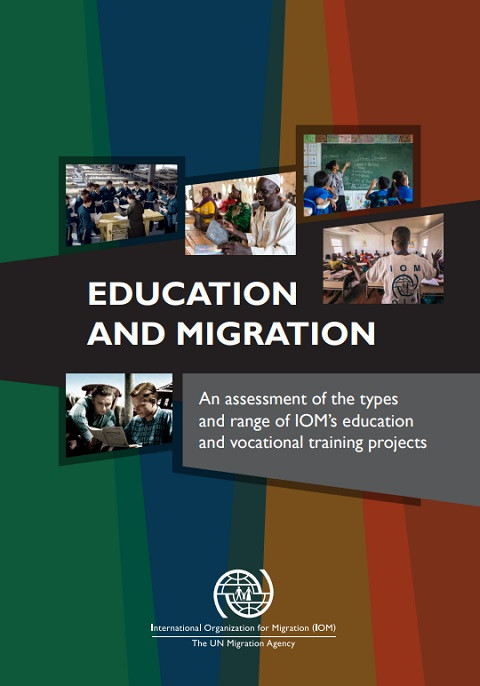 Education and Migration: An Assessment of the Types and Range of IOM’s Education and Vocational Training Projects Année de publication: 2018 Auteur: Rocio Sanz Auteur institutionnel: International Organization for Migration (IOM) This report presents the results of the assessment of the range and types of IOM’s education and vocational training programmes as of December 2017. Within an overall framework of reviewing the Organization’s role in supporting the development and implementation of migration policy, the purpose of this assessment is to understand how these programmes contribute to education and vocational training outcomes, especially in the specific context of SDG 4 (Quality Education) of the 2030 Agenda for Sustainable Development.
  Education Disrupted Education Reimagined: Responses from Education’s Frontline During the COVID-19 Pandemic and Beyond Année de publication: 2020 Auteur institutionnel: WISE | Salzburg Global Seminar | Diplomatic Courier The special edition E-Book you are reading about today was produced in real time, as WISE, in partnership with Salzburg Global Seminar, convened key stakeholders and education leaders from over 98 countries in a three-part series of global conferences aimed at bringing the global education community together. The result is a contemporary historical record of how schools, NGOs, governments, and international organizations responded to school closures during the crisis and how they are attempting to use this crisis as a springboard to reimagine—and even transform—education in their communities and countries.The E-Book offers an opportunity to a global audience to make sense of what happened but it also offers a breeding ground of ideas from some of the world’s top education thinkers. It is the editors’ sincere hope that through this publication we provide the education community with a reference point from the crisis from which future research, policy, and innovation can grow.
  Un Mundo en Igualdad Année de publication: 2019 Auteur institutionnel: Fundación Entreculturas “Un Mundo en Igualdad” es el primer ejemplar de una serie de recopilaciones de recursos educativos diseñados por Entreculturas para trabajar distintas temáticas globales con grupos de niños, niñas y jóvenes.En esta ocasión, esta publicación recoge una serie de recursos educativos para trabajar sobre la promoción de la igualdad de género, con el objetivo de desarrollar conocimientos, valores y competencias sociales y ciudadanas para promover que los grupos aprendan que la igualdad está en sus manos y que pueden ser protagonistas de los cambios necesarios para alcanzar una sociedad igualitaria.La publicación ofrece propuestas didácticas divididas en cuatro bloques de edad. Cada bloque recoge un itinerario adaptado con distintas actividades de menor a mayor grado de complejidad para trabajar con grupos de niñas, niños y jóvenes, tanto en el ámbito formal como en el no formal, de 4 a 18 años.