
Ressources
Explorez une large gamme de ressources sur le GCED afin d’approfondir votre compréhension et de renforcer vos activités de recherche, de plaidoyer, d’enseignement et d’apprentissage.
1,330 résultats trouvés
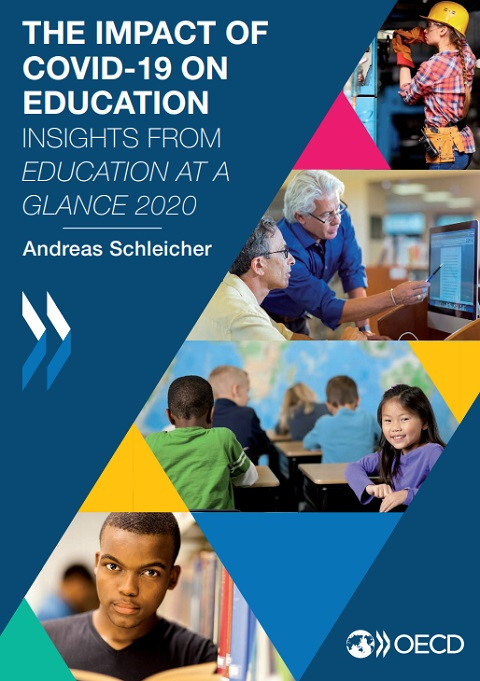 The Impact of COVID-19 on Education: Insights From Education at a Glance 2020 Année de publication: 2020 Auteur: Andreas Schleicher Auteur institutionnel: Organisation for Economic Co-operation and Development (OECD) OECD Director for Education and Skills Andreas Schleicher gives his insights and interpretations from the OECD’s Education at a Glance 2020 report – the go-to source for information on the state of education around the world. This brochure focuses on a selection of indicators from Education at a Glance, selected for their particular relevance in the current context. Their analysis enables the understanding of countries’ response and potential impact from the COVID-19 containment measures.
  Global Education in Estonia: The European Global Education Peer Review Process; National Report on Global Education in Estonia Année de publication: 2019 Auteur institutionnel: Global Education Network Europe (GENE) | European Union (EU) This National Report contains the findings from the Peer Review of Global Education in Estonia that took place during 2019. It provides an overview of Global Education in the country and includes observations and recommendations intended to assist Estonian Global Education actors to further improve and increase provision in the country.
 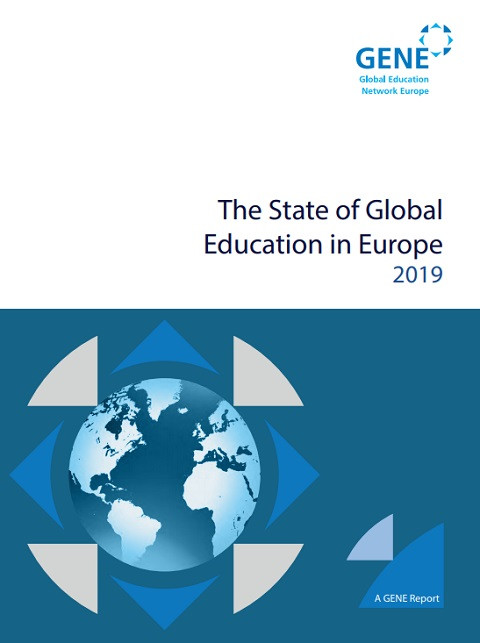 The State of Global Education in Europe 2019 Année de publication: 2020 Auteur institutionnel: Global Education Network Europe (GENE) | European Union (EU) This fourth edition of the State of Global Education in Europe has been developed to provide an updated account of current key issues, policy priorities, funding trends and activities inGlobal Education in Europe, among the Ministries and Agencies that participate in GENE. This report explores key trends, policy themes and budgetary information for Global Education in European countries, drawing on information provided by GENE member Ministries and Agencies during 2018 and 2019.
 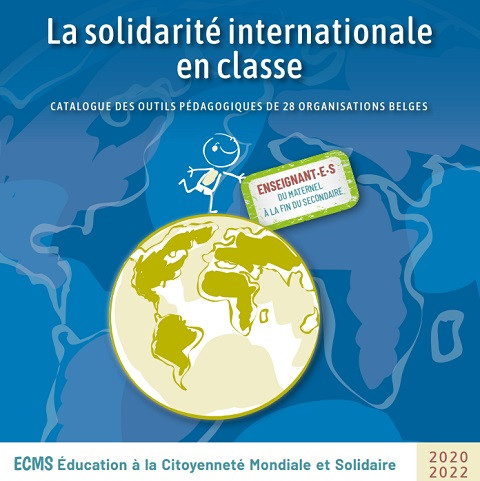 La solidarité internationale en classe: Catalogue des outils pédagogiques de 28 organisations belges; Éducation à la Citoyenneté Mondiale et Solidaire (ECMS) Année de publication: 2020 Auteur institutionnel: Îles de Paix Plus d’une centaine d’outils pédagogiques abordant chacun une ou plusieurs des thématiques en lien avec l’éducation à la citoyenneté mondiale et solidaire (ECMS). Dans ce catalogue, vous trouverez des dossiers pédagogiques, des livrets illustrés, des jeux interactifs, des fiches d’activités, des sites internet, etc. Bref, une grande diversité d’outils de qualité, ancrés dans l’actualité mondiale. Ils sont des supports indispensables pour mener à bien une foule de projets avec vos élèves, de la maternelle jusqu’à la fin du secondaire. Encartée dans ce catalogue, vous trouverez également une brochure destinée aux Hautes Écoles Pédagogiques.
 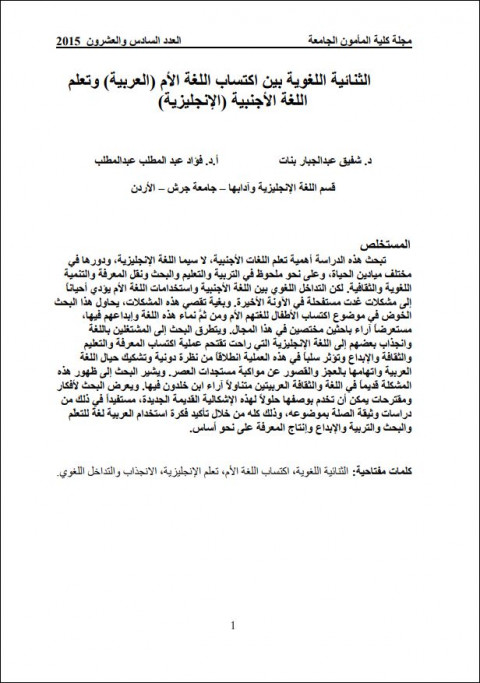 الثنائية اللغوية بين اكتساب اللغة الأم (العربية) وتعلم اللغة الأجنبية (الإنجليزية) Année de publication: 2015 Auteur: Fuad Abdul Muttalib | Shafeeq Banat Auteur institutionnel: AlMamon University College تبحث هذه الدراسة أهمية تعلم اللغات الأجنبية، لا سيما اللغة الإنجليزية، ودورها في مختلف ميادين الحياة، وعلى نحو ملحوظ في التربية والتعليم والبحث ونقل المعرفة والتنمية اللغوية والثقافية. لكن التداخل اللغوي بين اللغة الأجنبية واستخدامات اللغة الأم يؤدي أحياناً إلى مشكلات غدت مستفحلة في الآونة الأخيرة. وبغية تقصي هذه المشكلات، يحاول هذا البحث الخوض في موضوع اكتساب الأطفال للغتهم الأم ومن ثمَّ نماء هذه اللغة وإبداعهم فيها، مستعرضاً آراء باحثين مختصين في هذا المجال.ويتطرق البحث إلى المشتغلين باللغة وانجذاب بعضهم إلى اللغة الإنجليزية التي راحت تقتحم عملية اكتساب المعرفة والتعليم والثقافة والإبداع وتؤثر سلباً في هذه العملية انطلاقاً من نظرة دونية وتشكيك حيال اللغة العربية واتهامها بالعجز والقصور عن مواكبة مستجدات العصر. ويشير البحث إلى ظهور هذه المشكلة قديماً في اللغة والثقافة العربيتين متناولاً آراء ابن خلدون فيها. ويعرض البحث لأفكار ومقترحات يمكن أن تخدم بوصفها حلولاً لهذه الإشكالية القديمة الجديدة، مستفيداً في ذلك من دراسات وثيقة الصلة بموضوعه، وذلك كله من خلال تأكيد فكرة استخدام العربية لغةً للتعلّم والبحث والتربية والإبداع وإنتاج المعرفة على نحوٍ أساس. Bilingualism Between Mother Tongue (Arabic) Acquisition and Foreign Language (English) Learning Année de publication: 2015 Auteur: Fuad Abdul Muttalib | Shafeeq Banat Auteur institutionnel: AlMamon University College This research work considers the importance of learning of foreign languages, especially English, and their role in education, research, knowledge transfer, language and cultural growth. Language overlapping, between English and Arabic, leads sometimes to acute problems. To approach these problems, the work tries to discuss the acquisition of children of their mother tongue, its expansion and its use creatively in different disciplines.The work tackles the attraction of English to some experts in their fields, the thing that drives them to look suspiciously and down at Arabic accusing it of incompetence to catch up with new changes. Since language overlapping is an old problem, this has entailed a reference to Iben Khaldoun’s diagnosis of it with commentary. The work asserts eventually the essential use of Arabic as a language of education, research, culture and knowledge production, without neglecting foreign languages learning, above all English. The work is carried out in the light of the available studies on this issue.
  Ministerial Forum: Global Dialogue on ICT and Education Innovation – Towards Sustainable Development Goal for Education (SDG 4); Proceedings Année de publication: 2019 Auteur institutionnel: UNESCO Institute for Information Technologies in Education (IITE) The present publication contains articles based on the outcomes of the Ministerial Forum “Global Dialogue on ICT and Education Innovation – Towards Sustainable Development Goal for Education (SDG 4)”, organized by UNESCO IITE in cooperation with the Ministry of Education and Science of the Russian Federation in Moscow (Russia) on 18-19 March, within the Moscow International Education Fair 2018 (MIEF 2018).The publication covers the flagship topics such as ICT potential for future teachers and future schools, digital pedagogy and OER, collaboration between public and private sectors in the use of ICT in education, digital technologies for quality and equity in education.
  Pedagogical Guides: Let's Educate With Equality Année de publication: 2016 Auteur institutionnel: Chile. Ministry of Education This publication includes four pedagogical guides, the first seeks to generate reflection of teachers and managers about their role in gender constructions, the second one seeks critical reflection of elementary school students on how gender constructions affect decisions, the third guide looks the sdame for high school students, and the fourth guide goes around the reflection of parents / guardians on how gender roles affect the vocational decisions of boys and girls. Guías pedagógicas: Eduquemos con igualdad Année de publication: 2016 Auteur institutionnel: Chile. Ministry of Education Esta publicación reune cuatro guías, en la primera se busca generar reflexión de docentes y directivos en torno a su rol en las construcciones de género, en la segunda se pretende la reflexión critica de los estudiantes de enseñanza básica sobre como inciden las construcciones de género en las decisiones vocacionales al igual que en la tercera guía en estudiantes de enseñanza mediay la cuarta guía gira entorno a la reflexión de padres/madres/ apoderados sobre como afectan los roles de género en las decisiones vocacionales de niños y niñas.
  L’Éducation aux médias en 12 questions Année de publication: 2019 Auteur: Olivier Gobert | Philippe Delmotte | Catherine Soudon | Corine Dufour | Laurent Abraham | Aurore Leprêtre Auteur institutionnel: Conseil supérieur de l’éducation aux médias (CSEM) La brochure "L'éducation aux médias en 12 questions" a pour objectif de vous aider à mieux appréhender l’éducation aux médias dans divers contextes. Les 12 questions et leurs réponses sont accompagnées d’activités qui, bien qu’elles ne soient pas forcément liées aux questions qui les précèdent, servent à illustrer le champ de l’éducation aux médias.