
Ressources
Explorez une large gamme de ressources sur le GCED afin d’approfondir votre compréhension et de renforcer vos activités de recherche, de plaidoyer, d’enseignement et d’apprentissage.
1,330 résultats trouvés
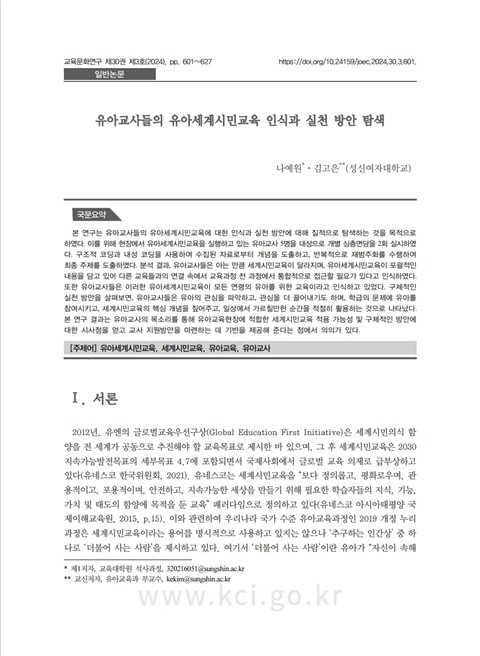 유아교사들의 유아세계시민교육 인식과 실천 방안 탐색 (교육문화연구; Vol. 30, No. 3) Année de publication: 2024 Auteur: 나예원 | 김고은 Auteur institutionnel: 인하대학교 교육연구소 본 연구는 유아교사들의 유아세계시민교육에 대한 인식과 실천 방안에 대해 질적으로 탐색하는 것을 목적으로 하였다. 이를 위해 현장에서 유아세계시민교육을 실행하고 있는 유아교사 5명을 대상으로 개별 심층면담을 2회 실시하였다. 구조적 코딩과 내성 코딩을 사용하여 수집된 자료로부터 개념을 도출하고, 반복적으로 재범주화를 수행하여 최종 주제를 도출하였다. 분석 결과, 유아교사들은 아는 만큼 세계시민교육이 달라지며, 유아세계시민교육이 포괄적인 내용을 담고 있어 다른 교육들과의 연결 속에서 교육과정 전 과정에서 통합적으로 접근할 필요가 있다고 인식하였다. 또한 유아교사들은 이러한 유아세계시민교육이 모든 연령의 유아를 위한 교육이라고 인식하고 있었다. 구체적인 실천 방안을 살펴보면, 유아교사들은 유아의 관심을 파악하고, 관심을 더 끌어내기도 하며, 학급의 문제에 유아를 참여시키고, 세계시민교육의 핵심 개념을 짚어주고, 일상에서 가르칠만한 순간을 적절히 활용하는 것으로 나타났다. 본 연구 결과는 유아교사의 목소리를 통해 유아교육현장에 적합한 세계시민교육 적용 가능성 및 구체적인 방안에 대한 시사점을 얻고 교사 지원방안을 마련하는 데 기반을 제공해 준다는 점에서 의의가 있다.
  NISSEM Global Briefs (Volume II): Educating for the Social, the Emotional and the Sustainable; Pedagogy, Practice and Materials Année de publication: 2020 Auteur: Andy Smart | Margaret Sinclair Auteur institutionnel: Networking to Integrate SDG Target 4.7 and SEL skills into Educational Materials (NISSEM) The timeframe for achieving the Sustainable Development Goals (SDGs) is tight, and the world also faces the consequences of Covid-19. NISSEM Global Briefs aim to show how SDG Target 4.7 themes and social and emotional learning (SEL) can be embedded in education policies, programs, curricula, materials, and practice, to help make progress towards sustainable development.
 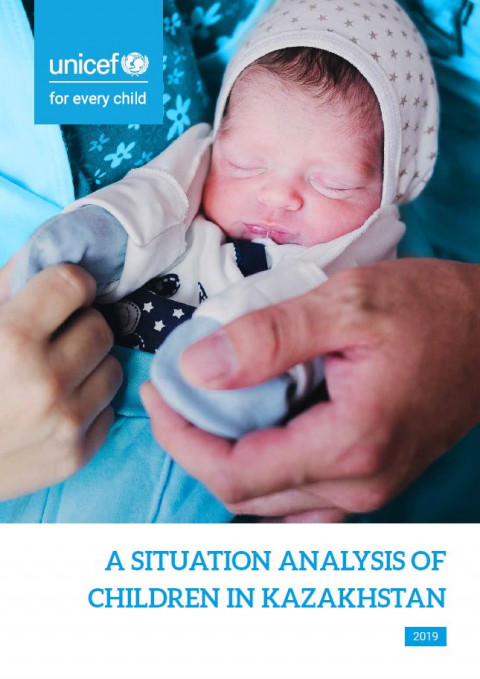 A Situation Analysis of Children in Kazakhstan Année de publication: 2019 Auteur institutionnel: UNICEF Kazakhstan Kazakhstan has set the overarching objective of becoming one of the 30 most developed countries in the world by 2050. Children and adolescents in Kazakhstan, who constitute 31.4 per cent of the total population, should be the beneficiaries and active contributors to achieving these goals. This Situation Analysis provides analysis and recommendations to ensure that children remain at the centre of the country’s development priorities. It confirms measurable progress made in advancing the rights of children and identifies outstanding challenges. Анализ положения детей в Республике Казахстан Année de publication: 2019 Auteur institutionnel: UNICEF Kazakhstan Казахстан поставил перед собой важную стратегическую цель – стать одной из 30 самых развитых стран мира к 2050 году. При этом нынешние дети и подростки, составляющие 31,4% от общей численности населения страны, будут теми, кто больше всех ощутит положительные изменениня и поэтому также должны стать активными участниками в реализации поставленной цели.В данном документе представлены анализ и рекомендации, направленные на то, чтобы дети оставались в центре приоритетов развития страны. Отчет подтверждает ощутимый прогресс, достигнутый в продвижении прав детей, а также выявляет факторы, влияющие на их уязвимость.
  E-learning Diversité & Inclusion Auteur institutionnel: UPANDGO Sur ce site vous trouverez des modules e-learning, micro-learning, jeux de sensibilisation, quiz diversité sur la question de l'inclusion et la diversité. Cette approche parfois décalée et ludique vous permet d’aborder cette thématique sereinement et de mobiliser efficacement vos collaborateurs. On this site you'll find e-learning modules, micro-learning, awareness-raising games and diversity quizzes on the subject of inclusion and diversity. This sometimes offbeat and playful approach enables you to tackle this issue with peace of mind and effectively mobilize your employees.
  The Game as a Fun Strategy for the Inclusive Education of Good Living Année de publication: 2017 Auteur: Evelyn Fernanda Córdoba Pillajo | Fernando Lara Lara | Andrés García Umaña The discussion on the implementation of the educational political project of sumak kawsay in Ecuador demands resources and proposals that contribute to its development. In this sense it is proposed the game as a possible didactic resource that can offer spaces of educational inclusion of the different facets of the human being that demand good living demands as long as the constitutionally conceptualized the right to education in the holistic formation of the human being, the formation of consciousness, the identifycation of the ego as a barrier to dialogue and the possibilities of interculturality, humility through self-criticism among others. This paper aims to present a reflection and an idea about the game as a playful strategy in the learning of inclusive practices as well as justify the promotion as Formative medium of an educative culture of sumak kawsay. El Juego como Estrategia Lúdica para la Educación Inclusiva del Buen Vivir Année de publication: 2017 Auteur: Evelyn Fernanda Córdoba Pillajo | Fernando Lara Lara | Andrés García Umaña La discusión sobre la implementación del proyecto político educativo del sumak kawsay en Ecuador demanda de recursos y propuestas que puedan contribuir a su desarrollo. En este sentido se propone lo lúdico como un posible recurso didáctico que permita ofrecer espacios de inclusión educativa de las distintas facetas del ser humano que demanda el buen vivir tanto en cuanto se conceptualiza constitucionalmente el derecho a la educación en su formación holística, de la conciencia, identificación del ego como barrera para el diálogo y las posibilidades de la interculturalidad, o la humildad mediante la autocrítica, entre otras. En este trabajo se persigue plantear una sucinta reflexión y propuesta concerniente al juego como estrategia lúdica favorecedora de prácticas inclusivas, así como justificar su promoción como medio formativo de una cultura educativa del sumak kawsay.
  Pedagogical Guide for an Intercultural, Anti-racist and Gender Perspective Education: Ideas, Experiences and Tools Année de publication: 2017 Auteur: Carolina Stefoni | Andrea Riedemann | Fernanda Stang | Andrea Guerrero | Antonia Garcés | Marta Camarena Auteur institutionnel: Programa Interdisciplinario de Estudios Migratorios (PRIEM) | Universidad Alberto Hurtado | Fundación para la Superación de la Pobreza (FUSUPO) The main purpose of this Guide is, then, to share some ideas, tools and experiences that can help build and walk the path towards an intercultural, anti-racist and gender perspective education in various educational spaces. It is directed primarily - though not exclusively, of course - to all those people who are part of formal and informal teaching-learning processes. It is important to emphasize that the Guide does not pretend to be a recipe for a mechanical application, but a tool box that each educational community can use considering its specific context, its particular needs and its potentialities. Guía pedagógica para una educación intercultural, anti-racista y con perspectiva de género: ideas, experiencias y herramientas Année de publication: 2017 Auteur: Carolina Stefoni | Andrea Riedemann | Fernanda Stang | Andrea Guerrero | Antonia Garcés | Marta Camarena Auteur institutionnel: Programa Interdisciplinario de Estudios Migratorios (PRIEM) | Universidad Alberto Hurtado | Fundación para la Superación de la Pobreza (FUSUPO) El propósito principal de esta Guía es, entonces, compartir algunas ideas, herramientas y experiencias que puedan ayudar a construir y andar el camino hacia una educación intercultural, anti-racista y con perspectiva de género en diversos espacios educativos. Está dirigida principalmente -aunque no de manera exclusiva, por supuesto- a todas aquellas personas que sean parte de procesos de enseñanza-aprendizaje formales e informales. Es importante enfatizar que la Guía no pretende ser un recetario para una aplicación mecánica, sino una caja de herramientas que cada comunidad educativa puede usar considerando su contexto específico, sus necesidades particulares y sus potencialidades.
  Reimagining Life Skills and Citizenship Education in the Middle East and North Africa: A Four-Dimensional and Systems Approach to 21st Century Skills; Conceptual and Programmatic Framework Année de publication: 2017 Auteur institutionnel: UNICEF Middle East and North Africa The situation of learning in MENA calls for a holistic, lifelong and rights-based vision of education that maximizes the potential of all children and youth in the region and better equips them to create meaning out of knowledge and to face the transitions from childhood to adulthood, from education to work, and from unreflective development to responsible and active citizenship. This is what drives the MENA Life Skills and Citizenship Education (LSCE) Initiative, kicked off in 2015 with the aim of supporting the countries of the region – conceptually, programmatically and technically – to improve learning and to better invest such learning in individual, social and economic development.The LSCE Conceptual and Programmatic Framework (CPF) puts forth a roadmap to guide policies, strategies and programmes on life skills and citizenship education supporting the region-wide efforts to provide children and youth with opportunities to learn, transition from childhood to adulthood, move from school to work settings, and become responsible and active citizens of their communities.A set of twelve core life skills for MENA has been identified using the four-dimensional learning model: ‘Learning to Know’ (Cognitive Dimension), ‘Learning to Do’ (Instrumental Dimension), ‘Learning to Be’ (Individual Dimension), and ‘Learning to Live Together’ (Social Dimension). The twelve core life skills are life-long, and they build on evidence that underlines the importance of skills acquisition from an early age. Furthermore, the twelve core life skills are acquired and sustained through all forms of learning in a systems approach that recognizes multiple pathways of learning, formal, non-formal and informal.