
Ressources
Explorez une large gamme de ressources sur le GCED afin d’approfondir votre compréhension et de renforcer vos activités de recherche, de plaidoyer, d’enseignement et d’apprentissage.
1,330 résultats trouvés
 Réimaginer l’éducation aux compétences de vie et à la citoyenneté au Moyen-Orient et en Afrique du Nord : Une approche à quatre dimensions et systémique des compétences pour le XXIe siècle ; Cadre programmatique et conceptuel Année de publication: 2017 Auteur institutionnel: UNICEF Middle East and North Africa L’Initiative pour l’éducation aux compétences de vie et à la citoyenneté de la région MENA (LSCE) représente un effort de collaboration étatique et régional en faveur de la réalisation de l’objectif de développement durable (ODD) 4 – Assurer l’accès de tous à une éducation de qualité, sur un pied d’égalité, et promouvoir les possibilités d’apprentissage tout au long de la vie. Elle cherche à reformuler la compréhension traditionnelle de l’éducation aux compétences de vie et à la citoyenneté dans la région, tout en rappelant les questions fondamentales au sujet du but et du rôle de l’éducation dans le développement sociétal qui sont pertinentes dans le contexte actuel.L’Initiative LSCE se concentre sur trois défis interdépendants :Une société du savoir inaccessible, résultat de la mauvaise qualité de l’éducation, du bas niveau des résultats scolaires et d’une équité et inclusion limitées.Une croissance économique en déclin, résultat d’un manque d’aptitudes à l’employabilité, du haut taux de chômage chez les jeunes, de l’inégalité des sexes face à l’accès au marché du travail, du manque de création d’emplois, et d’un environnement économique faible.Une faible cohésion sociale, résultat de l’escalade de la violence et de la radicalisation tout autant que d’un faible engagement civique.
  Global Education Monitoring Report, 2021, Central and Eastern Europe, Caucasus and Central Asia: Inclusion and Education; All Means All Année de publication: 2021 Auteur institutionnel: Global Education Monitoring Report Team | European Agency for Special Needs and Inclusive Education | Network of Education Policy Centers Prepared by the Global Education Monitoring (GEM) Report, in partnership with the European Agency for Special Needs and Inclusive Education and the Network of Education Policy Centers, the regional report on inclusion and education in Central and Eastern Europe, the Caucasus and Central Asia offers a deep dive into the core challenges and key solutions. The region is working hard to overcome a legacy, whereby children with disabilities attended special schools, once wrongly regarded as an effective solution, segregated by type of disability, if not fully excluded from education.The report draws on in-depth profiles of 30 education systems in the region. It also presents the additional risks to inclusion now posed by the COVID-19 pandemic. Building on the 2020 Global Education Monitoring Report, it documents barriers facing learners, particularly where multiple disadvantages intersect. Its recommendations provide a systematic framework for identifying and dismantling these barriers, according to the principle that ‘every learner matters and matters equally’. Всемирный доклад по мониторингу образования 2021 г. : для всех означает для всех инклюзивность и образование; центральная и восточная европа,кавказ и средняя азия Année de publication: 2021 Auteur institutionnel: Global Education Monitoring Report Team | European Agency for Special Needs and Inclusive Education | Network of Education Policy Centers В этом докладе описана огромная и географически разнородная территория, которую объединили в один регион схожие образовательные системыи подходы, сформированные во второй половине 20 века в рамках государственного социализма. Образование было доступно, гендерное неравенство и неравенство, связанное с местом проживания, было искоренено. Но образовательные системы подвергали дискриминации детей с особыми потребностями, которые посещали специальные школы. Это решение ошибочно считалось эффективным: ученики разделялись по типу инвалидности, а некоторые из них полностью исключались из системы образования.Начиная с 1989 года, регион старается преодолеть это тяжелое наследие и перейти к инклюзивному образованию, основанному на правах человека, подходу, который часто поддерживается международными организациями. В законодательство и образовательную политику было включено более широкое понимание инклюзии. Педагогическое образование и программы повышения квалификации учителей были пересмотрены и реструктурированы. Тем не менее, прогресс неравномерен. Многие изменения произошли на бумаге, в то время как глубинные убеждения и реальная практика практически не изменились. В то же время образовательные системы пытаются преодолеть негативные последствия политического и экономического кризисов, которые углубили неравенство и усилили социальную напряженность. Такие факторы как гендер, удаленное место проживания, бедность, этническая принадлежность, язык, миграция, принадлежность к числу перемещенных лиц, тюремное заключение, сексуальная ориентация, гендерная идентичность и религиозные и другие убеждения связаны с неравенством образовательных возможностей.Составленный группой по подготовке Всемирного доклада по мониторингу образования, в партнерстве с Европейским агентством по специальным потребностям и инклюзивному образованию и Сетью центров образовательной политики, этот доклад содержит подробные описания 30 образовательных систем региона. В докладе также представлены дополнительные риски для инклюзии, возникшие в результате пандемии COVID-19. Основываясь на Всемирном докладе ЮНЕСКО по мониторингу образования, этот документ фиксирует барьеры, с которыми сталкиваются учащиеся. Рекомендации, данные в докладе, предлагают систему для выявления и устранения этих барьеров, в основе которой лежит принцип «каждый ученик важен и важен одинаково».
  Global Learning in Subject Teaching: Framework and Toolkit Année de publication: 2020 Auteur institutionnel: Center for Citizenship Education (CCE) | Global Issues, Global Subjects (GIGS) The brochure 'Global Learning in Subject Teaching: Framework and Toolkit' has been developed as a proposal for teachers, educators and educational institutions on how to reach pupils with Global Learning. In its practical part, the brochure provides the reader with a toolkit of 20 ready-to-use lesson plans for subject lessons where the subject curriculum topics are linked with global issues such as migration, climate change and gender equality.
  Speak Out - Be Protected! Development Framework: Guide for Practitioners; Creating Child-sensitive Reporting Mechanisms of Alleged Cases of Violence Against Children Année de publication: 2016 Auteur: Raša Sekulović | Stephanie Delaney Auteur institutionnel: Plan International Produced by Plan International, the Child-Sensitive Reporting Mechanisms toolkit “Speak Out – Be Protected!” identifies simple, user-friendly processes through which children and their peers (and families) can raise child protection concerns and report them to child protective agencies, services or trusted community groups and institutions.
 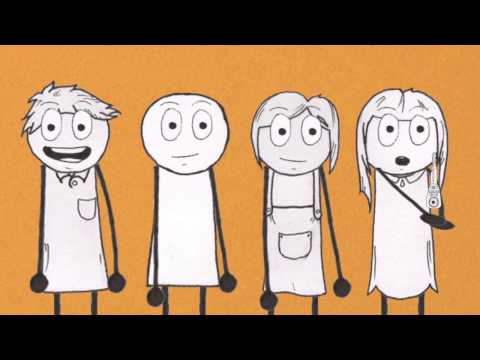 What is Media Literacy? Année de publication: 2017 Auteur institutionnel: Media Literacy Now Intended as a tool for advocates, the video introduces the concept of media literacy as a key that unlocks meaning behind the messages that we see, and allows us to be more thoughtful and deliberate as we create our own messages such as those we create and share on social media.
 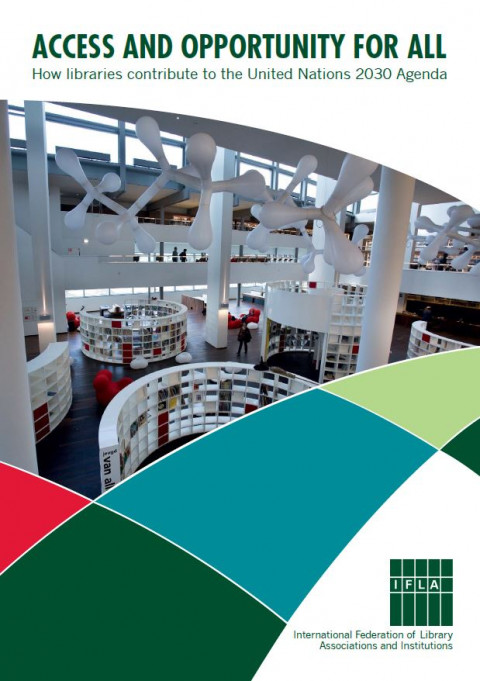 Access and Opportunity for All: How Libraries Contribute to the United Nations 2030 Agenda Année de publication: 2020 Auteur institutionnel: International Federation of Library Associations and Institutions (IFLA) The inclusion of libraries and access to information in national and regional development plans will contribute to meeting the global United Nations 2030 Agenda for Sustainable Development.In support of this goal, IFLA has published a booklet of examples and recommendations for policymakers demonstrating the contribution of libraries to the UN Sustainable Development Goals (SDGs).The booklet includes stories from all types of libraries in many countries around the world.
 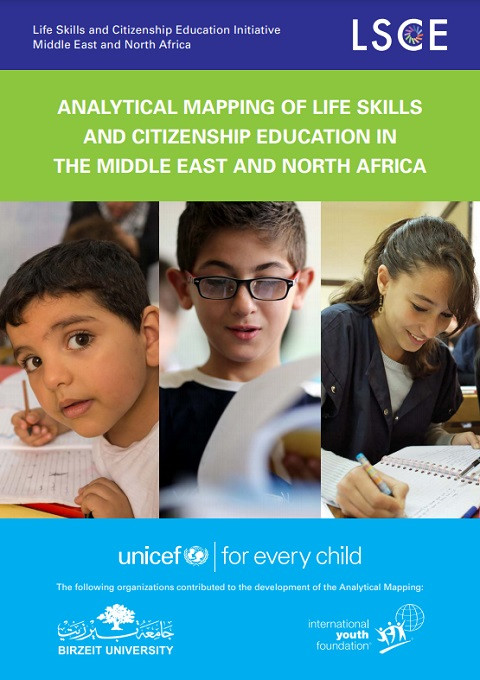 Analytical Mapping of Life Skills and Citizenship Education in the Middle East and North Africa Année de publication: 2017 Auteur institutionnel: UNICEF Middle East and North Africa The Analytical Mapping of the Life Skills and Citizenship Education in MENA, published in October 2017, provides a multi-stakeholder view of the status of life skills and citizenship education in MENA and the corresponding vision for the region. It does not evaluate existing interventions, nor is it meant to generate an exhaustive list of all existing life skills programmes in MENA. It rather aims to provide an analytical overview of Life Skills and Citizenship Education (LSCE) related intervention in the region. Through analyzation, it also attempts to highlight general challenges encountered in the programming of LSCE, as well as focus on opportunities for LSCE in MENA national education systems.
 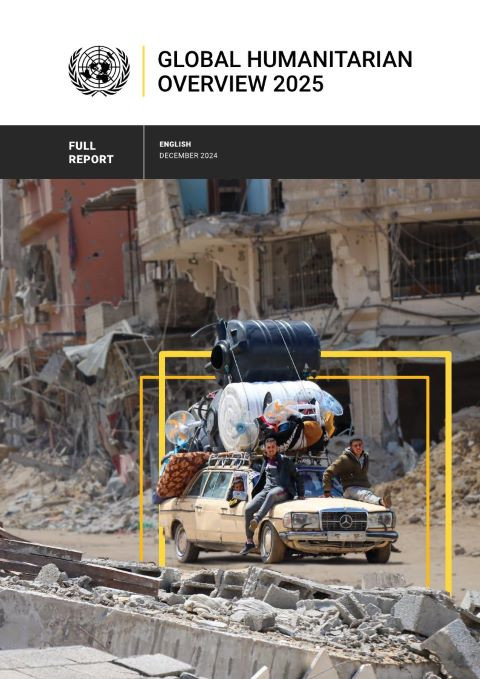 Global Humanitarian Overview 2025 Année de publication: 2024 Auteur institutionnel: UN. Office for the Coordination of Humanitarian Affairs (UN. OCHA) A snapshot of the global trends driving increased humanitarian needs in 2025, analysis from 2024 and an overview of where the system is delivering better to help those affected by crises. The Global Humanitarian Overview (GHO) is the world’s most comprehensive, authoritative and evidence-based assessment of humanitarian need. Through plans that prioritize those most in need, it aims to fight hunger, killer diseases, gender-based violence and displacement. The GHO 2025 presents an analysis of global crises and needs and the humanitarian plans to address them. In 2025, humanitarian partners are appealing for over US$47 billion to assist nearly 190 million people facing life-threatening and urgent needs across 72 countries. The report looks at response trends to strengthen, such as localization, cash, accountability and the changes needed to deliver aid effectively: security and funding. The GHO presents a collective picture of humanitarians' achievements and, conversely, what happens when humanitarians are unable to deliver aid. Explore the full report and interactive content through humanitarianaction.info.
 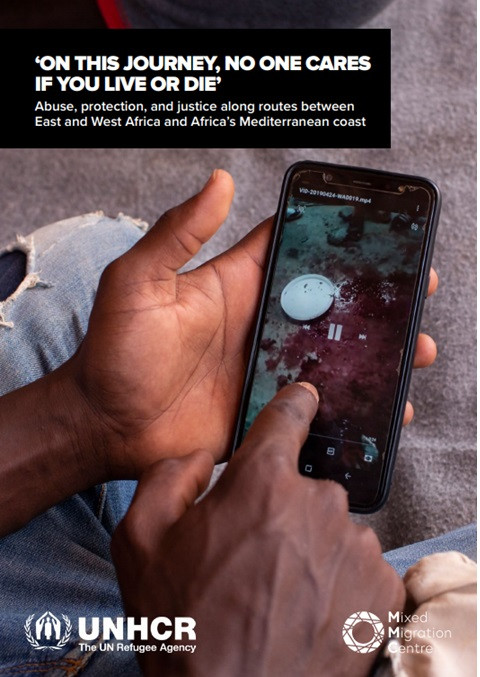 On This Journey, No One Cares If You Live or Die: Abuse, Protection, and Justice Along Routes Between East and West Africa and Africa’s Mediterranean Coast Année de publication: 2020 Auteur institutionnel: UN. Office of the United Nations High Commissioner for Refugees (UNHCR) | Mixed Migration Centre This report draws on data collected by the Mixed Migration Centre’s 4Mi monitors along the route to map the places where refugees interviewed in 2018 and 2019 most frequently reported deaths, sexual and gender-based violence (SGBV), physical violence, and kidnappings occurred. It illustrates how refugees and migrants using the route face a series of risks including as they cross into eastern Sudan, and when crossing the Sahara Desert, and then again in multiple places in Libya. Similarly, those traveling through West Africa reported multiple incidents of physical violence, SGBV, as well as deaths at various points. Refugees and migrants have reported being subjected to brutal violence, including being burnt with hot oil, melted plastic, or heated metal objects, being electrocuted, tied in stress positions, and experiencing and witnessing repeated sexual violence, often in the context of ransom demands. UNHCR staff and partners continue to witness the severe impact these abuses have had on the mental health of many men, women, and children.