
Ressources
Explorez une large gamme de ressources sur le GCED afin d’approfondir votre compréhension et de renforcer vos activités de recherche, de plaidoyer, d’enseignement et d’apprentissage.
1,329 résultats trouvés
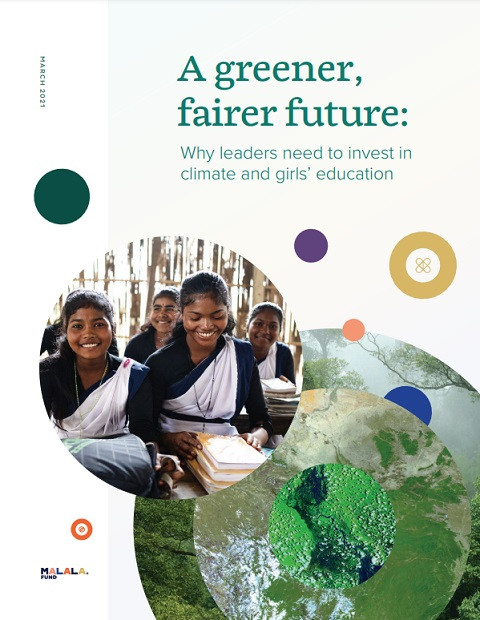 A Greener, Fairer Future: Why Leaders Need to Invest in Climate and Girls’ Education Année de publication: 2021 Auteur: Lucia Fry | Philippa Lei Auteur institutionnel: Malala Fund The world is on the brink of a climate catastrophe — and girls are disproportionately bearing the impact. Climate-related events like flooding, droughts and increased exposure to zoonotic diseases amplify the inequalities girls face and further limit their ability to access and complete their education. Malala Fund’s new report, A greener, fairer future: Why leaders need to invest in climate and girls' education, estimates that in 2021 climate-related events will prevent at least four million girls in low- and lower-middle-income countries from completing their education. If current trends continue, by 2025 climate change will be a contributing factor in preventing at least 12.5 million girls from completing their education each year.Yet evidence shows that closing gender gaps in education can help countries better adapt to the effects of climate change and decrease the rate and impact of global warming.“Girls in lower-income countries are the least responsible for the climate crisis, so it’s a travesty that it now threatens their very lifeline to a brighter future: quality education,” said Lucia Fry, Director of Research and Policy at Malala Fund. “Malala Fund wants leaders at COP26 to hear young people’s demands around education. They know that climate action helps girls stay in school, which in turn helps countries tackle the climate crisis. Young people are demanding an education that will prepare them to adapt to the effects of climate change and challenge the root causes of the crisis.”A greener, fairer future outlines the origins of the climate emergency and explains how confronting issues like the legacy of colonialism, racial discrimination and gender inequality through education is key to finding a sustainable solution to the crisis. The paper introduces the Gender-Equal Green Learning Agenda, a new framework to help leaders address the climate crisis through education.In this report, Malala Fund recommends how leaders can take urgent climate action at meetings this year, like COP26. This includes reducing carbon emissions, improving girls’ access to education, helping communities adapt to the realities of climate change and transforming education systems to provide all students with the knowledge, skills and values needed to challenge the social and economic inequalities fuelling the climate crisis.For more about the links between climate change and girls’ education, read the full paper below.
 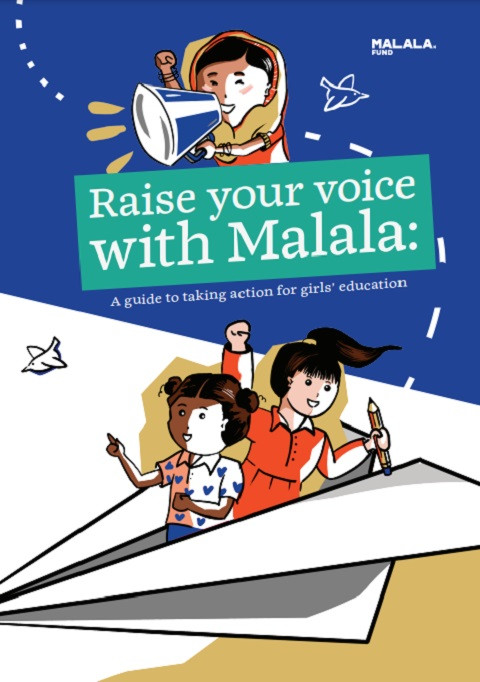 Raise Your Voice With Malala: A Guide to Taking Action for Girls’ Education Année de publication: 2018 Auteur: Emily Laurie | Eleanor Gall Auteur institutionnel: Malala Fund This guide gives young activists the tools to raise their voices and make change happen. Girls around the world are standing up in support of their out-of-school sisters and fighting to see every girl complete 12 years of free, safe, quality education. By taking action in their communities, girls can contribute to the peace and prosperity of our entire world. The guide includes real stories about girls around the world working to make sure all girls have the opportunity to go to school.
  Research on National Curriculum Standards and Framework Année de publication: 2001 Auteur: Cui Yunkuo This article is devoted to explaining the nature and framework of the national curriculum standards and the presentation techniques of the curriculum objectives. First, this article discusses the nature of the curriculum standard, describing the prescriptiveness of the curriculum standards, and then discussed the normative presentation of the curriculum standard framework. It also provides the framework of the first national curriculum standards in China and finally explains the presentation techniques of the course objectives, as well as the level of learning and behavioral verbs. 国家课程标准与框架的解读 Année de publication: 2001 Auteur: Cui Yunkuo 本文致力于阐释国家课程标准的性质、框架和课程目标的陈述技术。首先,探讨了课程标准的性质,对于课程标准的规定性作了描述。然后讨论了课程标准框架的规范性陈述方式,并提供了我国第一个国家课程标准的框架。最后阐述了课程目标的陈述技术,以及学习水平与行为动词等问题。
  Ten Clues for Rethinking Curriculum (In-Progress Reflection; No. 42, 2021) Année de publication: 2021 Auteur: Renato Opertti Auteur institutionnel: UNESCO International Bureau of Education (IBE) This discussion document highlights the urgency of rethinking curriculum in light of reinforcing the commitments of the Education 2030 Agenda on learning, disruptive systemic worldwide societal changes, and crucially, the profound transformation of education and education systems post Covid-19. Curriculum is always at the core of giving effect to social aspirations and ideals on the why, what, how, when, and where of teaching, learning, and assessing. We propose a series of 10 interconnected clues to deepen on the systemic and holistic understanding of curriculum as contributing to lay foundations for a better, sustainable and fair future. These clues are: understanding the new generations; combatting factors related to vulnerability; reinforcing understanding between school and families; deepening glo-local education; enhancing the focus on the person; promoting synergies among values; valuing diversity; focusing on education that enhances freedom; moving toward hybrid modes of education; and inspiring affection for educators.
  2013 Asia-Pacific Education Research Institutes Network (ERI-Net) regional study on: transversal competencies in education policy and practice (Phase I): regional synthesis report Année de publication: 2015 Auteur institutionnel: UNESCO Bangkok The Asia-Pacific region has been spearheading global, social, and economic development for the last several decades. Millions of people have been lifted out of poverty and basic education (primary and lower secondary) has become near universal in many countries in the region. Upper secondary and higher education enrollment rates have also increased significantly. However, while these are tremendous achievements, education quality remains a major concern among emerging economies and industrialized nations alike. While some countries in the region excel in international assessments, such as the Programme for International Student Assessment (PISA), the Trends in International Mathematics and Science Study (TIMSS), and the Progress in International Reading Literacy Study (PIRLS), other countries still attain low scores. National assessment results of countries that have not participated in international assessments reveal large knowledge and skills disparities among students of the same country. In some cases the results also indicate a very low attainment level of basic skills, even after years of schooling.At the same time, the debate surrounding what actually constitutes quality education and learning in the 21st century is ongoing. There is a growing concern that education systems are focusing too much on the accumulation of academic “cognitive” skills at the expense of the more elusive and hard-to-measure “nonacademic” skills and competencies. The accumulation of these skills and competencies, which include skills and competencies in efficient communication with others, innovative thinking, respect for diversity and the environment, conflict resolution, team work, problem solving, and so on, is not only important for students to be adequately prepared for the world of work, but is also paramount in ensuring future generations are equipped to live meaningful, sustainable, and responsible lives in a rapidly changing and interconnected world.1 The effects of the limited attention paid to such skills and competencies in education can be felt in a number of domains and include, for example: poor respect for diversity (including socio-economic, ethnic, and gender equality), neglect of environmental issues, and a lack of innovation and social entrepreneurship among students.To counter these challenges, many countries and economies in the Asia-Pacific region have introduced, or are in the process of introducing, policy and curriculum changes aimed at enhancing the cultivation of such “non-academic” skills and competencies in learners. To date, these important reforms in the Asia-Pacific region have not been widely documented, and hence, in 2013 members of the Asia-Pacific Education Research Institutes Network (ERI-Net), hosted by UNESCO Bangkok since 2009, agreed to make this their next topic of investigation. The research aims to document and consolidate reform initiatives for knowledge dissemination and policy consideration to the benefit of countries and economies in the Asia-Pacific region and beyond. In phase I, the 2013 ERI-Net research examined how different countries and economies in the region define and apply “non-academic” skills (often termed “non-cognitive skills”) in their education policies, practices, and curriculum frameworks, and identified emerging trends and challenges. This report synthesizes ten case studies and includes important information and insights gained from the discussions held during the ERI-Net annual meeting 2013.The objectives of the report are: (i) to capture the movements in the realm of “non-academic” learning in ten education systems in the Asia-Pacific region; (ii) to identify possible policy recommendations for promoting and enhancing well-rounded and holistic learning; and, (iii) to suggest further stages of investigation. 2013 Réseau des instituts de recherche en éducation en Asie-Pacifique (ERI-Net) Année de publication: 2015 Auteur institutionnel: UNESCO Bangkok La région Asie-Pacifique a été le fer de lance du développement mondial, social et économique depuis plusieurs décennies. Des millions de personnes ont été sorties de la pauvreté et de l'éducation de base (primaire et secondaire) est devenue quasi universelle dans de nombreux pays de la région. taux de scolarisation secondaire et le supérieur ont également augmenté de manière significative. Cependant, alors que ce sont des réalisations remarquables, la qualité de l'éducation demeure une préoccupation majeure parmi les économies émergentes et les pays industrialisés aussi bien. Alors que certains pays de la région d'exceller dans les évaluations internationales, telles que le Programme international pour le suivi des acquis des élèves (PISA), les Tendances de l'enquête internationale sur les mathématiques et les sciences (TEIMS) Le Programme international de recherche en lecture scolaire (PIRLS), et d'autres pays encore atteindre des scores faibles. Les résultats nationaux des pays qui n'ont pas participé aux évaluations internationales d'évaluation révèlent de grandes disparités entre les connaissances et les compétences chez les élèves d'un même pays. Dans certains cas, les résultats indiquent également un niveau de réalisation très faible des compétences de base, même après des années de scolarité.Dans le même temps, le débat entourant ce qui constitue effectivement l'éducation et un apprentissage de qualité dans le 21ème siècle est en cours. Il y a une préoccupation croissante que les systèmes éducatifs se concentrent trop sur l'accumulation de compétences académiques «cognitives» au détriment des compétences plus insaisissables et difficiles à mesurer "non académiques" et les compétences. L'accumulation de ces aptitudes et compétences, qui comprennent les compétences et les compétences en communication efficace avec les autres, la pensée novatrice, le respect de la diversité et de l'environnement, la résolution des conflits, le travail d'équipe, la résolution de problèmes, et ainsi de suite, est non seulement important pour les étudiants d'être adéquatement préparé pour le monde du travail, mais elle est aussi primordiale pour assurer les générations futures sont équipés pour mener une vie enrichissante, durables et responsables dans un monde1 en évolution rapide et interconnecté les effets de l'attention accordée à ces aptitudes et compétences en matière d'éducation peut se faire sentir dans un certain nombre de domaines et comprennent, par exemple: faible respect de la diversité (y compris l'égalité socio-économique, ethnique et le sexe), la négligence des questions environnementales, et un manque d'innovation et de l'entrepreneuriat social chez les étudiants.Pour contrer ces difficultés, de nombreux pays et économies de la région Asie-Pacifique ont mis en place ou sont en train d'introduire des changements de politiques et de programmes visant à améliorer la culture de ces aptitudes et compétences «non universitaires» chez les apprenants. À ce jour, ces réformes importantes dans la région Asie-Pacifique n'a pas été largement documentés, et donc, en 2013 les membres de l'Education Research Institutes Réseau Asie-Pacifique (ERI-Net), organisé par l'UNESCO à Bangkok depuis 2009, a aCECpté de faire cette leur sujet suivant l'enquête. La recherche vise à documenter et à consolider les initiatives de réforme pour la diffusion des connaissances et l'examen de la politique au profit des pays et des économies de la région Asie-Pacifique et au-delà. Dans la phase I, la recherche 2013 ERI-Net examiné comment les pays et les économies différentes dans la région de définir et d'appliquer les compétences «non universitaires» (souvent appelés «compétences non cognitives») dans leurs politiques d'éducation, des pratiques et des cadres du curriculum, et identifié les tendances et les défis nouveaux. Ce rapport synthétise dix études de cas et comprend des informations et des connaissances importantes acquises à partir des discussions tenues lors de la réunion annuelle ERI-Net 2013.Les objectifs du rapport sont les suivants: (i) de capturer les mouvements dans le domaine de la «non-académique" apprentissage dans dix systèmes d'éducation dans la région Asie-Pacifique; (Ii) de formuler des recommandations politiques possibles pour la promotion et l'amélioration de l'apprentissage bien équilibrée et holistique; et, (iii) à proposer d'autres stades de l'enquête.
  Education 21st Century Children: Emotional Well-being in the Digital Age (Educational Research and Innovation) Année de publication: 2019 Auteur institutionnel: Organisation for Economic Co-operation and Development (OECD) This report examines modern childhood, looking specifically at the intersection between emotional well-being and new technologies. It explores how parenting and friendships have changed in the digital age. It examines children as digital citizens, and how best to take advantage of online opportunities while minimising the risks. The volume ends with a look at how to foster digital literacy and resilience, highlighting the role of partnerships, policy and protection.
  Citizenship and Digital Literacy Plan 2024 Année de publication: 2024 Auteur institutionnel: Chile. Ministerio Secretaría General de Gobierno | Chile. Ministerio de Educación The Ministry of the General Secretariat of the Government together with the Ministry of Education have launched the “Citizenship and Digital Literacy” Plan with the aim of addressing the growing challenges, opportunities and risks involved in the use of digital technologies in everyday life. The actions presented in the plan seek to strengthen the skills of citizens in general and also with a focus on educational communities, supported by the frameworks of digital citizenship and media, information and digital literacy. This plan includes three axes: 1.) Training for citizenship and digital literacy; 2.) Incorporation of media literacy and digital citizenship in the national school curriculum; and 3.) Resources and guidelines for strengthening citizenship and digital literacy.
  [Executive Summary] Climate Change and Girls' Education: Barriers, Gender Norms and Pathways to Resilience Année de publication: 2023 Auteur institutionnel: Plan International This is the Executive Summary for the report: Climate Change and Girls’ Education: Barriers, Gender Norms and Pathways to Resilience. The full technical report and accompanying synthesis report are also available.