
Ressources
Explorez une large gamme de ressources sur le GCED afin d’approfondir votre compréhension et de renforcer vos activités de recherche, de plaidoyer, d’enseignement et d’apprentissage.
1,330 résultats trouvés
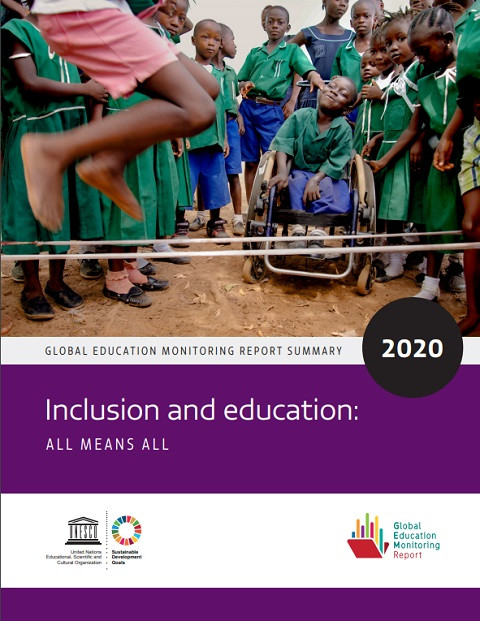 ملخص التقرير العالمي لرصد التعليم 2020: التعليم الشامل للجميع; الجميع بال استثناء Année de publication: 2020 Auteur institutionnel: UNESCO | Global Education Monitoring Report Team ينظر التقرير العالمي لرصد التعليم لعام 2020 في اآلليات االجتماعية واالقتصادية والثقافية التي تميز ضد األطفال والشباب والبالغين المحرومين، مما يحرمهم من التعليم أو يجعلهم مهمشين فيه. وبفضل حافز التزامها بإعمال الحق في التعليم الشامل، تعمل البلدان على توسيع نطاق رؤيتها للتعليم الشامل بإدراج التنوع في صلب ً ما يتعثر تنفيذ القوانين والسياسات الهادفة التي تنطوي نظمها التعليمية. لكن غالبا على نوايا حسنة. ويرى التقرير الذي صدر في بداية عقد العمل حتى عام 2030 ، وفي خضم األزمة الناجمة عن جائحة كوفيد-19 ،التي أسفرت عن تفاقم أوجه عدم ً أمام ً حقيقيا المساواة الكامنة، أن مقاومة تلبية احتياجات كل متعلم تشكل تهديدا تحقيق أهداف التعليم العالمية. 全球教育监测报告摘要 2020: 包容与教育; 覆盖全民,缺一不可 Année de publication: 2020 Auteur institutionnel: UNESCO | Global Education Monitoring Report Team 2020年《全球教育监测报告》分析了歧视弱势儿童、青年和成人、将 其排除在教育之外或是在教育领域内使其边缘化的社会、经济和文化机 制。各国承诺落实民众享有包容性教育的权利,并以此为鞭策,努力拓 展对于教育包容性的认识,将多样性作为教育系统的核心。然而,出于 良好意愿的法律和政策在实施过程中往往举步维艰。本报告发布于迈向 2030年目标的十年行动之初,仍在肆虐的2019冠状病毒病危机加剧了深 层次的不平等问题,报告认为对满足每名学习者需求的抵触,是对实现 全球教育目标的真正威胁。
 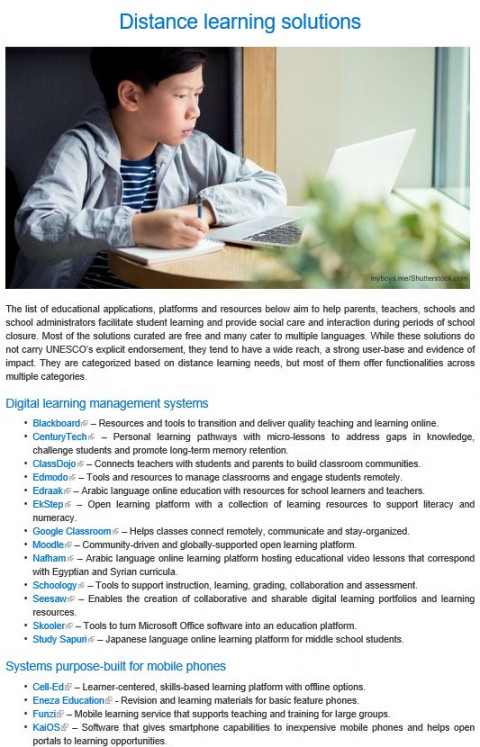 Distance Learning Solutions Année de publication: 2020 Auteur institutionnel: UNESCO The list of educational applications, platforms and resources below aim to help parents, teachers, schools and school administrators facilitate student learning and provide social care and interaction during periods of school closure. Most of the solutions curated are free and many cater to multiple languages. While these solutions do not carry UNESCO’s explicit endorsement, they tend to have a wide reach, a strong user-base and evidence of impact. They are categorized based on distance learning needs, but most of them offer functionalities across multiple categories. Solutions d’apprentissage à distance Année de publication: 2020 Auteur institutionnel: UNESCO La liste d’applications et de plates-formes éducatives ci-dessous vise à aider parents, enseignants, établissements et responsables pédagogiques à faciliter l’apprentissage des élèves et à assurer des interactions et des services sociaux pendant la fermeture des écoles. La plupart des solutions sont gratuites et plusieurs sont multilingues. Bien qu’elles ne soient pas explicitement soutenues par l’UNESCO, ces solutions ont généralement une large portée, de nombreux utilisateurs et une efficacité avérée. Elles sont classées par type de besoin pédagogique mais la plupart présente des fonctionnalités relevant de plusieurs catégories.
  Her Atlas: Girls’ and Women's Right to Education Atlas Année de publication: 2019 Auteur institutionnel: UNESCO Her Atlas, the online atlas of girls’ and women’s right to education, is developed as part of Her education, our future, UNESCO’s initiative to accelerate action for girls’ and women’s education by leveraging political and financial commitments. Her Atlas aims to enhance public knowledge and monitor the status of national constitutions, legislation and regulations related to girls’ and women’s education rights in order to encourage countries to improve their legal and policy frameworks.
 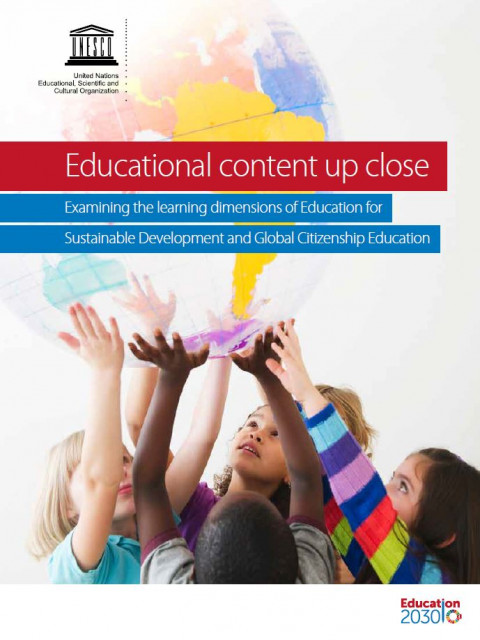 Educational Content up Close Examining the Learning Dimensions of Education for Sustainable Development and Global Citizenship Education Année de publication: 2019 Auteur institutionnel: UNESCO In taking ESD and GCED forward, UNESCO seeks to advance a holistic approach to education that emphasizes three inter-related dimensions of learning – the cognitive, social and emotional and behavioural.This publication summarizes the findings of a study commissioned by UNESCO to examine if and how these three dimensions of learning and teaching of ESD and GCED are reflected in pre-primary, primary and secondary educational content (ie. national laws, policies and the intended curriculum) in Costa Rica, Japan, Kenya, Lebanon, Mexico, Morocco, Portugal, Republic of Korea, Rwanda and Sweden. The outcome of this work shows a major pattern of commitment to the three learning dimensions in the selected countries and across the four education levels, with noteworthy nuances between ESD and GCED. 지속가능발전교육 및 세계시민교육의 학습 영역 연구: 국가별 교육 과정 분석을 중심으로 Année de publication: 2019 Auteur institutionnel: 유네스코 이 보고서는 유네스코가 의뢰한 연구 결과를 요약한 것으로, ESD 및 GCED의 교수·학습에 있어서 이 세 가지 영역이 취학전교육, 초등교육, 중등교육의 내용 (예: 국가법, 정책 및 의도된 교육과정)에 반영되고 있는지 여부와 어떻게 반영되고 있는지를 검토하고 있다. 연구 대상 국가로는 코스타리카, 일본, 케냐, 레바논, 멕시코, 모로코, 포르투갈, 한국, 르완다, 스웨덴 등 10개국이다. 이 연구결과는 선정 국가별, 교육단계별로 나타나는 세 가지 학습 영역에 대한 주요 양상을 보여주고 있으며, ESD와 GCED 사이의 미묘한 차이는 주목할 만하다.
 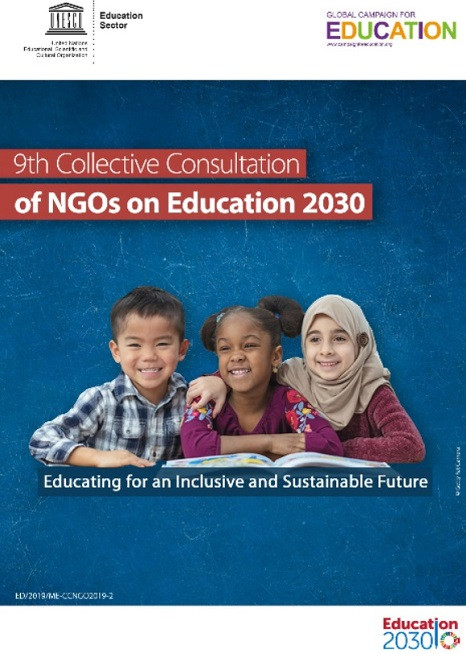 9th Collective Consultation of NGOs on Education 2030: Educating for an Inclusive and Sustainable Future Année de publication: 2020 Auteur institutionnel: UNESCO | Global Campaign for Education (GCE) This includes proceedings and key messages of the 9th Global meeting of the Collective Consultation of NGOs on Education 2030 (CCNGO 2019) organized by UNESCO from 2-5 December 2019 in Hammamet, Tunisia and generously hosted by the Global Campaign for Education (GCE), alongside the Arab Campaign for Education for All (ACEA) and the National Association of the Right to Education (ANDET). The CCNGO 2019 aimed to build on CSOs(Civil Society Organisations) experiences and strong commitments to strengthen collective initiatives towards the realisation of the SDGs and education related targets. The focus and major theme of the Meeting was the role and engagement of civil society organizations in supporting equity and inclusion in the implementation of SDG4-Education 2030 at national, regional and global level. 9e Consultation collective des ONG sur l’Éducation 2030: Éduquer pour un avenir inclusif et durable Année de publication: 2020 Auteur institutionnel: Organisation des Nations Unies pour l'éducation, la science et la culture (UNESCO) | Global Campaign for Education (GCE) Cela comprend les actes et les messages clés de la 9eRéunion mondialede la Consultation collective des ONG sur l’Éducation 2030(CCONG2019) a été organisée par l’UNESCO du 2 au 5 décembre2019 à Hammamet, Tunisie,où elle a été généreusement accueillie par la Campagne mondiale pour l’éducation(CME), la Campagne arabe pour l’éducation pour tous(ACEA) et l’Association nationale du droit à l’éducation(ANDET). La Réunion mondialede la CCONG2019 avait pour but derenforcer les initiatives collectives visant à la mise en œuvre des ODD et des cibles relatives à l’éducation ens’appuyantsur l’expérience des OSC et leur forte mobilisation. La réunion avait pour thèmecentral l’action et l’engagement des organisations de la société civile en faveur de l’équité et de l’inclusion dans le cadre dela mise en œuvre de l’ODD 4 –Éducation 2030aux niveaux national, régional et mondial.
 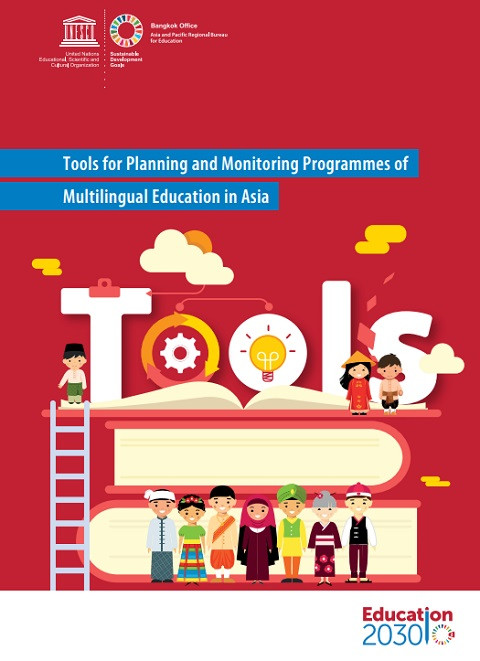 Tools for Planning and Monitoring Programmes of Multilingual Education in Asia Année de publication: 2020 Auteur institutionnel: UNESCO | UNESCO Bangkok This booklet provides some tools that programme personnel may use in the M&E of their multilingual education (MLE) programmes. This booklet complements the five booklets of UNESCO’s MTB MLE Resource Kit – Including the Excluded: Promoting Multilingual Education (2018).