
Ressources
Explorez une large gamme de ressources sur le GCED afin d’approfondir votre compréhension et de renforcer vos activités de recherche, de plaidoyer, d’enseignement et d’apprentissage.
3,126 résultats trouvés
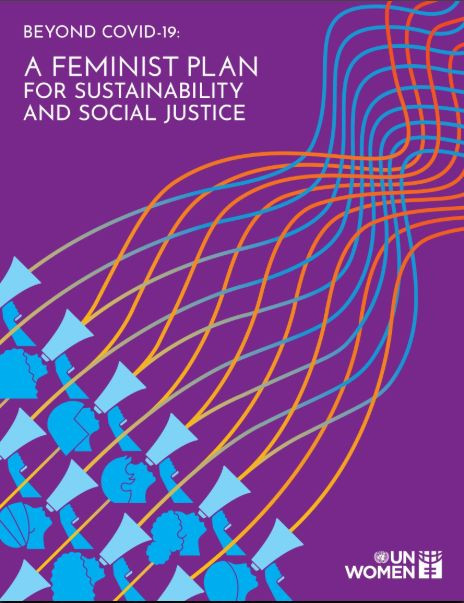 Más allá del COVID-19: un plan feminista para la sostenibilidad y la justicia social Année de publication: 2021 Auteur institutionnel: United Nations Entity for Gender Equality and the Empowerment of Women (UN Women) En un momento en que el mundo está aprendiendo a vivir con el COVID-19, y busca emerger de la crisis actual y “construir mejor”, el nuevo “Plan feminista” de ONU Mujeres ofrece una hoja de ruta visionaria y práctica para poner la igualdad de género, la justicia social y la sostenibilidad en el centro de la recuperación. En el “Plan feminista” se hace un recuento de las políticas ambiciosas y transformadoras en torno a los medios de vida, los cuidados y el medio ambiente que se necesitan para construir un futuro más igualitario y sostenible. Para llegar ahí, el documento hace un llamado a que se avance en políticas específicas para distintos contextos, estrategias políticas adaptadas y un financiamiento adecuado. Asimismo, se identifican los instrumentos clave que pueden generar el cambio y a los actores que necesitan entrar en acción a los niveles global, nacional y local para poder avanzar hacia esta aspiración.
  World's Largest Lesson Année de publication: 2016 Auteur institutionnel: United Nations Children's Fund (UNICEF) World's Largest Lesson (WLL) is an educational campagin that students participate from all around the world.With this campaign, students can understand SDGs, think about global problems and act for finding solutions. UNICEF provides teaching materials and guides to teachers for participatting World's Largest Lesson.
  Kiffe Ta Race Année de publication: 2018 Auteur institutionnel: Binge Audio Pourquoi le mot « race » est-il tabou ? Qu’en est-il quand on est, à la fois, victime de discriminations raciales et sexuelles ? Comment assumer son identité plurielle ? Un mardi sur deux, Rokhaya Diallo et Grace Ly reçoivent un·e invité·e pour explorer les questions raciales sur le mode de la conversation et du vécu. Why is the word "race" taboo? What happens when you are both a victim of racial and sexual discrimination? How do you come to terms with your plural identity? Every other Tuesday, Rokhaya Diallo and Grace Ly welcome a guest to explore racial issues in a conversational, real-life setting.
  Qui a peur des Juifs ? Antisémitisme, la tentation perpétuelle Année de publication: 2023 Auteur institutionnel: Illana Weizman Dans cette série podcast, la sociologue Illana Weizman questionne les expériences juives et l’hostilité subie par cette population en compagnie d’intellectuel-les, d’artistes, de chercheurs-euses, de militant-es ou de politiques rencontré·es des deux côtés de la frontière franco-suisse.Où en est la lutte contre l’antisémitisme aujourd’hui? Quand les courants antiracistes prônent l’écoute des concernés, n’est-il pas temps de l’appliquer pleinement aux Juifs? In this podcast series, sociologist Illana Weizman discusses the Jewish experience and the hostility suffered by this population in the company of intellectuals, artists, researchers, activists and politicians from both sides of the Franco-Swiss border. When anti-racist currents advocate listening to those concerned, isn't it time to apply this fully to Jews?
  Construction / Emerging Invention of Unequal Populations in Latin American Education Année de publication: 2017 Auteur: Jesús Aguilar Nery Auteur institutionnel: Universidad de San Andrés | Arizona State University This text explores the emergent construction of “unequal” populations in Latin-America, focusing on three national traditions: Argentina, Brazil and Mexico. It compares who has been named as unequal in educational research and under what categories, and treats this comparison as an indicator for understanding the phenomenon of educational inequalities in the region between 1960 and 1970. It is concluded that the rules used to enforce inclusion, equality and equity are, at the same time, standards and divisions that involve the construction of systems of reasoning that also simultaneously include and exclude. Construcción/Invención Emergente de Poblaciones Desiguales en la Educación Latinoamericana Année de publication: 2017 Auteur: Jesús Aguilar Nery Auteur institutionnel: Universidad de San Andrés | Arizona State University En este texto se indaga la emergencia de la construcción/invención de poblaciones “desiguales” en Latinoamérica, enfocando tres tradiciones nacionales: Argentina, Brasil, y México. Se compara quiénes han sido denominados como desiguales en la investigación educativa, y bajo qué categorías, esto como un indicador para la comprensión del fenómeno de las desigualdades educativas en la región entre las décadas de 1960 y 1970. Se concluye que las reglas utilizadas para ampliar la inclusión, la igualdad o la equidad son, al mismo tiempo, estándares y divisiones, que implican la construcción de sistemas de razonamiento que incluyen tanto como excluyen.
  Education and Social Cohesion in Latin America: A Micro-political Perspective Année de publication: 2014 Auteur: Silvina Gvirtz | Jason Beech Auteur institutionnel: Universidad de San Andrés | Arizona State University This article analyses the relation between education and social cohesion in Latin America from a micropolitical perspective. Even though we acknowledge the relevance of the macro and mezzo levels, we argue that the political decisions that are made at the school level are crucial to understand the contribution of educational systems to social cohesion. We suggest that the relation between social cohesion and school micropolitics can be analysed in two dimensions: the first is related to the access and permanence of children in school, while the second is related to the curriculum. The article concentrates on the second level by analysing the relation between the curriculum and social cohesion from a local, a national, and a global perspective. Educación y Cohesión Social en América Latina: Una Mirada desde la Micropolítica Escolar Année de publication: 2014 Auteur: Silvina Gvirtz | Jason Beech Auteur institutionnel: Universidad de San Andrés | Arizona State University Este artículo ofrece una serie de reflexiones acerca de la relación entre educación y cohesión social en América Latina en la actualidad, tomando como eje la micropolítica de la escuela. Sin desconocer la importancia de los niveles macro e intermedio, se sugiere que las decisiones políticas que se toman en el nivel escolar son fundamentales para entender la contribución que hace el sistema educativo a la cohesión social. Sostenemos que existen dos niveles para pensar la cohesión social en la micropolítica de la escuela en América Latina: uno vinculado al acceso y permanencia de los niños y jóvenes en la institución y uno curricular. Tomando como eje el segundo de los niveles mencionados, proponemos que en términos del alcance de la cohesión social, la relación entre este concepto y la escuela puede ser pensada en tres dimensiones: la global, la nacional y la local.
 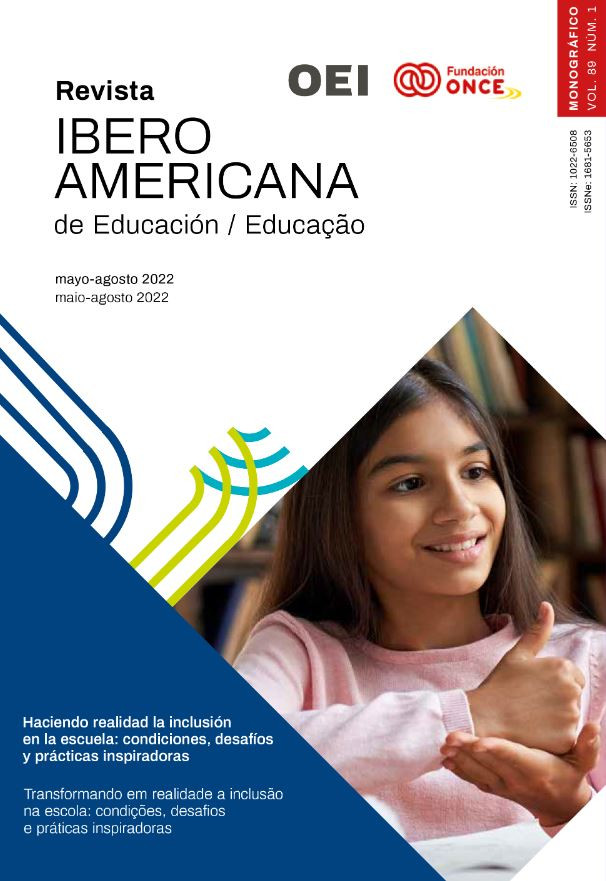 Teachers and Migrant Families: Pressing Communication (Iberoamerican Journal of Education; vol. 89, no. 1) Année de publication: 2022 Auteur: Mohamed Chamseddine Habib Allah Auteur institutionnel: Organization of Ibero-American States for Education, Science and Culture (OEI) This article presents the results of a study whose objective is to analyze the state of communication between migrant families and teachers in Early Childhood and Primary Education Centers in the Region of Murcia. Two questionnaires were chosen to develop a descriptive non-experimental quantitative research. The main results reveal that extracurricular activities are not part of the usual conversations between families and teachers. However, acceptable but improvable aspects are detected, such as delving into discipline issues, and student learning, etc. On the other hand, it is evident that the parents still do not go to visit the teachers on their own initiative to address the relevant elements of the teaching-learning process of their children. Docencia y familias migrantes: comunicación acuciante (Revista Ibero-americana de Educação; vol. 89, núm. 1) Année de publication: 2022 Auteur: Mohamed Chamseddine Habib Allah Auteur institutionnel: Organización de Estados Iberoamericanos para la Educación, la Ciencia y la Cultura (OEI) Este artículo presenta los resultados de un estudio cuyo objetivo es analizar el estado de comunicación entre las familias migrantes y los docentes en Centros Educativos de Educación Infantil y Primaria de la Región de Murcia. Se optó por dos cuestionarios homólogos para desarrollar una investigación de carácter cuantitativo no experimental de corte descriptivo. De los principales resultados se revela que las actividades extraescolares no forman parte de las conversaciones habituales entre las familias y el profesorado. Sin embargo, se detectan aspectos aceptables pero mejorables, como profundizar en los temas de disciplina, y el aprendizaje del alumnado, etc. Por otro lado, se evidencia que los progenitores siguen sin acudir a visitar a los docentes por iniciativa propia para abordar los elementos relevantes del proceso de enseñanza-aprendizaje de sus hijos e hijas.