
Ressources
Explorez une large gamme de ressources sur le GCED afin d’approfondir votre compréhension et de renforcer vos activités de recherche, de plaidoyer, d’enseignement et d’apprentissage.
3,182 résultats trouvés
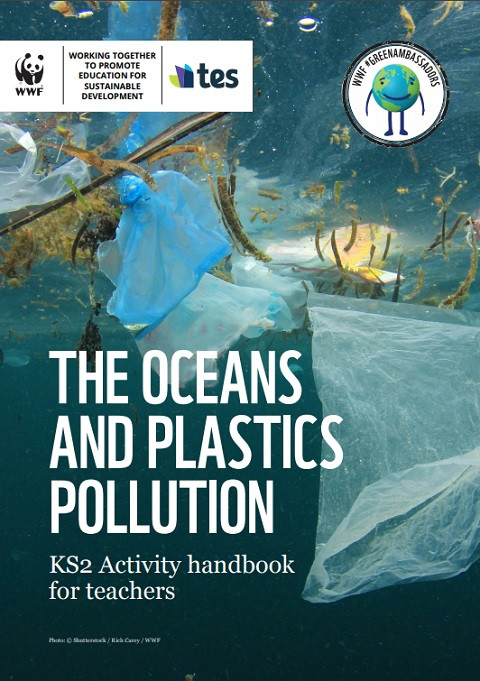 The Oceans and Plastics Pollution: KS2 Activity Handbook for Teachers Année de publication: 2019 Auteur institutionnel: World Wide Fund for Nature (WWF) | Tes This resource enables pupils to explore the role of the oceans in our lives and why healthy oceans are so vital to our future. By looking at the impact of plastics pollution on the oceans, pupils will also consider what steps we can all take to safeguard these precious waters for generations to come. It contains a range of activities aimed at teachers of 7-11 year-olds. It is intended that this resource will be used in cross-curricular work and all activities can be linked to the National Curricula of England, Northern Ireland, Scotland and Wales. Teachers will find that the material can be adapted for use with different ages and abilities.The six activities engage pupils in active learning methods, encouraging them to work together to solve problems, to think creatively, and to see themselves as active participants in their communities and the wider world. With a growing awareness of the part that they can play in creating a better future for our oceans, pupils will take a step on the journey to becoming global citizens and sustainability champions of the future.
 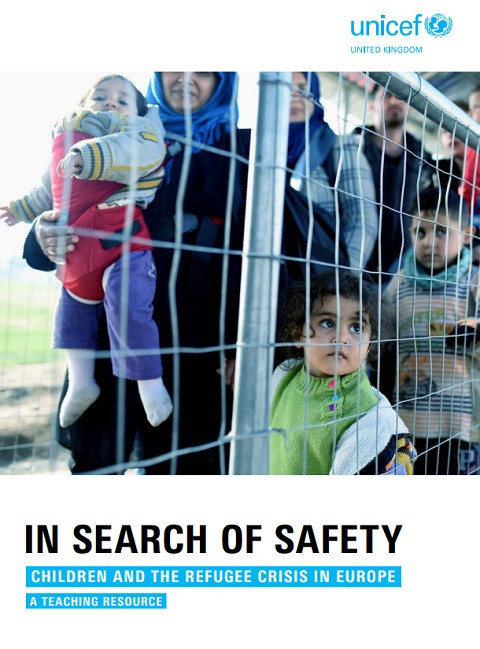 In Search of Safety: Children and the Refugee Crisis in Europe; A Teaching Resource Année de publication: 2016 Auteur: Carolyne Willow Auteur institutionnel: UNICEF UK This resource aims to allow teachers to help their students – primary (age seven upwards) and secondary – make sense of the current refugee and migrant crisis in Europe, within a children’s rights framework. It provides an historical overview of migration, contextualising the challenges we face today with a reminder of what has gone before. Guidance is provided to help you prepare for potentially difficult conversations and situations, and to enable you to be ready to access help for any child that needs it. The resource also includes ideas for extra activities by curriculum area, and ideas for whole-school activities. A range of films, images and information is provided and sign-posted to help you bring these activities to life.
  Maintaining Global Citizenship Education in Schools: A Challenge for Australian Educators and Schools (Vol. 43, No. 4) Année de publication: 2018 Auteur: John Buchanan | Nina Burridge | Andrew Chodkiewicz Auteur institutionnel: Australian Journal of Teacher Education Teaching students about global citizenship remains a critical challenge for schools and communities, especially in a developed country like Australia. With increasingly difficult national and international contexts and its marginal place in the school curriculum, there is an urgent need to help maintain support for global citizenship education. Recognising the challenges and limitations, key ways to raise its profile include considering available pedagogies, drawing on the existing Australian Global Education framework, taking up existing curriculum opportunities, accessing quality educational resources and relevant teacher education programs, and working in partnership with key Non-Government Organisations.
  Educating for Global Citizenship: Australia as a Case Study (Vol. 11. No. 1) Année de publication: 2019 Auteur: Ruth Reynolds | Suzanne MacQueen | Kate Ferguson-Patrick Auteur institutionnel: UCL Press Twenty-first-century teaching prepares students for a globalized existence. The long-established goal of schooling to prepare a responsible citizenry who strive for the benefit of the community must now be extended, assisting students to become global citizens, equipped to deal with global issues. This article investigates how civics and citizenship education is addressed in curricula; in particular, to what extent the ongoing issue of supporting a critical citizenry, locally and globally, is addressed. Using Australia as a case study, we present an analysis of selected Australian primary school (ages 5–12) curriculum documents to determine the extent of commitment to educating for global citizenship specifically. While intentions are good, work is needed to ensure that these are enacted within schools.
 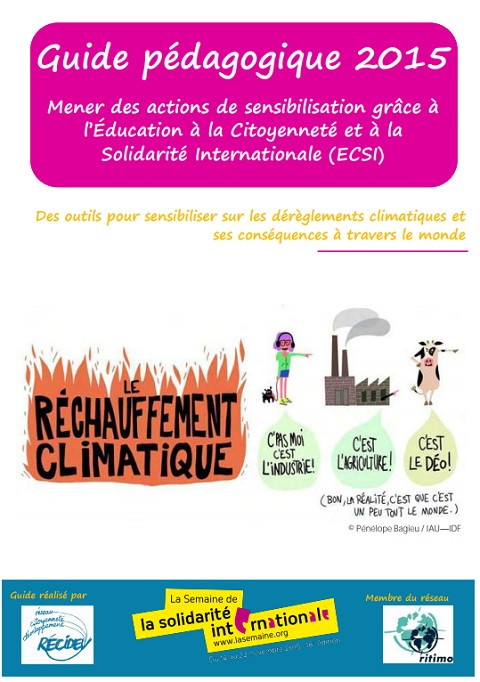 Guide pédagogique 2015: Mener des actions de sensibilisation grâce à l'Education à la Citoyenneté et à la Solidarité Internationale (ECSI): Des outils pour sensibiliser sur les dérèglements climatiques et ses conséquences à travers le monde Année de publication: 2015 Auteur institutionnel: RéCiDev Besançon (Réseau Citoyenneté Développement) Ce guide pédagogique est destiné aux acteurs de la semaine de solidarité internationale qui se déroule tous les ans autour de la 3ème semaine de novembre en France. Il propose des outils d'Education à la citoyenneté et à la solidarité internationale (ECSI) pour mener des actions de sensibilisation sur le dérèglement climatique et ses conséquences à travers le monde. Il comprend :- une première partie théorique sur les valeurs et la pédagogie de l'ECSI- une seconde partie pratique qui présente des outils pédagogiques- une troisième partie qui donne des informations pratiques sur les acteurs et les ressources en ECSI.
  Refugee Education: The Crossroads of Globalization (Educational Researcher; vol. 45, no. 9) Année de publication: 2016 Auteur: Sarah Dryden-Peterson Auteur institutionnel: Harvard University In this article, the author probes a question at the core of comparative education – how to realize the right to education for all and ensure opportunities to use that education for future participation in society. She does so thorough examination of refugee education from World War II to the present, including analysis of an original dataset of documents (n=214) and semi-structured interviews (n=208). The data illuminate how refugee children are caught between the global promise of universal human rights, the definition of citizenship rights within nation-states, and the realization of these sets of rights in everyday practices.
 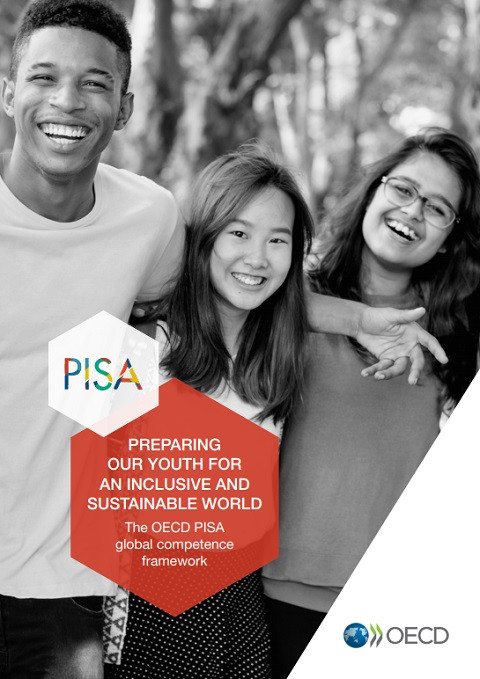 Preparing Our Youth for an Inclusive and Sustainable World: The OECD PISA Global Competence Framework Année de publication: 2018 Auteur institutionnel: Organisation for Economic Co-operation and Development (OECD) OECD Programme for International Student Assessment (PISA), the global yardstick for educational success, includes global competence in its metrics for quality, equity and effectiveness in education. The global competence assessment in PISA 2018 is composed of two parts: a cognitive assessment and a background questionnaire. The cognitive assessment is designed to elicit students' capacities to critically examine global issues; recognise outside influences on perspectives and world views; understand how to communicate with others in intercultural contexts; and identify and compare different courses of action to address global and intercultural issues. In the background questionnaire, students will be asked to report how familiar they are with global issues; how developed their linguistic and communication skills are; to what extent they hold certain attitudes, such as respect for people from different cultural backgrounds; and what opportunities they have at school to develop global competence. Answers to the school and teacher questionnaires will provide a comparative picture of how education systems are integrating global, international and intercultural perspectives throughout the curriculum and in classroom activities.
  Rethinking Learning: A Review of Social and Emotional Learning for Education Systems Année de publication: 2020 Auteur: Nandini Chatterjee Singh | Anantha Duraiappah Auteur institutionnel: Mahatma Gandhi Institute of Education for Peace and Sustainable Development (MGIEP) This publication titled ‘Rethinking Learning: A Review of Social and Emotional Learning for Education Systems’, published by the UNESCO Mahatma Gandhi Institute of Education for Peace and Sustainable Development (MGIEP) reviews the latest research on Social and Emotional Learning (SEL), its impact on student health and school climate and its transformative role in building happier classrooms. It seeks to inform and impress upon Member States the urgent need to mainstream social and emotional learning in education systems.
  No Poverty: Educational Resource for Teachers and Facilitators Année de publication: 2017 Auteur institutionnel: Concern Worldwide No Poverty – Educational resource for teachers and facilitators contains activities, statistics and information to explore the extent of poverty in the world, it’s causes and consequences as well as the aims of the sustainable development goals which aspire to address this issue. The booklet includes statistics, three activities complete with resources ready to photocopy and key terminology.
  Ensuring High Quality Primary Education for Children from Mobile Populations: A Desk Study Année de publication: 2017 Auteur: Stephanie Bengtsson | Caroline Dyer Auteur institutionnel: Educate A Child (EAC) | German Federal Ministry for Economic Cooperation and Development (GIZ) This study focuses on provision for primary school-aged children amongst communities of refugees and Internally Displaced People (IDPs), mobile pastoralists and seasonally migrating workers. For refugee and IDP children, policy, coordination and implementation challenges include: inconsistent ratification and enforcement of conventions and agreements protecting refugees and IDPs; the disproportionate impact of forced displacement on low and middle income countries (LMICs); the lack of a shared agenda among a wide range of stakeholders with differing mandates; and inadequate forced displacement terminology. Promising and emerging policy, coordination and implementation strategies include: expanding existing rights documents and agreements and building policy from the ground up; enshrining forcibly displaced people’s rights to education in national laws and policy; genuine engagement with affected communities; utilising the Education Cluster and other existing multi-stakeholder networks for knowledge sharing and collaboration; and collaborating across sectors to address the needs of the whole child. Financing challenges include: unpredictable and low funding for refugee and IDP education; weak capacity to absorb funds at the national and local level; an over-reliance on short-term financing mechanisms; donor dependence and a lack of funding sustainability; and inappropriate distribution of funds within education programming.