
Ressources
Explorez une large gamme de ressources sur le GCED afin d’approfondir votre compréhension et de renforcer vos activités de recherche, de plaidoyer, d’enseignement et d’apprentissage.
3,182 résultats trouvés
 OECD 학습 나침반 2030: 변혁적 역량과 민주시민교육의 접점 Année de publication: 2019 Auteur: 김아미 Auteur institutionnel: 경기도교육연구원 본 연구는 OECD 학습 나침반 2030(Learning Compass 2030)에서 논하는 변혁적 역량(transformative competencies)이 무엇을 의미하는지 살펴보고, 이에 대한 교육적 해석과 실천을 위해 민주시민교육과의 접점을 찾아 ‘변혁적 역량’을 지원할 수 있는 교육 방향 및 방안을 도출하고자 하였다. 또한 이를 통해 본 연구는 어린이·청소년인 학습자의 사회 변혁적 행동 능력 및 권리가 강조되는 국내외 맥락에서 교육적 대응을 위해 고려해야할 이슈들을 제안하는 것을 목적으로 한다.
  평화교육 사례 분석 및 실행방안 연구 Année de publication: 2017 Auteur: 김영철 | 김성오 | 박숙영 | 정주진 Auteur institutionnel: 경기도교육연구원 우리 사회와 학교 현장의 다양한 차별과 폭력 문제는 평화교육이 절실함을 보여준다. 민주시민을 키워야 할 학교에서는 평화교육을 접목시켜 민주시민교육을 강화하면서, 평화적 감수성과 태도, 능력을 고르게 함양토록 할 필요가 있다. 본 연구에서는 다양한 평화교육의 국내외 사례를 분석하여 창의적이고 포괄적인 실행 방안을 모색하였다.
  초등학교 교사를 위한 디지털 시민교육 활용 가이드북: 온-오프라인을 연결하는 디지털 시민교육 Année de publication: 2019 Auteur: 김양은 | 배은주 | 박정원 | 김형태 | 김영환 | 심성호 Auteur institutionnel: 방송통신위원회 | 한국정보화진흥원 초등교사들의 디지털시민교육 이해도를 높이고 교육현장에서 학생들과 함께 디지털시민역량을 기르기 위한 안내서이다. 본 교재에서는 디지털시민역량을 정체성, 웰빙, 권리와 책임, 소통과 관계, 정보리터러시, 사회참여 6가지로 제시한다.
 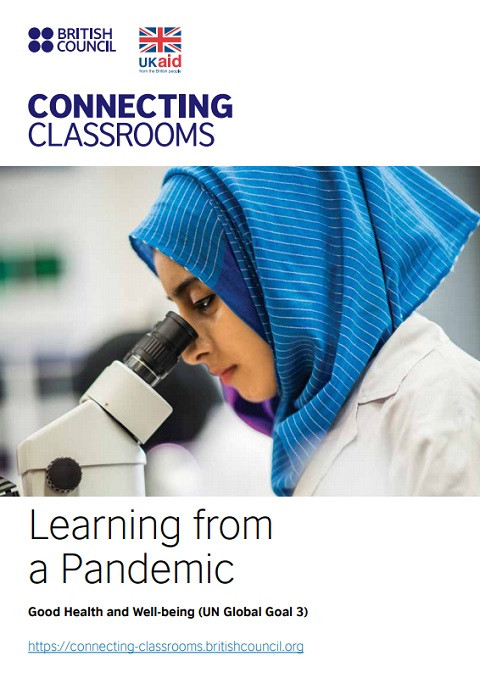 Connecting Classrooms: Learning From a Pandemic; Good Health and Well-Being (UN Global Goal 3) Année de publication: 2020 Auteur institutionnel: British Council | UK aid This resource will help you make a contribution to a recovery curriculum in schools, and beyond this, by providing interesting, engaging and relevant content that encourages pupils to recall, discuss and process some of their thoughts, feelings and memories. Over the course of six lessons, pupils will have opportunities to develop an understanding of:• Covid-19 in the context of some of the world’s most common communicable diseases and pandemics from the past• how communicable diseases like Covid-19 may start and spread, and how this is investigated• relevant prevention strategies to foster positive physical and mental health and well-being.In doing so, pupils will have the opportunity to develop core skills in critical thinking and problem solving, citizenship, student leadership, creativity and imagination and aspects of digital literacy. This learning unit is also designed to support the United Nations’ Global Goals for Sustainable Development (SDGs), in particular Goal 3: Good health and well-being.
 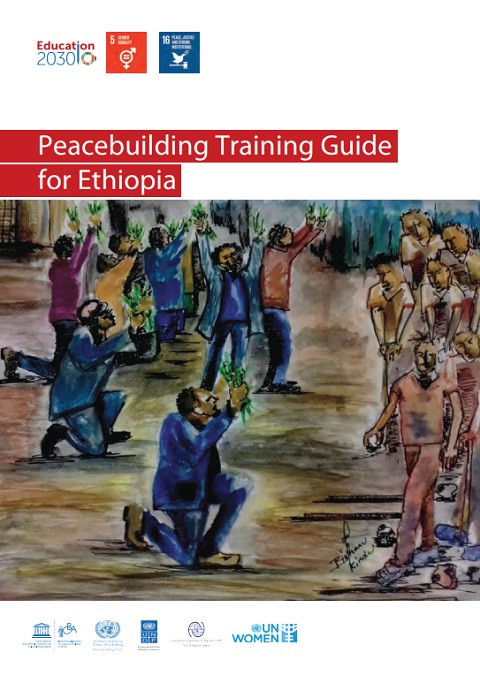 Peacebuilding Training Guide for Ethiopia Année de publication: 2020 Auteur institutionnel: UNESCO International Institute for Capacity-Building in Africa (IICBA) This publication is a training guide for a variety of stakeholders, both inside and outside the education system, in Ethiopia on peace and resilience building. It is an adapted and updated guide for the Ethiopian context. The training guide aims to inform and empower the reader in why and how to educate others for peacebuilding. It provides a foundation of con¬ict analysis and peacebuilding and describes a learner-centered approach to peace education and community engagement. The goal of the training guide is for the reader to become a facilitator with the disposition, knowledge, skills and commitment to support others in developing their full potential as peace-builders.
  PEERs for Peace!: A Community-Based Resource Guide for Peace Education Année de publication: 2016 Auteur: Tyler Hook | Kathleen Kardos | Athena Lao | Sharanya Vasudevan | Erin Wall Auteur institutionnel: UNESCO International Institute for Capacity-Building in Africa (IICBA) | University of Pennsylvania This peace education resource guide is designed for teachers of upper primary grades in sub‐Saharan African countries to help them foster the development of peaceful skills, attitudes, and practices in their students and empower students to use peaceful tools to respond productively to conflict. Throughout the seven units in this peace education resource guide, students will explore the concepts of problem solving, empathy, effective communication, and respect (PEER) and how they relate to conflict in various areas of their lives, including families, schools, communities, governments, and more.
  디지털 시대 시민되기: 초등학교 고학년 (디지털 시민교육 시리즈 2nd) Année de publication: 2019 Auteur: 김양은 | 배은주 | 박정원 | 김영환 | 김형태 | 심성호 Auteur institutionnel: 방송통신위원회 | 한국정보화진흥원 본 자료는 초등 고학년(5~6학년) 대상 디지털시민교육을 위한 교육자료이다. 6가지의 역량별로 교수학습지도안과 학생 활동지로 구성되어 있다.
 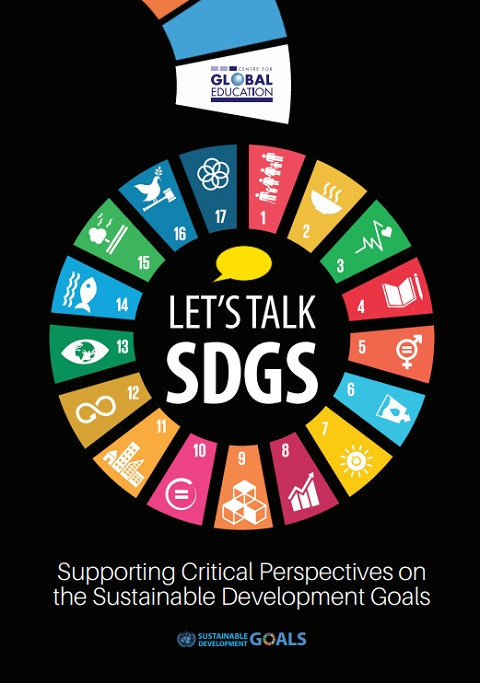 Let’s Talk SDGs: Supporting Critical Perspectives on the Sustainable Development Goals Année de publication: 2020 Auteur: Caroline Murphy Auteur institutionnel: Centre for Global Education (CGE) This resource is an invitation to development educators to critically interrogate the Sustainable Development Goals and discuss their capacity to deliver upon their intended outcomes. It invites users to ask if the SDGs can support effective global learning and represent a sound critique of the international system. The resource is a useful starting point for a critical discussion on the Goals' capacity for effective advocacy and education toward the eradication of poverty and inequality.
 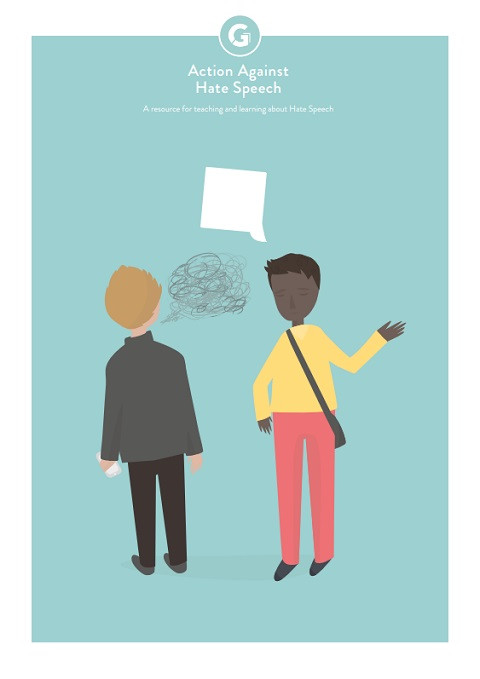 Action Against Hate Speech: A Resource for Teaching and Learning About Hate Speech Année de publication: 2017 Auteur institutionnel: Tony Blair Institute for Global Change | Generation Global This module is designed to prepare students for dialogue around the issue of hate speech. It builds upon other work on human rights, and explores the balancing act between freedom of expression and freedom from insult. Additionally, it prepares students for dialogue on these issues in our facilitated videoconferences and on our safe, secure, online community. This material helps you and your students to get involved in educating, advocating, and acting against hate speech in your communities.
  Global Citizenship Education and Human Rights Education: Are They Compatible With U. S. Civic Education? (Journal of International Social Studies; Vol. 6, No. 2) Année de publication: 2016 Auteur: William R. Fernekes Auteur institutionnel: International Assembly of the National Council for the Social Studies Global citizenship education (GCE) and human rights education (HRE) offer substantive contributions to civic education. Interconnections between the fields exist in curricula from intergovernmental organizations (UNESCO), non-governmental organizations (Oxfam Great Britain) and national ministries (Learning and Teaching Scotland). This essay explores how civic education curricula, learning outcomes, and teacher preparation can be developed to enhance the roles played by GCE and HRE in U. S. civic education. Analysis of the relationships between GCE and HRE yields these conclusions: (1) global citizenship education programs share a philosophy of cosmopolitanism, commitments to universal human rights norms, respect for cultural diversity and sustainable development, and issues-based curriculum designs; (2) a high degree of compatibility exists between GCE program goals and the goals of the values-awareness-socialization HRE model, and (3) this strong compatibility does not extend to the accountability-professional development or the activismtransformation models of HRE. Implementing GCE faces major obstacles, notably emphases on national identity in nation-state civic education, the potential incompatibility between national interests and cosmopolitan commitments in the study of global issues, and the low commitment to GCE or HRE in teacher preparation.