
Ressources
Explorez une large gamme de ressources sur le GCED afin d’approfondir votre compréhension et de renforcer vos activités de recherche, de plaidoyer, d’enseignement et d’apprentissage.
3,182 résultats trouvés
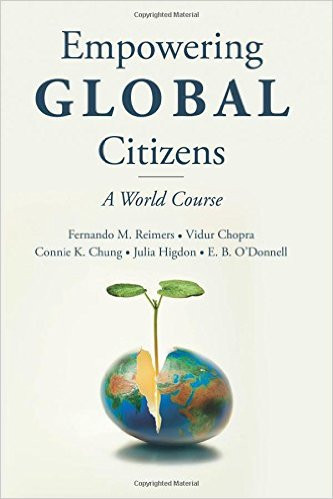 Empowering Global Citizens: A World Course Année de publication: 2016 Auteur: Fernando Reimers | Vidur Chopra | Connie K. Chung | Julia Higdon | E. B. O'Donnell The world is changing rapidly and shcools must evolve to prepare young people to invent the future. Reinventing education requires thinking anew about how to help students develop competencies that will empower them as architects of their own lives and contributing members of their communities. Drawing on a synthesis of research and practice in global citizenship education, this book presents The World Course - a rigorous and coherent curriculum to foster student agency, empathy, and deep knowledge and skills to recognize the biggest global challenges and opportunities of our times, and to advance sustainability, human rights, and peace. Integrating current thinking on twenty-first-centry competencies and deeper learning, and deploying pedagogies that cultivate student responsibility, imagination, and creativity, such as project-based learning and design thinking, this book is a blueprint to reinvent education to empower global citizens.
  2022 세계시민교육 선도교사 활동 참여 교사의 세계시민교육 확산도 연구 Année de publication: 2022 Auteur: 박환보 | 이인영 | 이지홍 본 연구는 유네스코 아시아태평양 국제이해교육원이 추진한 ‘세계시민교육 선도교사 사업’ 효과 분석을 목표로 한다. ‘선도교사 활동 참여를 통해 세계시민교육 실천 역량이 향상되었는지’, ‘연수 받은 내용을 학교 현장에서 얼마나 어떻게 확산시키고 있는지’, 그리고 이러한 활동을 통해 ‘학교 현장에서 세계시민교육은 얼마나 확산되고 있는지’ 등을 분석하였다. 이를 토대로 세계시민교육 선도교사 활동의 성과를 보다 종합적으로 이해하고, 향후 성과 확산을 위한 정책적 시사점을 도출하였다. 연구기관: 유네스코 아시아태평양 국제이해교육원연구책임자: 박환보 (충남대학교)공동연구원: 이인영 (한국청소년정책연구원)이지홍 (유네스코 아시아태평양 국제이해교육원)연구보조원: 정성경 (충남대학교)조유진 (유네스코 아시아태평양 국제이해교육원) 목차제1장 서론제2장 세계시민교육 선도교사 활동 성과분석 체계제3장 세계시민교육 선도교사 활동 성과분석제4장 세계시민교육 선도교사의 세계시민교육 확산 사례 분석제5장 세계시민교육 선도교사의 세계시민교육 확산 활동과 확산도 인식제6장 결론참고문헌부록
  평등교육실천론 Année de publication: 2020 Auteur: 백병부 | 권순정 | 심재휘 | 윤선인 | 이혜정 Auteur institutionnel: 경기도교육연구원 이 연구는 평등과 관련된 교육 영역에서의 논의가 가지고 있는 한계를 극복하기 위해서 수행되었다. 즉 기존의 논의는 대체로 능력주의를 전제로 교육기회의 분배 실태와 구조를 분석하는 데 집중하고 있다는 것이다. 구체적으로 이 연구에서는 독립적이고 이성적인 존재로 인간을 규정했던 근대적 인간관을 의존적이고 관계적인 존재로 전환해야 한다고 주장했다. 이 연구에서는 정의의 개념이 확장되어온 과정을 정리함으로써 평등이 적용되어야 할 영역의 다차원성을 확인하고, 앞에서 정리한 현대철학의 인간관에 근거하여 평등의 영역을 경제적 자원이나 사회적 지위뿐만 아니라 사회적 인정과 정치적 대표, 애정, 돌봄 등과 같은 정동적 영역으로 확장할 수 있음을 정리하였다. 마지막으로 이 연구에서는 기존의 평등에 대한 논의가 국민국가를 배경으로 하고 있기 때문에 여러 한계를 안고 있음을 지적하고, 세계시민교육과 평화교육의 맥락에서 평등의 적용 범위가 지구공동체 전체로 확장되어야 한다는 점을 강조하였다. 출처: 경기도교육연구원 홈페이지
 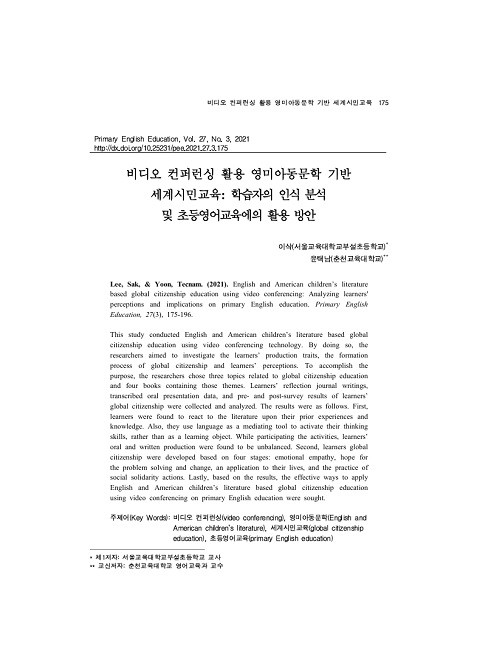 비디오 컨퍼런싱 활용 영미아동문학 기반 세계시민교육: 학습자의 인식 분석 및 초등영어교육에의 활용 방안 (초등영어교육; Vol. 27, No. 3) Année de publication: 2021 Auteur: 이삭 | 윤택남 Auteur institutionnel: 한국초등영어교육학회 본 연구는 비디오 컨퍼런싱을 활용한 원격수업 상황에서 영미아동문학 기반 세계시민교육을 실시하여 그 과정에서 나타난 학습자 발화의 특징과 세계시민성의 형성 및 발전 과정을 분석하였다. 이를 바탕으로 초등영어교육에의 활용 방안을 모색하고자 하였다. 이를 위해 제시한 연구 문제는 다음과 같다. 첫째, 비디오 컨퍼런싱 활용 영미아동문학 기반 세계시민교육이 학습자 발화 및 세계시민성 함양에 미치는 영향은 어떠한가? 둘째, 비디오 컨퍼런싱 활용 영미아동문학 기반 세계시민교육의 초등영어교육에서의 활용 방안은 무엇인가?
 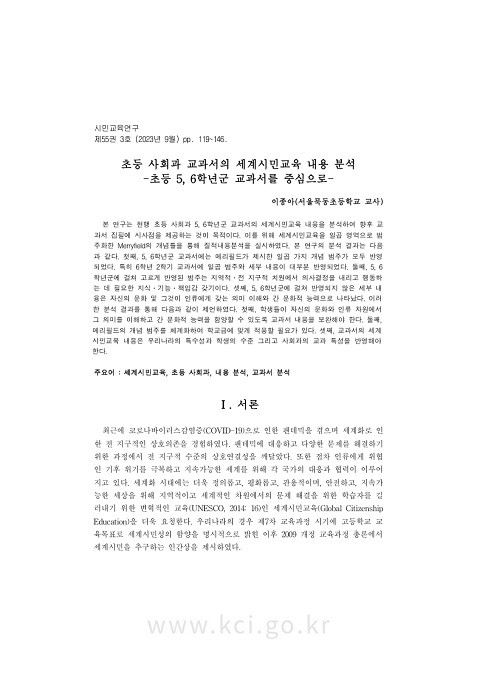 초등 사회과 교과서의 세계시민교육 내용 분석: 초등 5, 6학년군 교과서를 중심으로 (시민교육연구; Vol. 55, No. 3) Année de publication: 2023 Auteur: 이종아 Auteur institutionnel: 한국사회과교육학회 본 연구는 현행 초등 사회과 5, 6학년군 교과서의 세계시민교육 내용을 분석하여 향후 교과서 집필에 시사점을 제공하는 것이 목적이다. 이를 위해 세계시민교육을 일곱 영역으로 범주화한 Merryfield의 개념틀을 통해 질적내용분석을 실시하였다. 본 연구의 분석 결과는 다음과 같다. 첫째, 5, 6학년군 교과서에는 메리필드가 제시한 일곱 가지 개념 범주가 모두 반영되었다. 특히 6학년 2학기 교과서에 일곱 범주와 세부 내용이 대부분 반영되었다. 둘째, 5, 6학년군에 걸쳐 고르게 반영된 범주는 지역적․전 지구적 치원에서 의사결정을 내리고 행동하는 데 필요한 지식․기능․책임감 갖기이다. 셋째, 5, 6학년군에 걸쳐 반영되지 않은 세부 내용은 자신의 문화 및 그것이 인류에게 갖는 의미 이해와 간 문화적 능력으로 나타났다. 이러한 분석 결과를 통해 다음과 같이 제언하였다. 첫째, 학생들이 자신의 문화와 인류 차원에서 그 의미를 이해하고 간 문화적 능력을 함양할 수 있도록 교과서 내용을 보완해야 한다. 둘째, 메리필드의 개념 범주를 체계화하여 학교급에 맞게 적용할 필요가 있다. 셋째, 교과서의 세계시민교육 내용은 우리나라의 특수성과 학생의 수준 그리고 사회과의 교과 특성을 반영해야 한다.
 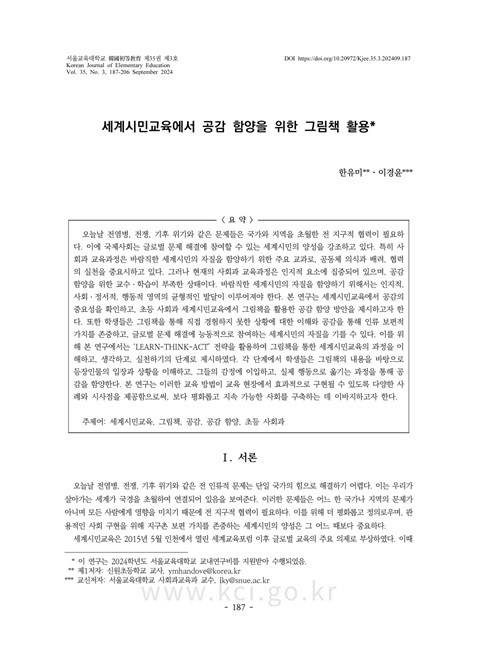 세계시민교육에서 공감 함양을 위한 그림책 활용 (한국초등교육; Vol. 35, No. 3) Année de publication: 2024 Auteur: 한유미 | 이경윤 Auteur institutionnel: 서울교육대학교 초등교육연구원 오늘날 전염병, 전쟁, 기후 위기와 같은 문제들은 국가와 지역을 초월한 전 지구적 협력이 필요하다. 이에 국제사회는 글로벌 문제 해결에 참여할 수 있는 세계시민의 양성을 강조하고 있다. 특히 사회과 교육과정은 바람직한 세계시민의 자질을 함양하기 위한 주요 교과로, 공동체 의식과 배려, 협력의 실천을 중요시하고 있다. 그러나 현재의 사회과 교육과정은 인지적 요소에 집중되어 있으며, 공감함양을 위한 교수ㆍ학습이 부족한 상태이다. 바람직한 세계시민의 자질을 함양하기 위해서는 인지적, 사회ㆍ정서적, 행동적 영역의 균형적인 발달이 이루어져야 한다. 본 연구는 세계시민교육에서 공감의중요성을 확인하고, 초등 사회과 세계시민교육에서 그림책을 활용한 공감 함양 방안을 제시하고자 한다. 또한 학생들은 그림책을 통해 직접 경험하지 못한 상황에 대한 이해와 공감을 통해 인류 보편적가치를 존중하고, 글로벌 문제 해결에 능동적으로 참여하는 세계시민의 자질을 기를 수 있다. 이를 위해 본 연구에서는 ‘LEARN-THINK-ACT’ 전략을 활용하여 그림책을 통한 세계시민교육의 과정을 이해하고, 생각하고, 실천하기의 단계로 제시하였다. 각 단계에서 학생들은 그림책의 내용을 바탕으로등장인물의 입장과 상황을 이해하고, 그들의 감정에 이입하고, 실제 행동으로 옮기는 과정을 통해 공감을 함양한다. 본 연구는 이러한 교육 방법이 교육 현장에서 효과적으로 구현될 수 있도록 다양한 사례와 시사점을 제공함으로써, 보다 평화롭고 지속 가능한 사회를 구축하는 데 이바지하고자 한다.
  Intercultural Education : special issue on Holocaust Education in North America and Europe (Vol 14) Issue 2 "Intercultural Education is a global forum for the analysis of issues dealing with education in plural societies. It provides educational professionals with the knowledge and information that can assist them in contributing to the critical analysis and the implementation of intercultural education." This special issue concerns Holocaust Education in North America and Europe.
  Intercultural Education : Supplement 1 : Teaching the Holocaust in diverse classrooms : Opportunities and Challenges (Vol 21) Supplement 1 "Intercultural Education is a global forum for the analysis of issues dealing with education in plural societies. It provides educational professionals with the knowledge and information that can assist them in contributing to the critical analysis and the implementation of intercultural education." This special issue is about the opportunities and challenges about teaching the Holocaust in diverse classrooms.
 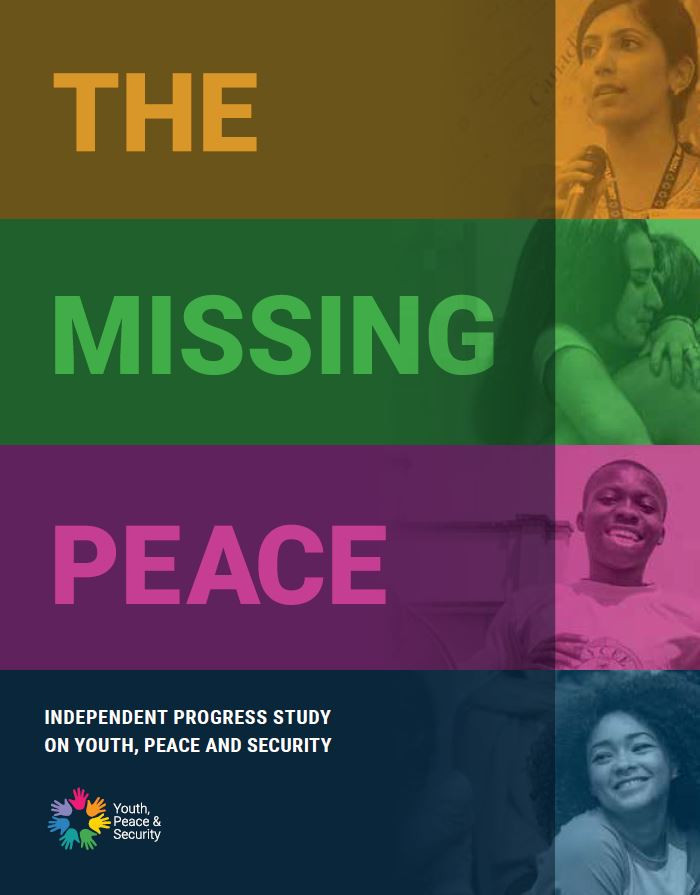 The Missing Peace: Independent Progress Study on Youth, Peace and Security Année de publication: 2018 Auteur institutionnel: United Nations Population Fund (UNFPA) | UN. Peacebuilding Support Office (UN. PBSO) The process of how this study was undertaken is just as important as the outcomes it produced. The study used an inclusive and participatory research approach by undertaking regional, subregional and national consultations with young people across the globe; conducting and receiving country case studies; commissioning focus-group discussions with “hard to reach” youth; and drawing on a survey-based mapping of the work done by youth-led peacebuilding organizations. Particular effort was made to reach out beyond easily accessible and elite youth, to young people who would not ordinarily have a say in these sorts of global policy processes. Given the challenge of young people’s increasing distrust in their governments and the multilateral system, it was essential to work with credible civil society organizations with strong trust-based relationships with youth on the ground. السلام المفقود: دراسة مرحلية مستقلة حول الشباب والسلام والأمن Année de publication: 2018 Auteur institutionnel: United Nations Population Fund (UNFPA) | UN. Peacebuilding Support Office (UN. PBSO) استعانت الدراسة بمنهجٍ بحثيّ شامل وتشارُكي من خلال إجراء استشارات إقليمية وشبه إقليمية ووطنية مع مجموعات من الشباب حول العالم؛ وإجراء وتلقي دراسات حالة قطُرية؛ والتكليف بعقد مناقشات جماعية مركّزة مع الشباب الذين "يصعب الوصول إليهم"؛ والاستفادة من وضع خريطة تستند إلى دراسات استقصائية في العمل الذي أجرته منظمات بناء السلام التي يقودها الشباب. وقد بُذل جهد خاص لكي تشمل الدراسة ما يتجاوز الشباب الذين يسهل الوصول إليهم والشباب النخبة، لتصل إلى الشباب الذين لا تسنح لهم الفرصة عادةً للإدلاء بآرائهم حول هذا النوع من عمليات السياسة العامة العالمية. ونظراً لما يمثّله تفاقم عدم ثقة الشباب بحكوماتهم وبالأنظمة المتعددة الأطراف من تحدٍّ، فقد كان من الضروري العمل مع منظمات المجتمع المدني ذات المصداقية التي تتمتّع بعلاقات متينة قائمة على الثقة مع الشباب على أرض الواقع.