
Ressources
Explorez une large gamme de ressources sur le GCED afin d’approfondir votre compréhension et de renforcer vos activités de recherche, de plaidoyer, d’enseignement et d’apprentissage.
3,126 résultats trouvés
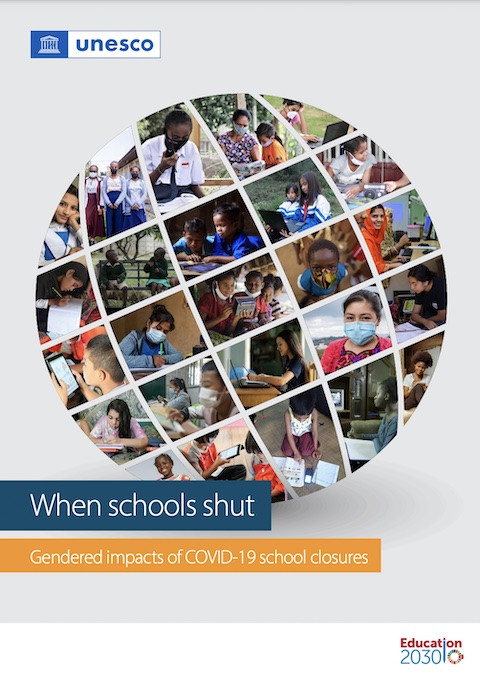 When Schools Shut: Gendered Impacts of COVID-19 School Closures Année de publication: 2021 Auteur institutionnel: UNESCO School closures to mitigate the spread of COVID-19 have caused unprecedented disruption for nearly 1.6 billion learners across the globe. Beyond alarming effects on learning loss and school dropout, they pose an immediate and long-term threat to gender equality, with gender-specific effects on health, well-being and protection. This publication exposes these impacts and calls for effective strategies to ensure education continuity, promote gender equality and improve lives and futures. Through a review of published research, a global survey of actions taken by organizations in favour of gender equality in education, and in-depth data collection in five countries, UNESCO and its partners underline the challenges faced by children and young people to continue learning, and to return to school safely. When schools shut also showcases the efforts made by governments and the international community to mitigate harm and safeguard progress towards gender equality in and through education. While it is too soon to grasp the full scope of the impact of school closures, the publication sets out early evidence from across different contexts globally on how girls and boys have been participating in remote learning, planning for the return to school, and coping with mental and physical health challenges during the closures. It is a call to governments and their partners to put gender at the centre of education recovery to tackle declining participation and low return-to-school rates. When schools shut is a timely reminder that schools are essential sites not only for learning, but also lifelines when it comes to health, well-being and protection of all learners.
 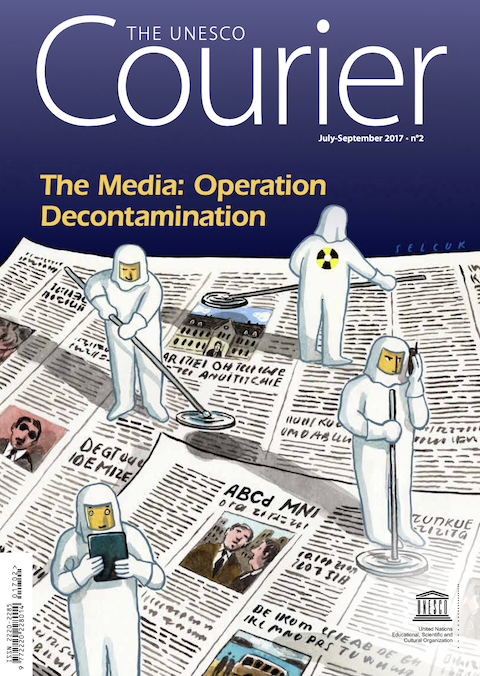 The Media: Operation Decontamination (The UNESCO Courier no. 2; July-September 2017) Année de publication: 2017 Auteur institutionnel: UNESCO The plurality of enlightened opinions is a prerequisite of the democratic development of our societies. The quality of the information disseminated by the media – traditional or new – is decisive when it comes to shaping public opinion. This is why UNESCO puts special emphasis on education about media and information, which it considers a fundamental skill for citizens in the twenty-first century.Freedom of expression and the free movement of ideas by words and images are among the constitutive principles of UNESCO and at the core of the 2030 Agenda for Sustainable Development. UNESCO supports the work of dedicated journalists and activists who defend fundamental freedoms, like the journalist Dawit Isaak, winner of the 2017 UNESCO/ Guillermo Cano World Press Freedom Prize, whose story appears in this issue of the UNESCO Courier.Over the last decade, more than 800 journalists have been victims of crimes aimed at muzzling freedom of expression. Only one murder out of ten ended with a conviction. This impunity is unacceptable and further fuels the spiral of violence in the future. This is why UNESCO is committed to putting an end to these crimes against the press, on all continents, as an indispensable condition for peaceful societies that are all the more robust for being better informed.In this “post-truth” era, the role of UNESCO is more important than ever, and this issue of the Courier is a wonderful opportunity to renew our founding commitment to support information and communication to build peace in the minds of men and women. Médias: Opération décontamination (Le Courrier de l'UNESCO no. 2; Juillet-Septembre 2017) Année de publication: 2017 Auteur institutionnel: Organisation des Nations Unies pour l'éducation, la science et la culture (UNESCO) La pluralité d’opinions éclairées est une condition sine qua non du développement démocratique de nos sociétés. La qualité des informations diffusées par les médias – traditionnels et nouveaux – est déterminante dans la formation de l’opinion publique. C’est pourquoi l’UNESCO met un accent tout particulier à l’éducation aux médias et à l’information qu’elle considère comme une compétence citoyenne fondamentale du XXIe siècle.La liberté d’expression et la libre circulation des idées par les mots et l’image font partie des principes constitutifs de l’UNESCO et sont au cœur de l’Agenda 2030 pour le développement durable. L’UNESCO soutient le travail des journalistes et militants déterminés qui défendent ces libertés fondamentales, comme le journaliste Dawit Isaak, lauréat du Prix mondial de la liberté de la presse UNESCO/Guillermo Cano 2017, dont on peut découvrir le portrait dans ce numéro du Courrier de l’UNESCO.Au cours de cette dernière décennie, plus de 800 professionnels des médias ont été victimes de crimes visant à museler la libre expression. Seul un meurtre sur dix a donné lieu à un jugement. Cette impunité est inacceptable et alimente encore la spirale de la violence dans le futur. C’est pourquoi l’UNESCO s’engage de toutes ses forces pour y mettre un terme, sur tous les continents, comme une condition indispensable de sociétés pacifiques et d’autant plus robustes qu’elles sont mieux informées.À l’ère de la « post-vérité », le rôle de l’UNESCO est plus important que jamais, et ce nouveau numéro du Courrier est une belle occasion de renouveler notre engagement fondateur à soutenir l’information et la communication pour construire la paix dans l’esprit des hommes et des femmes.
 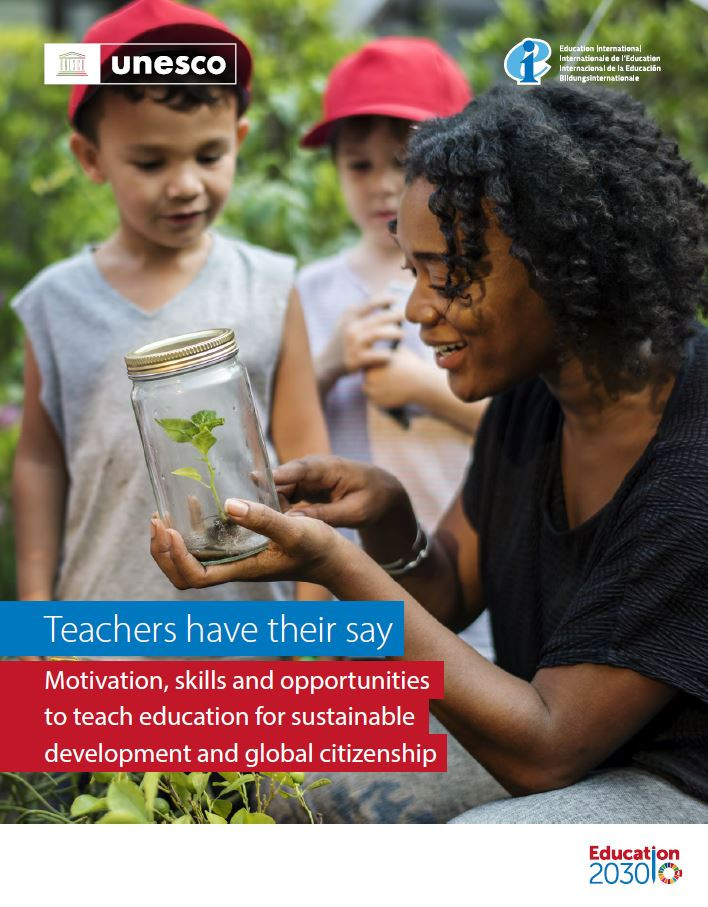 Teachers Have Their Say: Motivation, Skills and Opportunities to Teach Education for Sustainable Development and Global Citizenship Année de publication: 2021 Auteur institutionnel: منظمة الأمم المتحدة للتربية والعلم والثقافة (UNESCO) | Education International (EI) This report examines how ready teachers are to meet the promise of Sustainable Development Goal 4 on Education and Target 4.7, which calls on countries ‘to ensure that all learners acquire the knowledge and skills needed to promote sustainable development’.
  Global Citizenship Education: Comoros, Djibouti, Kenya, Madagascar, Mauritius and Seychelles Année de publication: 2022 Auteur institutionnel: Organización de las Naciones Unidas para la Educación, la Ciencia y la Cultura (UNESCO) This is a collection of papers of a research project undertaken in six countries of the Eastern Africa region, namely, Comoros, Djibouti, Kenya, Madagascar, Mauritius and Seychelles to assess the Understanding and Implementation of SDG 4.7 on Global Citizenship Education (GCED) in each of the six countries.The research findings were shared by each of the six countries in a Webinar hosted by the UNESCO Nairobi Regional Office for Eastern Africa on September 23, 2021. The Webinar Agenda is contained in this publication along with the Opening and Closing Remarks made by UNESCO and Keynote Address by an affiliate UNESCO Chair in Africa.
 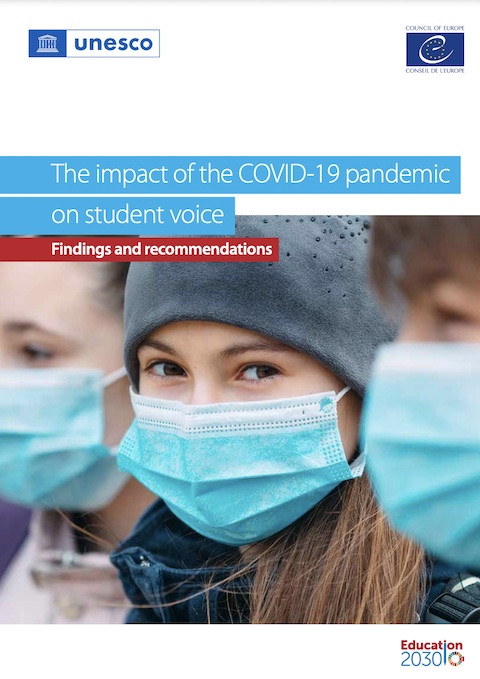 The Impact of the COVID-19 Pandemic on Student Voice: Findings and Recommendations Année de publication: 2021 Auteur institutionnel: UNESCO | Council of Europe The COVID-19 pandemic has had serious consequences on the education of young people and their ability to engage and participate meaningfully. In 2020, UNESCO and the Council of Europe decided to collaborate on a research project with a view to examining the impact of the COVID-19 pandemic on student voice and particularly the consequences of the subsequent school closures on student voice opportunities in Europe and in the Middle East and North Africa (MENA). This publication details the findings of this study and provides recommendations for school directors and personnel, teachers, educators, policy-makers and young people to build on the lessons learned from the pandemic and help the education community work collectively towards promoting societies that are guided by human rights, with student voice and participation at the centre. It is primarily intended for policy-makers, educators, teachers working in formal school systems. It may also be of interest to professionals working in non-formal education settings or other sectors – namely the justice, social and health sectors – working with student.
 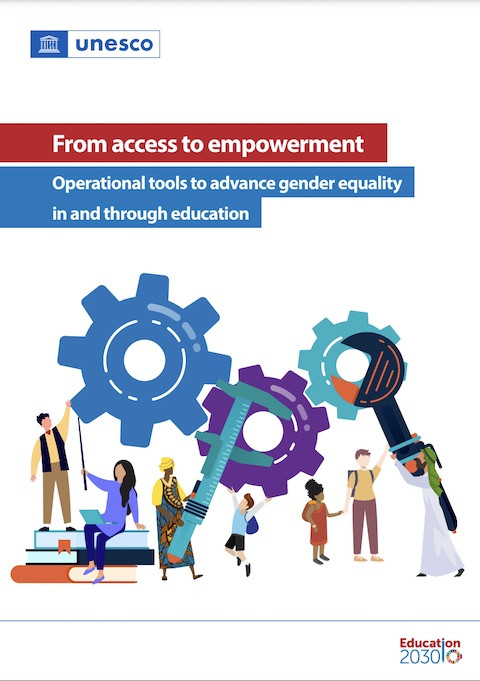 From Access to Empowerment: Operational Tools to Advance Gender Equality in and Through Education Année de publication: 2021 Auteur institutionnel: UNESCO This toolkit has been developed to strengthen individual and institutional capacity to integrate gender equality into education programmes in an effective manner. It has been prepared for all UNESCO Education Sector staff, including those at Headquarters, in Field/Regional/Cluster Offices and in Institutes as well as for implementing partners. This toolkit provides orientation and operational tools to meaningfully integrate gender into all education programmes. The first part provides a short introduction to key concepts on gender equality in and through education and an overview on how gender equality in education links to UNESCO’s vision and internationally agreed objectives. The second part provides practical guidance on how to mainstream gender equality into an education programme, how to design gender-transformative programmes and finally, how to monitor and evaluate gender results in education programmes. Del acceso al empoderamiento: Herramientas operativas para promover la igualdad de género en y a través de la educación Année de publication: 2021 Auteur institutionnel: UNESCO Esta guía se ha desarrollado para fortalecer la capacidad individual e institucional para integrar de forma efectiva la igualdad de género en los programas de educación. Fue elaborada para todo el personal del Sector de Educación de la UNESCO, incluyendo el personal ubicado en la Sede, en las Oficinas fuera de la Sede, regionales y multipaís, y en los Institutos, así como para los asociados en la ejecución de su trabajo. Esta guía ofrece herramientas orientativas y operativas para integrar de forma significativa la cuestión de género en todos los programas de educación. La primera parte ofrece una breve introducción a los conceptos clave de la igualdad de género en y a través de la educación y un resumen general de cómo la igualdad de género en la educación se vincula con la visión de la UNESCO y sus objetivos, aprobados a nivel internacional. La segunda parte ofrece una orientación práctica de cómo integrar la igualdad de género en los programas de educación, cómo elaborar programas transformadores en materia de género y, por último, cómo realizar el seguimiento y la evaluación de los resultados en materia de género en los programas de educación.
  The Journey Towards Comprehensive Sexuality Education: Global Status Report Année de publication: 2021 Auteur institutionnel: UNESCO | Joint United Nations Programme on HIV/AIDS (UNAIDS) | United Nations Population Fund (UNFPA) | United Nations Children's Fund (UNICEF) | United Nations Entity for Gender Equality and the Empowerment of Women (UN Women) | World Health Organization (WHO) Comprehensive sexuality education (CSE) is central to children and young people’s well-being, equipping them with the knowledge and skills they need to make healthy and responsible choices in their lives. This report draws on multiple data sources to provide analysis of countries’ progress towards delivering good quality school-based CSE to all learners. 85 per cent of 155 countries surveyed have policies or laws relating to sexuality education, with considerably more countries reporting policies to mandate delivery at secondary education level than at primary level. However, the existence of policy and legal frameworks do not always equate to comprehensive content or strong implementation. Most countries report that they have some curricula in place but more detailed analysis suggests that it often lacks the breadth of topics needed to make sexuality education effective and relevant. Moreover, while efforts to scale-up teacher training are evident in a range of settings, research with teachers shows that many feel they lack confidence to deliver sexuality education. Surveys show that students frequently feel that they received information too late and would have preferred sexuality education to have started earlier in their schooling. There is evidence of opposition to CSE across a range of settings, often reflecting misinformation about the content, purpose or impact of such education. However, in many countries involvement of communities, including parents, school officials, religious leaders, media and young people themselves, has created a favourable environment for CSE. Recommendations to countries in this report include:Clear mandates and budgets to ensure implementation of policies and programmes that support the availability of good quality comprehensive sexuality education for all learners.Invest in quality curriculum reform and teacher training.Strengthen monitoring of the implementation of CSE.
 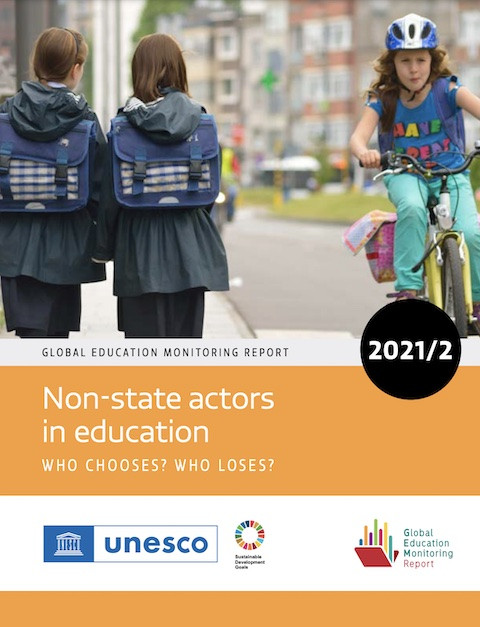 Global Education Monitoring Report 2021/2: Non-state Actors in Education; Who Chooses? Who Loses? Année de publication: 2021 Auteur institutionnel: UNESCO Non-state actors’ role extends beyond provision of schooling to interventions at various education levels and influence spheres. Alongside its review of progress towards SDG 4, including emerging evidence on the COVID-19 pandemic’s impact, the 2021/2 Global Education Monitoring Report urges governments to see all institutions, students and teachers as part of a single system. Standards, information, incentives and accountability should help governments protect, respect and fulfill the right to education of all, without turning their eyes away from privilege or exploitation. Publicly funded education does not have to be publicly provided but disparity in education processes, student outcomes and teacher working conditions must be addressed. Efficiency and innovation, rather than being commercial secrets, should be diffused and practiced by all. To that end, transparency and integrity in the public education policy process need to be maintained to block vested interests. The report’s rallying call – Who chooses? Who loses? – invites policymakers to question relationships with non-state actors in terms of fundamental choices: between equity and freedom of choice; between encouraging initiative and setting standards; between groups of varying means and needs; between immediate commitments under SDG 4 and those to be progressively realized (e.g. post-secondary education); and between education and other social sectors.