
Ressources
Explorez une large gamme de ressources sur le GCED afin d’approfondir votre compréhension et de renforcer vos activités de recherche, de plaidoyer, d’enseignement et d’apprentissage.
3,126 résultats trouvés
 Calendrier des événements du développement durable 2023-2024 Année de publication: 2023 Auteur: Matthieu Remblière Auteur institutionnel: Académie de Versailles Ce calendrier met en lumières les dates et les journées nationales, européennes et mondiales en rapport avec le développement durable. This calendar highlights national, European and international dates and days related to sustainable development.
 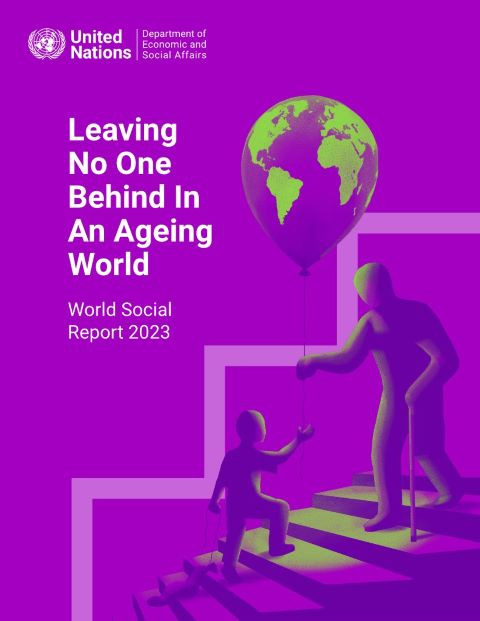 World Social Report 2023 : Leaving No One Behind in an Ageing World Année de publication: 2023 Auteur institutionnel: UN. Department of Economic and Social Affairs (UN. DESA) Population ageing is a defining global trend of our time. People are living longer, and more are older than ever before. Spectacular improvements in health and survival and reductions in fertility have driven this momentous shift, which has begun or is expected to begin soon in all countries and areas. This change brings both challenges and opportunities as countries strive to achieve the Sustainable Development Goals (SDGs). In 2022, the world marked the twentieth anniversary of the adoption of the Madrid International Plan of Action on Ageing. To commemorate this landmark, the World Social Report 2023 explores the economic and social implications of the ageing of the human population. It builds on the Plan of Action’s framework for national policies to create equitable, inclusive societies for people of all ages, providing recommendations to put the rights and well-being of older persons at the centre, across the life course. Population ageing is an inevitable result of the demographic transition towards longer lives and smaller families. While the shift towards older populations is largely irreversible, collective actions and policy decisions shape its path and consequences. Postponing critical measures that allow societies to benefit from and adapt to population ageing would impose high social, economic, fiscal and health-related costs, for both current and future generations. By contrast, with appropriate foresight and planning, Governments can manage the challenges from population ageing while enhancing opportunities for all people to thrive and ensuring that no one is left behind. As elaborated in this report, population ageing needs to be widely understood as more than just a set of discrete concerns mainly for one group of people who have advanced beyond a given age. Ageing touches all parts of economies and societies, from health care and education to employment and taxation. Each stage of life can contribute to or detract from well-being at older ages.
 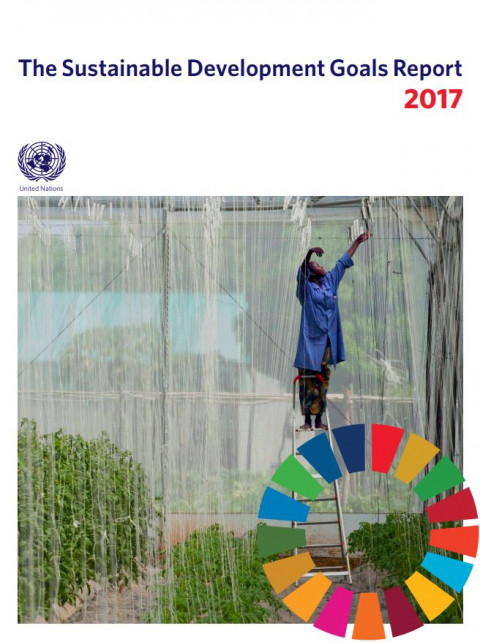 The Sustainable Development Goals Report 2017 Année de publication: 2017 Auteur institutionnel: United Nations (UN) In adopting the 2030 Agenda for Sustainable Development, world leaders resolved to free humanity from poverty, secure a healthy planet for future generations, and build peaceful, inclusive societies as a foundation for ensuring lives of dignity for all.This report provides a snapshot of our efforts to date. It stresses that high-level political leadership and new partnerships will be essential for sustaining momentum. It also underscores the need for reliable, timely, accessible and disaggregated data to measure progress, inform decision-making and ensure that everyone is counted.
 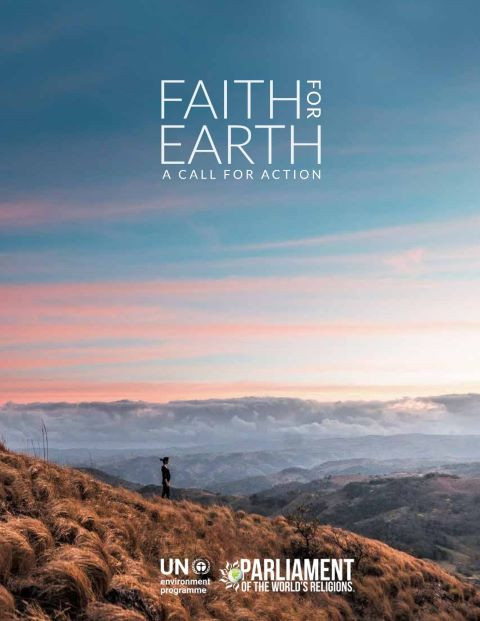 Faith for Earth : a Call for Action Année de publication: 2020 Auteur institutionnel: United Nations Environment Programme (UNEP) | Inter-Agency Network on Women and Gender Equality (IANWGE) The UN Environment Programme (UNEP) and the Parliament of the World’s Religions today released a new book, "Faith for Earth — A Call for Action", which gives readers a wide-ranging look at the history and diversity of faith teachings and their advocacy for the protection of the environment. The online book and its print edition were launched on 8 October 2020 during the Faith for Nature Global Conference, (5th - 8th October) in Skálhol, Iceland. The book provides a comprehensive overview of the faith traditions and scientific findings that underpin the understandings and reflections of world religions concerning environmental sustainability. It includes clear statements from sacred scripts and faith leaders. It underlines that protecting the Earth, restoring ecosystems, preventing pollution, and leaving behind a healthy environment for the next generations is an ethical, moral and spiritual responsibility. With more than one hundred million houses of worship around the globe, adapting green building principles is a massive demonstration of commitment to sustainability.
 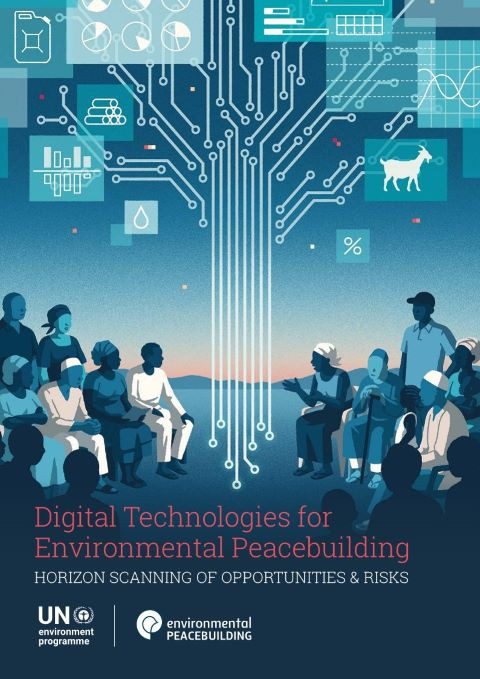 Digital Technologies for Environmental Peacebuilding : Horizon Scanning of Opportunities and Risks Année de publication: 2024 Auteur institutionnel: United Nations Environment Programme (UNEP) This report specifically delves into how digital technologies can be harnessed to manage environmental and natural resource risks that contribute to insecurity and social conflict, as well as the opportunities they present for peacebuilding, cooperation, and social cohesion. It examines relevant use cases spanning the peace and security continuum and concludes with a set of important policy and governance recommendations. The report is designed to inform and contribute to significant upcoming frameworks addressing digital technologies, including the Summit of the Future and the Global Digital Compact.
 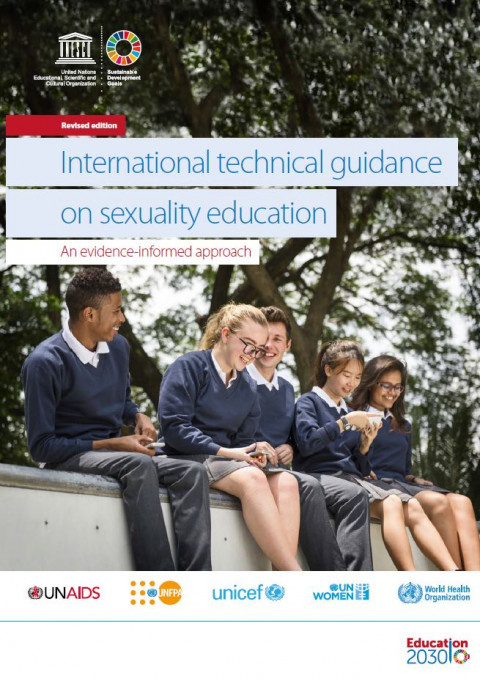 International Technical Guidance on Sexuality Education: An Evidence-Informed Approach Année de publication: 2018 Auteur institutionnel: Joint United Nations Programme on HIV/AIDS (UNAIDS) | United Nations Population Fund (UNFPA) | United Nations Children's Fund (UNICEF) | United Nations Entity for Gender Equality and the Empowerment of Women (UN Women) | World Health Organization (WHO) The UN International technical guidance on sexuality education was first published in 2009 as an evidence-informed approach for schools, teachers and health educators.Recognizing the dynamic shifts in the field of sexuality education that have occurred since then, an expanded group of UN co-publishing partners has reviewed and updated the content to respond appropriately to the contemporary needs of young learners, and to provide support for education systems and practitioners seeking to address those needs. The International technical guidance on sexuality education (revised edition) provides sound technical advice on the characteristics of effective comprehensive sexuality education (CSE) programmes; a recommended set of topics and learning objectives that should be covered in comprehensive sexuality education; and, recommendations for planning, delivering and monitoring effective CSE programmes. This revised edition of the Guidance reaffirms the position of sexuality education within a framework of human rights and gender equality, and promotes structured learning about sex and relationships in a manner that is positive, affirming, and centred on the best interests of the young person. It is based on a review of the latest evidence and lessons-learned from implementing CSE programmes across the globe. The revised Guidance reflects the contribution of sexuality education to the realization of multiple Sustainable Development Goals, notably Goal 3 on good health and well-being for all, Goal 4 on quality education for all, and Goal 5 to achieve gender equality.
  Education, Development and Citizenship in Latin America: Proposals for the Debate Année de publication: 2011 Auteur: Alicia Barcena | Narcis Serra Auteur institutionnel: Naciones Unidas. Comisión Económica para América Latina y el Caribe (CEPAL) | Centro de Estudios y Documentación Internacionales de Barcelona (CIDOB) Through ADI, an initiative promoted by CIDOB, the Ibero-American General Secretariat (SEGIB) and the Economic Commission for Latin America and the Caribbean (ECLAC), with the support of various sponsoring companies, it is intended to encourage academic debate along with the political debate on diverse issues crucial for the region. Through a rigorous analysis of the social, economic and political reality carried out by academics, public policymakers and other key actors in the development process in Latin America, the aim is to offer recommendations that make economic growth compatible with well-being of the majorities. This publication constitutes the fifth volume of the series and is the result of the willingness of the participating institutions to disseminate, as much as possible, the ideas and discussions that emerged in the seminar. Its reading is a fundamental element to understand the current state of education in the region, as well as the possibilities that exist in this area to continue advancing in inclusion and development. Educación, Desarrollo y Ciudadanía en América Latina: Propuestas para el Debate Année de publication: 2011 Auteur: Alicia Barcena | Narcis Serra Auteur institutionnel: Naciones Unidas. Comisión Económica para América Latina y el Caribe (CEPAL) | Centro de Estudios y Documentación Internacionales de Barcelona (CIDOB) Mediante la ADI, iniciativa impulsada por CIDOB, la Secretaría General Iberoamericana (SEGIB) y la Comisión Económica para América Latina y el Caribe (CEPAL), con el apoyo de diversas empresas patrocinadoras, se pretende alentar el debate académico junto con el debate político en diversos temas cruciales para la región. A través del análisis riguroso de la realidad social, económica y política realizado por los académicos, los encargados de formular políticas públicas y otros actores clave en el proceso de desarrollo de América Latina, se pretende ofrecer recomendaciones que hagan compatible el crecimiento económico y el bienestar de las mayorías. Esta publicación constituye el quinto volumen de la serie y es fruto de la voluntad de las instituciones participantes de difundir, en la mayor medida posible, las ideas y discusiones surgidas en el seminario. Su lectura supone un elemento fundamental para comprender el estado actual de la educación en la región, así como las posibilidades que existen en este ámbito para seguir avanzando en la inclusión y el desarrollo.
  Buenos Aires Recommendations Année de publication: 2007 Auteur institutionnel: PRELAC II Recognizing that education is a public good and is the key to building a more just and better world for all, the Second Intergovernmental Meeting of the Regional Education Project, PRELAC II, held in the city of Buenos Aires, on the 29th and March 30, 2007, agrees the following recommendations as criteria and lines of action for national policies and international cooperation. Recomendaciones de Buenos Aires Année de publication: 2007 Auteur institutionnel: PRELAC II Reconociendo que la educación es un bien público y es la llave para la construcción de un mundo más justo y mejor para todos, la Segunda Reunión Intergubernamental del Proyecto Regional de Educación, PRELAC II, reunida en la ciudad de Buenos Aires, los días 29 y 30 de marzo de 2007, acuerda las siguientes recomendaciones como criterios y líneas de acción para las políticas nacionales y la cooperación internacional.