
Ressources
Explorez une large gamme de ressources sur le GCED afin d’approfondir votre compréhension et de renforcer vos activités de recherche, de plaidoyer, d’enseignement et d’apprentissage.
3,158 résultats trouvés
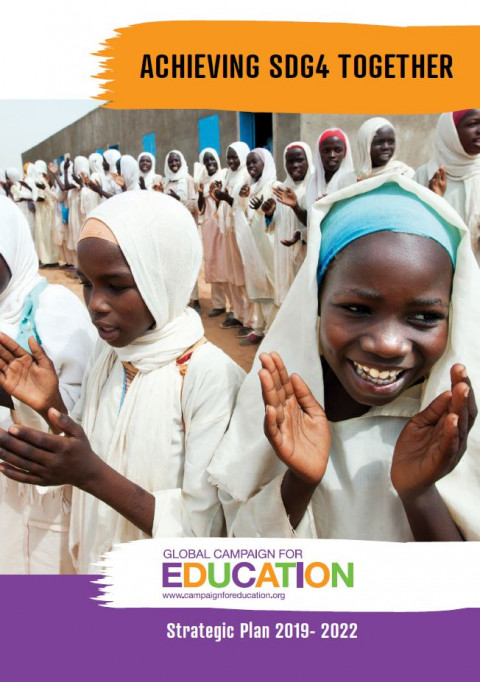 Achieving SDG 4 Together: Strategic Plan 2019 - 2022 Année de publication: 2018 Auteur institutionnel: Global Campaign for Education (GCE) The 2019-2022 strategic plan of the Global Campaign for Education was adopted during the 6th World Assembly of the movement in November 2018, Kathmandu. The plan identifies 4 priority strategic areas: Inclusivity and non-discrimination, Transformative education, Education in emergencies and Financing education. The plan also focus on strengthening the global movement and integrating youth voices.On the eve of celebrating its 20th anniversary, the Global Campaign for Education (GCE) is the largest civil society organisation movement working to promote the human right to education and to put pressure on governments and the international community to fulfil their commitments to provide free, inclusive, quality public education and lifelong learning for all, particularly for children. Our regional and national coalitions encompass many thousands of civil society organisations and represent millions of individuals across the world. Each is independent, and all are united by the commitment to the human right to education, and to achieving change through the mobilisation of citizens and civil society.
 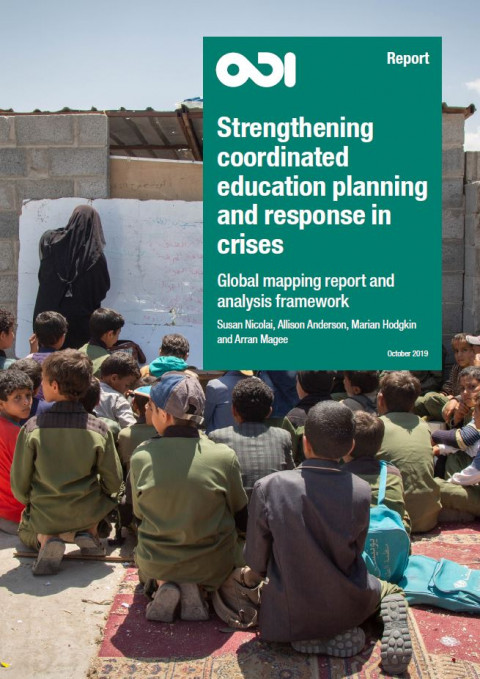 Strengthening Coordinated Education Planning and Response in Crises: Global Mapping Report and Analysis Framework Année de publication: 2019 Auteur: Susan Nicolai | Allison Anderson | Marian Hodgkin | Arran Magee Auteur institutionnel: Overseas Development Institute (ODI) This report presents a framework for analysis of formal coordination approaches for education planning and response in emergencies and protracted crises. It reviews concepts and definitions of coordination, approaches and structures for coordinated planning and response, and expected outcomes of these processes, with a focus on humanitarian structures across the humanitarian–development nexus.It is part of a set of publications produced in partnership with the Global Education Cluster, the Inter-Agency Network for Education in Emergencies and UNHCR – the UN Refugee Agency – with funding from the Education Cannot Wait Fund. The conceptual framework and set of research questions that emerge from this report is applied to six country case studies, which will be published in December 2019.
 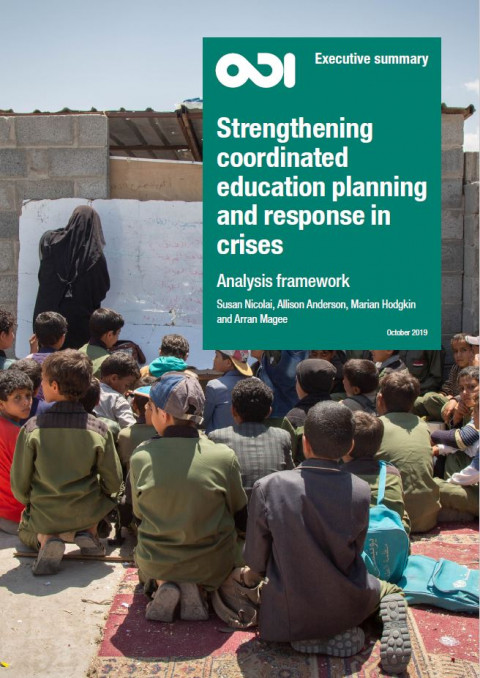 [Summary] Strengthening Coordinated Education Planning and Response in Crises: Analysis Framework; Executive Summary Année de publication: 2019 Auteur: Susan Nicolai | Allison Anderson | Marian Hodgkin | Arran Magee Auteur institutionnel: Overseas Development Institute (ODI) This report presents a framework for analysis of formal coordination approaches for education planning and response in emergencies and protracted crises. It reviews concepts and definitions of coordination, approaches and structures for coordinated planning and response, and expected outcomes of these processes, with a focus on humanitarian structures across the humanitarian–development nexus. The main types of formal education coordination groups include Education Clusters, Refugee Education Working Groups and Local Education Groups (LEGs). These often have different purposes and organisations associated with them, sometimes resulting in overlaps and gaps in coordination efforts.
  Transforming Systems in Times of Adversity: Education and Resilience; White Paper Année de publication: 2019 Auteur: Ritesh Shah Auteur institutionnel: United States Agency for International Development (USAID) This white paper was commissioned to provide USAID, including Missions, Regional Bureaus, Pillar Bureaus, and the Office of U.S. Foreign Disaster Assistance (OFDA), with an overview of global and Agency thinking and practice on education and resilience and a foundation and justification for positioning USAID education efforts more concretely within a resilience frame.The white paper is organized into three key sections. The first section outlines the business case for resilience, explaining how and why resilience is an important consideration for education programs to consider in contexts of crisis and conflict and how education is well poised as a sector to contribute to strengthening resilience. The second section presents a conceptual framework for understanding how resilience operates through and within the education sector and program interventions. The third section provides a series of key considerations for developing and supporting USAID education programs with a resilience lens or focus.
 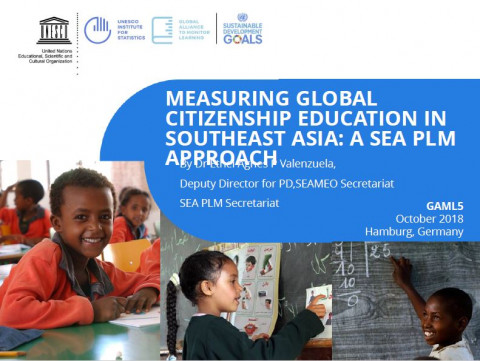 Measuring Global Citizenship Education in Southeast Asia: A SEA PLM Approach Année de publication: 2018 Auteur: Ethel Agnes P. Valenzuela Auteur institutionnel: Southeast Asian Ministers of Education Organization (SEAMEO) | UNESCO Institute for Statistics (UIS) Audit of Curricula for the Southeast Asia Primary Learning Metrics (March 2016), an early issue confronted in developing an assessment framework for SEA-PLM wasdetermining how to design and construct a single assessment program across all ASEAN member countries.The design and approach needed to take account of the similarities and differences in the curriculum frameworks in each country for the four domains that were to be assessed through SEA-PLM: Mathematics, Reading, Writing, and Global Citizenship.
 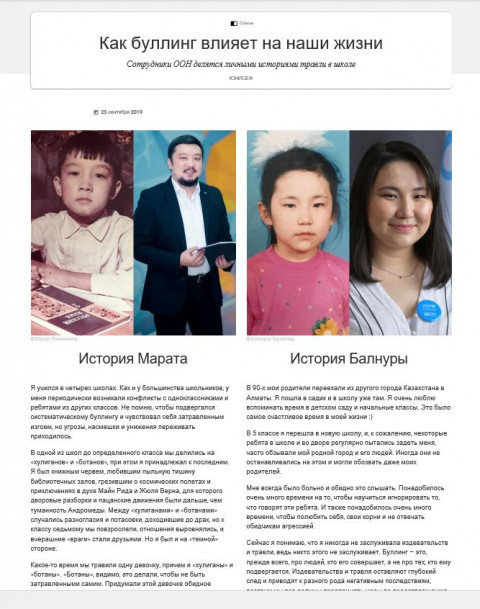 How Bullying Affects Our Lives Année de publication: 2019 Auteur institutionnel: UNICEF Kazakhstan In this article, UN staff members share personal stories showing how they dealt with bullying at school.
 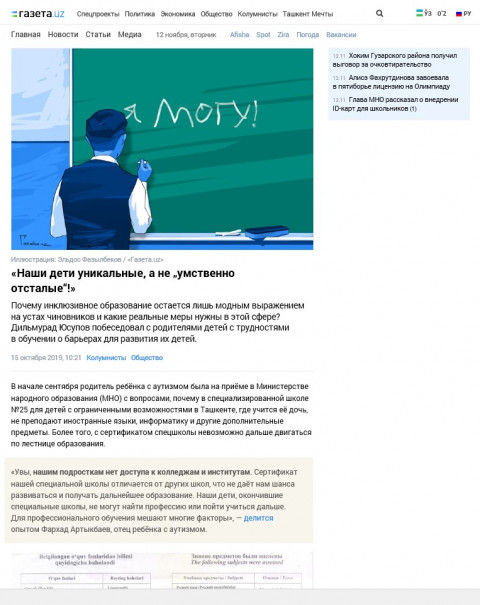 “Our Children Are Unique, Not 'Mentally Retarded'!” Année de publication: 2019 Auteur: Dilmurad Yusupov The article analyzes the necessary measures in the field of inclusive education in Uzbekistan. The author spoke with parents of children with learning difficulties about the barriers to their children's development. «Наши дети уникальные, а не „умственно отсталые“!» Année de publication: 2019 Auteur: Dilmurad Yusupov В статье проведен анализ необходимых мер в сфере инклюзивного образования в Узбекистане. Автор побеседовал с родителями детей с трудностями в обучении о барьерах для развития их детей. Как буллинг влияет на наши жизни Année de publication: 2019 Auteur institutionnel: UNICEF Kazakhstan В данной статье сотрудники ООН делятся личными историями травли в школе.
 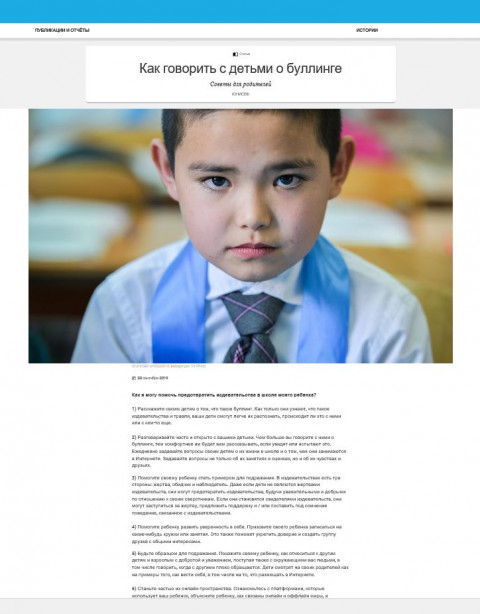 How to Talk with Children About Bullying: Tips for Parents Année de publication: 2019 Auteur institutionnel: UNICEF Kazakhstan In this article, parents are offered practical advice on how to talk with children about bullying in order to prevent its occurrence and teach children how to effectively counteract it.