
Ressources
Explorez une large gamme de ressources sur le GCED afin d’approfondir votre compréhension et de renforcer vos activités de recherche, de plaidoyer, d’enseignement et d’apprentissage.
3,537 résultats trouvés
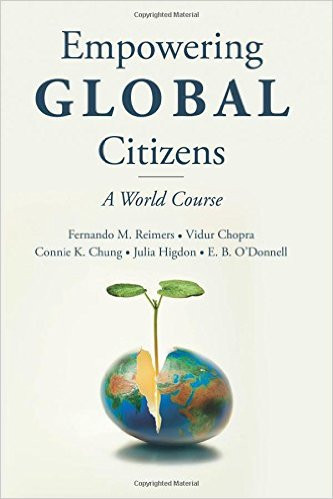 Empowering Global Citizens: A World Course Année de publication: 2016 Auteur: Fernando Reimers | Vidur Chopra | Connie K. Chung | Julia Higdon | E. B. O'Donnell The world is changing rapidly and shcools must evolve to prepare young people to invent the future. Reinventing education requires thinking anew about how to help students develop competencies that will empower them as architects of their own lives and contributing members of their communities. Drawing on a synthesis of research and practice in global citizenship education, this book presents The World Course - a rigorous and coherent curriculum to foster student agency, empathy, and deep knowledge and skills to recognize the biggest global challenges and opportunities of our times, and to advance sustainability, human rights, and peace. Integrating current thinking on twenty-first-centry competencies and deeper learning, and deploying pedagogies that cultivate student responsibility, imagination, and creativity, such as project-based learning and design thinking, this book is a blueprint to reinvent education to empower global citizens.
  2022 세계시민교육 선도교사 활동 참여 교사의 세계시민교육 확산도 연구 Année de publication: 2022 Auteur: 박환보 | 이인영 | 이지홍 본 연구는 유네스코 아시아태평양 국제이해교육원이 추진한 ‘세계시민교육 선도교사 사업’ 효과 분석을 목표로 한다. ‘선도교사 활동 참여를 통해 세계시민교육 실천 역량이 향상되었는지’, ‘연수 받은 내용을 학교 현장에서 얼마나 어떻게 확산시키고 있는지’, 그리고 이러한 활동을 통해 ‘학교 현장에서 세계시민교육은 얼마나 확산되고 있는지’ 등을 분석하였다. 이를 토대로 세계시민교육 선도교사 활동의 성과를 보다 종합적으로 이해하고, 향후 성과 확산을 위한 정책적 시사점을 도출하였다. 연구기관: 유네스코 아시아태평양 국제이해교육원연구책임자: 박환보 (충남대학교)공동연구원: 이인영 (한국청소년정책연구원)이지홍 (유네스코 아시아태평양 국제이해교육원)연구보조원: 정성경 (충남대학교)조유진 (유네스코 아시아태평양 국제이해교육원) 목차제1장 서론제2장 세계시민교육 선도교사 활동 성과분석 체계제3장 세계시민교육 선도교사 활동 성과분석제4장 세계시민교육 선도교사의 세계시민교육 확산 사례 분석제5장 세계시민교육 선도교사의 세계시민교육 확산 활동과 확산도 인식제6장 결론참고문헌부록
  평등교육실천론 Année de publication: 2020 Auteur: 백병부 | 권순정 | 심재휘 | 윤선인 | 이혜정 Auteur institutionnel: 경기도교육연구원 이 연구는 평등과 관련된 교육 영역에서의 논의가 가지고 있는 한계를 극복하기 위해서 수행되었다. 즉 기존의 논의는 대체로 능력주의를 전제로 교육기회의 분배 실태와 구조를 분석하는 데 집중하고 있다는 것이다. 구체적으로 이 연구에서는 독립적이고 이성적인 존재로 인간을 규정했던 근대적 인간관을 의존적이고 관계적인 존재로 전환해야 한다고 주장했다. 이 연구에서는 정의의 개념이 확장되어온 과정을 정리함으로써 평등이 적용되어야 할 영역의 다차원성을 확인하고, 앞에서 정리한 현대철학의 인간관에 근거하여 평등의 영역을 경제적 자원이나 사회적 지위뿐만 아니라 사회적 인정과 정치적 대표, 애정, 돌봄 등과 같은 정동적 영역으로 확장할 수 있음을 정리하였다. 마지막으로 이 연구에서는 기존의 평등에 대한 논의가 국민국가를 배경으로 하고 있기 때문에 여러 한계를 안고 있음을 지적하고, 세계시민교육과 평화교육의 맥락에서 평등의 적용 범위가 지구공동체 전체로 확장되어야 한다는 점을 강조하였다. 출처: 경기도교육연구원 홈페이지
  Intercultural Education : special issue on Holocaust Education in North America and Europe (Vol 14) Issue 2 "Intercultural Education is a global forum for the analysis of issues dealing with education in plural societies. It provides educational professionals with the knowledge and information that can assist them in contributing to the critical analysis and the implementation of intercultural education." This special issue concerns Holocaust Education in North America and Europe.
  Intercultural Education : Supplement 1 : Teaching the Holocaust in diverse classrooms : Opportunities and Challenges (Vol 21) Supplement 1 "Intercultural Education is a global forum for the analysis of issues dealing with education in plural societies. It provides educational professionals with the knowledge and information that can assist them in contributing to the critical analysis and the implementation of intercultural education." This special issue is about the opportunities and challenges about teaching the Holocaust in diverse classrooms.
  Установки молодежи современного Казахстана на проявление социальной активности Année de publication: 2018 Auteur: O.V. Kaldybayeva | F.M. Mussataeva | G.Ye. Okasova В статье поднимается проблема исследования социальной активности среди современной молодежи, от степени которой во многом зависит эффективность реализации многих государственных программ. Выводы основаны на результатах социологического исследования, реализованного Научно-исследовательским центром «Молодежь» во второй половине 2017 г. в Республике Казахстан.
 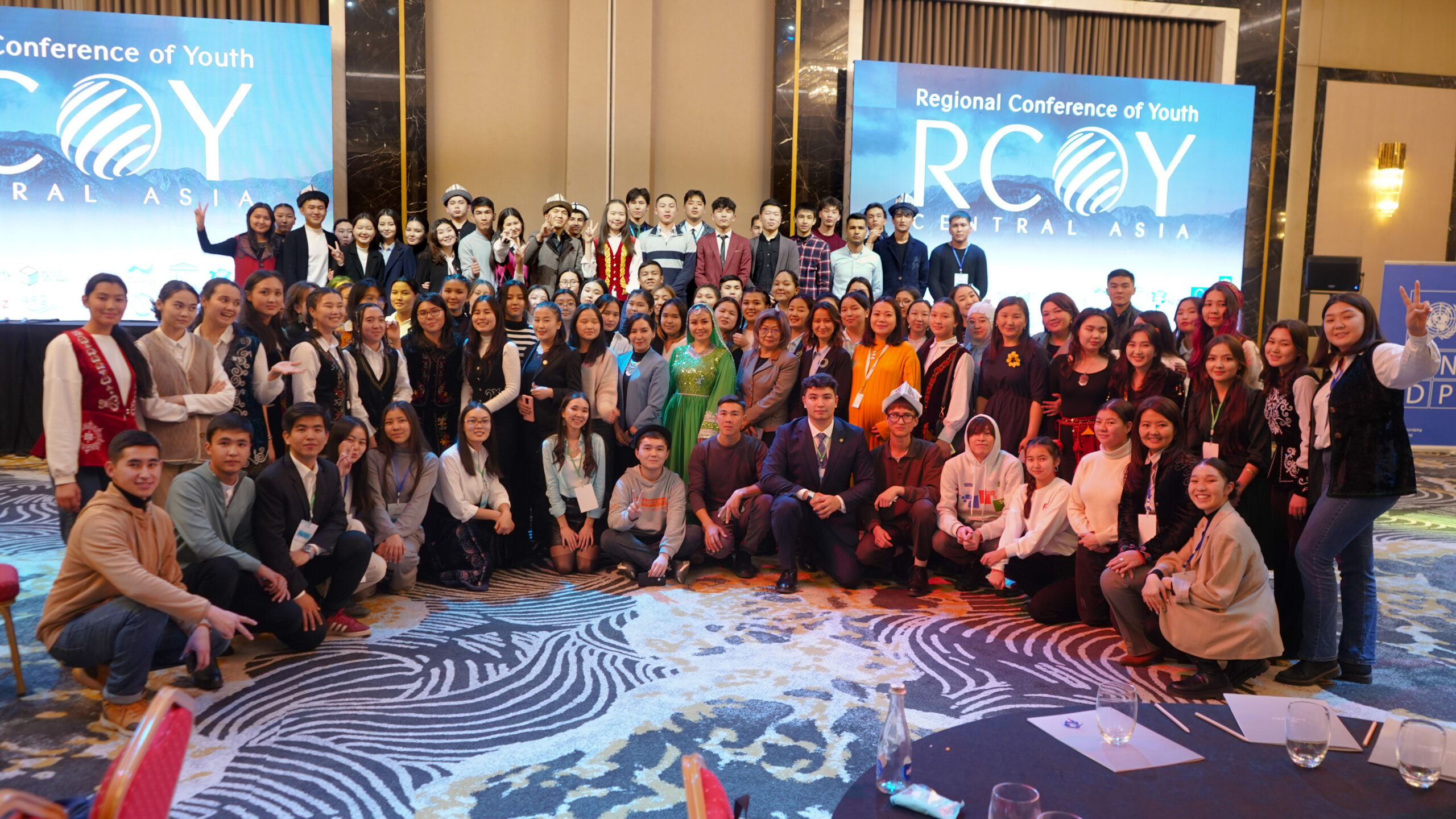 Youth Involvement in Climate Issues in Kazakhstan and Tajikistan: Illusion or Reality? Année de publication: 2024 Auteur: Anisa Abibulloyeva | Mukhtar Amanbayuly Auteur institutionnel: Central Asian Bureau for Analytical Reporting (CABAR) Government agencies in Central Asian countries and international organizations that deal with environmental issues, especially climate change, do not sufficiently take into account the opinions of young environmentalists, according to young experts from Tajikistan and Kazakhstan, Anisa Abibulloyeva and Mukhtar Amanbayuly. Вовлечение молодежи в климатические вопросы в Казахстане и Таджикистане: иллюзия или реальность? Année de publication: 2024 Auteur: Anisa Abibulloyeva | Mukhtar Amanbayuly Auteur institutionnel: Central Asian Bureau for Analytical Reporting (CABAR) Государственные органы стран Центральной Азии и международные организации, которые занимаются проблемами окружающей среды, особенно изменения климата, недостаточно учитывают мнения молодых экологов, считают молодые эксперты из Таджикистана и Казахстана Аниса Абибуллоева и Мухтар Аманбайулы.
  Case Studies in Action: Youth Empowerment for a Peaceful Caribbean Année de publication: 2024 Auteur: Gizem Kilinç Auteur institutionnel: UNESCO Kingston This compilation, titled “Case Studies in Action: Youth Empowerment for a Peaceful Caribbean” presents fourteen concise case studies highlighting (sub-)regional, national, and local initiatives that contribute to the operationalisation of the Youth, Peace, and Security (YPS) agenda. It features a combination of initiatives led by government, regional organisations, the United Nations, youth organisations, civil society, and multi-stakeholder groups across the Dutch and English-speaking Caribbean. The primary objective of this overview is to enrich the knowledge base on meaningful youth engagement in peace and security issues within the region, shedding light on successful approaches, obstacles encountered, and lessons learned. Organised into five sections aligned with the pillars of the YPS agenda—prevention, protection, disengagement and reintegration, partnership, and participation—the case studies are accompanied by an introduction and a summary of recommendations.
  Rewriting the nation: World War II narratives in Polish history textbooks This chapter examines the processes of rewriting nationhood in educational narratives regarding the Second World War (WWII) in Poland. Using mixed methods, this case study analyzes narrative change in state-approved history textbooks published between 1977 and 2008, thus covering the period of political transition from a communist to a democratic Poland. Although trends in learning theory and international norms suggest that attention to diversity should have increased in textbooks, in Poland these trends have been subsumed by more long-lasting Polish specific cultural tropes. WWII narratives, in particular, emphasize an ethnically homogeneous nation. Throughout the 31-year sample, educating youth about WWII in Poland continues to be focused on reclaiming “Polishness” rather than on espousing global understandings and citizenship. (By the author)