
Ressources
Explorez une large gamme de ressources sur le GCED afin d’approfondir votre compréhension et de renforcer vos activités de recherche, de plaidoyer, d’enseignement et d’apprentissage.
3,500 résultats trouvés
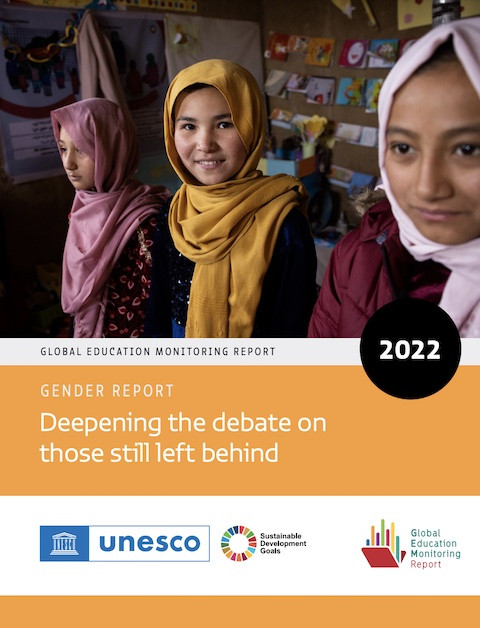 Global Education Monitoring Report 2022: Gender Report; Deepening the Debate on Those Still Left Behind Année de publication: 2022 Auteur institutionnel: Global Education Monitoring Report Team | UNESCO The 2022 Gender Report presents fresh insights on progress towards gender parity in education with respect to access, attainment and learning. It showcases the results of new models that provide coherent estimates, combining multiple sources of information, on out-of-school and completion rates. It also reviews the results of learning assessments released over the past 18 months, which present an almost global picture of the gender gap in reading, mathematics and science achievement in lower and upper primary and lower secondary grades. They provide a baseline against which to assess the impact of COVID-19 on inequality when post-pandemic data start being released next year.A companion to the 2021/2 GEM Report, it emphasizes the role of non-state actors in influencing gender inequality in and through education. Non-state actors have filled in provision gaps left by the public education system. The 2022 Gender Report presents evidence on gender gaps in the share of students enrolled in private institutions by sex and what drives these gaps in the various regions. It also provides case studies on the privatization of childcare in high-income countries, the impact of non-state faith-based schools in Asia on gender norms and the role of women’s universities around the world.Some non-state actors have pushed the gender equality agenda forward, while others have undermined progress in order to maintain the status quo. Some have been at the front line for girls’ education in emergencies. Some have lobbied against comprehensive sexuality education. Some champion inclusion of marginalized girls, while others maintain discriminatory gender norms. Depending on the context, it is important not to make assumptions but to look carefully at the data and work together to eliminate all forces that prevent anyone on the basis of gender from fulfilling their potential through education.
 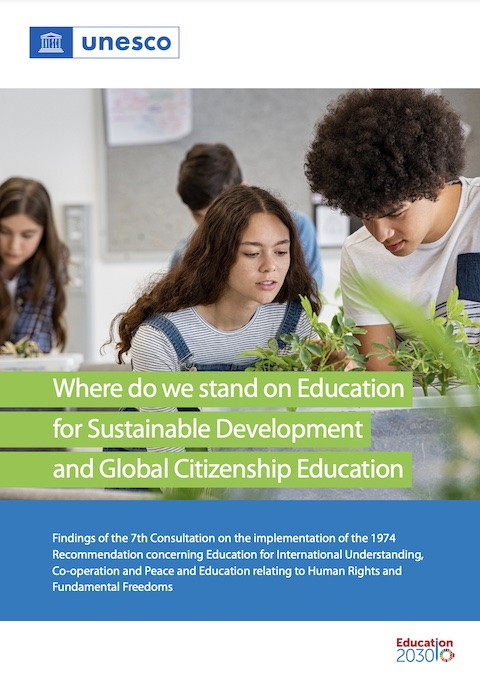 Where Do We Stand on Education for Sustainable Development and Global Citizenship Education: Findings of the 7th Consultation on the Implementation of the 1974 Recommendation Concerning Education for International Understanding, Co-operation and Peace and Education Relating to Human Rights and Fundamental Freedoms Année de publication: 2022 Auteur institutionnel: UNESCO The Recommendation concerning Education for International Understanding, Co-operation and Peace and Education relating to Human Rights and Fundamental Freedoms was adopted by the 18th session of UNESCO’s General Conference in November 1974. Every four years, Member States are invited to report on the measures they have taken to implement the Recommendation in all levels and types of education from pre-primary to tertiary, formal, non-formal and adult education. This document summarizes the results of the 7th consultation on the implementation of the 1974 Recommendation, covering the period 2017-2020. It also contains, for the first time, data for the global indicator adopted by the UN Statistical Commission and the UN General Assembly for the monitoring of Target 4.7 of Sustainable Development Goal for Education.
 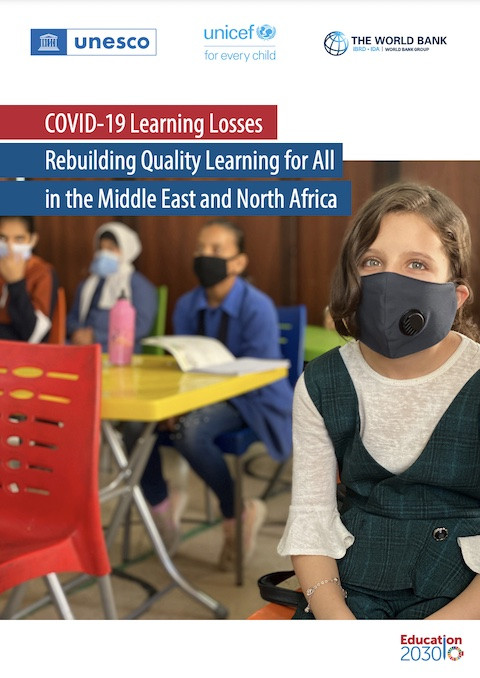 COVID-19 Learning Losses: Rebuilding Quality Learning for All in the Middle East and North Africa Année de publication: 2021 Auteur: Hana Yoshimoto | Jeannette Vogelaar | Brenda Haiplik Auteur institutionnel: UNESCO | United Nations Children's Fund (UNICEF) | World Bank An entire generation of children in the Middle East and North Africa (MENA) is estimated to be affected by the education crisis determined by the COVID-19 pandemic, with potential impacts that are going beyond the immediate/short term and also well beyond the education domain itself, with consequences on children’s socialisation, mental well-being, and future perspective of being active members of their society, including in the labor market. More information on the impact of the crisis would help countries to put in place strategies to mitigate the impacts. Timely investment and action to prevent extreme impacts of this crisis on education are of paramount importance in MENA, which already tackling a learning crisis before the COVID-19 outbreak.This publication delineates the overall education status in MENA after the breakout of COVID-19 pandemic, by presenting the education responses in MENA, and assessing the potential learning loss through a simulation analysis, recommendations are provided on how to build back better and enhance access and quality learning for all.
  Addressing Conspiracy Theories: What Teachers Need to Know Année de publication: 2022 Auteur institutionnel: UNESCO This document is a first introduction for educators, working in and outside of formal schooling, on how to identify, prevent and address conspiracy theories in education settings. It seeks to provide educators with key definitions and essential knowledge to grasp the complexity of the phenomenon and alert learners about the key characteristics and harmful effects of conspiracy theories for a first, immediate response. To support educators in this endeavour, this document outlines strategies to prevent the belief in conspiracy theories as well as to engage with learners who already believe in them.
  اﻟﺘﺼﺪي ﻟﺨﻄﺎب اﻟﻜﺮاﻫﻴﺔ: ﻫﻞ اﻟﺘﻌﻠﻴﻢ ﻫﻮ اﻟﺤﻞ؟ Année de publication: 2022 Auteur: Nicole Fournier-Sylvester Auteur institutionnel: UNESCO | UN. Office on Genocide Prevention and the Responsibility to Protect هذه الورقة جزء من مجموعة أوراق المناقشة ، التي تمّ إعدادها بتكليف من اليونسكو ومكتب الأمم المتحدة للمستشار الخاص وتعتبر الأوراق مساهمة ، )OSAPG( المعني بمنع الإبادة الجماعية مباشرة في استراتيجية وخطة عمل الأمم المتحدة. في سياق منتدى أصحاب المصلحة المتعددين والمؤتمر الوزاري المعني بمعالجة خطابالكراهية من خلال التعليم في سبتمبر وأكتوبر 2021.وقد سلط تفشي جائحة كوفيد- 19 الضوء على أهمية استراتيجية وخطة عمل الأمم المتحدة ، مما أدى إلى ظهور موجة من خطاب الكراهية في جميع أنحاء العالم - مما يؤدي إلى تفاقم التعصب والتمييز تجاه مجموعات معينة وزعزعة استقرار المجتمعات والأنظمة السياسية. تسعى أوراق المناقشة إلى تفريغ القضايا الرئيسية المتعلقةبهذا التحدي العالمي واقتراح الاستجابات والتوصيات الممكنة. Addressing Hate Speech: Educational Responses Année de publication: 2022 Auteur: Nicole Fournier-Sylvester Auteur institutionnel: UNESCO | UN. Office on Genocide Prevention and the Responsibility to Protect This paper is part of a collection of discussion papers, commissioned and produced by UNESCO and the United Nations Office of the Special Adviser on the Prevention of Genocide (OSAPG).The papers are a direct contribution to the United Nations Strategy and Plan of Action and are published in the context of the Multistakeholder Forum and Ministerial Conference on Addressing Hate Speech through Education in September and October 2021.The outbreak of the COVID-19 pandemic has highlighted the pertinence of the United Nations Strategy and Plan of Action, generating a wave of hate speech across the world –further exacerbating intolerance and discrimination towards particular groups and destabilizing societies and political systems. The discussion papers seek to unpack key issues related to this global challenge and propose possible responses and recommendations. Afrontar el discurso de odio: respuestas educativas Année de publication: 2022 Auteur: Nicole Fournier-Sylvester Auteur institutionnel: UNESCO | UN. Office on Genocide Prevention and the Responsibility to Protect Este documento forma parte de una colección de documentos de discusión, encargados y producidos por la UNESCO y la Oficina del Asesor Especial para la Prevención del Genocidio de las Naciones Unidas (OSAPG). Los documentos son una contribución directa a la Estrategia y el Plan de Acción de las Naciones Unidas y se publican en el contexto del Foro Multilateral y la Conferencia Ministerial sobre Combatir los discursos de odio a través de la educación en septiembre y octubre de 2021.El estallido de la pandemia del COVID-19 ha puesto de manifiesto la pertinencia de la Estrategia y el Plan de Acción de las Naciones Unidas, generando una ola de discursos de odio en todo el mundo, exacerbando aún más la intolerancia y la discriminación hacia determinados grupos y desestabilizando las sociedades y los sistemas políticos. Los documentos de discusión tratan de desentrañar las cuestiones clave relacionadas con este reto mundial y proponer posibles respuestas y recomendaciones. Lutter contre les discours de haine : réponses éducatives Année de publication: 2022 Auteur: Nicole Fournier-Sylvester Auteur institutionnel: UNESCO | UN. Office on Genocide Prevention and the Responsibility to Protect Ce document fait partie d’une série de documents de synthèse commandés et produits par l’UNESCO et le Bureau du Conseiller spécial pour la prévention du génocide des Nations Unies (OSAPG). Ces documents sont une contribution directe à la stratégie et le Plan d’action des Nations Unies et sont publiés dans le cadre du Forum multipartite et de la Conférence ministérielle sur la lutte contre les discours de haine par l’éducation, en septembre et octobre 2021.L’apparition de la pandémie de COVID-19 a mis en évidence la pertinence de la Stratégie et le Plan d’action des Nations Unies, générant une vague de discours de haine dans le monde entier, exacerbant encore l’intolérance et la discrimination à l’égard de certains groupes et déstabilisant les sociétés et les systèmes politiques. Les documents de synthèse visent à analyser les questions clés liées à ce défi mondial et à proposer des réponses et des recommandations possibles.
  [Résumé] Repenser nos futurs ensemble: Un nouveau contrat social pour l’éducation Année de publication: 2021 Auteur institutionnel: International Commission on the Futures of Education | Organisation des Nations Unies pour l'éducation, la science et la culture (UNESCO) Devant la menace qui pèse sur les futurs communs de l’humanité et de la planète Terre, il est devenu urgent d’entreprendre une action commune pour changer de cap et repenser nos futurs. Des responsabilités nouvelles, pressantes et importantes incombent notamment à l’éducation, un secteur qui a été et continue d’être un puissant vecteur de changement positif. Publié par la Commission internationale sur Les futurs de l’éducation, le présent rapport est le résultat d’une consultation mondiale qui a mobilisé près d’un million de personnes. Il invite les gouvernements, les institutions, les organisations et les citoyens à travers le monde à élaborer un nouveau contrat social pour l’éducation qui nous aidera à construire, ensemble et pour tous, des futurs pacifiques, justes et durables. À travers un examen approfondi de différentes questions ayant trait aux technologies numériques, au changement climatique, au recul démocratique, à la polarisation sociétale et à l’avenir incertain du marché du travail, ce rapport entend non seulement lancer un débat ouvert sur l’éducation pour susciter la réflexion, mais aussi inciter chacun d’entre nous à agir ; son argument central étant que grâce à des millions d’actes individuels et collectifs de courage, de leadership, de résistance, de créativité et d’intérêt pour autrui, nous parviendrons à changer de cap et à transformer l’éducation pour favoriser l’avènement de futurs justes, équitables et durables. [Резюм] Совместное переосмысление наших перспектив: Новый социальный договор в интересах образования Année de publication: 2021 Auteur institutionnel: International Commission on the Futures of Education | Организация Объединенных Наций по вопросам образования, науки и культуры (UNESCO) Все человечество и планета Земля находятся под угрозой. Для изменения ситуации и переосмысления будущего необходимы безотлагательные действия, предпринятые каждым из нас. Перед образованием, которое уже давно признано влиятельным фактором позитивных изменений, стоит новая, срочная и важная задача. Данный доклад Международной комиссии по Перспективам образования, основанный на глобальном процессе консультаций с участием около миллиона человек, предлагает правительствам, учреждениям, организациям и гражданам всего мира заключить новый общественный договор в области образования, который поможет нам построить мирные отношения, создавая справедливое и устойчивое будущее вместе и для каждого. В докладe подробно рассматриваются цифровые технологии, изменение климата, отсутствие успеха в достижении демократии и поляризация общества, а также неопределенные перспективы трудоустройства. Доклад направлен не только на то, чтобы стимулировать обсуждение о вопросах образования и побудить к размышлениям, но и на то, чтобы призвать каждого из нас к активным действиям. Основная его идея заключается в том, что только через миллионы индивидуальных и коллективных актов мужества, лидерства, сопротивления, творчества и заботы мы сможем изменить курс и преобразить систему образования для построения справедливого, равноправного и устойчивого будущего.