
Ressources
Explorez une large gamme de ressources sur le GCED afin d’approfondir votre compréhension et de renforcer vos activités de recherche, de plaidoyer, d’enseignement et d’apprentissage.
3,500 résultats trouvés
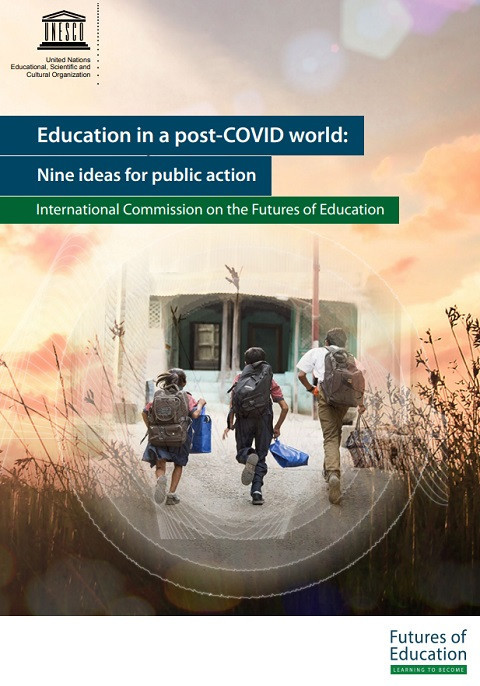 后疫情世界的教育: 推进公共行动的九个构想 “教育的未来”国际委员会 Année de publication: 2020 Auteur institutionnel: UNESCO 在冠状病毒病(Covid-19)疫情背景的当下作出的决定,将对教育的未来产生深远的影响。在本报告中,“教育的未来”国际委员会提出了应对Covid-19危机及其后果的九个关键构想。报告认为,当面临经济、社会以及教育体系遭到前所未有破坏的情况时,我们必须坚持核心原则,继续发挥固有优势。在振兴和重塑教育时,必须优先考虑人际互动和人的福祉问题。同时,还必须致力于全球团结,不能接受当今世界出现如此程度的不平等。
 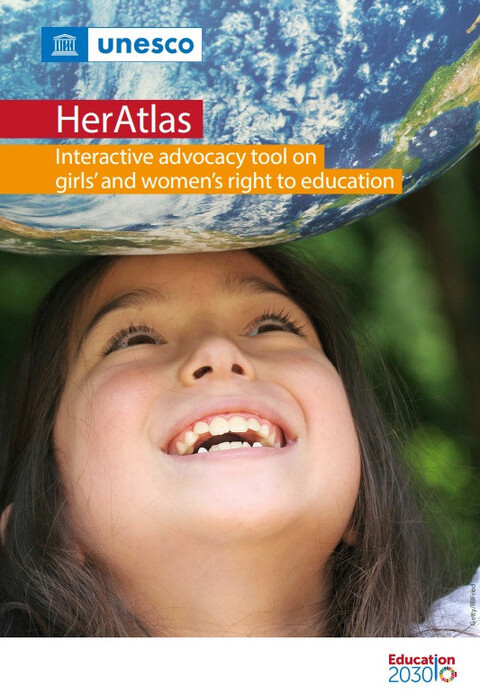 Her Atlas: Interactive Advocacy Tool on Girls’ and Women’s Right to Education Année de publication: 2023 Auteur institutionnel: UNESCO Many girls and women cannot exercise their right to education due to gender inequality and discriminatory practices. Poverty, early marriage, and gender-based violence are just some of the many reasons behind the high percentage of global female illiteracy and school drop-outs. Strengthening the right of girls and women to quality education is key to eliminate discrimination and to achieve equal rights between genders. This cannot be achieved without solid national legal frameworks that are rightsbased, gender responsive and inclusive. This is where HerAtlas comes in. HerAtlas, is a first of its kind online tool that maps the right to education of girls and women. It aims to enhance public knowledge and monitor the status of national constitutions, legislation and regulations related to education rights for girls and women to encourage countries to take action, strengthen their laws and policies, and lead to long term change. Concrete changes are already apparent. In 2019, 4% of countries were explicitly restricting the right to education of married, pregnant, and parenting girls. This has dropped to 2% in 2022, benefiting millions of girls who can now legally attend school when they marry or become pregnant.
  التوصية الخاصة بالتربية والتعليم من أجل السلام وحقوق الإنسان والتنمية المستدامة: دليل تفسيري Année de publication: 2024 Auteur institutionnel: UNESCO ويقدّم هذا الكتيّب تعريفاً بالتوصية بصيغتها المعدّلة ويبيّن مضمون التوصية ويوضح لمختلف الجهات المعنية بالتربية والتعليم كيفية استخدامها بطريقة عملية في عملها اليومي.
  The Recommendation on Education for Peace, Human Rights and Sustainable Development: An Explainer Année de publication: 2024 Auteur institutionnel: UNESCO This is an explainer brochure of the new UNESCO Recommendation on Education for Peace and Human Rights, International Understanding, Cooperation, Fundamental Freedoms, Global Citizenship and Sustainable Development, which is commonly referred to as the Recommendation on Education for Peace, Human Rights and Sustainable Development, about its purpose, history, content and potential to bring about necessary change.
 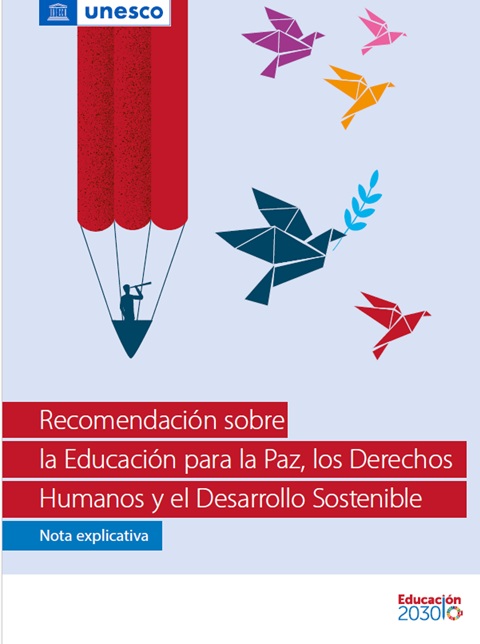 Recomendación sobre la Educación para la Paz, los Derechos Humanos y el Desarrollo Sostenible : nota explicativa Année de publication: 2024 Auteur institutionnel: UNESCO En este folleto se presenta la versión actualizada de la Recomendación y se explica lo que ofrece y el modo en que las distintas partes interesadas en la educación pueden utilizarla de manera concreta en el día a día.
 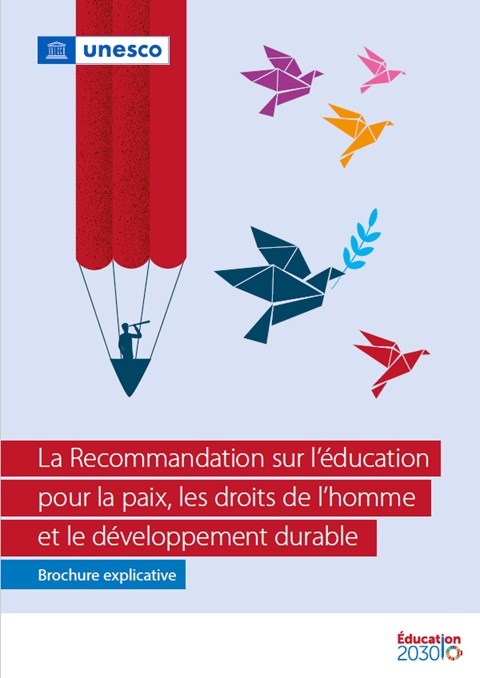 La Recommandation sur l’éducation pour la paix, les droits de l’homme et le développement durable: Brochure explicative Année de publication: 2024 Auteur institutionnel: UNESCO Cette brochure présente la version actualisée de la Recommandation et explique ce que cette dernière peut apporter et comment elle peut être mise en application de manière concrète par les différents acteurs de l’éducation au quotidien.
 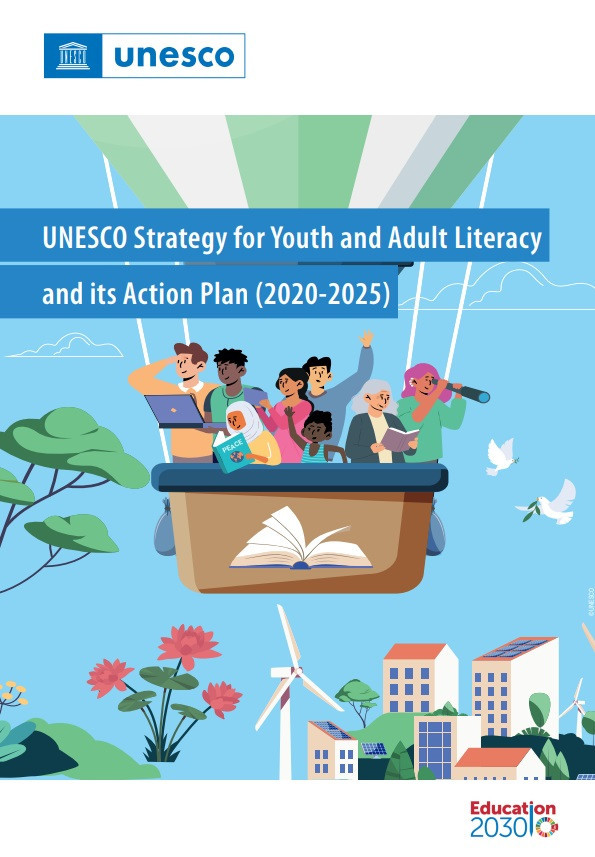 UNESCO Strategy for Youth and Adult Literacy and its Action Plan (2020-2025) Année de publication: 2023 Auteur institutionnel: UNESCO I. Introduction1. The international community has set an ambitious 2030 Agenda for Sustainable Development1, with education and learning central to its achievement. The vision of the Incheon Declaration2, Education 2030, is fully captured by Sustainable Development Goal 4 (SDG4) “ensure inclusive and equitable quality education and promote lifelong learning opportunities for all”. Education 2030 devotes considerable attention to literacy and adult learning including through Target 4.6 and related indicative strategies.2. By 205 EX/Decision 6.III, the Executive Board requested the Director-General to review, update and improve the vision and strategy for literacy to contribute to SDG 4 – Education 2030, and to present it at its 207th session, with a view to transmitting it to the General Conference at its 40th session. The present document therefore contains the draft UNESCO Strategy for Youth and Adult Literacy (2020- 2025). The Strategy was developed through an inclusive and participatory process, including research and analysis of key trends, online consultation of Member States and expert meetings.
 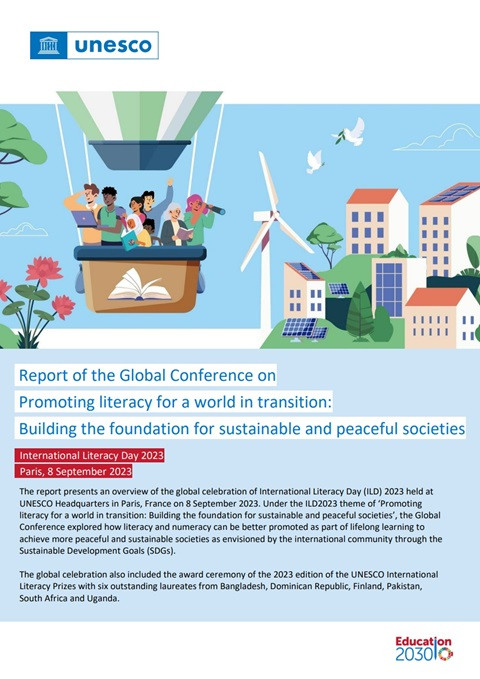 Report of the Global Conference on Promoting Literacy for a World in Transition: Building the Foundation for Sustainable and Peaceful Societies Année de publication: 2024 Auteur institutionnel: UNESCO The report presents an overview of the global celebration of International Literacy Day (ILD) 2023 held at UNESCO Headquarters in Paris, France on 8 September 2023. Under the ILD 2023 theme of ‘Promoting literacy for a world in transition: Building the foundation for sustainable and peaceful societies’, the Global Conference explored how literacy and numeracy can be better promoted as part of lifelong learning to achieve more peaceful and sustainable societies as envisioned by the international community through the Sustainable Development Goals (SDGs). The global celebration also included the award ceremony of the 2023 edition of the UNESCO International Literacy Prizes with six outstanding laureates from Bangladesh, Dominican Republic, Finland, Pakistan, South Africa and Uganda.
  Reconciliation through Global Citizenship Education Année de publication: 2023 Auteur institutionnel: UNESCO This document zeroes in on how concepts of GCED and reconciliation are addressed in current research and practice and aims to provide existing grounds and future considerations for policy-makers concerned with reconciliation through education.
 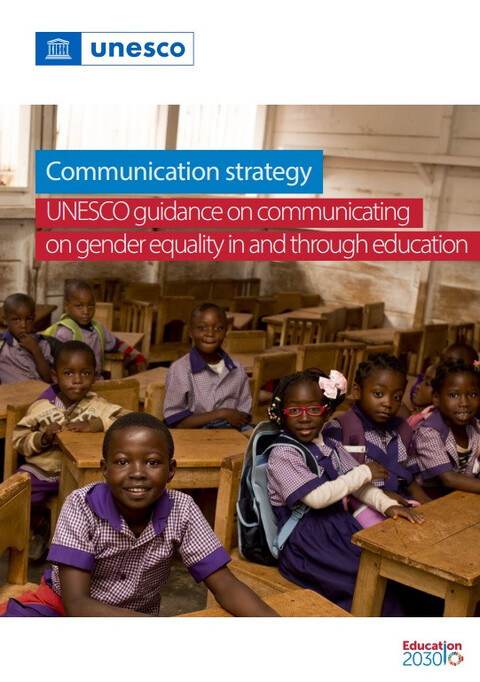 Communication Strategy: UNESCO Guidance on Communicating on Gender Equality in and through Education Année de publication: 2022 Auteur institutionnel: UNESCO About 259 million children and youth are out of school according to the UNESCO Institute for Statistics, including 127 million girls and 132 million boys. Twothirds of the 750 million non-literate adults around the world are women. This gender disparity remains one of the persistent challenges in adult literacy and education. The COVID-19 pandemic has exacerbated existing challenges, disrupting the education of over 1.5 billion learners. UNESCO estimates that close to 24 million children and youth, including over 11 million girls and 13 million boys, may drop out of school due to the pandemic’s economic impact. A window of opportunity is now more than ever open to build back equal. This communication strategy is designed to provide strategic guidance on communicating on gender equality in and through education. While prepared for UNESCO Education Sector staff, including those at Headquarters, in Field/Regional/Cluster Offices and in Institutes as well as for implementing partners, a broader audience of gender focal points, partners, Member States and others with an interest in and commitment to gender equality in and through education may also find this strategy particularly useful.