
Ressources
Explorez une large gamme de ressources sur le GCED afin d’approfondir votre compréhension et de renforcer vos activités de recherche, de plaidoyer, d’enseignement et d’apprentissage.
3,505 résultats trouvés
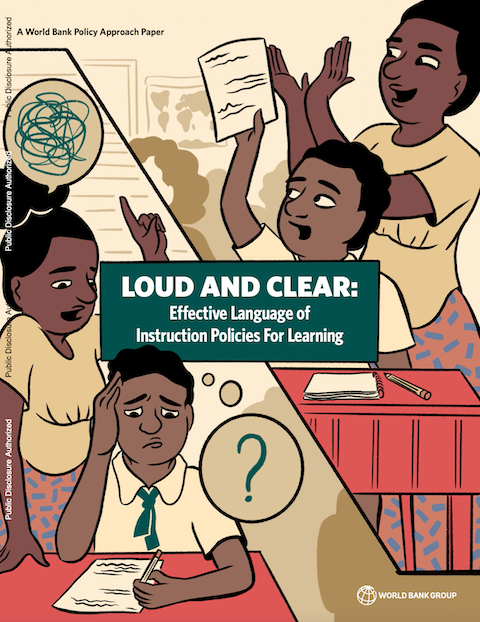 Haut et fort: Politiques efficaces de Langue d’Enseignement Pour l’Apprentissage Année de publication: 2021 Auteur institutionnel: World Bank Ce document décrit la nouvelle approche de la politique de la Banque mondiale en matière de langue d’enseignement, en tant que composante dans l’opérationnalisation du paquet de politique de littératie en appui au nouvel objectif d’apprentissage de la banque. Cette nouvelle approche vise à soutenir les progrès dans le domaine des politiques et des interventions en matière de LE (Langue d'Enseignement), dans la mesure où les défis liés à la PLE(Politique de Langue d'Enseignement) sont identifiés et traités à la lumière du contexte de chaque pays.
 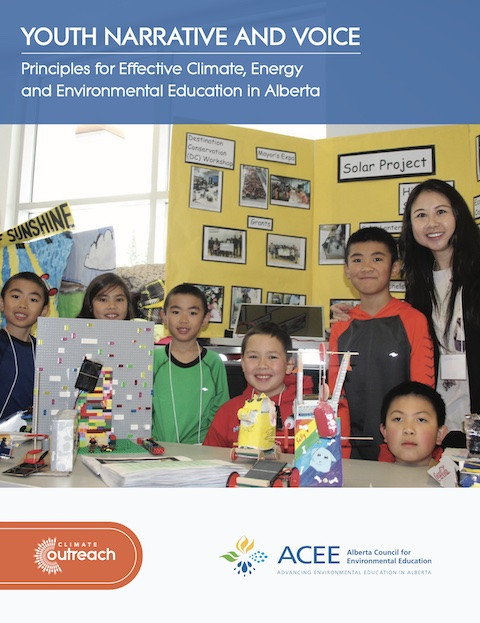 Youth Narrative and Voice: Principles for Effective Climate, Energy and Environmental Education in Alberta Année de publication: 2020 Auteur: Christopher Shaw | Amber Bennett | Susie Wang Auteur institutionnel: Climate Outreach | Alberta Council for Environmental Education (ACEE) This report provides educators with 10 principles for developing new energy and climate change education resources in Alberta, and example narratives and language to engage students. The findings and recommendations are drawn primarily from a series of workshops with Alberta students held during the fall of 2019. A survey of Alberta youth conducted by Leger, a literature review and interviews with Alberta teachers provided additional insights that deepened, broadened and ‘sense checked’ the workshop results.
 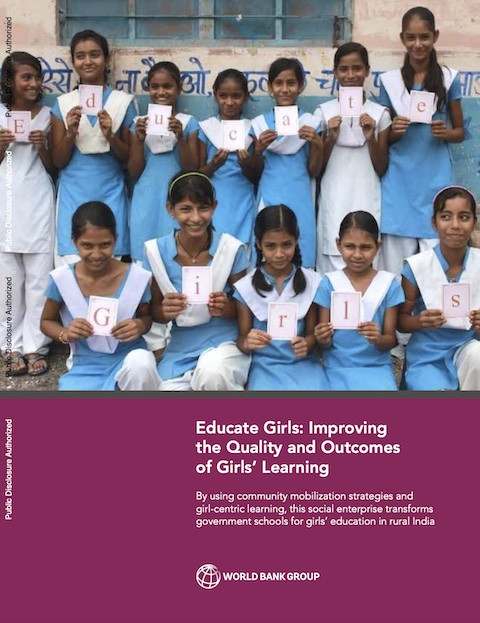 Educate Girls: Improving the Quality and Outcomes of Girls’ Learning Année de publication: 2017 Auteur institutionnel: World Bank In India, women and girls, especially in rural areas, are particularly affected by the country’s illiteracy problem, since they face discrimination based on their sex and need for childbearing. In Rajasthan, the north- western Indian state that borders Pakistan, 9 out of 26 districts have the worst gender gap in India for girls’ education.Established in 2007, Educate Girls is holistically tackling issues at the root cause of gender inequality in India’s education system that has helped to ensure over 90% enrollment and significantly higher attendance for all girls as well as improved school infrastructure, quality of education and learning outcomes for all children.As a result of Educate Girls’ efforts to date, an army of “girls champions” has been created to combat cultural issues and support systemic change. More than 150,000 out-of-school girls have been enrolled in school and the program has benefitted around 3.8 million of beneficiaries. Continuing to address the social and cultural barriers in girls’ education can bring about real transformation, such as improvement in health, income levels, and overall livelihoods in rural populations.
  Secondary Education and Skills Année de publication: 2020 Auteur institutionnel: Generation Unlimited | Global Initiative on Decent Jobs for Youth All young people need access to quality education and learning that would help them develop the skills, knowledge, attitudes and values they need to find and retain productive work, to make informed decisions, and to positively engage in their communities. However, millions of young people remain out of school or do not have access to quality learning opportunities. The COVID-19 pandemic and the resulting economic downturn have made the challenges facing young people even more pressing, as shrinking labour markets leave low-skilled young people with fewer choices, and render them more vulnerable to exploitation.There is a need for a radical re-think of what works, seeking a radical improvement in traditional curricula, the number of trained professional teachers, student–teacher ratios, and the teaching methods and strict school timetables that have become less relevant to the current needs of young people.The aim of this guide is to support the Generation Unlimited strategic priorities, and to inform policy makers and social partners, so as to guide action on investment, policy change and delivery, increasing the likelihood of successful outcomes and decent jobs for young people.
  Positioning ICT in Education to Achieve the Education 2030 Agenda in Asia and the Pacific: Recommendations for a Regional Strategy Année de publication: 2018 Auteur: Hyojeong So | Kyungsim Yeon | Kyungsim Yeon | Jian Xi Teng Auteur institutionnel: UNESCO Bangkok This regional study is an important document for Asia-Pacific Member States as it consolidates data related to the effective use of ICT in education. One highlight of this study is the five priority areas for the use of ICT towards achieving SDG4 and Education 2030 that were identified based on a synthesis of the data:ICT for transforming and expanding TVET and higher education ICT for improving teacher qualityICT for improving access to and quality of secondary education ICT for enabling inclusive and equitable learningICT for monitoring and evaluation
 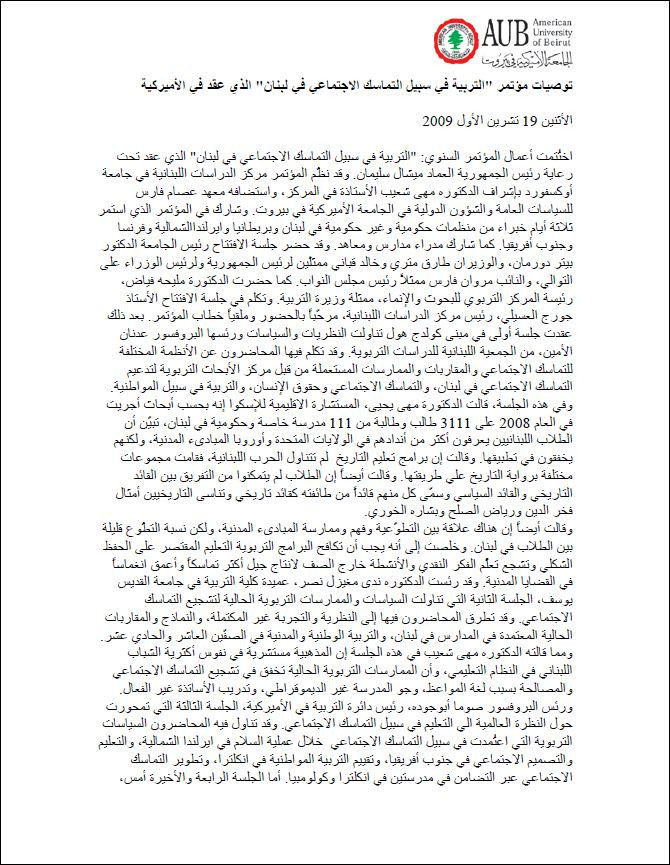 توصيات مؤتمر " التربية في سبيل التماسك الاجتماعي في لبنان " Année de publication: 2009 Auteur institutionnel: American University of Beirut الملف عبارة عن التوصيات التي خرج بها مؤتمر "التربية والتماسك الاجتماعي في لبنان"، والذي أقيم بالجامعة الامريكية في بيروت. التوصيات تتعاطى مع تحديات التماسك الاجتماعي في لبنان باختلاف طوائفه ومكوناته العرقية. أستمر هذا المؤتمر ثلاث أيام وحضرها مجموعة من المشاركين من لبنان وخارجه. Recommendations of the Conference on "Education for Social Cohesion in Lebanon" Année de publication: 2009 Auteur institutionnel: American University of Beirut The file is a summary of the recommendations that came out of the "Education and Social Cohesion in Lebanon" conference, which was held at the American University in Beirut. The recommendations deal with the challenges of social cohesion in Lebanon with its different sects and ethnic components. This conference lasted for three days and was attended by a group of participants from Lebanon and abroad.
 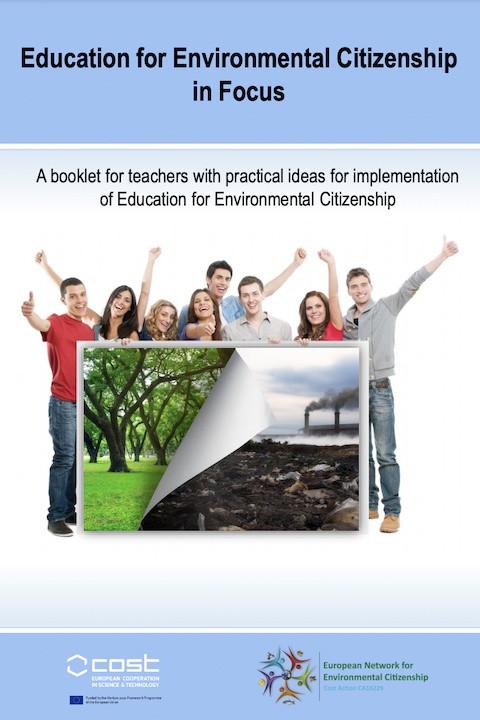 Una visión nítida de la Educación para la Ciudadanía Ambiental: Una publicación para profesorado con ideas prácticas para trabajar la Ciudadanía Ambiental a través de la educación Année de publication: 2019 Auteur institutionnel: European Network for Environmental Citizenship (ENEC) La Red Europea para la Ciudadanía Ambiental (ENEC) – financiada como Acción COST (CA16229-Horizon 2020) – aúna a más de 130 expertos de 38 países con el objetivo de mejorar la comprensión, práctica y evaluación de la Ciudadanía Ambiental en Europa y en los países participantes. El concepto de Ciudadanía Ambiental ha sido influyente en muchos ámbitos como la economía, la política, la filosofía, la gestión y el comercio y se podría desarrollar y aplicar mejor en el ámbito de la educación. La actual crisis ambiental, el cambio climático, la pérdida de biodiversidad y la contaminación requieren de una educación que permita el empoderamiento de los ciudadanos. La educación juega un papel clave en la formación de la futura ciudanía. El enfoque didáctico para una ciudadanía ambiental es una metodología que apunta en esta dirección. Esta metodología propone diferentes pasos y etapas, aunque no es obligatorio seguirlos todos o aplicarlos en un determinado orden. Dependiendo de las circunstancias, del problema ambiental que se esté tratando, del nivel educativo, (p. ej. Primaria o Secundaria) o del contexto (p. ej. formal o no formal), se pueden llevar a cabo unas adaptaciones u otras. Focus sur l’Éducation à la Citoyenneté Environnementale: Un livret pour les enseignants avec des idées pratiques pour l’éducation à la citoyenneté environnementale (EEC) Année de publication: 2019 Auteur institutionnel: European Network for Environmental Citizenship (ENEC) Le réseau européen pour la citoyenneté environnementale – European Network for Environmental Citizenship (ENEC) – financé en tant qu’Action COST (CA16229-Horizon 2020) – a réuni plus de 120 experts venant de 38 pays dans l’objectif d’améliorer la compréhension, la pratique et l’évaluation de la Citoyenneté Environnementale en Europe et dans lespays participants. La Citoyenneté Environnementale a été un concept influant dans de nombreux champs – économie, politique, philosophie, management organisationnel et entrepreneurial, marketing – et pourrait également être mieux exploitéeet davantage établie dans le champ de l’éducation. La crise environnementale contemporaine avec le changement climatique, perte de la biodiversité, pollution de l’air et tous les autres problèmes environnementaux locaux et globaux exigent une éducation à même d’habiliter des citoyens environnementaux. L’éducation joue un rôle clé dans la construction des futurs citoyens environnementaux. L’approche pédagogique de l’Éducation à la Citoyenneté Environnementale est une proposition qui va dans ce sens. L’approche recommande des éléments spécifiques tels des stades et étapes, mais il n’est pas obligatoire de tous les suivre ou de les appliquer selon un ordre linéaire particulier. Selon le problème environnemental à l’étude, le niveau d’éducation (par ex. primaire ou secondaire) et le mode éducatif (par ex. formel ou non-formel), les différenciations et adaptations nécessaires peuvent être faites.
 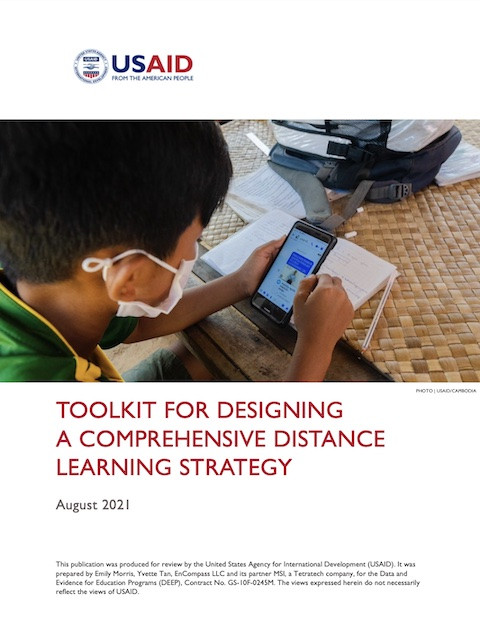 Toolkit for Designing a Comprehensive Distance Learning Strategy Année de publication: 2021 Auteur: Emily Morris | Yvette Tan Auteur institutionnel: United States Agency for International Development (USAID) The purpose of this toolkit is to provide practical guidance (tools, examples, and resources) for designing a comprehensive distance learning strategy that covers an entire education sector or system.