
Ressources
Explorez une large gamme de ressources sur le GCED afin d’approfondir votre compréhension et de renforcer vos activités de recherche, de plaidoyer, d’enseignement et d’apprentissage.
3,530 résultats trouvés
 数字公民教育: 亚太地区的政策与实践 Année de publication: 2019 Auteur: 周小李 | 王方舟 随着网络信息时代的到来,在国际学术界,数字公民已成为一个被深入探讨的概 念 ;在全球教育领域,数字公民教育日益成为世界各国教育体系的重要组成部分。在亚太地 区,联合国教科文组织曼谷办事处已经启动了数字公民培育项目,各成员国在政策与实践方 面正作出积极的探索和努力。作为信息化程度较高的国家,新加坡、澳大利亚和韩国的数字 公民教育开展得较好,尤其在网络健康课程、网络安全教育及网络成瘾预防和治疗等方面表 现更为出色,这些经验可为数字公民教育的推进提供若干启示。
  当代公民教育的价值困境及其对策 Année de publication: 2017 Auteur: 叶飞 随着当代中国公民意识的觉醒及社会主义民主法制建设的勃兴,公民教育迎来 了一个快速发展的时期。但值得注意的是,当前我们的公民教育依然面临着诸多伦理与价值 的困境,如在伦理规范体系上存在着“应然规范”与“实然规范”的分裂,在价值导向上存 在着权利导向与责任导向的失衡,在目标追求上深陷于公共德性与个体善性的混淆,在实施 过程中面临着公共价值与公共生活的背离等等。为从这种困境中摆脱出来,当代公民教育应 建构起“应然规范”与“实然规范”、权利导向与责任导向、公共德性与个体善性的均衡体 系,构筑公共生活与公共价值之间的有机联结,从而更有效地传递公共价值观念,最终实现 公民教育的目标与使命。
  以电影《美国女孩》为例分析中国集体主义和美国个人主义对家庭教育的影响 Année de publication: 2024 Auteur: 刘梦雨 Auteur institutionnel: 中国高校人文社会科学信息网 在中国家庭面对中美跨文化交际时 会表现出剧烈的冲突,以电影《美国女孩》为例,分析在美国长大的芳仪回到中国后会发生怎样的跨文化问题,不同的教育背景使芳仪产生自我矛盾,在家庭中和父母爆发了争吵,芳仪最后在不断冲突后接受了现实。在对影片分析后希望能够发现更恰当的方法去解决跨文化家庭的教育问题并解决他们的矛盾。
  特殊学生的家校合作 (国际教育学 6卷第1期) Année de publication: 2024 Auteur: 赵建玲 Auteur institutionnel: 国际开放获取期刊研究中心 正常儿童的成长发育进度基本一致,而特殊学生往往在生理、心理及智力等方面都可能存在问题,所以需要特殊对待。家庭和学校对培养学生都有重要的作用,家校合作不仅更有利于学生的健康成长,还能帮助家庭和学校的教育目的协调与统一。家校合作让家长能够参与到学校的教育中,通过与学校其他家长的沟通和交流总结教育经验,及时掌握更全面的信息,从而提高家长自己的教育观念和教育素养,为特殊学生的未来发展营造更好的环境。
 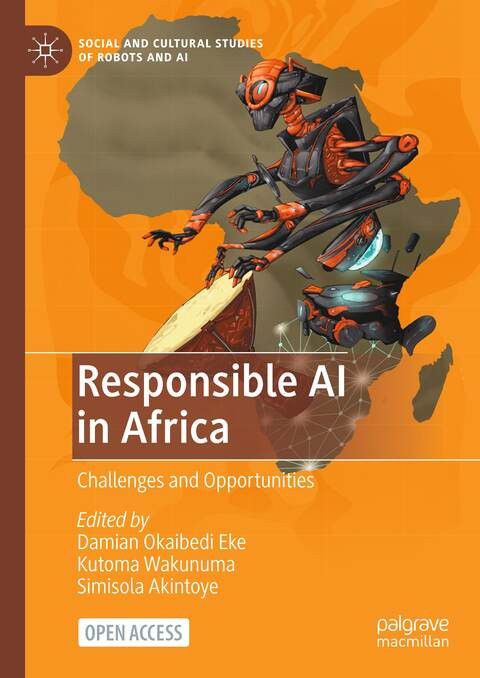 Responsible AI in Africa: Challenges and Opportunities Année de publication: 2023 Auteur institutionnel: Palgrave Macmillan This open access book contributes to the discourse of Responsible Artificial Intelligence (AI) from an African perspective. It is a unique collection that brings together prominent AI scholars to discuss AI ethics from theoretical and practical African perspectives and makes a case for African values, interests, expectations and principles to underpin the design, development and deployment (DDD) of AI in Africa. The book is a first in that it pays attention to the socio-cultural contexts of Responsible AI that is sensitive to African cultures and societies. It makes an important contribution to the global AI ethics discourse that often neglects AI narratives from Africa despite growing evidence of DDD in many domains. Nine original contributions provide useful insights to advance the understanding and implementation of Responsible AI in Africa, including discussions on epistemic injustice of global AI ethics, opportunities and challenges, an examination of AI co-bots and chatbots in anAfrican work space, gender and AI, a consideration of African philosophies such as Ubuntu in the application of AI, African AI policy, and a look towards a future of Responsible AI in Africa.
  The UNESCO Recommendation on the Ethics of AI: Shaping the Future of Our Societies Année de publication: 2023 Auteur institutionnel: German Commission for UNESCO | Netherlands National Commission for UNESCO | Slovenian National Commission for UNESCO The UNESCO commissions of Germany, the Netherlands and Slovenia with the support of IRCAI have jointly published a brochure on the UNESCO recommendation on the ethics of artificial intelligence. It summarizes the most important content in a compact manner and presents the central demands from the areas of health, culture, the environment, gender equality as well as education and research. The recommendation with its diverse topics is not only relevant for political experts, but it offers one for various areas of application of the ethical framework and thus serves as an orientation for dealing with AI in general. The brochure is available for the wider public in a number of formats including the original Adobe InDesign file that allows translations to be inserted and format pages, resulting in new versions of the brochure. Therefore, we strongly encourage all UNESCO Commissions from across all UNESCO regions Africa, Arab States, Asia and the Pacific, Europe and North America, Latin America and the Caribbean to use the text in the basic files and translate the content into their own languages, including using the graphic file to setup their own designs of the brochure.
  Rwanda: In Search of Justice(Humains; no.30) Année de publication: 2024 Auteur institutionnel: Action by Christians for the Abolition of Torture (ACAT France) On the thirtieth anniversary of the genocide of the Tutsis in Rwanda, ACAT-France looks back at this tragic event for human rights. Discover the dossier in the magazine Humains #32 devoted to this subject. Rwanda: En quête de justice (Humains; n° 30) Année de publication: 2024 Auteur institutionnel: Action by Christians for the Abolition of Torture (ACAT France) À l’occasion du trentième anniversaire du génocide des Tutsis au Rwanda, l’ACAT-France revient sur cet événement tragique pour les droits de l’Homme. Découvrez le dossier de la revue Humains #32 consacré à ce sujet.
 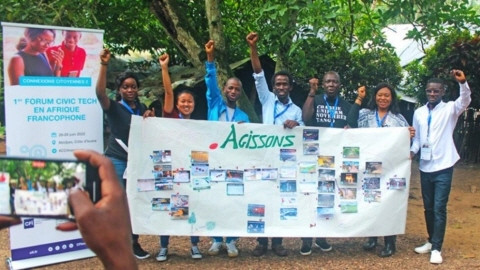 Civic Tech in Africa: When Citizen’s Connections Work for Democracy Année de publication: 2022 Auteur: Raphaëlle Constant Auteur institutionnel: Radio France International (RFI) The first civic tech forum in French-speaking Africa was held at the end of June in Abidjan, Côte d'Ivoire, at the initiative of CFI. For "L'atelier des médias", Raphaëlle Constant spoke to the people who are developing digital initiatives in several African countries to improve the flow of information and mobilise citizens to influence public debate. Civic tech en Afrique: Quand des connexions citoyennes œuvrent pour la démocratie Année de publication: 2022 Auteur: Raphaëlle Constant Auteur institutionnel: Radio France International (RFI) Le premier forum civic tech en Afrique francophone s’est tenu fin juin à Abidjan, en Côte d’Ivoire, à l'initiative de CFI. Pour L’atelier des médias, Raphaëlle Constant y a tendu son micro à celles et ceux qui développent des initiatives numériques dans plusieurs pays africains pour améliorer la circulation de l’information et déclencher des mobilisations citoyennes pour peser dans le débat public.