
Ressources
Explorez une large gamme de ressources sur le GCED afin d’approfondir votre compréhension et de renforcer vos activités de recherche, de plaidoyer, d’enseignement et d’apprentissage.
3,505 résultats trouvés
 Education and Its Role in Activating Tolerance Education to Achieve Peaceful Coexistence (Hammurabi Journal for Studies; Vol.1, No.46) Année de publication: 2023 Auteur: Marwan Kadhim Wajar Al-Saedl Auteur institutionnel: Hammurabi Centre for Research and Strategic Studies Achieving and spreading a culture of tolerance has become a necessity for societies to prevail the values of peace, benevolence, coexistence with others, and respect for intellectual and cultural diversity within the same society. Tolerant education and its values are a frame of reference and guide for students' behavior. The value system of individuals represents their beliefs, behaviors, and emotions, as well as their social and interactive attitudes; they also form part of their self-concept. The current research attempts to answer the following question: "What is the role of education in activating tolerance education to achieve peaceful coexistence?" The research also aims to identify the intellectual and theoretical framework of tolerance, and knowing the educational effects of activating tolerance education in order to provide a vision of the role of education in activating tolerance education to achieve peaceful coexistence. The current research adopts the descriptive approach as the most appropriate to the nature of this research.
  التربية على التسامح وتجسيد ثقافة العيش المشترك من التسامح إلى التعايش Année de publication: 2022 Auteur institutionnel: Democratic Arab Center حظى مفهوم التسامح باهتمام كبير في ضوء المتغيرات المجتمعية المعاصرة من أجل ضمان استقرار المجتمع، وتعايش أفراده في وئام وسلام بالإضافة إلى أهميته على مستوى العلاقات بين الدول وبعضها. التسامح قيمة إنسانية ذات طابع عالمي، ولقد ظهر مفهوم التسامح من حاجة المجتمعات الغارقة في الحروب والاقتتال الأهلي، وهو أعطى تقدما باهرا للمجتمعات والمؤسسات في الغرب، وحرّر الإنسـان من قيود الخوف، لقد أرسى مفهوم التسامح قوانين أكثر إنسانية، وفرض على الـدول أنماطا جديدة مـن التفكير وإعمال العقل لاستنباط مخارج تجنب البشرية العنف والتعصب، وقـد التزمت الأمـم المتحدة بتدعيم التسامح من خلال تعزيز التفاهم المتبادل بين الثقافات والشعوب . وقد تنبهت منظمة اليونسكو للتربية والثقافة والعلـوم التابعة للأمم المتحدة، إلى موضوع ثقافة التسامح فأصدرت في السادس عشر من تشرين الثاني لعام 1995، إعلاناً يتضمـن الـمبـادئ الأساسية للتسامح كثقافة تربوية ونفسية و اجتماعية. وقـد أصبح هذا اليوم ومنذ المؤتمر العام لليونسكو في دورته الثامنة والعشرين، يوماً عالمياً للتسامح Tolerance Education and the Embodiment of Coexistence Culture: From Tolerance to Coexistence Année de publication: 2022 Auteur institutionnel: Democratic Arab Center The concept of tolerance has received great attention in light of contemporary societal changes in order to ensure the stability of society and the coexistence of its members in harmony and peace, in addition to its importance at the level of relations between countries.Tolerance is a human value of a universal nature. The concept of tolerance emerged from the need of societies mired in war and civil strife. It gave remarkable progress to societies and institutions in the West, and liberated people from the shackles of fear. The concept of tolerance established more humane laws and imposed on countries new patterns of thinking. And using reason to devise ways to avoid violence and intolerance for humanity. The United Nations has committed to strengthening tolerance by promoting mutual understanding between cultures and peoples.The United Nations Educational, Scientific and Cultural Organization, UNESCO, became aware of the issue of the culture of tolerance and issued, on November 16, 1995, a declaration containing the basic principles of tolerance as an educational, psychological and social culture. Since the twenty-eighth session of the UNESCO General Conference, this day has become an international day for tolerance.
 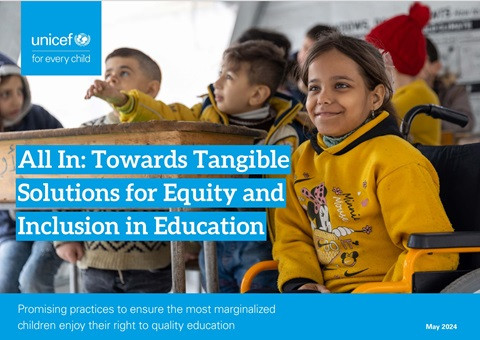 All In: Towards Tangible Solutions for Equity and Inclusion in Education Année de publication: 2024 Auteur institutionnel: United Nations Children's Fund (UNICEF) All In: Towards Tangible Solutions for Equity and Inclusion in Education showcases promising practices that were successfully implemented to ensure that inclusive education really does include all children, so that the most marginalized learners – including children with disabilities, children who are out of school, children living in poverty, marginalized girls, and refugee children – have access to quality education. While many of the promising practices were initiated in response to the COVID-19 crisis, or draw upon the pandemic experience, they go beyond the immediate focus of pre- or post-COVID-19 education systems to an overall view of child well-being and the need to focus on skills for the 21st century. Many of these practices have the potential to be applied more widely within education systems and can be adapted and replicated by stakeholders in any context where innovative and inclusive approaches are needed to protect and promote children’s right to education. Ingenuity, flexibility and a commitment to true inclusion and forward-looking policies are the common thread of promising practices in this document. This publication is a complementary resource to the 2021 report: Reimagining Girls’ Education: Solutions to Keep Girls Learning in Emergencies.
 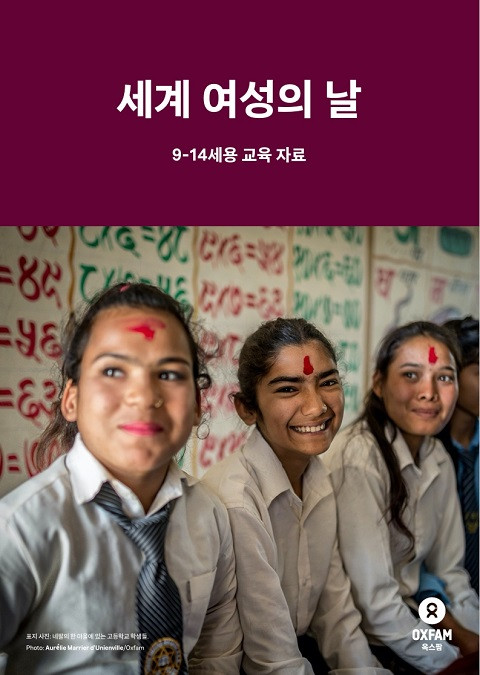 세계 여성의 날: 9-14세용 교육 자료 Année de publication: 2024 Auteur institutionnel: 옥스팜 세계 여성의 날은 매년 3월 8일을 기념한다. 이날은 미국 뉴욕에서 15,000명의 여성 노동자들이 노동시간 단축, 임금 인상, 투표권 보장을 요구하며 행진한 것에서 처음 시작되었다. 세계 여성의 날은 전 세계가 함께 모여 여성과 소녀들이 이룬 업적을 기념하고 성별 격차 해소를 위한 새로운 행동을 촉구하는 날이다. 이 교육 자료는 성평등과 관련된 이슈를 소개하고, 비판적 사고를 돕고, 청소년들이 취할 수 있는 행동이 무엇인지 생각해 볼 수 있도록 돕는데 사용할 수 있다. 자료에 소개된 활동들은 유연하게 적용할 수 있도록 설계되었기 때문에 수업 시간 외에 언제 어디서든 활용할 수 있다.
  الأطفال غير المصحوبين بذويهم أو المنفصلين عنهم في منطقة الشرق الأوسط Année de publication: 2024 Auteur: Pierre Cazenave Auteur institutionnel: International Centre for Migration Policy Development (ICMPD) | European Union (EU) قد صمم هذا العمل لتسليط الضوء على الديناميات السابقة والحالية التي تؤثر على الهجرة الدولية (من المنطقة وداخلها)، وجمع وجهات النظر وتحليل سرد الأطفال غير المصحوبين بذويهم أو المنفصلين عنهم في محاولة لفهم الأسباب التي تدعم تنقل والأطفال غير المصحوبين بذويهم أو المنفصلين عنهم من المنطقة وداخلها، وذلك أي ًضا بهدف تقديم توصيات بشأن كيفية توفير احتياجاتهم المحددة على نحو أفضل في سياقات مختلفة. ركزت الدراسة بشكل خاص على ٣ بلدان مختارة في منطقة الشرق الأوسط وشمال إفريقيا (المغرب والأردن ولبنان) بينما تم استخدام المعلومات والبيانات القيمة التي تم جمعها في بلدين من بلدان الاتحاد الأوروبي (الاتحاد الأوروبي)، وهما اليونان وإسبانيا. Unaccompanied and Separated Children in the Mediterranean Region Année de publication: 2024 Auteur: Pierre Cazenave Auteur institutionnel: International Centre for Migration Policy Development (ICMPD) | European Union (EU) This work was designed to shed light on past and current dynamics that influence international migration (from and within the region), gather the perspectives and analyse the narratives of Unaccompanied and Separated Children (UASC) in an attempt to understand the reasons that underpin the mobility of unaccompanied and separated children from and within the region, also with a view to provide recommendations on how to better provide for their specific needs in different contexts. The study placed a special emphasis on 3 selected countries in the MENA region (Morocco, Jordan and Lebanon) while valuable information and data gathered in 2 European Union (EU) countries, Greece and Spain, were also used. Les enfants non accompagnés et séparés dans la région méditerranéenne Année de publication: 2024 Auteur: Pierre Cazenave Auteur institutionnel: International Centre for Migration Policy Development (ICMPD) | European Union (EU) La présente étude a été menée dans le cadre du programme EUROMED Migration V, qui est financé par l'Union européenne (UE) et mis en œuvre par le Centre international pour le développement des politiques migratoires (ICMDP). Il aide les Pays membres de l’Union européenne et les Pays partenaires du sud (PPS) à mettre en place un cadre de dialogue et de coopération global, constructif et opérationnel, portant en particulier sur le renforcement des instruments et des capacités pour développer et mettre en œuvre des politiques de migration fondées sur des données factuelles. EMM5 s’appuie sur les résultats de ses quatre premières phases (2004-2020) et développe ses activités autour de la facilitation d’un dialogue et d’une coopération régionale Sud-Nord et Sud-Sud efficaces dans les domaines thématiques identifiés dans le nouvel agenda pour la Méditerranée sur les migrations et la mobilité et le Nouveau pacte sur les migrations et l'asile. Il s'agit notamment de la gouvernance en matière de migration et d'asile, des opportunités socio-économiques pour les migrants et les communautés d'accueil, du retour et de la réintégration, de la migration légale et de la mobilité.
 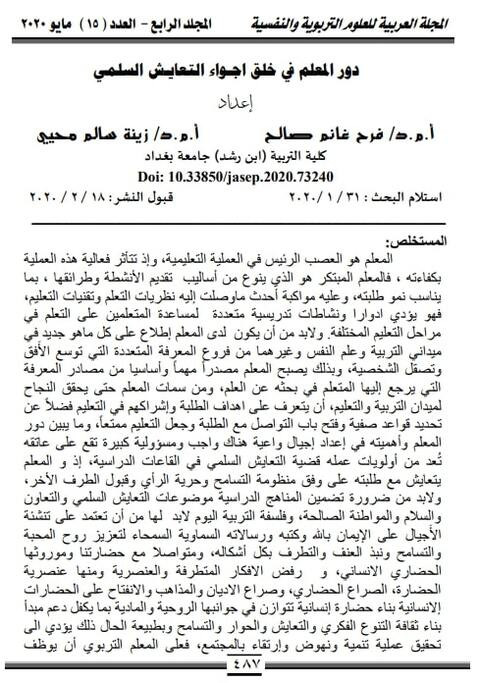 دور المعلم في خلق اجـواء التعايـش السلمي (المجلة العربية للعلوم التربوية والنفسية; Vol. 4, No. 15) Année de publication: 2020 Auteur: Farah Ghanem Saleh | Zeina Salem Mohy Auteur institutionnel: Ibn Rushd College of Education المعلم هو العصب الرئيس في العملية التعليمية، وإذ تتأثر فعالية هذه العملية بکفاءته ، فالمعلم المبتکر هو الذي ينوع من أساليب تقديم الأنشطة وطرائقها ، بما يناسب نمو طلبته، وعليه مواکبة أحدث ماوصلت إليه نظريات التعلم وتقنيات التعليم، فهو يؤدي ادوارا ونشاطات تدريسية متعددة لمساعدة المتعلمين على التعلم في مراحل التعليم المختلفة. ولابد من أن يکون لدى المعلم إطلاع على کل ماهو جديد في ميداني التربية وعلم النفس وغيرهما من فروع المعرفة المتعددة التي توسع الأَفق وتصقل الشخصية، وبذلک يصبح المعلم مصدراً مهماً وأساسيا من مصادر المعرفة التي يرجع إليها المتعلم في بحثه عن العلم، ومن سمات المعلم حتى يحقق النجاح لميدان التربية والتعليم، أن يتعرف على اهداف الطلبة وإشراکهم في التعليم فضلاً عن تحديد قواعد صفية وفتح باب التواصل مع الطلبة وجعل التعليم ممتعاً، وما يبين دور المعلم وأهميته في إعداد إجيال واعية هناک واجب ومسؤولية کبيرة تقع على عاتقه تُعد من أولويات عمله قضية التعايش السلمي في القاعات الدراسية، إذ و المعلم يتعايش مع طلبته على وفق منظومة التسامح وحرية الرأي وقبول الطرف الأخر، ولابد من ضرورة تضمين المناهج الدراسية موضوعات التعايش السلمي والتعاون والسلام والمواطنة الصالحة The Role of the Teacher in Creating an Atmosphere of Peaceful Coexistence (Arab Journal of Educational and Psychological Sciences; Vol.4, No.15) Année de publication: 2020 Auteur: Farah Ghanem Saleh | Zeina Salem Mohy Auteur institutionnel: Ibn Rushd College of Education The teacher is the main nerve in the educational process, and the effectiveness of this process is affected by his competence. The innovative teacher is the one who diversifies the approaches and methods of presenting activities to suit the growth of his students. He must keep up with the latest developments in learning theories and teaching techniques. He performs multiple teaching roles and activities to help learners achieve Learning at different stages of education. The teacher must have knowledge of everything new in the fields of education, psychology, and other multiple branches of knowledge that broaden the horizon and refine the personality. Thus, the teacher becomes an important and essential source of knowledge that the learner returns to in his search for knowledge. One of the characteristics of a teacher, in order to achieve success in the field of education, is to know the goals of students and involve them in education, in addition to setting classroom rules, opening the door to communication with students, and making education enjoyable. What shows the role of the teacher and his importance in preparing conscious generations is that there is a great duty and responsibility that falls on his shoulders, which is considered one of the priorities of his work are the issue of peaceful coexistence in the classrooms, as the teacher coexists with his students according to the system of tolerance, freedom of opinion, and acceptance of the other party, and it is necessary to include in the school curricula the topics of peaceful coexistence, cooperation, peace, and good citizenship.