
Ressources
Explorez une large gamme de ressources sur le GCED afin d’approfondir votre compréhension et de renforcer vos activités de recherche, de plaidoyer, d’enseignement et d’apprentissage.
2,768 résultats trouvés
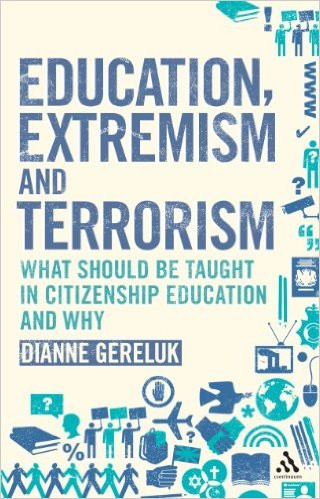 Education, Extremism and Terrorism: What should be Taught in Citizenship Education and Why Année de publication: 2012 Auteur: Dianne Gereluk Les enseignants doivent-il aborder les questions du terrorisme et de l'extrémisme au sein des salles de classe ? Dans ce cas, que doivent-ils enseigner, et comment ? Dianne Gereluk réunit au sein d'un même ouvrage les opinions divergentes autour de ces débats, elle explore et interroge les arguments mis en avant pour démontrer de l’importance du traitement de ces thèmes par les écoles. Elle envisage la façon dont ces sujets devraient être enseignés, et propose quelques conseils pratiques.
  Education, Poverty and Terrorism: Is There a Causal Connection? Année de publication: 2003 Auteur: Alan B. Krueger | Jitka Maleckova Auteur institutionnel: American Economic Association In the authors' view, any connection between poverty, education and terrorism is indirect, complicated and probably quite weak. Instead of viewing terrorism as a direct response to low market opportunities or ignorance, the article suggests it is more accurately viewed as a response to political conditions and long-standing feelings of indignity and frustration that have little to do with economics. Education, Poverty and Terrorism: Is There a Causal Connection? Année de publication: 2003 Auteur: Alan B. Krueger | Jitka Maleckova Auteur institutionnel: American Economic Association Selon les auteurs, le lien entre la pauvreté, l'éducation et le terrorisme est indirect, compliqué et probablement faible. Au lieu de considérer le terrorisme comme une réaction immédiate au manque d’opportunités d’accéder au marché du travail ou comme résultant de l'ignorance, l'article suggère de considérer le terrorisme comme une réaction à des situations politiques et des sentiments d'indignité et de frustration de longue date, dont le lien avec l'économie est faible. Engaging and Educating Women and Girls in the Prevention of Violent Conflict and Violent Extremism Année de publication: 2014 Auteur: Kathleen Kuehnast Auteur institutionnel: United States Institute of Peace (USIP) Dr. Kathleen Kuehnast, director of the Center for Gender and Peacebuilding at the U.S. Institute of Peace, testified on the importance of engaging and educating women and girls in conflict zones in order to prevent and mitigate violent conflict and violent extremism. Engaging and Educating Women and Girls in the Prevention of Violent Conflict and Violent Extremism Année de publication: 2014 Auteur: Kathleen Kuehnast Auteur institutionnel: United States Institute of Peace (USIP) Dr. Kathleen Kuehnast, directrice du Centre pour le genre et la construction de la paix (Center for Gender and Peacebuilding) à l’Institut américain pour la paix (United States Institute of Peace), témoigne de l'importance d'impliquer et d'éduquer les femmes et les jeunes filles dans les zones de conflit afin de prévenir et de contenir les conflits violents et l'extrémisme violent.
 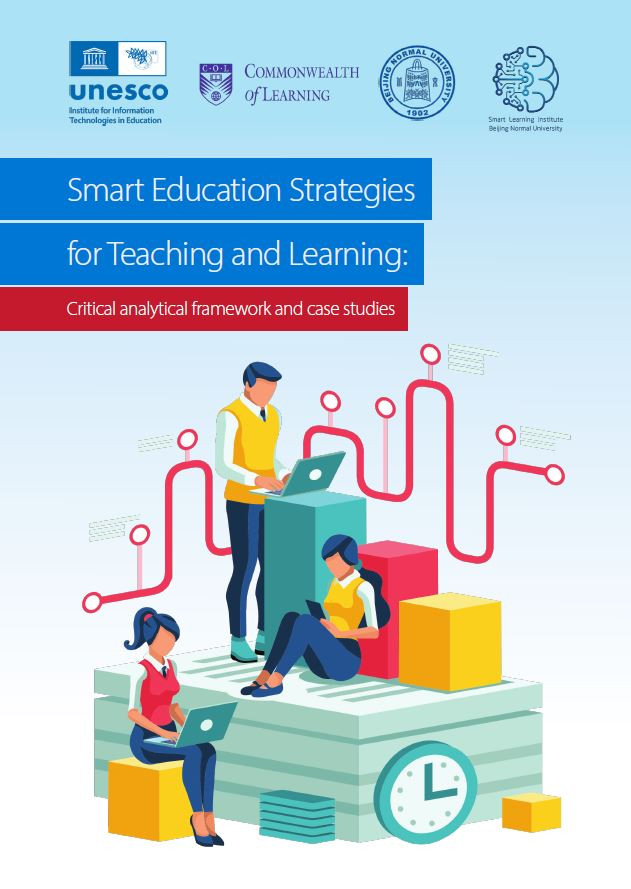 Smart Education Strategies for Teaching and Learning: Critical Analytical Framework and Case Studies Année de publication: 2022 Auteur: Shafika Isaacs | Sanjaya Mishra Auteur institutionnel: UNESCO Institute for Information Technologies in Education (IITE) | Beijing Normal University This electronic publication about smart education strategies for building the resilience of education and training systems in the postpandemic environment provides a framework to develop appropriate policy and strategy in existing and emerging forms of schooling, higher education, technical and vocational education, and training (TVET), adult education and lifelong learning, including formal, nonformal and informal educational environments. The publication reviews the status of smart education policies in 10 countries. It includes 15 case studies within the six policy themes: infrastructure, curriculum and pedagogy, digital education resources and platforms, skills and competencies, governance, management and administration, and partnership.
 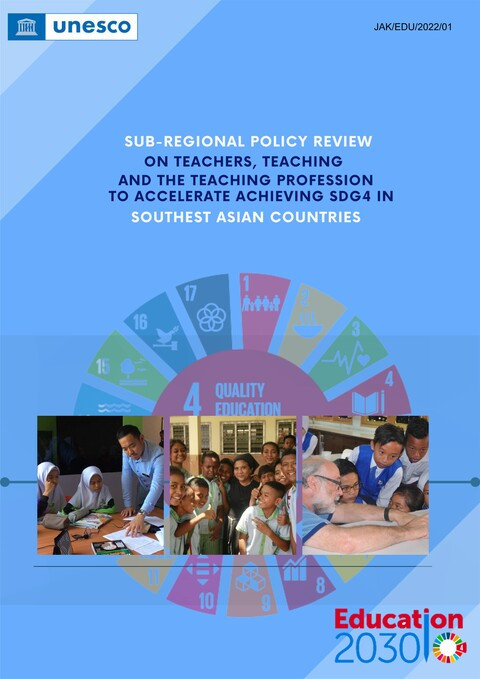 Sub-regional Policy Review on Teachers, Teaching and the Teaching Profession to Accelerate Achieving SDG4 in Southeast Asian Countries Année de publication: 2022 Auteur: Azlina Abdul Aziz | Kamisah Osman | Khairul Farhah Khairuddin | Meeyoung Choi Auteur institutionnel: UNESCO Jakarta The objectives of this report are to analyse existing national policies related to Teachers, Teaching and the Teaching Profession and examine their implementation in the five UNESCO cluster countries, namely Brunei, Indonesia, Malaysia, the Philippines and Timor-Leste. Eight themes have emerged from the systematic review of literature and they are i) Teacher Standard Competence, ii) Teacher professional Development, iii) Teacher Support, iv) Teaching Quality, v) Formative and Summative Assessment Framework on Teaching, vi) Showcasing and Rewarding Best Teaching Practices, vii) Teacher Professionalism and finally viii) Teacher Career Development.
  Toward one world or many? A comparative analysis of OECD and UNESCO global education policy documents Année de publication: 2019 Auteur: Vaccari, Victoria | Gardinier, Meg P. Education policymaking has gone global. The 2030 Agenda for Sustainable Development aims to galvanize efforts to promote sustainable development, decrease global inequalities, and realize universal quality education. Supporting these efforts, two leading international organizations, UNESCO and the OECD, have set out normative frameworks for their vision of global education. This paper examines the policy discourses of these organizations in light of SDG 4–Education. Specifically, through a comparative analysis of selected terms and underlying concepts in key policy documents, the paper distinguishes between UNESCO's notion of global citizenship and the OECD's framework for global competence. Ultimately, the authors discuss whether the organizations' agendas are aimed at a common global vision, or, alternatively, towards two distinct and divergent conceptualizations of an imagined future.
 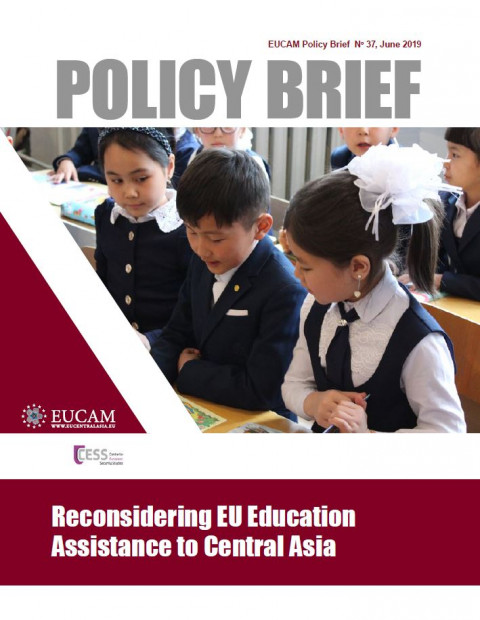 Reconsidering EU Education Assistance to Central Asia (EUCAM Policy Brief No. 37, June 2019) Année de publication: 2019 Auteur: Sebastien Peyrouse Auteur institutionnel: Europe-Central Asia Monitoring (EUCAM) This paper is based on broader research on education in Central Asia that includes interviews with local stakeholders (teachers, parents and students) in Kazakhstan, Kyrgyzstan and Uzbekistan. Some views were taken from Sebastien Peyrouse, ‘How to Strengthen Western Engagement in Central Asia: Spotlight on EU Education Assistance in Uzbekistan’, PONARS Policy Memo, no. 524, April 2018,http://www.ponarseurasia.org/memo/strengthen-western-engagement-central-asia-spotlight-eu-education-assistance-uzbekistan. Новый взгляд на содействие ЕС образовательному сектору в Центральной Азии (Брифинг EUCAM No. 37, сентябрь 2019) Année de publication: 2019 Auteur: Sebastien Peyrouse Auteur institutionnel: Europe-Central Asia Monitoring (EUCAM) Этот брифинг основан на более углубленном исследовании системы образования в Центральной Азии, которое включает интервью в регионе (с учителями, родителями и учащимися) в Казахстане, Кыргызстане и Узбекистане.Ряд выводов позаимствованы из работы Себастьяна Пейруза ‘How to Strengthen Western Engagement in Central Asia: Spotlight on EU Education Assistance in Uzbekistan’, PONARS Policy Memo, no. 524, апрель 2018,http://www.ponarseurasia.org/memo/strengthen-western-engagement-central-asia-spotlight-eu-education-assistance-uzbekistan.