
Ressources
Explorez une large gamme de ressources sur le GCED afin d’approfondir votre compréhension et de renforcer vos activités de recherche, de plaidoyer, d’enseignement et d’apprentissage.
2,813 résultats trouvés
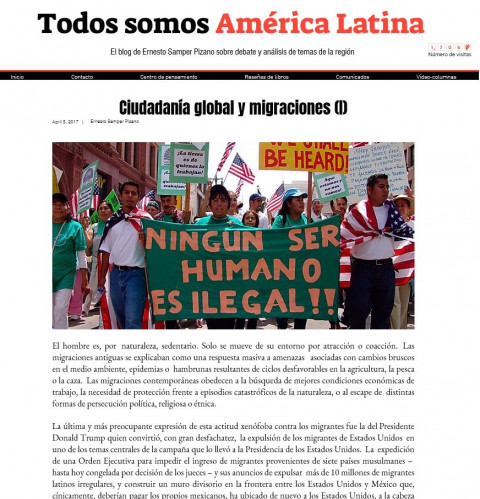 Ciudadanía global y migraciones Année de publication: 2017 Auteur: Ernesto Samper Pizano La noticia es una proclama a favor y defensa de los migrantes a nivel global. Esta fue elaborada para la Conferencia Mundial de los Pueblos que tuvo lugar en 2017 en Bolivia y describe muy brevemente la situación de los inmigrantes en el mundo, sobre todo de los latinoamericanos.
 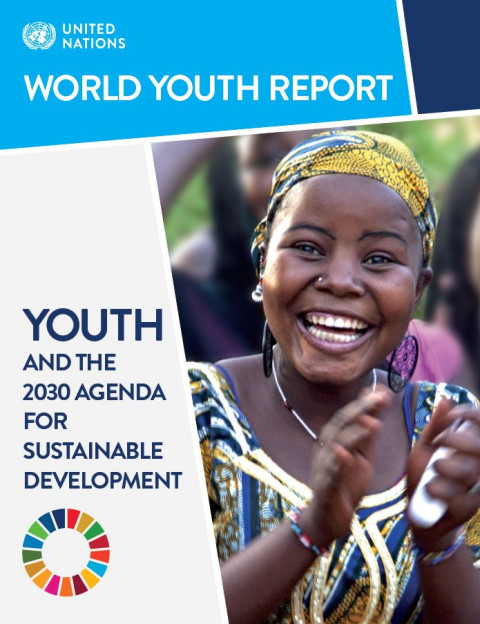 [Summary] World Youth Report: Youth and the 2030 Agenda for Sustainable Development Année de publication: 2019 Auteur institutionnel: United Nations (UN) The World Youth Report on “Youth and the 2030 Agenda for Sustainable Development”, prepared by the United Nations Department of Economic and Social Affairs (UN DESA), examines the mutually supportive roles of the new agenda and current youth development efforts. The report provides insight into the role of young people in sustainable development in the context of the implementation of the 2030 Agenda for Sustainable Development and related frameworks, in particular, the Addis Ababa Action Agenda of the Third International Conference on Financing for Development and the World Programme of Action for Youth.The Report considers the role the 2030 Agenda can play in enhancing youth development efforts and examines how evidence-based youth policies can help accelerate youth-related objectives. It explores the critical role young people have in the implementation of sustainable development efforts at all levels. This publication is a summary of the World Youth Report on “Youth and the 2030 Agenda for Sustainable Development”. [요약문] 세계청소년보고서: 청소년과 2030 지속가능발전 의제 Année de publication: 2019 Auteur institutionnel: United Nations (UN) UN 경제사회국이 작성한 『세계청소년보고서: 청소년과 2030 지속가능발전 의제(World Youth Report: Youth and the 2030 Agenda for Sustainable Development)』는 청소년 개발에 대한 현재의 노력과 새로운 의제 간의 상호 보완적인 역할을 다루고 있습니다. UN 경제사회국은 경제, 사회 및 환경 분야 글로벌 정책과 국가적 실천 사이의 연결고리를 제공하고 있습니다. 2년마다 발간되는 본 보고서는 회원국 및 기타 이해관계자들이 청소년 문제 해결에 대한 진전 사항을 파악하고, 정책과 현실의 격차를 평가하고, 가능한 정책 대안을 마련하기 위한 정보와 분석 결과를 제공합니다.본 보고서는 2030 지속가능발전 의제 및 관련 프레임워크 이행의 맥락, 특히 제3차 개발재원총회 아디스아바바 행동의제 (Ababa Action Agenda of the Third International Conference on Financing for Development) 및 세계청소년행동계획 (World Programme of Action for Youth) 의 이행과 관련하여 지속가능발전을 위한 청소년의 역할에 대한 통찰을 제시합니다. 2030 의제는 청소년개발 노력을 증진하고 증거기반(evidence ― based) 청소년정책이 청소년 목표 증진에 이바지하는 바를 검토하는 데 있어 중요한 역할을 할 수 있습니다. 본 보고서는 이를 통해 모든 수준에서의 지속가능발전 이행에 있어 결정적으로 중요한 청소년의 역할을 살펴봅니다. 이 간행물은 『세계청소년보고서: 청소년과 2030 지속가능발전 의제(World Youth Report: Youth and the 2030 Agenda for Sustainable Development)』의 요약본입니다.
 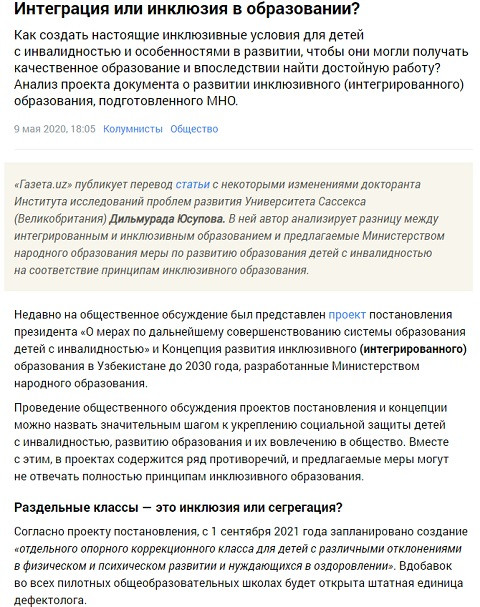 Integration or Inclusion in Education? Année de publication: 2020 Auteur: Dilmurod Yusupov How to create true inclusive conditions for children with disabilities and developmental disabilities so that they can receive a quality education and subsequently find decent work? Analysis of a draft document on the development of inclusive (integrated) education prepared by INR. Интеграция или инклюзия в образовании? Année de publication: 2020 Auteur: Dilmurod Yusupov Как создать настоящие инклюзивные условия для детей с инвалидностью и особенностями в развитии, чтобы они могли получать качественное образование и впоследствии найти достойную работу? Анализ проекта документа о развитии инклюзивного (интегрированного) образования, подготовленного МНО.
 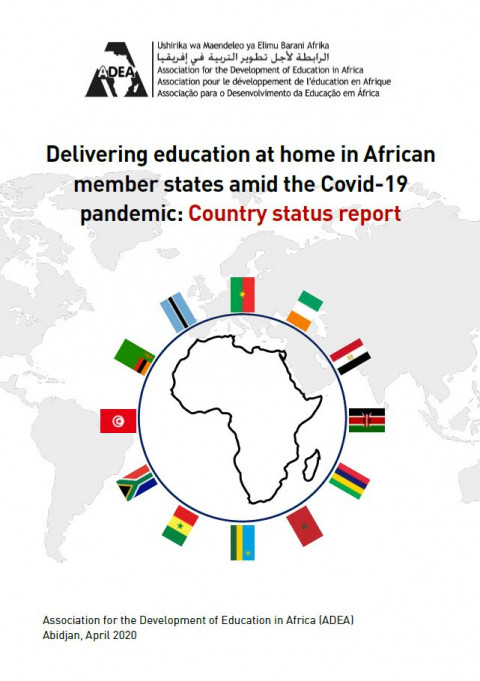 Assurer l’éducation à domicile dans les États membres africains dans le contexte de la pandémie de COVID-19 : rapport sur la situation dans les pays Année de publication: 2020 Auteur institutionnel: Association for the Development of Education in Africa (ADEA) Depuis son émergence à la fin de 2019, la maladie à coronavirus 2019 (COVID-19) est devenue une pandémie, affectant fortement la vie de milliards de personnes à travers le monde, avec un impact énorme prévu sur l'économie mondiale et l'Afrique en particulier. L'éducation est l'un des secteurs les plus touchés, la fermeture des établissements d'enseignement dans de nombreux pays africains risquant d'affecter négativement la qualité de l'éducation.Afin d'obtenir une vision plus claire de l'état de l'apprentissage au cours de cette période et de mieux soutenir les pays dans l'immédiat, à court et à long terme, l'ADEA a engagé en mars 2020 certains des pays africains les plus touchés pour schématiser la situation nationale du secteur de l'éducation. Ce qui précède est un résumé des commentaires reçus par l'Afrique du Sud, le Burkina Faso, la Côte d'Ivoire, l'Égypte, le Ghana, le Kenya, l’île Maurice, le Maroc, le Rwanda, le Sénégal, la Tunisie et la Zambie en termes de stratégies nationales, de plateformes, d'outils ou d'applications d’apprentissage, de lacunes et défis, d’engagement des partenaires, de bonnes pratiques et d’enseignements tirés avec quelques recommandations.
 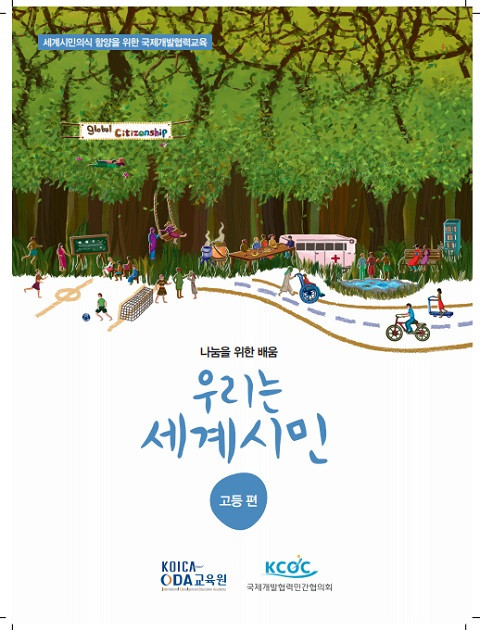 우리는 세계시민: 나눔을 위한 배움; 고등 편 Année de publication: 2013 Auteur: 고아라 | 고영주 | 김영미 | 성은경 | 홍지영 Auteur institutionnel: KOICA ODA 교육원 | 국제개발협력민간협의회 우리는 세계시민(고등편)은 상호연계성, 인권, 빈곤, 국제개발 진로 등을 주제로 한 세계시민교육 교사용 교수학습자료이다. 게임자료 및 선택활동이 포함되어 있다.
  Thinkpiece: Are We Changing the World?; Reflections on Development Education, Activism and Social Change Année de publication: 2015 Auteur: Stephen McCloskey Auteur institutionnel: Centre for Global Education (CGE) This article has been published as part of a one year development education project delivered by the Centre for Global Education and funded by Trócaire. It aims to support reflection and debate on how development educators engage the public on international development issues. The article comes on the back of recent research, most notably Oxfam’s Finding Frames report, which suggests that the development sector is struggling to enhance and sustain citizenship engagement on the structural causes of poverty and inequality. The article probes some of the factors that may underpin this lack of engagement both within the development education sector specifically and the wider development sector more generally. It examines some of the challenges involved in engaging learners in actions on global issues. Some of these challenges relate to the sectors and environmental pressures in which development educators operate which can thwart in-depth engagement with learners.
  From Volunteers to Active Citizens Année de publication: 2015 Auteur: Grainne O’Neil Auteur institutionnel: Comhlámh This is a practical guide for volunteer sending-organisations, which aims to build capacity to support and deepen volunteers’ ongoing learning and critical engagement with international development issues, and to help volunteers “to address the structural and underlying causes of inequality and injustice to participate in social change making.”
 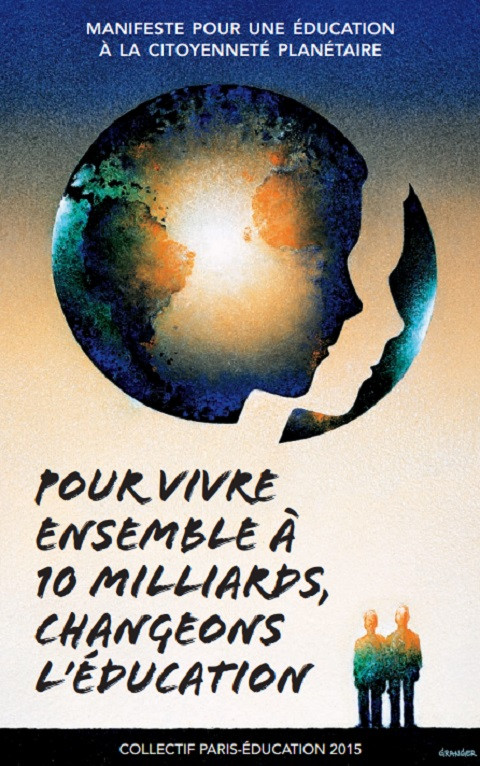 Pour vivre ensemble à 10 milliards, changeons l’éducation: Manifeste pour une éducation à la citoyenneté planétaire Auteur institutionnel: Le collectif Paris-éducation 2015 | Les Amis de Circée 2050, c’est demain. Nos enfants et petits-enfants seront alors, sans doute, 10 milliards sur la Terre. D’ici là, quelles que soient les décisions qui seront prises par les gouvernants et les engagements de millions de citoyens dans le monde, la température du globe aura monté, comme le niveau des océans. Selon ce que notre génération aura entrepris plus ou moins résolument pour réduire nos émissions de CO2, ce sera entre 2° C ou 4° C à l’horizon 2100, voire davantage. Il faudra donc, de toute façon, vivre autrement. Face à l’ampleur, l’urgence, la diversité et la complexité des problématiques engendrées par le modèle de développement de nos sociétés contemporaines, nous sommes donc obligés, dans l’urgence, de nous pencher sur les questions d’éducation et de formation des générations futures qui devront affronter des réalités biophysiques, économiques et politiques inédites, dont nous commençons à peine à entrevoir l’ampleur. Ce qui est dès lors en jeu, avec l’avenir de l’homme et de la Terre, c’est l’humain, ce qu’il deviendra, ce qu’il sera capable de porter comme projet pour l’humanité. Quelles qualités d’humains devons-nous faire advenir pour que ces réalités inédites puissent être rencontrées demain, sans que l’humanité bascule dans la violence et le dépeçage égoïste de la planète? Quels enfants voulons-nous laisser à notre Terre?Cette urgence impose un changement d’échelle dans la transformation des systèmes éducatifs, des contenus et des méthodes d’enseignement. Malgré la volonté et la compétence de nombreux acteurs de l’école, force est de constater que les actions menées pour une éducation plus en cohérence avec les enjeux climatiques et, plus largement, sociétaux restent à la marge. Elles sont réalisées par des individus clairvoyants. Il est temps d’enclencher la vitesse supérieure.