
Ressources
Explorez une large gamme de ressources sur le GCED afin d’approfondir votre compréhension et de renforcer vos activités de recherche, de plaidoyer, d’enseignement et d’apprentissage.
2,813 résultats trouvés
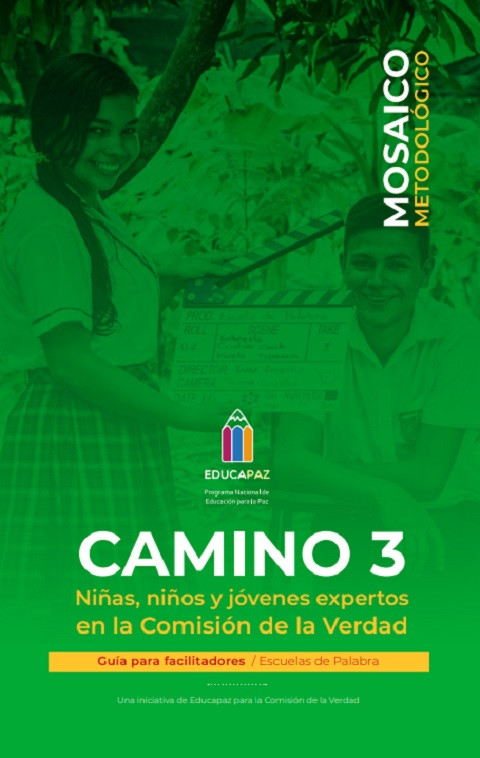 Methodological Mosaic: Path 3; Girls, Boys and Young Experts in the Truth Commission Année de publication: 2019 Auteur institutionnel: EDUCAPAZ This publication reflects the work carried out by the National Program of Education for Peace EDUCAPAZ and the Truth Commission in Colombia, for education in schools that want to reflect on the value of truth in the reconstruction of memory, forgiveness and reconciliation. This module presents strategies to educate children and young people about the truth commission.
  Report on the Social Monitoring of the Legislation and Law Enforcement Practices of the Local Police Service in the Area of Preventing Domestic Violence in the Republic of Kazakhstan Année de publication: 2017 Auteur: S.V. Korneytchuk | N.S. Gladyr Auteur institutionnel: OSCE. Programme Office in Astana This monitoring focuses on evaluating and forecasting the legislation by means of identifying contradictions in the legislation, obsolete, corruption-generating and ineffectively implemented statutes, as well as the drafting of proposals on improving the legislation and mechanisms of its implementation by units of the local police service. This edition was published with the financial support of the OSCE Programme Office in Nur-Sultan as part of the project entitled “Social Monitoring of the Legislation and Law Enforcement Practices of the Local Police Service in the Area of Preventing Domestic Violence in the Republic of Kazakhstan”.
  Les ODD comme nouvelle citoyenneté mondiale Année de publication: 2018 Auteur institutionnel: UVED Cynthia Fleury, professeur au Conservatoire National des Arts et Métiers, titulaire de la Chaire « Humanités et Santé », et également professeur associée à PSL / Mines ParisTech, présente dans cette vidéo (10'27) les trois questions qui lui paraissent fondamentales pour la réalisation des Objectifs de Développement Durable : celle de l'état de droit, celle de la santé humaine entendue dans son sens le plus large et celle de la transition numérique, indissociable de la transition écologique.
 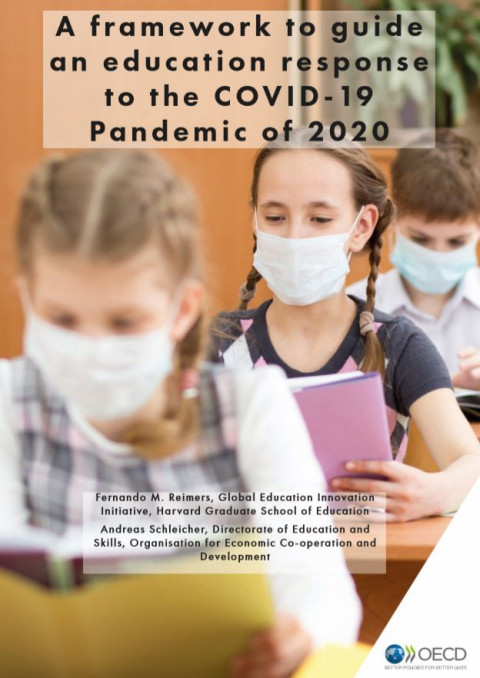 A Framework to Guide an Education Response to the COVID-19 Pandemic of 2020 Année de publication: 2020 Auteur: Fernando Reimers | Andreas Schleicher Auteur institutionnel: Organisation for Economic Co-operation and Development (OECD) This report aims at supporting education decision making to develop and implement effective education responses to the COVID-19 Pandemic. The report explains why the necessary social isolation measures will disrupt school-based education for several months in most countries around the world. Absent an intentional and effective strategy to protect opportunity to learn during this period, this disruption will cause severe learning losses for students.The report proposes that leaders of education systems and organizations develop plans for the continuation of education through alternate modalities, during the period of necessary social isolation. It offers a framework of areas to be covered by such plans. Un cadre pour guider une réponse éducative à la Covid-19 en cas de pandémie de 2020 Année de publication: 2020 Auteur: Fernando Reimers | Andreas Schleicher Auteur institutionnel: Organisation for Economic Co-operation and Development (OECD) Ce rapport vise à appuyer la décision de l'éducation faisant de développer et mettre en œuvre des réponses éducatives efficaces au Covid-19 en cas de pandémie. Le rapport explique pourquoi les mesures d'isolement social nécessaires perturberont l'éducation en milieu scolaire pendant plusieurs mois dans la plupart des pays à travers le monde. En l'absence d'une stratégie délibérée et efficace pour protéger l'occasion d'apprendre au cours de cette période, cette perturbation entraîne des pertes sévères d'apprentissage pour les étudiants.Le rapport propose que les dirigeants des systèmes d'éducation et les organisations à élaborer des plans pour la poursuite de l'éducation des modalités alternatives, au cours de la période d'isolement social nécessaire. Il offre un cadre de zones à couvrir par ces plans.
 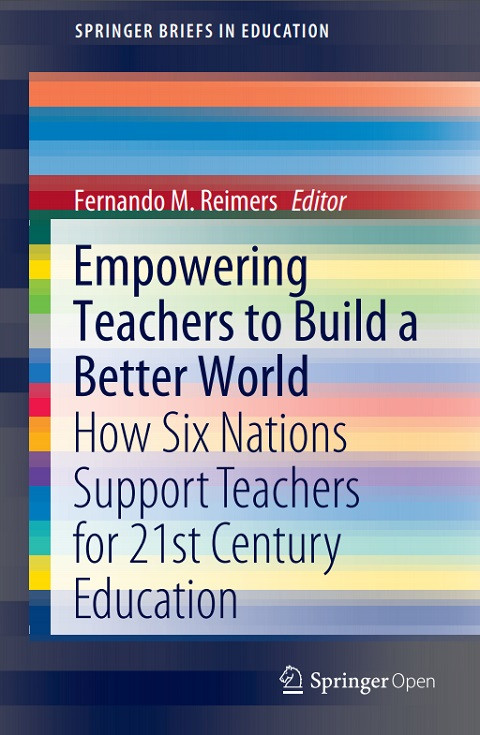 Empowering Teachers to Build a Better World: How Six Nations Support Teachers for 21st Century Education; Springer Briefs in Education Année de publication: 2020 Auteur: Fernando Reimers This open access book presents a comparative study on how large-scale professional development programs for teachers are designed and implemented. Around the world, governments and educators are recognizing the need to educate students in a broad range of higher order cognitive skills and socio-emotional competencies, and providing effective opportunities for teachers to develop the expertise needed to teach these skills is a crucial aspect of effective implementation of curricula which include those goals. This study examines how large-scale efforts to empower teachers for deeper instruction have been designed, how they have been implemented, and their outcomes. To do so, it investigates six programs from England, Colombia, Mexico, India, and the United States. Though all six are intended to broaden and deepen students’ curricular aspirations, each takes this expansion of curricular goals in a different direction.The ambitious education reforms studied here explicitly focus on building teachers’ capacity to teach on a broader set of goals. Through a discerning analysis of program documents, evaluations, and interviews with senior leaders and participants in the programs, the book identifies the various theories of action used in these programs, examines how they were implemented, and discusses what they achieved. As such, it offers an indispensable resource for education leaders interested in designing and implementing professional development programs for teachers that are aligned with ambitious instructional goals.
 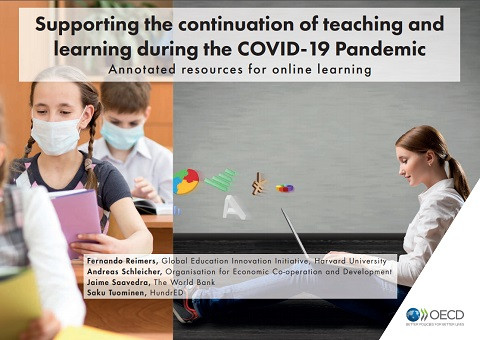 Supporting the Continuation of Teaching and Learning during the COVID-19 Pandemic: Annotated Resources for Online Learning Année de publication: 2020 Auteur: Fernando Reimers | Andreas Schleicher | Jaime Saavedra | Saku Tuominen Auteur institutionnel: Organisation for Economic Co-operation and Development (OECD) | Global Education Innovation Initiative | HundrED This resource discusses the second module of a series which presents the results of a comparative analysis of emerging educational needs and responses as the pandemic unfolds across countries around the world. The overall goal of this series is to facilitate the rapid design process and implementation of adaptive responses to the emerging education challenges, and to protect young people’s educational opportunities during and following the pandemic. This second module presents a first set of online educational resources to support the continuity of teaching and learning during the 2019-20 COVID-19 Pandemic with education leaders around the world. The resources were compiled from responses to the same survey used to produce the first module: A framework to guide an education response to the COVID-19 Pandemic, and additional online sources were included to enhance the list in order to support the continuity of learning for students who have access to the internet and digital devices.
  Teach the Change: 8 Steps to Be a Global Teacher Année de publication: 2018 Auteur institutionnel: Start the Change | European Union (EU) These guidelines are a result of consultation with 45 teachers from across Europe, drawing on their combined experiences to reflect on the main challenges of developing educational activities on global issues and with a particular focus on the Sustainable Development Goals (SDGs) and migration.
 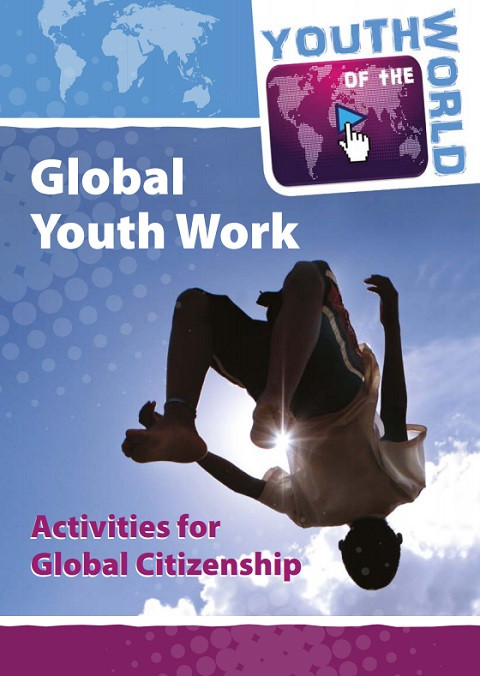 Global Youth Work: Activities for Global Citizenship Année de publication: 2014 Auteur: Kate Allen | Charlotte Dwyer Auteur institutionnel: Scotdec | European Union (EU) | Government of Scotland This resource has been designed for youth workers and other professionals working with young people to promote global youth work as a mainstream practice across Scotland. Each chapter contains practical activities, background information and resources aimed at encouraging young people to think about their own lives and how they connect with others. Examining these topics within the framework of social justice, human rights and sustainable development enables young people to reflect on how their behaviour and actions impact on people and issues locally and globally.
 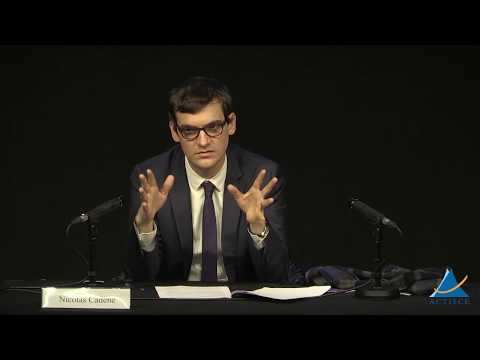 Citoyenneté mondiale et laïcité Année de publication: 2018 Auteur: Nicolas Cadène Auteur institutionnel: ACTISCE Patronage Laique Jules Vallès La laïcité fait, de chacune et de chacun d’entre nous, au-delà de nos appartenances ou de nos origines, des citoyennes et des citoyens à égalité de droits et de devoirs. Elle nous permet d’aller au-delà de nos différences et de les dépasser tout en les respectant. Par la volonté de vivre ensemble, notre laïcité garantit la liberté de croire ou de ne pas croire et la possibilité de l’exprimer dans les limites de la liberté d’autrui. Elle permet la pluralité dans le respect mutuel et assise sur une citoyenneté commune. Au travers de nombreux exemples dont les cas de la Belgique, la Turquie, l’Inde, le Brésil, le Mexique et le Sénégal, Nicolas Cadène nous montre en quoi la laïcité est source de liberté pour tous les peuples.