
Ressources
Explorez une large gamme de ressources sur le GCED afin d’approfondir votre compréhension et de renforcer vos activités de recherche, de plaidoyer, d’enseignement et d’apprentissage.
2,813 résultats trouvés
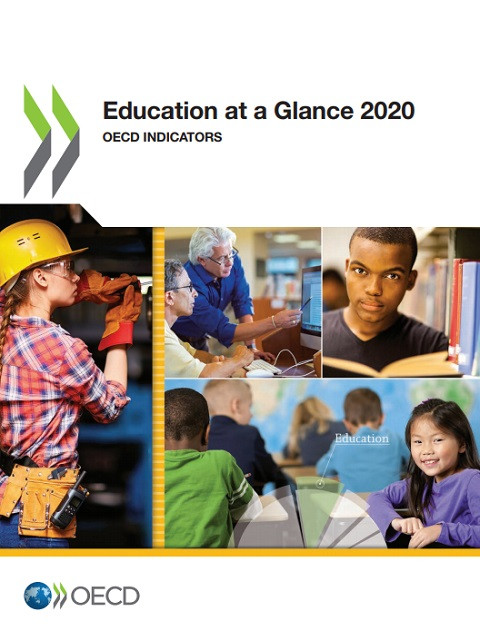 Education at a Glance 2020: OECD Indicators Année de publication: 2020 Auteur institutionnel: Organisation for Economic Co-operation and Development (OECD) Education at a Glance is the authoritative source for information on the state of education around the world. It provides data on the structure, finances and performance of education systems across OECD countries and a number of partner economies. More than 100 charts and tables in this publication – as well as links to much more available on the educational database – provide key information on the output of educational institutions; the impact of learning across countries; access, participation and progression in education; the financial resources invested in education; and teachers, the learning environment and the organisation of schools.The 2020 edition includes a focus on vocational education and training, investigating participation in vocational education and training at various levels of education, the labour market and social outcomes of vocational graduates as well as the human and financial resources invested in vocational institutions. Two new indicators on how vocational education and training systems differ around the world and on upper secondary completion rate complement this topic. A specific chapter is dedicated to the Sustainable Development Goal 4, and investigates the quality and participation in secondary education.
 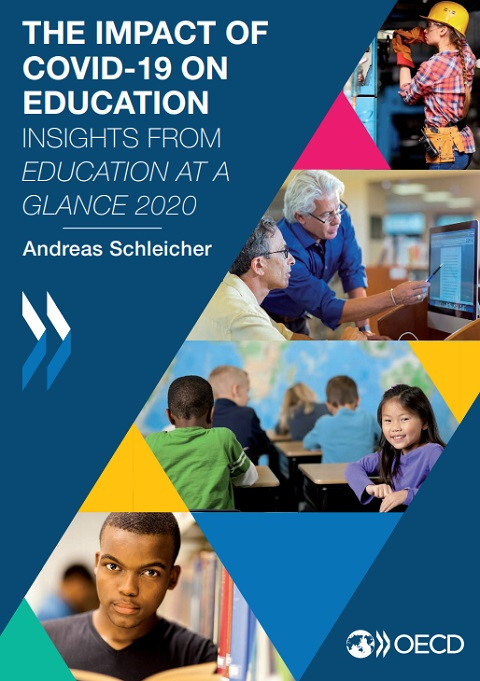 The Impact of COVID-19 on Education: Insights From Education at a Glance 2020 Année de publication: 2020 Auteur: Andreas Schleicher Auteur institutionnel: Organisation for Economic Co-operation and Development (OECD) OECD Director for Education and Skills Andreas Schleicher gives his insights and interpretations from the OECD’s Education at a Glance 2020 report – the go-to source for information on the state of education around the world. This brochure focuses on a selection of indicators from Education at a Glance, selected for their particular relevance in the current context. Their analysis enables the understanding of countries’ response and potential impact from the COVID-19 containment measures.
 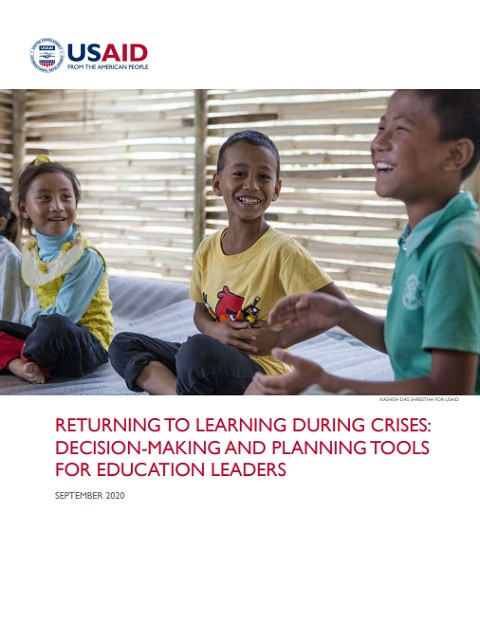 Returning to Learning During Crises: Decision-Making and Planning Tools for Education Leaders Année de publication: 2020 Auteur institutionnel: United States Agency for International Development (USAID) This toolkit is for USAID Mission staff and their partner national and local education officials, implementing partners, and administrators and educators of education institutions. It helps education planners plan and make key decisions on the return to learning during and after education disruptions caused by crises, such as COVID-19, in a way that is equitable, inclusive, and builds the resilience of education systems. To provide timely support to the field, this toolkit includes a first set of tools and identifies several tools that are forthcoming. The toolkit is expected to be updated with the full set of tools in late 2020.
 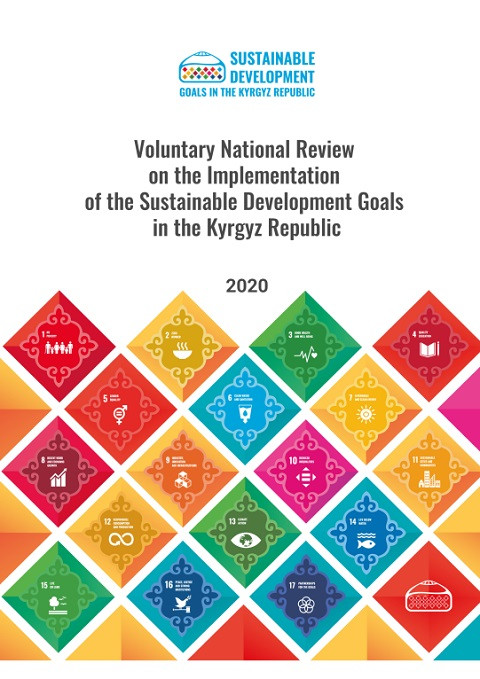 Национальный добровольный обзор достижений Целей устойчивого развития в Кыргызской Республике 2020 Année de publication: 2020 Auteur institutionnel: Kyrgyzstan. Ministry of Economy | United Nations (UN) Данный добровольный обзор содержит в себе информацию по выполнению Кыргызской Республикой целей устойчивого развития 2030, задачи и направления дальнейшей деятельности. Отдельное внимание уделено ЦУР 4 "Образование", где приоритетом является повышение качества и охвата образованием на всех уровнях, а также развитие системы непрерывного образования. Voluntary National Review on the Implementation of the Sustainable Development Goals in the Kyrgyz Republic 2020 Année de publication: 2020 Auteur institutionnel: Kyrgyzstan. Ministry of Economy | United Nations (UN) This voluntary review contains information on the implementation of the 2030 Sustainable Development Goals by the Kyrgyz Republic, objectives and directions for further activities. Special attention is paid to SDG 4 "Education", where the priority is to improve the quality and coverage of education at all levels, as well as the development of the lifelong education system.
  Practices of Citizenship in East Africa: Perspectives from Philosophical Pragmatism Année de publication: 2020 Auteur: Katariina Holma | Tiina Kontinen Auteur institutionnel: Routledge Practices of Citizenship in East Africa uses insights from philosophical pragmatism to explore how to strengthen citizenship within developing countries. Using a bottom-up approach, the book investigates the various everyday practices in which citizenship habits are formed and reformulated. In particular, the book reflects on the challenges of implementing the ideals of transformative and critical learning in the attempts to promote active citizenship. Drawing on extensive empirical research from rural Uganda and Tanzania and bringing forward the voices of African researchers and academics, the book highlights the importance of context in defining how habits and practices of citizenship are constructed and understood within communities. The book demonstrates how conceptualizations derived from philosophical pragmatism facilitate identification of the dynamics of incremental change in citizenship. It also provides a definition of learning as reformulation of habits, which helps to understand the difficulties in promoting change. This book will be of interest to scholars within the fields of development, governance, and educational philosophy. Practitioners and policy-makers working on inclusive citizenship and interventions to strengthen civil society will also find the concepts explored in this book useful to their work.
  Taking Action for Change: Youth Civic Engagement and Activism; A Resource for Educators Année de publication: 2019 Auteur: Ian Davies | Mark Evans | Márta Fülöp | Dina Kiwan | Andrew Peterson | Jasmine B.-Y. Sim Auteur institutionnel: University of York ‘Youth activism, engagement and the development of new civic learning spaces’ was a project funded by the Leverhulme Trust and developed by an international network of researchers. The project took place between 2016 and 2019.In this resource for education, each member of the project team discusses developments in their own country and identifies key ideas and issues about how young people participate in society and what implications have for education. This book gives several examples that have already been done in different geographical areas and educational perspectives and includes promising practices that begin to illustrate ways in which educators may act.
  The State of Global Education in Europe 2019 Année de publication: 2020 Auteur institutionnel: Global Education Network Europe (GENE) | European Union (EU) This fourth edition of the State of Global Education in Europe has been developed to provide an updated account of current key issues, policy priorities, funding trends and activities inGlobal Education in Europe, among the Ministries and Agencies that participate in GENE. This report explores key trends, policy themes and budgetary information for Global Education in European countries, drawing on information provided by GENE member Ministries and Agencies during 2018 and 2019.
  School Polylingual Education in Kazakhstan (Turkic-Russian, Turkic-English, Turkis-Russian-English) Année de publication: 2015 Auteur: Dzhusupov M. This article deals with a problem of bilingual and polylingual education at school, lyceum and college of Turkic Republic of CIS on the illustration of Kazakhstan; it is drawn an analogy (parallel) between modern polylingual education of — Soviet period; active ingress of English language in a system of school polylingual education has been analyzed; the domination of Russian language in polylingual educational process has been proved, it is determined an educational status of Russian language not as adoptive, but as obligatory general subject at school and in the institute of higher education and educational status of English language as foreign, i.e. as an alternative (optional) subject. Школьное полиязычное образование в Казахстане (тюркско-русское, тюркско-английское, тюркско-русско-английское) Année de publication: 2015 Auteur: Dzhusupov M. В статье исследуется проблема би- и полилингвального образования в школе, лицее и колледже тюркоязычных республик СНГ на примере Казахстана; проводится параллель между современным полиязычным образованием в системе среднего и среднего специального образования с языковым образованием советского периода; анализируется активное вхождение английского языка в систему школьного образования; доказывается доминирование русского языка в полилингвальном образовательном процессе; определяется образовательный статус русского языка как неродного, но как обязательной общеобразовательной дисциплины в школе и в вузе, а также образовательный статус английского языка как иностранного.