
Ressources
Explorez une large gamme de ressources sur le GCED afin d’approfondir votre compréhension et de renforcer vos activités de recherche, de plaidoyer, d’enseignement et d’apprentissage.
2,813 résultats trouvés
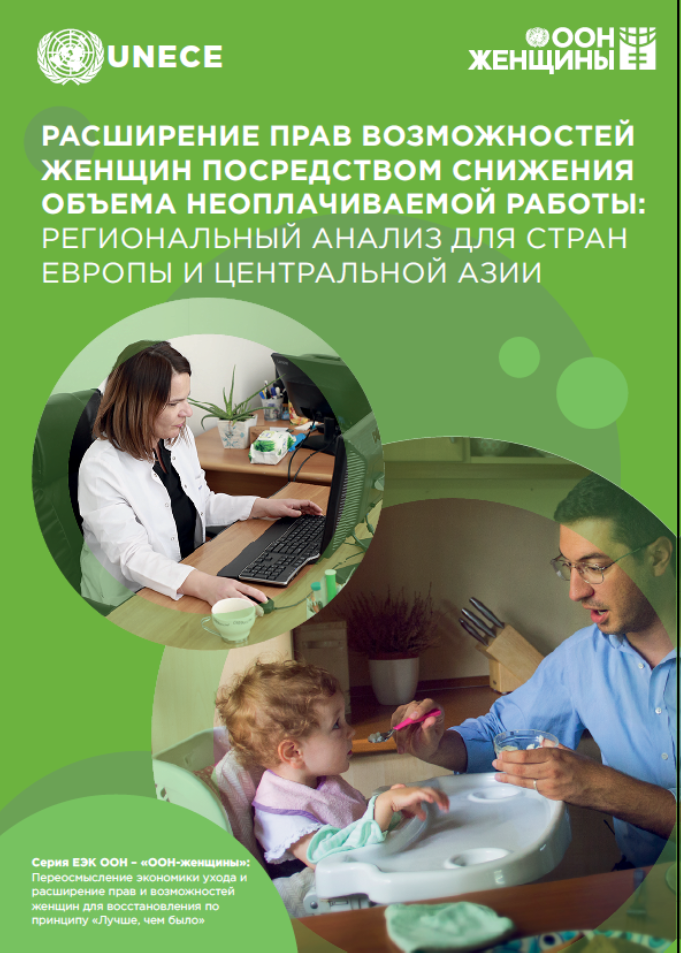 Расширение прав и возможностей женщин посредством снижения объема неоплачиваемой работы: Региональный анализ для стран Европы и Центральной Азии Année de publication: 2021 Auteur: Sara Cantillon | Nina Teasdale Auteur institutionnel: United Nations Economic Commission for Europe (UNECE) | United Nations Entity for Gender Equality and the Empowerment of Women (UN Women) Данный отчет является частью серии информационных продуктов, разработанных в целях укрепления социальной защиты в ответ на пандемию . Он фокусируется на вопросах переосмысления экономики ухода и расширения прав и возможностей женщин. В настоящем отчете представлен тематический региональный анализ неоплачиваемого труда в странах Восточной Европы и Центральной Азии и расширения прав и возможностей женщин, обусловленного уменьшением женской ответственности за выполнение такой работы.
  Gender mainstreaming principles, dimensions and priorities for PVE Année de publication: 2019 Auteur: Katherine Brown | Jayne Huckerby | Laura J. Shepherd Auteur institutionnel: United Nations Entity for Gender Equality and the Empowerment of Women (UN Women) This guidance note offers comprehensive background information and resources, along with guidelines and guidance for the UN system, in supporting Member States in their efforts to prevent and counter violent extremism and terrorism (P/CVE)—with a primary focus on preventing violent extremism (PVE). It proposes a model for gender mainstreaming across PVE efforts that is human rights–compliant.The objective of this document is not to provide a single template or one-size-fits-all approach for PVE—in part because a wide range of activities potentially falls under PVE—but more significantly because, to be successful, each context requires a human rights–compliant, gender-responsive, bespoke, and locally derived set of practices and policies.
  Turning Promises into Action: Gender Equality in the 2030 Agenda for Sustainable Development Année de publication: 2018 Auteur institutionnel: United Nations Entity for Gender Equality and the Empowerment of Women (UN Women) “Turning promises into action: Gender equality in the 2030 Agenda for Sustainable Development” provides a comprehensive and authoritative assessment of progress, gaps and challenges in the implementation of the Sustainable Development Goals (SDGs) from a gender perspective. This report monitors global and regional trends in achieving the SDGs for women and girls based on available data, and provides practical guidance for the implementation of gender-responsive policies and accountability processes. As a source of high-quality data and policy analysis, the report is a key reference and accountability tool for policymakers, women’s organizations, the UN system, and other stakeholders. Traduire les promesses en actions : L’égalité des sexes dans le Programme de développement durable à l’horizon 2030 Année de publication: 2018 Auteur institutionnel: United Nations Entity for Gender Equality and the Empowerment of Women (UN Women) « Traduire les promesses en actions : l’égalité des sexes dans le Programme de développement durable à l’horizon 2030 » offre une évaluation exhaustive et fiable des progrès, des manquements et des difficultés dans la mise en œuvre des Objectifs de développement durable (ODD) dans une perspective de genre. Ce rapport analyse, sur la base des données disponibles, les grandes tendances mondiales et régionales dans la réalisation des ODD pour les femmes et les filles, et offre des conseils pratiques pour la mise en œuvre de politiques et de processus de responsabilisation sensibles au genre. En tant que source de données et d’analyse des politiques de grande qualité, le rapport constitue une référence et un outil de responsabilisation clé pour les décideurs politiques, les organisations de femmes, le système des Nations Unies, et d’autres parties prenantes. Hacer las promesas realidad: La igualdad de género en la agenda 2030 para el desarrollo sostenible Année de publication: 2018 Auteur institutionnel: United Nations Entity for Gender Equality and the Empowerment of Women (UN Women) “Hacer las promesas realidad: La igualdad de género en la Agenda 2030 para el Desarrollo Sostenible” presenta una evaluación exhaustiva y fidedigna de los avances, dificultades y posibilidades de la aplicación de los Objetivos de Desarrollo Sostenible (ODS) desde una perspectiva de género. El informe hace seguimiento de las tendencias mundiales y regionales con miras a la consecución de los ODS para las mujeres y las niñas sobre la base de los datos disponibles, y ofrece orientación práctica para la ejecución de políticas sensibles al género y los consiguientes procesos de rendición de cuentas. Como fuente de análisis de alta calidad de datos y políticas, el informe es una referencia e instrumento de rendición de cuentas esencial para responsables de la formulación de políticas, organizaciones de mujeres, el sistema de las Naciones Unidas y otras partes interesadas.
  Spotlight on Gender, COVID-19 and the SDGs: Will the Pandemic Derail Hard-Won Progress on Gender Equality? Année de publication: 2020 Auteur: Priya Alvarez | Emma-Louise Anderson | Nazneen Damji | Gaëlle Ferrant | Rosina Gammarano | Steve Kapsos | Ann Beth Moller | Amy Patterson Auteur institutionnel: United Nations Entity for Gender Equality and the Empowerment of Women (UN Women) COVID-19 has been declared a public health emergency of international concern and a global pandemic by the World Health Organization. This global threat to health security underscores the urgent need to accelerate progress on achieving Sustainable Development Goal (SDG) 3 and the need to massively scale up international cooperation to deliver on SDG 3. It also reveals what is less obvious, but no less urgent: how health emergencies such as COVID-19, and the response to them, can exacerbate gender inequality and derail hard-won progress not only on SDG 3 but on all the SDGs.This paper presents the latest evidence on the gendered impact of the pandemic, highlights potential and emerging trends, and reflects on the long-term impact of the crisis on the achievement of the 2030 Agenda for Sustainable Development.The paper begins by presenting key facts and figures relating to the gendered impacts of COVID-19 followed by reflecting on the health impacts of COVID-19 on SDG 3 targets. Then, the paper explores the socioeconomic and political implications of COVID-19 on women and gender across five of the Goals: SDG 1 (poverty), 4 (quality education), 5 (gender equality), 8 (decent work and economic growth), and 10 (reduced inequalities).
  Violence Against Women and Girls: Kyrgyz Republic (Gender in Society Perception Study; Oct. 2018) Année de publication: 2018 Auteur: Elena Kim Auteur institutionnel: United Nations Entity for Gender Equality and the Empowerment of Women (UN Women) This report is part of the Gender in the Perception of Society (GSPS) study, funded by the UN Peacebuilding Fund, jointly run by UN Women, UNFPA and IOM in the Kyrgyz Republic. The report on the results of the study is dedicated to the topic of violence against women through the prism of two types of widespread practice of forced marriage in the Kyrgyz Republic. The report, which consists of two main sections, focuses on the practice of abducting brides and child marriages. The report attempts to explain the attitude and reaction of society to both phenomena, which deprive women of their rights and opportunities and require changes in opinions, attitudes and institutional priorities. Насилие в отношении женщин и девочек: Кыргызская Республика (Исследование – Гендер в восприятии общества; Октябрь 2018) Année de publication: 2018 Auteur: Elena Kim Auteur institutionnel: United Nations Entity for Gender Equality and the Empowerment of Women (UN Women) Данный оттчет является частью исследования "Гендер в восприятии общества" (GSPS), финансируемого Фондом ООН по миростроительству, совместно выполняемого ООН-Женщины, ЮНФПА и МОМ в Кыргызской Республики. Отчет по результатам исследования посвящен теме насилия в отношении женщин через призму двух видов широкораспространенной практики насильственных браков в Кыргызской Республике. Состоящий из двух основных разделов отчет сфокусирован на практике похищения невест и детских браков. В отчете предпринимается попытка объяснить отношение и реакцию общества на оба явления, которые лишают женщин их прав и возможностей и требуют изменений в суждениях, отношении и институциональных приоритетах.
  Progress on the Sustainable Development Goals: The Gender Snapshot 2020 Année de publication: 2020 Auteur institutionnel: United Nations Entity for Gender Equality and the Empowerment of Women (UN Women) This document brings together the latest available evidence on gender equality across all 17 Goals, underscoring the progress made, but also taking stock of areas where progress has been disrupted, as a result of COVID-19.
  Gender and Climate Change: Training Handbook Année de publication: 2018 Auteur: Višnja Baćanović | Jasmina Murić Auteur institutionnel: United Nations Entity for Gender Equality and the Empowerment of Women (UN Women) | Government of Serbia | United Nations Development Programme (UNDP) This handbook aims to improve the understanding of gender aspects in climate change. It is intended for experts and interested public, and is organized as a training program for male and female representatives of institutions and state administration, so that it may can be used as a source for practical training, as well as a guide for the introduction of gender perspective in programs and projects.The manual is organized according to thematic units of training and includes basic concepts, gender roles and stereotypes; key gender aspects of climate change; legal and strategic frameworks; and the introduction of gender perspectives in policies and programs in the field of climate change.