
Ressources
Explorez une large gamme de ressources sur le GCED afin d’approfondir votre compréhension et de renforcer vos activités de recherche, de plaidoyer, d’enseignement et d’apprentissage.
2,813 résultats trouvés
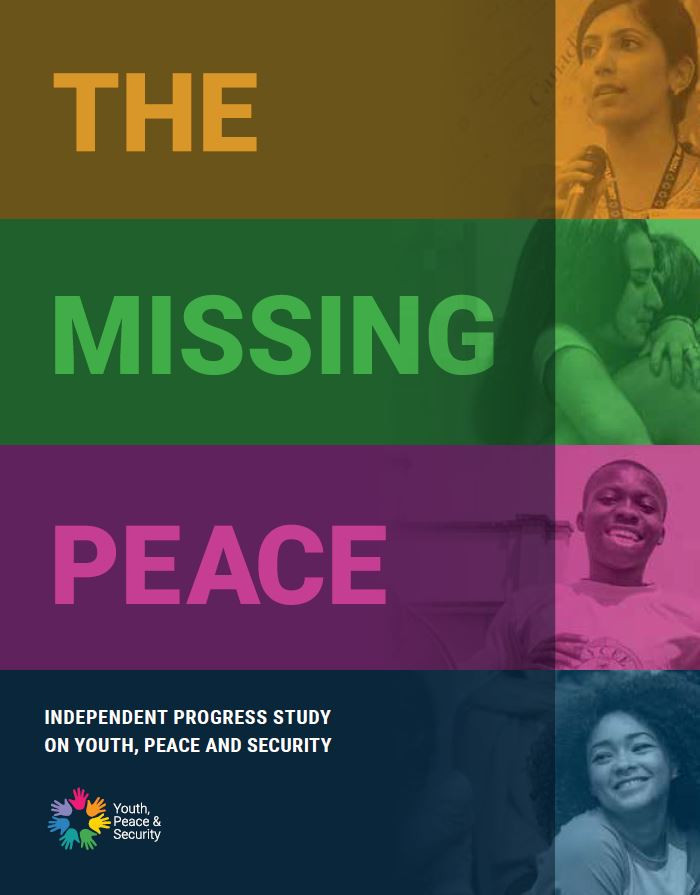 The Missing Peace: Independent Progress Study on Youth, Peace and Security Année de publication: 2018 Auteur institutionnel: United Nations Population Fund (UNFPA) | UN. Peacebuilding Support Office (UN. PBSO) The process of how this study was undertaken is just as important as the outcomes it produced. The study used an inclusive and participatory research approach by undertaking regional, subregional and national consultations with young people across the globe; conducting and receiving country case studies; commissioning focus-group discussions with “hard to reach” youth; and drawing on a survey-based mapping of the work done by youth-led peacebuilding organizations. Particular effort was made to reach out beyond easily accessible and elite youth, to young people who would not ordinarily have a say in these sorts of global policy processes. Given the challenge of young people’s increasing distrust in their governments and the multilateral system, it was essential to work with credible civil society organizations with strong trust-based relationships with youth on the ground. السلام المفقود: دراسة مرحلية مستقلة حول الشباب والسلام والأمن Année de publication: 2018 Auteur institutionnel: United Nations Population Fund (UNFPA) | UN. Peacebuilding Support Office (UN. PBSO) استعانت الدراسة بمنهجٍ بحثيّ شامل وتشارُكي من خلال إجراء استشارات إقليمية وشبه إقليمية ووطنية مع مجموعات من الشباب حول العالم؛ وإجراء وتلقي دراسات حالة قطُرية؛ والتكليف بعقد مناقشات جماعية مركّزة مع الشباب الذين "يصعب الوصول إليهم"؛ والاستفادة من وضع خريطة تستند إلى دراسات استقصائية في العمل الذي أجرته منظمات بناء السلام التي يقودها الشباب. وقد بُذل جهد خاص لكي تشمل الدراسة ما يتجاوز الشباب الذين يسهل الوصول إليهم والشباب النخبة، لتصل إلى الشباب الذين لا تسنح لهم الفرصة عادةً للإدلاء بآرائهم حول هذا النوع من عمليات السياسة العامة العالمية. ونظراً لما يمثّله تفاقم عدم ثقة الشباب بحكوماتهم وبالأنظمة المتعددة الأطراف من تحدٍّ، فقد كان من الضروري العمل مع منظمات المجتمع المدني ذات المصداقية التي تتمتّع بعلاقات متينة قائمة على الثقة مع الشباب على أرض الواقع.
  Key Challenges of Youth in OIC Countries Année de publication: 2015 Auteur institutionnel: Organization of Islamic Cooperation (OIC) | Statistical, Economic and Social Research and Training Centre for Islamic Countries (SESRIC) The report contains four main sections, with the exception of the introductory and concluding sections. The first section briefly reviews some of the main educational outcomes in OIC countries. Literacy and participation rates in tertiary schools and international student mobility are the main indicators reviewed in this section. The second section highlights some important labor market indicators related to the young population in order to identify the main challenges and obstacles in the OIC countries. The third section deals with some social problems of young people. The fourth section deals with mental health issues. The last section is devoted to recommendations. التحديات الرئيسية للشباب في دول منظمة التعاون اإلسالمي Année de publication: 2015 Auteur institutionnel: Organization of Islamic Cooperation (OIC) | Statistical, Economic and Social Research and Training Centre for Islamic Countries (SESRIC) ويحتوي التقرير على أربعة أقسام رئيسية، باستثناء الأقسام التمهيدية والختامية. يستعرض القسم الأول بإيجاز بعض النتائج التعليمية الرئيسية في دول المنظمة. وتشكل معدلات الإلمام بالقراءة والكتابة والمشاركة في مدارس التعليم العالي والحراك الطلابي الدولي المؤشرات الرئيسية المستعرضة في هذا القسم. يبرز القسم الثاني بعض المؤشرات الهامة لسوق العمل المتعلقة بالسكان الشباب بهدف التعرف على التحديات والعقبات الرئيسية في دول المنظمة. ويتناول القسم الثالث بعض المشاكل الاجتماعية للشباب. أما القسم الرابع فيتناول قضايا الصحة النفسية. والقسم الأخير مخصص للتوصيات.
  Installations of the Youth of Modern Kazakhstan to Implement Social Activity Année de publication: 2018 Auteur: O.V. Kaldybayeva | F.M. Mussataeva | G.Ye. Okasova The article discusses the issues related to the study of social activity among modern youth, which largely determines the implementation effeciency of a number of national programs. The conclusions in this article are based on the results of sociological study by Scientific Research Center “Youth”, carried out in the second half of 2017 in the Republic of Kazakhstan.
  التعليم متعدد الثقافات بين النمذجة التنظيرية وإشكالية الممارسات : دراسة مقارنة بين مصر وفرنسا واليابان Année de publication: 2006 Auteur: Ahmed Aidrous | Mohammed Awad Auteur institutionnel: Zagazig University تركز هذه الورقة على دراسة التعددية الثقافية كمفهوم والنظريات والأطر والنماذج التطبيقية المرتبطة بها. وتستعرض الدراسة خبرة كلا من فرنسا واليابان ومصر، وتضع مقارنات بينها. تنتهي الدراسة بوضع تصور مقترح للتعليم متعدد الثقافات في ضوء الخبرات المعروضة.
  Cultural Diversity and Interculturality in Higher Education. Experiences in Latin America Année de publication: 2008 Auteur: Daniel Mato Auteur institutionnel: UNESCO International Institute for Higher Education in Latin America and the Caribbean (IESALC) The work that we present below under the title Cultural Diversity and Interculturality in Higher Education. Experiences in Latin America offers a documented and novel analysis on the subject, accompanied by more than thirty studies on concrete experiences that allow to appreciate the richness and vitality that this field exhibits in Latin America, as well as the problems and challenges it faces. The volume brings together thirty-six studies of experiences of the types mentioned, each of which identifies achievements, obstacles and learning, and culminates in offering recommendations. This collection of texts is preceded by a study of regional scope that analyzes significant contextual elements, as well as salient aspects of the studied experiences, evaluates problems, challenges and opportunities, and offers a set of recommendations. Diversidad Cultural e Interculturalidad en Educación Superior. Experiencias en América Latina Année de publication: 2008 Auteur: Daniel Mato Auteur institutionnel: UNESCO International Institute for Higher Education in Latin America and the Caribbean (IESALC) La obra que a continuación presentamos bajo el título Diversidad Cultural e Interculturalidad en Educación Superior. Experiencias en América Latina ofrece un documentado y novedoso análisis sobre el tema, acompañado de más de treinta estudios sobre experiencias concretas que permiten apreciar la riqueza y vitalidad que este campo exhibe en América Latina, así como los problemas y desafíos que enfrenta. El volumen reúne treinta y seis estudios de experiencias de los tipos mencionados, cada uno de los cuales identifica logros, obstáculos y aprendizajes, y culmina ofreciendo recomendaciones. Esa colección de textos es precedida por un estudio de alcance regional que analiza elementos contextuales significativos, así como aspectos salientes de las experiencias estudiadas, evalúa problemas, retos y oportunidades, y ofrece un conjunto de recomendaciones.
 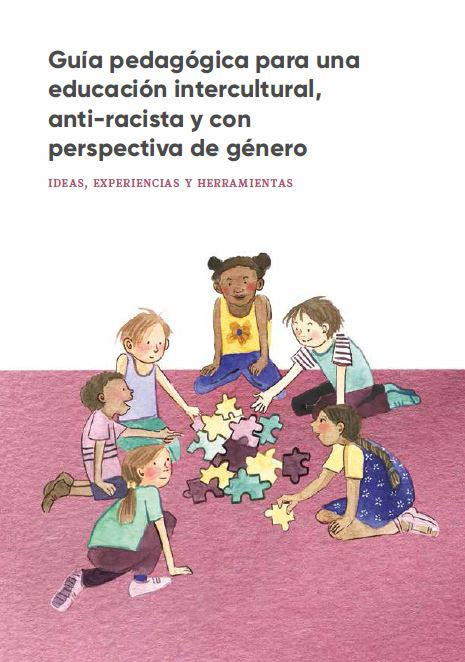 Pedagogical Guide for an Intercultural, Anti-racist and Gender Perspective Education: Ideas, Experiences and Tools Année de publication: 2017 Auteur: Carolina Stefoni | Andrea Riedemann | Fernanda Stang | Andrea Guerrero | Antonia Garcés | Marta Camarena Auteur institutionnel: Programa Interdisciplinario de Estudios Migratorios (PRIEM) | Universidad Alberto Hurtado | Fundación para la Superación de la Pobreza (FUSUPO) The main purpose of this Guide is, then, to share some ideas, tools and experiences that can help build and walk the path towards an intercultural, anti-racist and gender perspective education in various educational spaces. It is directed primarily - though not exclusively, of course - to all those people who are part of formal and informal teaching-learning processes. It is important to emphasize that the Guide does not pretend to be a recipe for a mechanical application, but a tool box that each educational community can use considering its specific context, its particular needs and its potentialities. Guía pedagógica para una educación intercultural, anti-racista y con perspectiva de género: ideas, experiencias y herramientas Année de publication: 2017 Auteur: Carolina Stefoni | Andrea Riedemann | Fernanda Stang | Andrea Guerrero | Antonia Garcés | Marta Camarena Auteur institutionnel: Programa Interdisciplinario de Estudios Migratorios (PRIEM) | Universidad Alberto Hurtado | Fundación para la Superación de la Pobreza (FUSUPO) El propósito principal de esta Guía es, entonces, compartir algunas ideas, herramientas y experiencias que puedan ayudar a construir y andar el camino hacia una educación intercultural, anti-racista y con perspectiva de género en diversos espacios educativos. Está dirigida principalmente -aunque no de manera exclusiva, por supuesto- a todas aquellas personas que sean parte de procesos de enseñanza-aprendizaje formales e informales. Es importante enfatizar que la Guía no pretende ser un recetario para una aplicación mecánica, sino una caja de herramientas que cada comunidad educativa puede usar considerando su contexto específico, sus necesidades particulares y sus potencialidades.