
Ressources
Explorez une large gamme de ressources sur le GCED afin d’approfondir votre compréhension et de renforcer vos activités de recherche, de plaidoyer, d’enseignement et d’apprentissage.
2,813 résultats trouvés
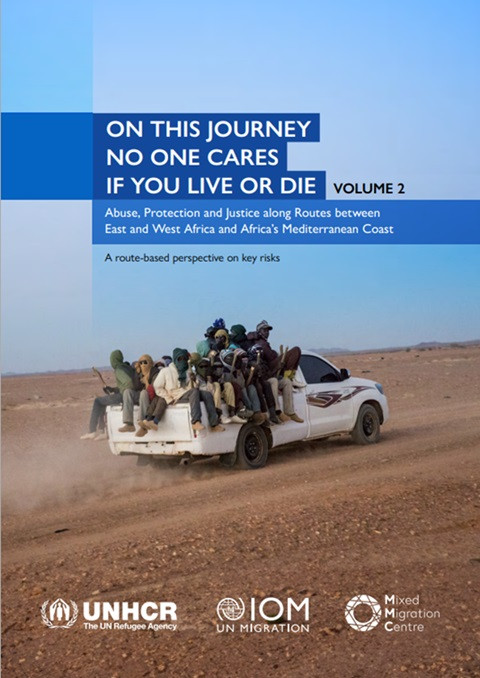 On This Journey No One Cares If You Live or Die, Volume 2: Abuse, Protection and Justice Along Routes Between East and West Africa and Africa's Mediterranean Coast Année de publication: 2024 Auteur institutionnel: International Organization for Migration (IOM) | Mixed Migration Centre | UN. Office of the United Nations High Commissioner for Refugees (UNHCR) In the complex landscape of migration, this second volume of the report, On This Journey, No One Cares if You Live or Die, emerges as a crucial body of work that sheds light on the stark realities faced by refugees and migrants traversing the perilous Central Mediterranean route all the way from East and Horn of Africa and West Africa to the North African coast of the Mediterranean and across the sea. Jointly published by IOM, MMC and UNHCR, this report delves into the protection risks faced by refugees and migrants during these journeys. It aims to inform increased and concrete routes-based protection responses to reduce the suffering associated with the desperate journeys refugees and migrants undertake, and to serve as a call to action in addressing the root causes of displacement and drivers of irregular migration through positive action on peace, climate change, governance, inequality and social cohesion, as well as the creation of safe migration pathways.
 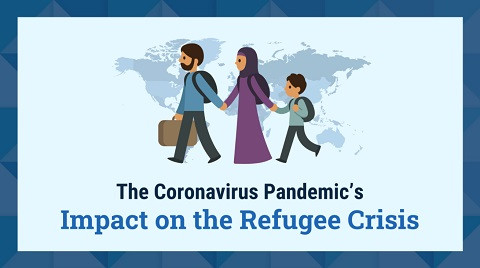 The Coronavirus Pandemic and the Refugee Crisis Année de publication: 2020 Auteur: Alice Corner Auteur institutionnel: Venngage Inc. One group of people most impacted by the Coronavirus Pandemic is the world’s population of refugees and displaced people. There are approximately 25 million refugees in the world, facing unique struggles in access to healthcare, government assistance, and sanitation. Venngage analyzed the data and created this collection of infographics to help paint a fuller picture of COVID-19’s impact on the refugee crisis. This resource includes clear infographics detailing how the conronavirus crisis and refugee crisis relate to each other globally
  The Media and Its Role in Raising Security Awareness in Society Année de publication: 2018 Auteur: Abdul Basit Howaidi | Iman Drake Auteur institutionnel: Hamma Lakhdar Eloued University The aim of this study was to reveal the role of the media in the security awareness within the society. The media was one of the means of mass influence that played an important role in the life of human societies. The analytical descriptive method was used to suit the nature of the subject. A professor of the Faculty of Social Sciences and Humanity, which was randomly selected. The questionnaire was also used as an important tool for collecting data from the field. The study reached the following results: The media, the coverage, the nature of the programs presented, and the attempt to open channels of communication between the security institutions and the media have a great role in spreading and achieving security awareness within the community. الإعلام و دوره في التوعية الأمنية داخل المجتمع Année de publication: 2018 Auteur: Abdul Basit Howaidi | Iman Drake Auteur institutionnel: Hamma Lakhdar Eloued University هدفت هذه الدراسة إلى ال كشف عن "دور الإعلام في التوعية الأمنية داخل المجتمع"، و ذلك أن الإعلام وسيلة من وسائل التأثير الجماهيري التي لعبت دورا مهما في حياة المجتمعات الإنسانية ، تم توظيف المنهج الوصفي التحليلي و الذي يناسب طبيعة الموضوع، وقدرت عينة الدراسة ب66 أستاذا جامعيا من كلية العلوم الاجتماعية و الانسانية و التي تم اختيارها بطريقة عشوائية، كما تم الاعتماد على أداة الاستبيان كأداة مهمة لجمع البيانات من الميدان و قد توصلت الدراسة إلى النتائج التالية : ان للإعلام و طريقة التغطية و طبيعة البرامج المقدمة ومحاولة فتح قنوات الاتصال بين المؤسسات الأمنية و الإعلام له دور كبير في نشر و تحقيق التوعية الأمنية داخل المجتمع.
 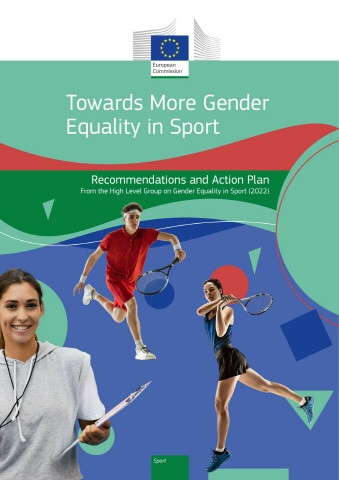 Towards More Gender Equality in Sport: Recommendations and Action Plan From the High Level Group on Gender Equality in Sport (2022) Année de publication: 2022 Auteur institutionnel: European Commission | European Union (EU) Gender equality is a fundamental European Union (EU) principle. Enshrined in the Treaties, it is something the EU is actively trying to achieve – most recently through its Gender Equality Strategy 2021-2025. The Strategy aims to give women, men, girls and boys, in all their diversity, the freedom to pursue their chosen path in life and equal opportunities to thrive and to participate in and lead European society. Looking back at the steps already taken, the ‘Gender equality in sport – Proposal for strategic actions 2014-2020’ has certainly led to achievements, but the pace of reforms needs to be accelerated. Firstly, the principle of gender equality now underpins all actions funded under Erasmus+ Sport and projects supporting women’s sport are actively encouraged. Secondly, awareness raising is at the core of EU action in this field, notably through studies or discussions, such as within the Commission Expert Group on Good Governance. Finally, initiatives such as the annual #BeInclusive EU Sport Awards recognise those organisations using sport to increase social inclusion, including gender equality. In 2020, Commissioner Gabriel announced the setting up of an expert group with the aim of discussing the way forward and proposing future actions in the area of gender equality in sport to the European Commission, EU Member States and sports organisations. The work of the experts will lead to the implementation of concrete actions at local, national and European level. This report is the result of the work of the European Commission High-Level Group (HLG) on Gender Equality in Sport. The 15 members of the HLG were appointed in December 2020. Work began in February 2021 and was completed in December 2021. Meetings focused on six areas of engagement identified by the experts. Scientists and practitioners shared findings of their research and good practices. Each meeting was followed by working sessions to summarise the presentations and formulate recommendations. Vers une plus grande égalité des genres dans le sport: Recommandations et plan d'action du groupe de haut niveau sur l’égalité des genres dans le sport (2022) Année de publication: 2022 Auteur institutionnel: European Commission | European Union (EU) L’égalité des genres est l’un des principes fondamentaux de l’Union européenne (UE). Inscrite dans les traités, elle constitue un objectif que l’UE s’efforce activement d’atteindre – notamment dans le cadre de sa stratégie en faveur de l’égalité entre les femmes et les hommes 2021-2025. Cette stratégie a pour objectif de donner aux femmes, aux hommes, aux jeunes filles et aux jeunes garçons, dans toute leur diversité, la liberté de suivre le chemin qu’ils ont choisi dans la vie et des chances égales de s’épanouir, de participer à la société européenne et de la diriger. Si l’on considère les mesures déjà prises, le rapport « Égalité des genres dans le sport – Proposition d’actions stratégiques 2014-2020 » a certes permis des avancées, mais le rythme des réformes doit être accéléré. Tout d’abord, le principe de l’égalité des genres sous-tend désormais toutes les actions financées dans le cadre du programme Erasmus+ Sport, et les projets soutenant le sport féminin sont activement encouragés. Ensuite, la sensibilisation est au coeur de l’action de l’UE dans ce domaine, notamment par le biais d’études ou de discussions, comme au sein du groupe d’experts de la Commission sur la bonne gouvernance. Enfin, des initiatives telles que les prix annuels #BeInclusive EU Sport Awards récompensent les organisations qui se servent du sport pour accroître l’inclusion sociale, notamment l’égalité des genres. En 2020, la commissaire Mariya Gabriel a annoncé la création d’un groupe d’experts chargé de déterminer la marche à suivre et de proposer des actions à implémenter dans le domaine de l’égalité des genres dans le sport à la Commission européenne, aux États membres de l’UE et aux organisations sportives. Le travail des experts permettra de mettre en oeuvre des actions concrètes aux niveaux locaux, nationaux et européen. Ce rapport est le résultat du travail du groupe de haut-niveau (GHN) de la Commission européenne sur l’égalité des genres dans le sport. Les 15 membres du groupe de haut-niveau ont été nommés en décembre 2020 Les travaux ont commencé en février 2021 et se sont terminés en décembre 2021. Les réunions ont porté sur six domaines d’engagement identifiés par les experts. Des scientifiques et des praticiens ont partagé le fruit de leurs recherches et leurs bonnes pratiques. Chaque réunion a été suivie par des sessions de travail destinées à résumer les présentations et à formuler des recommandations.
  Strengthening Democracy With a Modern Civics Education Année de publication: 2019 Auteur: Ashley Jeffrey | Scott Sargrad Auteur institutionnel: Center for American Progress This report aims to examine the state of civic education and look deeper at promising approaches to increase civic engagement. It provides an updated state-by-state analysis of civics education requirements and civic engagement measures.
  Enhancing Jordanian Media’s Ability to Combat Extremism and Terrorism Through Media Literacy, Quality of Content, and Media Performance: Training Guide (2020) Année de publication: 2020 Auteur: Amani Jarrar Auteur institutionnel: Jordan Media Institute This training toolkit has been developed by the Jordan Media Institute in the frame of the project “Improving Jordan’s Media Capacity to Counter Violent Extremism and terrorism: Media Literacy and Performance & Content Quality Perspective”. The guide means to be a reference for journalists to enhance journalists media literacy, fact checking and news verification skills when covering stories of extremism and terrorism.This project has been implemented since December 2019 under the STRIVE Global Program, funded by the European Union, at Hedayah.
  State Civic Education: Toolkit Année de publication: 2017 Auteur: Elizabeth Whitehouse | Paul J. Baumann | Jan Brennan Auteur institutionnel: Council of State Governments | Education Commission of the States This Civic Education Toolkit is intended to help stakeholders from all three branches of government, as well as other members of the civic education community in their mission to improve state civic education. There are many unique strategies stakeholders can use to effectively engage students. To effectively use this guide, the icons below denote methods and examples that may be particularly useful to leaders from each branch of government, leaders in the K-12 education community, leaders in the higher education community, and leaders working with non-governmental organizations.
  How Can We Talk About Climate Without Turning It Into a Contentious Issue? Année de publication: 2023 Auteur: Laurent Cordonier Auteur institutionnel: Le Monde How can we tackle the climate issue without talking only to the convinced? Debates on the climate issue run the risk of becoming a highly divisive political issue, hampering much-needed action, warns sociologist Laurent Cordonier in a new episode of “Chaleur humaine”, a weekly podcast for reflection and debate on ways of tackling the climate challenge.