
Ressources
Explorez une large gamme de ressources sur le GCED afin d’approfondir votre compréhension et de renforcer vos activités de recherche, de plaidoyer, d’enseignement et d’apprentissage.
2,771 résultats trouvés
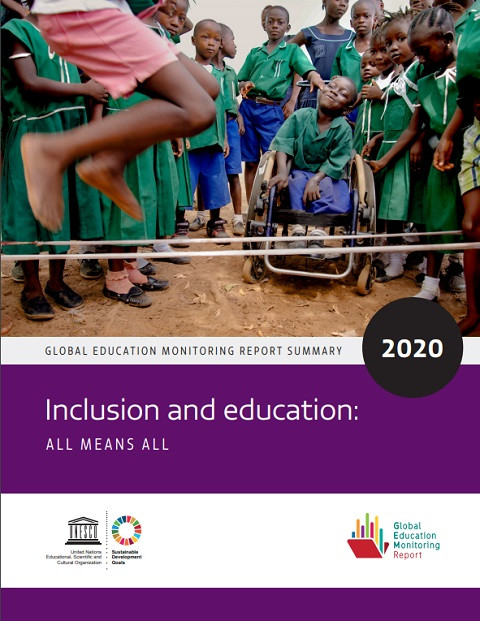 [Resumen] Resumen del informe de seguimiento de la educación en el mundo 2020: Inclusión y educación; Todos sin excepción Année de publication: 2020 Auteur institutionnel: UNESCO | Global Education Monitoring Report Team En el Informe de Seguimiento de la Educación en el Mundo 2020 se examinan los mecanismos sociales, económicos y culturales que discriminan a niños, jóvenes y adultos desprotegidos, manteniéndolos excluidos de la educación o marginados dentro de ella. Estimulados por su compromiso de hacer realidad el derecho a la educación inclusiva, los países están ampliando su visión de la inclusión en la educación y otorgando a la diversidad un lugar central en sus sistemas. Sin embargo, la aplicación de leyes y políticas bienintencionadas suele flaquear. El informe, publicado a principios del decenio de acción que culmina en 2030 y en el contexto de la crisis de Covid-19 que ha exacerbado las desigualdades subyacentes, sostiene que la resistencia a atender las necesidades de todos los educandos es una verdadera amenaza para el logro de los objetivos mundiales de educación. Pезюме всемирного доклада по мониторингу образования 2020: Инклюзивность и образование; для всех означает для всех Année de publication: 2020 Auteur institutionnel: UNESCO | Global Education Monitoring Report Team Во Всемирном докладе по мониторингу образования за 2020 г. рассматриваются социальные, экономические и культурные механизмы, которые служат источниками дискриминации обездоленных детей, молодых людей и взрослых, не позволяя им получать образование или отводя им маргинальное место. В подтверждение своей приверженности делу осуществления права на инклюзивное образование страны расширяют свое видение инклюзивности в образовании, отводя разнообразию центральное место в рамках своих систем. Однако воплотить в жизнь правильные, по сути, законы и стратегии часто не удается. В настоящем докладе, вышедшем в начале десятилетия действий на период до 2030 г., в разгар кризиса COVID-19, усугубившего основные формы неравенства, утверждается, что отказ обеспечить удовлетворение потребностей каждого учащегося представляет собой реальную угрозу для решения глобальных задач в области образования.
 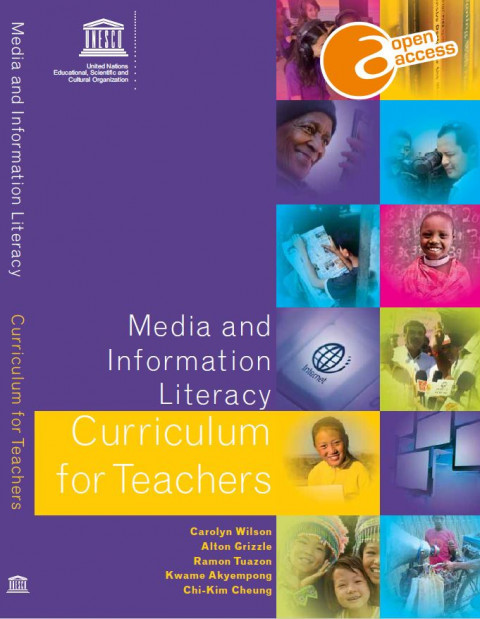 Media and Information Literacy Curriculum for Teachers Année de publication: 2011 Auteur: Carolyn Wilson | Alton Grizzle | Ramon Tuazon | Kwame Akyempong | Chi Kim Cheung Auteur institutionnel: UNESCO We live in a world where the quality of information we receive largely determines our choices and actions, including our capacity to enjoy fundamental freedoms and the ability for self-determination and development. This Media and Information Literacy Curriculum for Teachers is an important resource for UNESCO Member States and a pioneering publication.First, it is forward looking, drawing on present trends toward the convergence of radio, television, Internet, newspapers, books, digital archives and libraries into one platform. Second, it is specifically designed for integration into the formal teacher education system.UNESCO believes that, ultimately, this curriculum will contribute to innovation and improvement in all levels of education.
  Educación para el desarrollo sostenible: Asociados en la acción; Informe de los asociados clave del Programa de Acción Mundial de Educación para el Desarrollo Sostenible (2015-2019) Année de publication: 2019 Auteur institutionnel: UNESCO La UNESCO puso en marcha el Programa de Acción Mundial de Educación para el Desarrollo Sostenible (EDS) como seguimiento del Decenio de las Naciones Unidas de la EDS, con el fin de acelerar el progreso del desarrollo sostenible e intensificar las iniciativas de EDS en todas las esferas de la educación y el aprendizaje. Este Programa se desarrolló entre 2015 y 2019. La UNESCO trabajó con una red de 97 asociados clave del Programa de Acción Mundial, procedentes de gobiernos, la sociedad civil, el sector privado y el mundo académico que trabajan en cinco ámbitos de acción prioritarios: la promoción de políticas, la transformación de los entornos de aprendizaje, el desarrollo de la capacidad de los educadores, el empoderamiento de los jóvenes y la aceleración de las soluciones sostenibles a escala local. Los asociados clave del Programa se comprometieron a cumplir objetivos específicos para 2019.Se desarrollaron diez indicadores, dos por cada ámbito de acción prioritario.Los asociados clave del Programa informaron de sus progresos en relación con esos indicadores en tres encuestas que les envió la UNESCO a lo largo del Programa. También se invitó a los asociados clave a que valoraran los beneficios que había tenido para su labor la participación en el Programa de Acción Mundial y a que proporcionaran datos cualitativos sobre los progresos realizados en la aplicación del mismo. Se elaboraron tres informes sobre los progresos realizados:• El primer informe, que abarca los progresos realizados entre 2015 y 2016, fue publicado por la UNESCO en 2017.• El segundo informe, que abarca de 2015 a 2018, se publicó en 2019.• Este tercer y último informe abarca todo el periodo del Programa de Acción Mundial, desde 2015 hasta 2019.En el presente informe se presenta el análisis de las respuestas cuantitativas de los asociados clave del Programa a cada uno de los diez indicadores. Sobre la base de las respuestas cualitativas, se ofrece también un breve comentario sobre los progresos realizados en relación con cada indicador. Este breve informe concluye con algunas enseñanzas extraídas del Programa de Acción Mundial que pueden servir de base para la aplicación del nuevo marco mundial para el periodo 2020-2030: “Educación para el desarrollo sostenible: hacia la consecución de los ODS (EDS para 2030)”. Образование в интересах устойчивого развития: Партнеры в действии; Доклад ключевых партнеров по Глобальной программе действий (ГПД) (2015-2019 гг.) Année de publication: 2019 Auteur institutionnel: UNESCO По итогам Десятилетия образования в интересах устойчивого развития (ОУР) Организации Объединенных Наций ЮНЕСКО предприняла осуществление Глобальной программы действий (ГПД) по ОУР в целях содействия устойчивому развитию и расширению масштабов действий в сфере ОУР во всех областях образования и обучения. Время осуществления программы – с 2015 г. по 2019 г. ЮНЕСКО развернула сотрудничество с сетью из 97 ключевых партнеров по ГПД, представляющих правительство, гражданское общество, частный сектор и академические круги. Деятельность осуществлялась в пяти приоритетных областях: разработка политики, преобразование учебной среды, создание потенциала преподавателей, расширение прав и возможностей молодежи и содействие принятию устойчивых решений на местном уровне. Ключевые партнеры по ГПД взяли на себя обязательство выполнить к 2019 г. ряд конкретных задач. Было разработано десять целевых показателей – по два для каждой приоритетной области деятельности. Ключевые партнеры по ГПД представили информацию о прогрессе в достижении этих показателей, ответив на три опроса, которые ЮНЕСКО направила им в ходе осуществления программы. Ключевым партнерам было также предложено оценить преимущества, полученные ими самими благодаря участию в ГПД, и представить данные качественного характера о ходе работы. Достигнутым успехам были посвящены три доклада: первый доклад, охватывающий период 2015-2016 гг., был выпущен ЮНЕСКО в 2017 г.; второй доклад, охватывающий период 2015-2018 гг., был опубликован в 2019 г.; настоящий доклад, третий и заключительный, охватывает весь период осуществления ГПД с 2015 г. по 2019 г. В этом докладе содержится анализ количественных данных, представленных ключевыми партнерами по ГПД по каждому из десяти показателей. На основе качественных ответов, представленных ключевыми партнерами по ГПД, в докладе также дается краткий комментарий о ходе работы над каждым показателем.В заключительной части доклада содержатся некоторые выводы, касающиеся осуществления ГПД, которые могут послужить информационной основой для реализации новых рамочных принципов деятельности в области ОУР на период 2020-2030 гг. под названием «Образование в интересах устойчивого развития: на пути к достижению ЦУР (ОУР на период до 2030 г.)».
  Enforcing the right to education of refugees: a policy perspective Année de publication: 2019 Auteur institutionnel: UNESCO This paper, aimed at education policymakers, provides analysis and insights on how the right to education for refugees could be ensured from a policy perspective. It does so by reviewing the current status of access to education of refugees, using the scant data that is available in this area. It also outlines some of the extensive barriers to education that refugees face, with recognition of the multifaceted, interlinked and complex nature of exclusion. It provides an overview of the international normative frameworks and global agendas on education that can be applied to refugees to ensure their right to education and achieve SDG 4. Additionally, this document presents practical examples, good practices, and promising measures taken by countries in order to ensure the inclusion of refugees in their national systems and better guarantee the fulfilment of their right to education. As a result of this research, collaboration and the invaluable contributions from the participants in a dedicated Expert Meeting in Barcelona (2018), a set of policy recommendations are provided in the last chapter which aims to guide policymakers to ensure equal access to good quality education for refugees.
 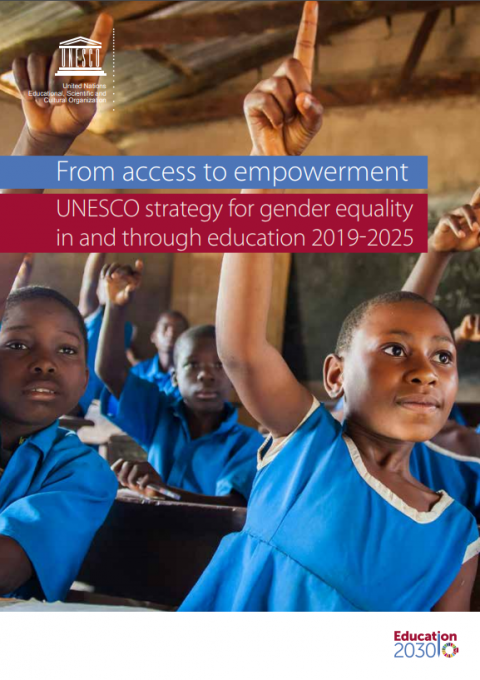 From access to empowerment: UNESCO strategy for gender equality in and through education 2019-2025 Année de publication: 2019 Auteur institutionnel: UNESCO Gender bias still permeate the entire education system in some settings and is often perpetuated rather than questionned. This includes the absence of women as leaders in textbooks, to differential expectations of boys and girls by teachers, to school policies that put pregnant girls at the door rather than respecting, protecting and fulfilling their right to education. This Strategy focuses on system-wide transformation to benefit all learners and targeted interventions to support girls’ and women’s empowerment. It offers three clear lines of action: better data to inform action for gender equality in and through education, better legal, policy and planning frameworks to advance rights, and better teaching and learning practices to empower. De l’accès à l’autonomisation: stratégie de l’UNESCO pour l’égalité des genres dans et par l’éducation 2019-2025 Année de publication: 2019 Auteur institutionnel: Organisation des Nations Unies pour l'éducation, la science et la culture (UNESCO) Les préjugés de genres continuent d’imprégner l’ensemble du système éducatif et sont souvent perpétués au lieu d’être contestés. Ces derniers vont de l’absence de leaders féminins dans les manuels scolaires, aux attentes différentes des enseignants concernant les filles et les garçons, en passant par les politiques scolaires qui excluent les filles enceintes au lieu de les respecter, de les protéger et de garantir leur droit à l’éducation. Cette stratégie met l’accent sur la transformation à l’échelle du système au profit de tous les apprenants, et sur des interventions ciblées pour soutenir l’autonomisation des filles et des femmes. Elle propose trois thématiques prioritaires distincts : meilleures données pour éclairer l’action ; meilleurs cadres juridiques, politiques et de planification pour faire progresser les droits ; et meilleures pratiques d’enseignement et d’apprentissage pour autonomiser.
 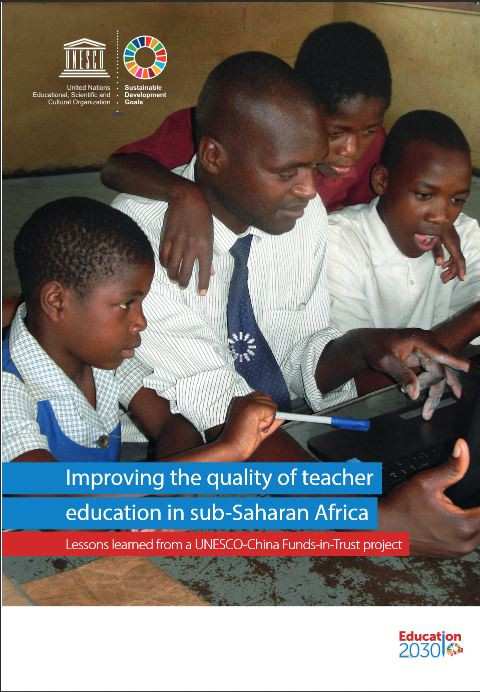 Improving the quality of teacher education in Sub-Saharan Africa: lessons learned from a UNESCO-China Funds-in-Trust project Année de publication: 2018 Auteur institutionnel: UNESCO The booklet describes how the project started, the choice of beneficiary countries, the implementation strategies and its achievements. The different sections numbered one to four describe particular aspects of the project, using country cases to illustrate how the success of the project was due to strong country ownership and leadership. UNESCO, in partnership with the Government of the People’s Republic of China, initiated the project to enhance the institutional capacity and the professional development of teacher educators through ICT-supported learning, teaching and research. This technology aided the transformation of capacity teacher training through digitalization of instructional materials.
  Monitoring the implementation of the Lisbon Recognition Convention - Council of Europe Higher Education Series No. 23 Année de publication: 2019 Auteur institutionnel: UNESCO | Council of Europe In accordance with the Lisbon Recognition Convention, the Committee of the Convention shall oversee its implementation and guide the competent authorities in implementing the convention and in their consideration of applications for the recognition of foreign qualifications. The Rules of procedure (adopted by the Committee in Vilnius in 1999) reiterate this role – the function of the Committee is to promote the application of the convention and oversee its implementation. Article II. of the convention states that where the central authorities of a party are competent to make decisions in recognition cases, that party shall be immediately bound by the provisions of the convention and shall take the necessary measures to ensure the implementation of its provisions on its territory. Where the competence to make decisions in recognition matters lies with individual higher education institutions or other entities, each party, according to its constitutional situation or structure, shall transmit the text of this convention to those institutions or entities and shall take all possible steps to encourage the favourable consideration and application of its provisions. The provisions of Article II. are central to determining the obligations of the parties to the convention. This article places upon these parties an obligation to make sure that information on the provisions is disseminated to all competent recognition authorities, and that these institutions are encouraged to abide by the convention (Explanatory report to the convention). The objective of this monitoring exercise has been to oversee the implementation of the main provisions of the convention and to report to parties on the outcome of this monitoring, presenting the main findings and recommendations. This monitoring report is also a contribution to the commitment set out in the Yerevan Communiqué (2015) to review national legislation to ensure full compliance with the convention, and to ask the Convention Committee, in co-operation with the ENIC (Council of Europe and UNESCO European Network of National Information Centres on academic recognition and mobility) and NARIC (EU Network of National Academic Recognition Information Centres) networks, to prepare an analysis of the national legislation reports by the end of 2017, taking due account of this monitoring report. This is the first monitoring of implementation of the Lisbon Recognition Convention (LRC) since its signature in 1997. The questionnaire used for the monitoring exercise was drawn up by the Bureau of the Convention Committee, namely Gunnar Vaht, President of the Committee, Gayane Harutyunyan, Vice-President, Allan Bruun Pedersen, Vice-President, and Baiba Ramina, Rapporteur, together with the joint Council of Europe/UNESCO Secretariat. The monitoring covers the 10 main provisions of the convention and comprises 22 questions relating to implementation of the main principles. The questions focus primarily on how the convention requirements are regulated at national level and to what extent the rules are reflected in national legislation. In cases where some or all of the provisions are not regulated at national level and where the higher education institutions have total autonomy in establishing the principles of the convention, the aim has been to discover how national authorities oversee implementation of the principles of the convention at institutional level. As stated above, the objective of this monitoring report is to monitor implementation of the convention by the parties to the convention. The executive summary focuses on the key findings and the conclusions focus on the recommendations made by the Convention Committee Bureau, which will require political decisions from the Convention Committee and from national authorities for follow-up action. The various chapters of the report elaborate further on both the key findings and the recommendations. The questionnaire was sent to 53 states parties to the LRC, and replies were received from 50 countries. The initial deadline given was 15 February 2015, but this was extended to June 2015. The analysis by the members of the Convention Committee Bureau took place from June to November 2015 and was assisted and reviewed by the Council of Europe and UNESCO, the joint Secretariat of the LRCC Bureau.