
Ressources
Explorez une large gamme de ressources sur le GCED afin d’approfondir votre compréhension et de renforcer vos activités de recherche, de plaidoyer, d’enseignement et d’apprentissage.
2,813 résultats trouvés
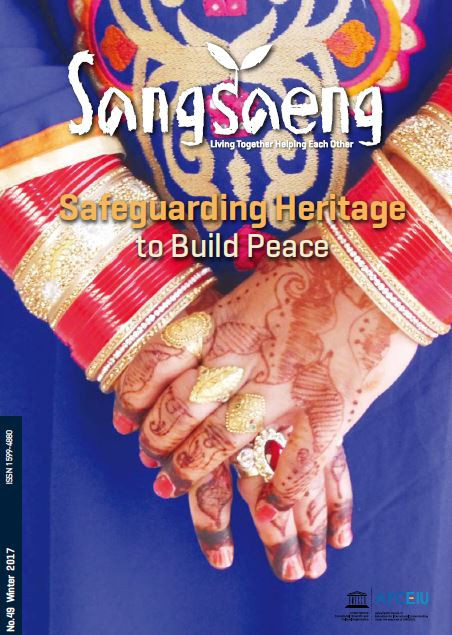 Sauvegarder le patrimoine pour consolider la paix (SangSaeng no. 49 Hiver 2017) Année de publication: 2017 Auteur institutionnel: Centre Asie-Pacifique d'éducation pour la compréhension internationale (APCEIU) 03 MESSAGE DU DIRECTEUR04 RUBRIQUE SPECIALEPrendresoin de notreplanète08 LE PATRIMOINE POUR LA PAIX ET LA PROSPÉRITÉApporter de la valeurajoutée avec uneéducationappropriéeet des services d’interprétation sur les sites de tourisme patrimonial12 EDUCATION AU PATRIMOINE: UNE OPPORTUNITÉ POUR ACCROITRE L'ALPHABÉTISATION CULTURELLEReconnaître la valeur de la communautécommeespaced’apprentissage17 REPORTAGE PHOTOSites du patrimoinemondial 2017 21 REPORTAGE SPÉCIALL’UNAI influence l’enseignementet la recherche pour le biencommun24 BONNES PRATIQUES24 Éducationen zone frontalière: à la frontière de la vie29 Encourager le coeur du sujet33 ENTRETIENLe défi de l’ECMestlancé !36 RÉSEAU DE JEUNESLes jeunes édifient la paix 40 LETTRE42 LA PAIX DANS MA MÉMOIRELa paixdansun monde de violence46 COMPRENDRE LA REGION ASIE-PACIFIQUEOEuf, tambourinetcélébration49 APCEIU EN ACTION 평화를 구축하기 위한 유산 보호 (상생 제49호 2017년 겨울호) Année de publication: 2017 Auteur institutionnel: 유네스코 아시아태평양 국제이해교육원 49호 <상생>이 “평화를 구축하기 위한 유산 보호”라는 주제로 발간되었다. 모든 고대 문명은 현대 사회 발전에 어떤 방식으로든 영향을 준다는 점에서 연구의 가치가 있다. 이번 호 상생은 다양한 맥락에서 유산을 살펴보고, 글로벌 사회의 일원으로서 책임을 다하기 위해 나와 다른 유산을 이해하고 관용하도록 돕는다. 3 발간사4 스페셜 칼럼4 우리 지구의 청지기로서 살아가기8 포커스: 평화를 구축하기 위한 유산 보호8 평화와 번영을 위한 유산12 유산 교육: 문화 리터러시 강화의 기회17 포토 에세이: 2017 세계 유산21 스페셜 리포트대의를 위한 학문과 연구에 영향을 미치는 UNAI활동24 국제이해교육 모범사례24 경계선에 있는 사람들을 위한 최전선의 교육29 학생들의 감성과 열망 자극하기 33 인터뷰세계시민교육에 대한 도전들36 유스네트워크평화를 구축하는 청년40 APCEIU에 보내는 편지평화의 마음을 향한 여정42 내 기억 속의 평화폭력적인 세상에서의 평화46 아시아태평양 지역 이해하기계란, 탬버린 그리고 기념49 교육원 활동
  Global Citizenship Concepts in the Curricula of Four Countries Année de publication: 2017 Auteur: Natalie Browes Auteur institutionnel: UNESCO International Bureau of Education (IBE) | APCEIU This report details the presence of Global Citizenship Education (GCED) concepts in the education systems of four countries: Cambodia, Colombia, Mongolia and Uganda. It highlights the main findings of eight reports: four expert reports, which predominately analyse curriculum content, and four situational analysis reports, which take a broader view and detail some of the country-specific challenges and opportunities with regard to GCED. Findings reveal the presence of GCED concepts across the curricula of the four countries. In addition to cognitive content related to GCED, competency-based content is also found present within the curricula of these countries. However, the majority of this content can only be indirectly linked to GCED, and it is better interpreted as part of the more traditional civics or citizenship education approach. As such, it generally lacks a global perspective and does not engage with all key themes of GCED. Furthermore, this content is often concentrated at the lower and upper secondary levels, instead of being equally distributed across all grade levels. This is particularly true in the case of behaviour-based competencies. Findings also reveal challenges beyond the curriculum. These include lack of teacher training and lack of support to implement GCED, which are concerns expressed by stakeholders in all four countries. A lack of GCED content in textbooks and lack of supplementary materials were also found to be issues. The report concludes with recommendations regarding the effective implementation of GCED within curricula. Among others, the report suggests the transversal integration of GCED - across the curriculum at all grade levels, while at the same time, actors from all levels of the education system, ranging from central government to teachers, should be engaged to ensure the use of complementary learning materials, pedagogies and assessment techniques.
 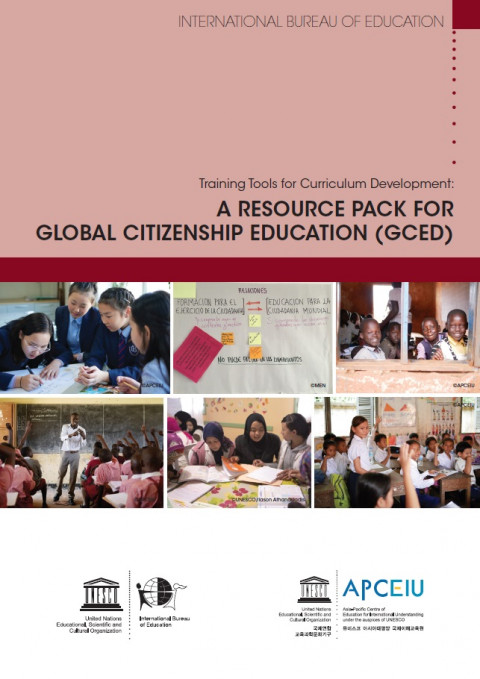 Herramientas para Desarrollo Curricular: Recursos para la Educación para la Ciudadanía Mundial (ECM) Année de publication: 2018 Auteur institutionnel: UNESCO International Bureau of Education (IBE) | Centro de Asia y el Pacífico de Educación para el Entendimiento Internacional (APCEIU) El objetivo principal de “Recursos para la Educación para la Ciudadanía Mundial (ECM)” es el compartir una comprensión más profunda y amplia de la teoría y práctica de la ECM para poder propiciar su desarrollo efectivo e implementación a nivel de las políticas, escuelas y aulas. Los Recursos propician una guía comprensiva para los diseñadores de políticas nacionales, los especialistas y expertos en desarrollos de planes de estudios, formadores de maestros, educadores, líderes escolares y administradores a nivel de los distritos. Los principales temas abordados son:Módulo 1: IntroducciónMódulo 2: Políticas NacionalesMódulo 3: Diseño curricular Módulo 4: Enseñanza, aprendizaje y evaluaciónMódulo 5: Recursos para Enseñanza y AprendizajeMódulo 6: Enfoque Escolar IntegralMódulo 7: Formación de Maestros y Desarrollo Profesional
  SDG 4.7: 세계시민교육 지표수립을 위한 기초연구 Année de publication: 2018 Auteur institutionnel: 유네스코 아시아태평양 국제이해교육원 “SDG 4.7 세계시민교육 지표수립을 위한 기초연구 보고서”가 발간되었다. 본 연구보고서는 국제적으로 합의된 글로벌 지표의 부재로 현재까지 정의가 완료되지 않은 지속가능발전목표 (SDG) 4.7 지표 개발을 위한 기초 연구이다. 즉, 동 보고서는 세계시민교육 및 SDG 4.7 지표에 관한 기존의 국내·외 연구결과를 종합적으로 검토하여 글로벌 지표에 관한 주요 논의를 정리하고, 국내 지표 개발을 위한 함의를 도출하는 데에 목적을 두고 있다. 이를 위하여 유네스코 통계원 (UIS)의 최신 SDG 4.7.1 메타데이터 연구와 국내·외 연구결과에 기초하여 국내에서 활용할 수 있는 정보와 데이터를 검토하고 있다.
 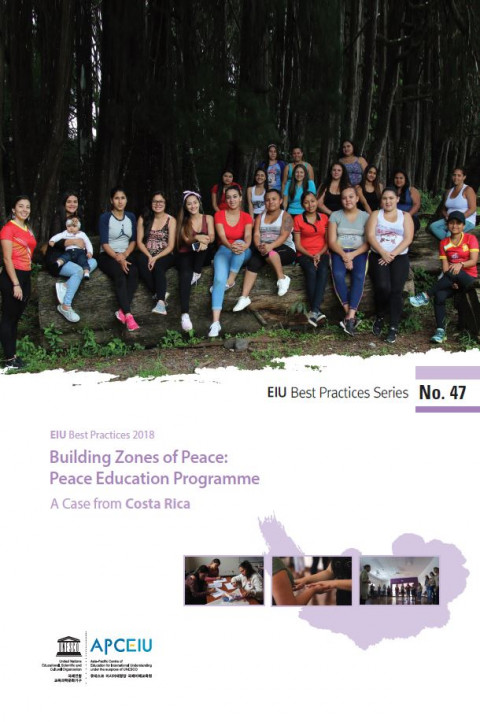 EIU Best Practices Series No. 47: Building Zones of Peace: Peace Education Programme; A Case from Costa Rica Année de publication: 2018 Auteur institutionnel: APCEIU Building Zones of Peace (BZP) is a non-formal peace and global citizen education programme created to promote peace and prevent violence in vulnerable urban communities in Costa Rica. The programme aims to encourage participants to develop a critical view of their contexts and explore different ways of taking action to transform the world we live in, and by recognizing how individual and collective efforts have a positive and direct impact in our personal, family and community spheres as well as nationally and globally.In 2017, BZP was conducted to a group of secondary education students ages 13 to 17. This year (2018), participants are young women, ages 18 to 22, all of the mothers who live in extreme poverty. These women have been selected by a governmental office whose aim is to reduce poverty by empowering them. Several resources and networks of support have been created in different areas such as health, employment, childcare and education to achieve this goal. In this sense, our programme was chosen to contribute significantly in this process.
 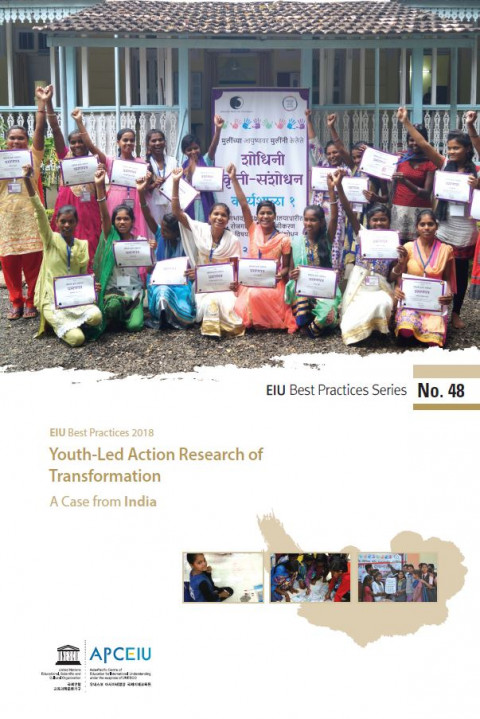 EIU Best Practices Series No. 48: Youth-Led Action Research of Transformation; A Case from India Année de publication: 2018 Auteur institutionnel: APCEIU This action research project is about the education for livelihood and life skills of marginalized young girls. This project was based from my experience in the Youth-Led Action Research Project organized by ASPBAE and UNESCO Institute of Lifelong Learning (UIL), which gradually led to the conception of the present action research project for the empowerment of the marginalized rural girls suppressed by patriarchal social systems. The Shodhinis are the subjects and objects of this action research. A hundred girls from ten villages conducted action research on the topics of gender, education, livelihood and life skills to young marginalized young girls aged between 14 to 25 years old in their respective communities. The Shodhinis discovered the joys of learning as they took positive steps in discovering and empowering themselves. The research enabled them to conduct various research methods like census and in-depth surveys of their fellow girls in their villages. As part of the research process, the girls also drew up a community map to understand their village. The relevance of this project to GCED values cannot be overemphasized especially in developing the cognitive, emotional and the behavioral dimensions of the girls themselves.This project not only focuses on analyzing the findings derived from the gathered data but also on generating action based on the data. It helped improve the way Shodhinis looked at themselves, their families, and their communities, inspiring them to become agents of change in their own lives as well as those of other girls in their villages. By amplifying their voices and opinions in the decision making processes at the family and community levels – for instance, by lobbying for the construction of libraries – the Shodhinis were able to demonstrate their leadership skills in shaping the development of their villages, thereby enhancing their dignity and self-worth.
  Kit de Herramientas de incidencia Juvenil sobre ECM Année de publication: 2019 Auteur institutionnel: Centro de Asia y el Pacífico de Educación para el Entendimiento Internacional (APCEIU) APCEIU ha publicado el Kit de Herramientas de incidencia Juvenil sobre Educación para la Ciudadanía Mundial (ECM) para proveer a líderes jóvenes con una guía de incidencia sobre ECM. Enfocado en jóvenes activistas que actualmente participan en programas de ECM alrededor del mundo, el kit ofrece una mirada de la ECM e incidencia, así como consejos y herramientas para implementar de forma efectiva una campaña de incidencia en los niveles local y global. Por otro lado, a través de compartir casos de incidencia juvenil en diversos entornos, este kit también brinda ejemplos de la vida real presentados por jóvenes que se interesan en la incidencia sobre ECM.ÍndiceCapítulo 1 - Qué es la Educación por la Ciudadanía Mundial (ECM)?Capítulo 2 - Qué es la incidencia por la ECM?Capítulo 3 - La juventud como un agente activo por la ECMCapítulo 4 - Compartiendo casos de incidencia juvenilCapítulo 5 - Iniciativas juveniles de ECM
  Набор инструментов для молодежи по адвокации обучения для глобального гражданства (GCED) Année de publication: 2019 Auteur institutionnel: Азиатско-тихоокеанский центр по воспитанию в духе международного взаимопонимания (APCEIU) APCEIU опубликовал набор инструментов для молодежи по адвокации обучения для глобального гражданства для того, чтобы обеспечить молодежным лидерам руководство по адвокации ОГГ (GCED). Этот набор, предназначен для молодежных активистов, которые в настоящее время участвуют в программах ОГГ (GCED) по всему миру, предлагает обзор ОГГ и информационно-адвокационной деятельности, а также советы и инструменты для эффективной реализации информационно-адвокационной кампании по ОГГ в локальном и глобальном контексте. Кроме того, посредством обмена историй адвокации молодежи в различных областях этот набор также предоставляет примеры из реальной жизни, которые могут быть легко использованы молодежью, заинтересованной в адвокации ОГГ. <Содержание> Набор инструментов для молодежи по адвокации обучения для глобального гражданства (GCED)Глава 1 - Что такое образование для глобального гражданства (ОГГ)?Глава 2. Что такое адвокация ОГГ?Глава 3 - Молодежь как активный агент для ОГГГлава 4 - Обмен историй молодежной адвокацииГлава 5 - Молодежные инициативы по ОГГ
  세계시민교육 전문가양성과정 종료평가: 최종보고서 Année de publication: 2023 Auteur institutionnel: 유네스코 아시아태평양 국제이해교육원 본 연구는 유네스코 아시아태평양 국제이해교육원에서 진행되는 다양한 세계시민교육 전문가양성과정 중 2022년 시행된 제8회 세계시민교육 청년리더십 워크숍과 제7회 세계시민교육 교사교육가 글로벌연수에 대한 종료평가로서, 사업성과에 대한 심층분석과 교훈 및 제언 도출을 주요 목표로 하였다. 적절성, 효율성, 효과성, 지속가능성 등 4개 기준을 적용하고, 문헌검토, 워크숍 참여자 대상 설문조사, 심층면담 등의 방법을 활용해 데이터를 확보하여 연구를 진행하였다. 연수 종료 후 확인 가능한 성과(outcome)에 대한 효과성과 지속가능성 항목에 대한 평가에는 2021년 연수 자료가 포함되었다.