
Ressources
Explorez une large gamme de ressources sur le GCED afin d’approfondir votre compréhension et de renforcer vos activités de recherche, de plaidoyer, d’enseignement et d’apprentissage.
2,768 résultats trouvés
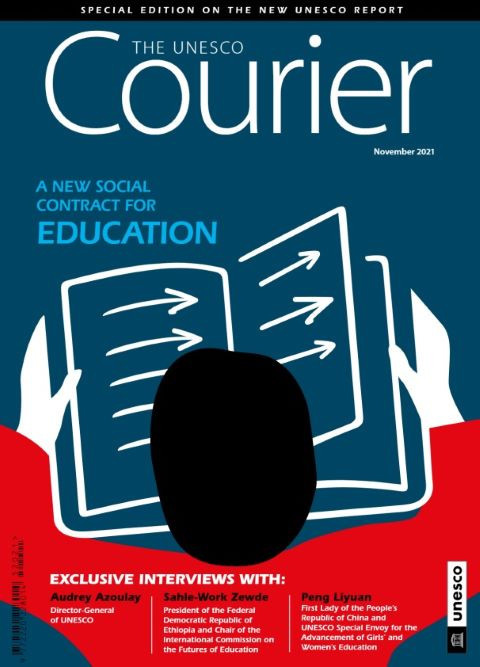 面向教育的新社会契约 (The UNESCO Courier Special Edition; November 2021) Année de publication: 2021 Auteur institutionnel: 联合国教科文组织 (UNESCO) Reimagining Our Futures Together upholds the tradition of the major UNESCO reports that have already structured education policies throughout the world in the past. The Faure report, Learning to be, in 1972, and the Delors report, Learning: The Treasure Within, in 1996, have become benchmarks in the debate on learning. This third document presents a lucid assessment of the challenges confronting education today.Faced with the rapid changes in our environment, a change of direction is needed. We need to devote more importance to ecology; to provide students with the critical tools to detect misinformation, prejudices, and preconceived ideas; to strengthen teamwork, and to improve the professionalization of teachers. Beyond these imperatives, we must also rethink the multiple interdependencies, the links between generations and between cultures, and our relationship with living beings, to establish a new social contract for education.
 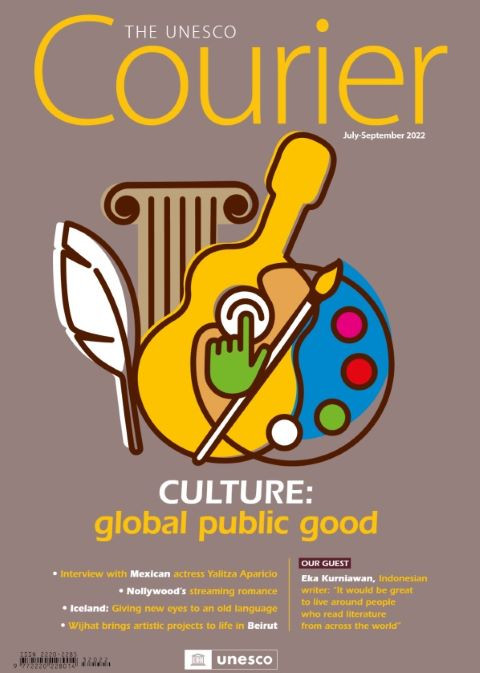 Culture: Global Public Good (The UNESCO Courier no. 3; July-September 2022) Année de publication: 2022 Auteur institutionnel: UNESCO Culture is what defines us in space and time – our past and present roots, our prospects. Culture is an inexhaustible and renewable resource, which adapts to changing contexts and which speaks to humans first and foremost through their capacity to imagine, create and innovate. Culture is our most powerful global public good. In the words of Javier Pérez de Cuéllar, former Secretary-General of the United Nations, culture has a role “as a desirable end in itself, as giving meaning to our existence”. Today, more than ever, we need to find meaning, we need universality, we need culture in all its diversity. La Cultura: Un bien público mundial (The UNESCO Courier no. 3; July-September 2022) Année de publication: 2022 Auteur institutionnel: UNESCO Culture is what defines us in space and time – our past and present roots, our prospects. Culture is an inexhaustible and renewable resource, which adapts to changing contexts and which speaks to humans first and foremost through their capacity to imagine, create and innovate. Culture is our most powerful global public good. In the words of Javier Pérez de Cuéllar, former Secretary-General of the United Nations, culture has a role “as a desirable end in itself, as giving meaning to our existence”. Today, more than ever, we need to find meaning, we need universality, we need culture in all its diversity. La Culture: Un bien public mondial (The UNESCO Courier no. 3; July-September 2022) Année de publication: 2022 Auteur institutionnel: Organisation des Nations Unies pour l'éducation, la science et la culture (UNESCO) Culture is what defines us in space and time – our past and present roots, our prospects. Culture is an inexhaustible and renewable resource, which adapts to changing contexts and which speaks to humans first and foremost through their capacity to imagine, create and innovate. Culture is our most powerful global public good. In the words of Javier Pérez de Cuéllar, former Secretary-General of the United Nations, culture has a role “as a desirable end in itself, as giving meaning to our existence”. Today, more than ever, we need to find meaning, we need universality, we need culture in all its diversity.
 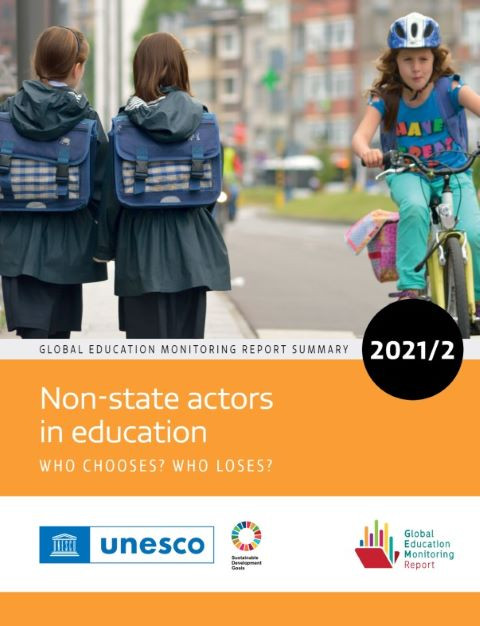 [Summary] Global Education Monitoring Report 2021/2: Non-state Actors in Education: Who Chooses? Who Loses? Année de publication: 2022 Auteur institutionnel: UNESCO Non-state actors’ role extends beyond provision of schooling to interventions at various education levels and influence spheres. Alongside its review of progress towards SDG 4, including emerging evidence on the COVID-19 pandemic’s impact, the 2021/2 Global Education Monitoring Report urges governments to see all institutions, students and teachers as part of a single system. Standards, information, incentives and accountability should help governments protect, respect and fulfill the right to education of all, without turning their eyes away from privilege or exploitation. Publicly funded education does not have to be publicly provided but disparity in education processes, student outcomes and teacher working conditions must be addressed. Efficiency and innovation, rather than being commercial secrets, should be diffused and practiced by all. To that end, transparency and integrity in the public education policy process need to be maintained to block vested interests. The report’s rallying call – Who chooses? Who loses? – invites policymakers to question relationships with non-state actors in terms of fundamental choices: between equity and freedom of choice; between encouraging initiative and setting standards; between groups of varying means and needs; between immediate commitments under SDG 4 and those to be progressively realized (e.g. post-secondary education); and between education and other social sectors.
  Перспективы развития сотрудничества республики Узбекистан и ООН в обеспечении экологических прав человека (ORIENS; Выпуск 3, № 5) Année de publication: 2023 Auteur: Арзиев Алишер Бахритдинович В данной статье раскрываются основные аспекты направления сотрудничества Республики Узбекистан и ООН в обеспечении экологических прав человека. Рассмотрена и проанализирована деятельность государства в реализации международных проектов и нормативно-правовой активности, направленных на сохранение окружающей среды, экологического климата и здоровья граждан. Определены основные проблемы, являющиеся наиболее актуальными на сегодняшний день в сфере защиты экологических прав человека.
  Technical Note on the Implementation of the Convention on the Rights of Persons with Disabilities in Uzbekistan Année de publication: 2023 Auteur institutionnel: World Bank This compilation of technical briefs lays out the key problems faced by persons with disabilities in Uzbekistan under all areas of life and formulates detailed recommendations, providing the evidence base for a Strategic Note that aims to guide Uzbekistan's next five-year National Action Plan (NAP) for implementing the United Nations Convention on the Rights of Persons with Disabilities (CRPD). Технические справки по имплементации Конвенции о правах инвалидов Année de publication: 2023 Auteur institutionnel: World Bank В этом сборнике девяти отраслевых технических справок очень подробно анализируются проблемы, с которыми сталкиваются лица с инвалидностью в Узбекистане во всех сферах жизни, и формулируются подробные рекомендации, обеспечивающие доказательную базу для Стратегической записки, которая призвана служить ориентиром для следующего пятилетнего Национального плана действий Узбекистана (НПД) по имплементации Конвенции Организации Объединенных Наций о правах инвалидов (КПИ) в стране.
  Prevention of Violence in Educational Institutions of the Kyrgyz Republic Année de publication: 2015 Auteur: D. Abdyldaeva | V. Gorkina Auteur institutionnel: UNESCO The methodological manual provides information on the nature and causes of violence in educational institutions, its forms and consequences; parties involved; ways to prevent and resolve conflict situations. Particular attention is paid to gender-based violence. The manual provides practical advice on organizational and educational measures, and algorithms for the actions of the management and staff of an educational organization to respond to facts of violence and provide assistance to victims. Предотвращение насилия в образовательных организациях Кыргызской Республики: Методическое пособие для педагогических работников Année de publication: 2015 Auteur: D. Abdyldaeva | V. Gorkina Auteur institutionnel: UNESCO В методическом пособии представлена информация о природе и причинах насилия в образовательных организациях, его формы и последствия; вовлеченные стороны; способы предотвращения и разрешения конфликтных ситуаций. Особое внимание уделяется гендерному насилию. В пособии представлены практические советы по организационным и воспитательным мерам, алгоритмы действий руководства и персонала образовательной организации по реагированию на факты насилия и оказанию помощи пострадавшим.