
Ressources
Explorez une large gamme de ressources sur le GCED afin d’approfondir votre compréhension et de renforcer vos activités de recherche, de plaidoyer, d’enseignement et d’apprentissage.
2,768 résultats trouvés
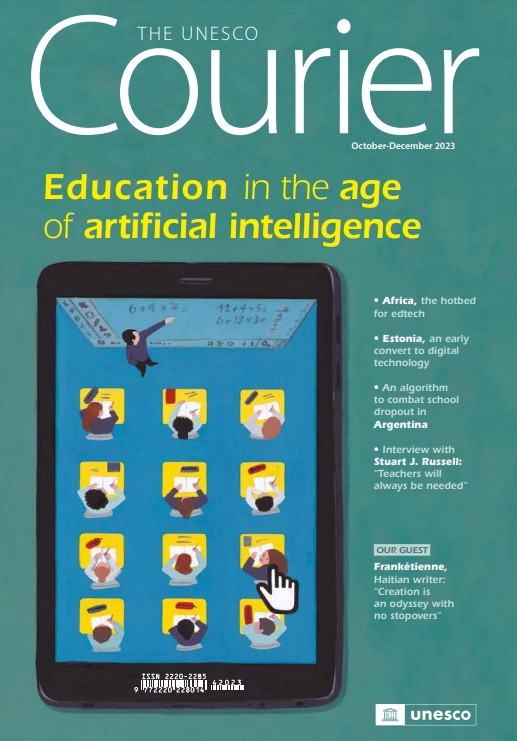 人工智能时代的教育 (联合国教科文组织 信使 2023年第4期) Année de publication: 2023 Auteur institutionnel: UNESCO “就在世界各国的教育领域经历巨变的时候, 一种教学现象不仅引起了专业人士的注意, 也受到了非专业人士的关 注。”这里所说的创新是指人工智能吗?抑或是指在课堂 上使用增强现实技术?都不是。联合国教科文组织《信使》 杂志上的这篇文章讲的是“教学机器”。 这是美国开发出 来的一套程序, 用于指导学生学习。 这篇文章最初发表于 1965 年 3 月。 由此可见, 关于计算机在学习中能起到什么作用的思 考, 并不算新鲜。 无论人们的态度是褒是贬, 科技正在日 益融入学校, 至少在工业化国家是这样的。 数字技术学习 游戏、线上辅导和大规模开放式在线课程(MOOC)已成 为越来越多的学生的现实生活场景。 新型冠状病毒感染疫 情只是加速了这一发展趋势, 促进了非洲等地数字化教育 服务公司(“教育科技公司”)的崛起。 然而, 在一名教师同时为一群学生授课这条基本原 则面前, 无论多么尖端的技术都没能打破陈规。 人工智能 有可能改变游戏规则。ChatGPT 和智能教程等生成式人 工智能工具的出现, 是否意味着众望所期的革命已经开始 了?总之, 生成式人工智能在学习中的应用, 给教育系统 带来了前所未有的挑战。 正如联合国教科文组织《2023 年全球教育监测报告》 所强调的那样, 这些新工具可以为学生, 特别可以为残疾 学生和居住在偏远地区的学生, 提供个性化支持, 新工具 在这方面的作用确实不可估量, 但由此也引发了关于数字 鸿沟、 数据保密性, 以及国际大公司在这一领域占尽优势 等问题。目前,保障措施仍然缺失。 因此, 联合国教科文组织建议, 当务之急是制定相关 法规, 确保人工智能在教育中的应用始终秉承以人为本的 理念, 且符合学生的最大利益。 为此, 联合国教科文组织 于 2023 年 9 月发布了首份全球《生成式人工智能在教育 和研究中的应用指南》(Guidance for generative AI in education and research ), 旨在解决这些技术造成的干 扰。《指南》对联合国教科文组织编制的其他工具进行了 补充, 包括《人工智能伦理问题建议书》(Recommendation on the Ethics of Artificial Intelligence )和 2021 年发布的《人工智能与教育:政策制定者指南》(AI and education: guidance for policy-makers )。
 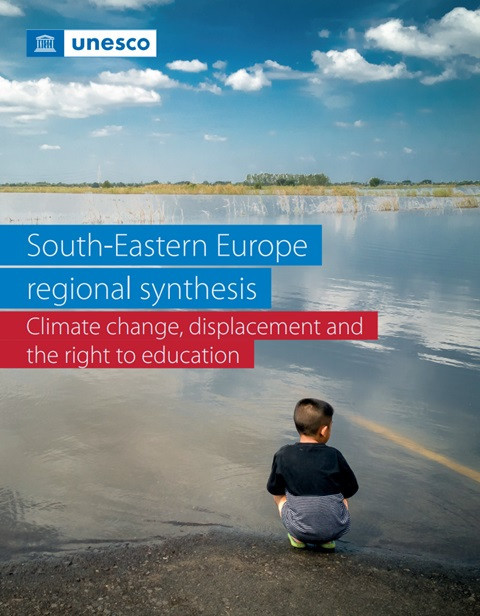 South-Eastern Europe regional synthesis: climate change, displacement and the right to education Année de publication: 2023 Auteur institutionnel: UNESCO In 2021 alone, 23.7 million people were displaced in 137 countries and territories due to natural disasters, which the scientific community has recognized have become more frequent and intense due to climate change. Climate change and displacement is currently taking place in Europe, with particularly disastrous consequences in South-Eastern Europe due to regional specificities. Comparative country case studies were carried out in Bosnia and Herzegovina, the Republic of Moldova, and Serbia, as they exemplify clear, present patterns of climate displacement, to examine the impacts of climate change on the right to education in the region. The case studies show that climate change directly threatens education through the destruction of schools and property. It also indirectly puts learning in peril by leading people across borders where their legal residency nor right to education is ensured. This publication aims to guide policy-makers by providing recommendations on how to ensure the protection of the right to education in South-Eastern Europe in the face of climate change and displacement. It is one of four regional reports that will lead to the development of a global report providing global policy guidance.
 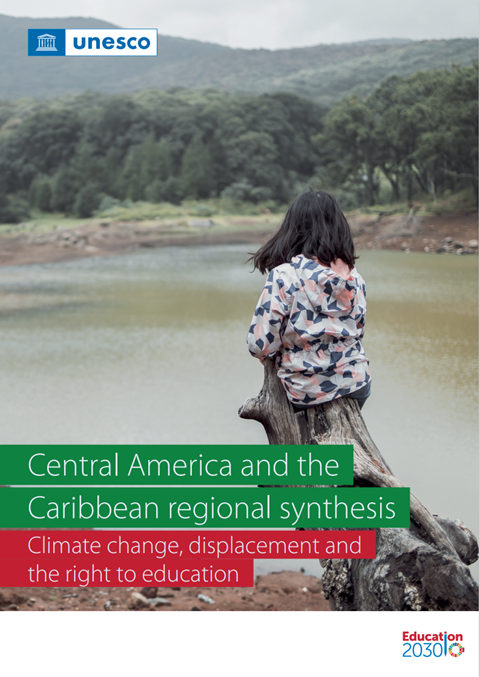 Central America and the Caribbean regional synthesis: climate change, displacement and the right to education Année de publication: 2023 Auteur institutionnel: UNESCO From rising sea level to drought and increasingly frequent natural disasters - the effects of climate change are well-known today. However, its effect on human mobility is just coming to the forefront of the political discussion. In 2020 alone, 30.7 million people globally were displaced by natural disasters. Central America and the Caribbean region is prone to the effects of climate change and displacement due to its socioeconomic characteristics and geographic location. Country case studies were carried out in the Bahamas, Cuba, the Dominican Republic, Guatemala, and Jamaica to examine the impacts on the right to education in the region. The research shows that climate change directly threatens education through the destruction of schools and property. It also leads people across borders where their legal residency and right to education are not guaranteed. This report aims to guide policy-makers on how to ensure education is protected in the face of climate change and displacement. The report is one of four being developed and will contribute to UNESCO’s global initiative on climate change, displacement and the right to education. It will inform the development of a Global Report with policy recommendations.
 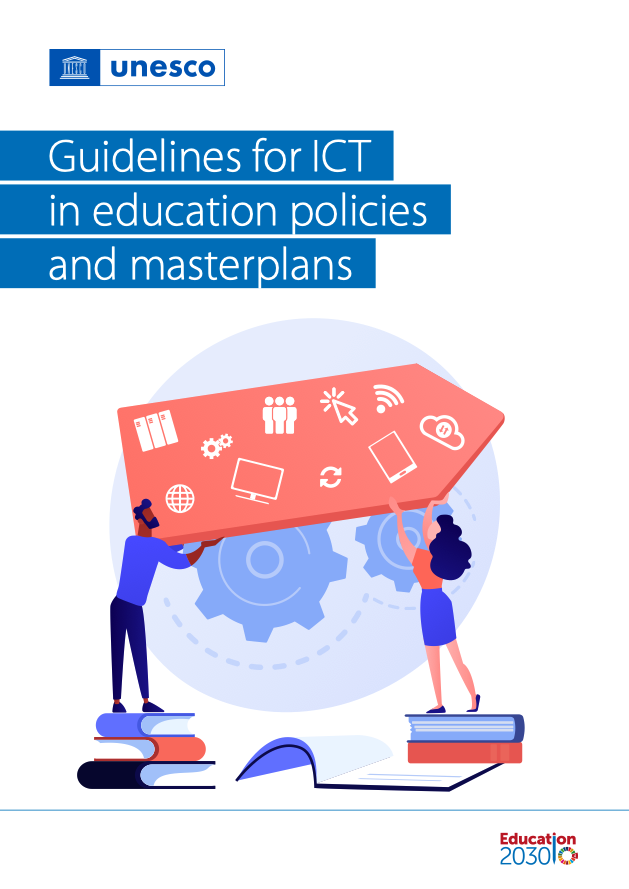 Guidelines for ICT in education policies and masterplans Année de publication: 2022 Auteur: Fengchun Miao | Juan Enrique Hinostroza | Molly Lee | Shafika Isaacs | Dominic Orr | Fabio Senne | Ana-Laura Martinez | Ki-Sang Song | Alexander Uvarov | Wayne Holmes | Benjamin Vergel de Dios Auteur institutionnel: UNESCO Countries across the world have been leveraging information and communication technologies (ICTs) to advance education for decades. These initiatives are driven by public institutions and involve commercial technology companies, and have resulted in paradoxes such as increasing digital inequalities and uneven access to high-quality digital learning opportunities. The COVID-19 crisis further exacerbated this trend: At least one third of students globally did not have access to distance learning during the peak of the COVID-19 crisis in 2020.The publication aims to guide policy-makers to ensure that when adopting technology, human rights should be defended; inclusion, equity and gender equality should be at the heart of solutions; and innovations should be considered as a common good. Based on these principles, the publication presents a human-centred view on the potentials of technologies ranging from low-bandwidth technologies to emerging technologies including Artificial Intelligence and Web 3.0 or “metaverse”. It advocates for national policies to protect the digital well-being of teachers and students, to reduce and neutralize the digital emission footprint, and to avoid ‘techno-solutionism’.This publication proposes policy planning frameworks and an iterative roadmap to examine the digital readiness of local education systems, assess needs of learners and teachers, and plan well-resourced national ICT in education programmes. This is followed by a deep dive into examples of national masterplans on the use of ICT in different types of education.
  Challenging Systematic Prejudices: An Investigation into Bias Against Women and Girls in Large Language Models Année de publication: 2024 Auteur: Daniel Van Niekerk | Maria Peréz Ortiz | John Shaw-Taylor | Davor Orlic | Ivana Drobnjak | Jackie Kay | Noah Siegel | Katherine Evans | Nyalleng Moorosi | Tina Eliassi-Rad | Leone Maria Tanczer | Wayne Holmes | Marc Peter Deisenroth | Isabel Straw | Maria Fasli | Rachel Adams | Nuria Oliver | Dunja Mladenić | Urvashi Aneja | Madeleine Janicky Auteur institutionnel: UNESCO | International Research Centre on Artificial Intelligence (IRCAI) This study explores biases in three significant large language models (LLMs): OpenAI’s GPT-2 and ChatGPT, along with Meta’s Llama 2, highlighting their role in both advanced decision-making systems and as user-facing conversational agents. Across multiple studies, the brief reveals how biases emerge in the text generated by LLMs, through gendered word associations, positive or negative regard for gendered subjects, or diversity in text generated by gender and culture. The research uncovers persistent social biases within these state-of-the-art language models, despite ongoing efforts to mitigate such issues. The findings underscore the critical need for continuous research and policy intervention to address the biases that exacerbate as these technologies are integrated across diverse societal and cultural landscapes. The emphasis on GPT-2 and Llama 2 being open-source foundational models is particularly noteworthy, as their widespread adoption underlines the urgent need for scalable, objective methods to assess and correct biases, ensuring fairness in AI systems globally.
  Global Toolkit on AI and the Rule of Law for the Judiciary Année de publication: 2023 Auteur: Miriam Stankovich | Ivana Feldfeber | Yasmín Quiroga | Marianela Ciolfi Felice | Vukosi Marivate Auteur institutionnel: UNESCO What is Artificial Intelligence (AI)? How does it work? And more importantly, how does it find its way into the judicial context? Technologies such as AI have been around for decades, but only recently have they begun to be used in a variety of justice and law enforcement settings. While AI has immense potential for the justice system, helping judges make better decisions, improving efficiency, increasing access, and helping to detect and prevent crime, there are also some important issues that justice stakeholders should consider as they prepare for a future in which AI is increasingly used in justice systems.In 2022, UNESCO launched two needs assessments. First, through UNESCO’s Artificial Intelligence Needs Assessment Survey in Africa, 90% of the 32 countries surveyed requested capacity building support for the Judiciary on AI. At the same time, a second global survey of judicial actors in 100 countries underlined the need for better understanding the use of AI in the administration of justice and its wider legal implications on societies.The “Global Toolkit on AI and the Rule of Law” for the Judiciary responds to these needs and provides judicial actors (judges, prosecutors, state attorneys, public lawyers, law universities and judicial training institutions) with the knowledge and tools necessary to understand the benefits and risks of AI in their work. The toolkit will assist judicial actors in mitigating the potential human rights risks of AI by providing guidance on the relevant international human rights laws, principles, rules and emerging jurisprudence that underpin the ethical use of AI.
  평화, 인권, 국제이해, 협력, 기본적 자유, 세계시민성, 지속가능발전을 위한 교육 권고: 해설서 Année de publication: 2024 Auteur institutionnel: 유네스코 '평화, 인권, 국제이해, 협력, 기본적 자유, 세계시민성, 지속가능발전을 위한 교육 권고'를 소개하고 교육에 관심이 있는 이해관계자들 대상으로 권고의 내용과 활용을 담은 해설서.
  Рекомендация об образовании в духе мира, прав человека и устойчивого развития. Пояснительная записка Année de publication: 2024 Auteur institutionnel: UNESCO Данная брошюра знакомит с обновленной Рекомендацией и кратко разъясняет, каким образом сформулированные в ней руководящие принципы могут быть применены на практике и в повседневной жизни различными субъектами деятельности в сфере образования.
  Revision Process of the 1974 Recommendation concerning Education for International Understanding, Co-operation and Peace and Education relating to Human Rights and Fundamental Freedoms: Compilation of Member State Comments Année de publication: 2023 Auteur institutionnel: UNESCO Adopted in 1974, the Recommendation concerning education for international understanding, co-operation and peace and education relating to human rights and fundamental freedoms is considered a landmark legal instrument that brings together for the first time peace, international understanding, human rights, fundamental freedoms and education. As per Circular letter 4401, the preliminary report and the first draft of the revised 1974 Recommendation were transmitted to Member States for their written comments and observations. These written comments were taken into consideration by the Director-General when preparing the revised second draft of the Recommendation to be discussed at the Intergovernmental Special Committee Meeting (Category II), in view of its submission to the 42nd session of the General Conference in November 2023 and eventual adoption.
 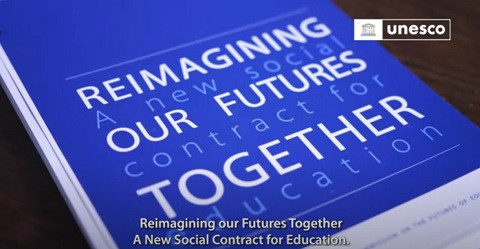 UNESCO Futures of Education Report Explained by Members of the International Commission Année de publication: 2022 Auteur institutionnel: UNESCO Initiated by UNESCO, the International Commission on the Futures of Education has prepared a new report on how education can best shape the future of humanity and the planet. In this video, members of the Commission and its chair explain the main recommendations and defining features of their report, Reimagining our futures together: A new social contract for education. The report is part of UNESCO’s Futures of Education initiative which aims to rethink education and shape the future. The initiative is catalyzing a global debate on how knowledge, education and learning need to be reimagined in a world of increasing complexity, uncertainty, and precarity.