
Ressources
Explorez une large gamme de ressources sur le GCED afin d’approfondir votre compréhension et de renforcer vos activités de recherche, de plaidoyer, d’enseignement et d’apprentissage.
2,813 résultats trouvés
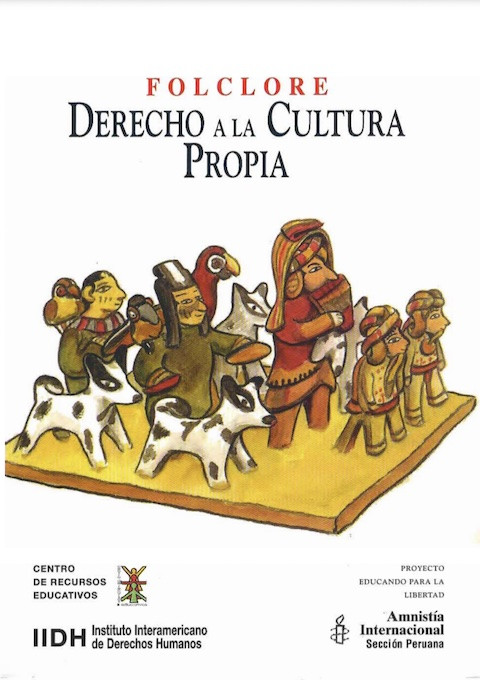 Folclore: Derecho a la cultura; Guía para el docente Année de publication: 1997 Auteur: William Tamayo Ángeles Auteur institutionnel: Instituto Interamericano de Derechos Humanos (IIDH) La cultura popular tradicional que llamamos folclore resume siglos de nuestra historia y el arte festivo que la expresa, a través de la danza, la música y la palabra, es portador de una sensibilidad que por mucho tiempo se intentó extinguir en el país, pese a constituir uno de aquellos rasgos que mejor nos identifica ante el mundo y a ser reconocido como vínculo nacionalizante de los peruanos. En este documento se ofrece una guía para que profesores y alumnos conozcan algo más de esta expresión de la vida continua de nuestro pueblo e identifiquen en ella su propio esfuerzo cotidiano de liberación y superación.
  Paulo Freire's Contributions to Intercultural Education: A Case Study in Compulsory Secondary Education (Ibero-American Journal of Education; vol.76) Année de publication: 2018 Auteur: Maria Verdeja Muniz | Xose Anton Gonzalez Riano The general purpose of this research is to synthesize the contributions of Paulo Freire's pedagogy to intercultural education and study the possibilities of application to the educational system. The research is raised from a qualitative perspective and completed with a case study. At first, an analysis of a selected part of Freire's written work was carried out and the basic lines of what his intercultural sensitivity would be established. In another level of analysis, a study of the subjects of the ESO curriculum in Asturias in its intercultural dimension is carried out. The case study in the educational center shows that, in order to carry out true intercultural education proposals, it would be necessary for there to be some previous conditions that are described in the article. Aportaciones de Paulo Freire a la educación intercultural: Un estudio de caso en la Educación Secundaria Obligatoria (Revista Iberoamericana De Educación; vol.76) Année de publication: 2018 Auteur: Maria Verdeja Muniz | Xose Anton Gonzalez Riano La finalidad general de esta investigación es sintetizar las aportaciones de la pedagogía de Paulo Freire a la educación intercultural y estudiar las posibilidades de aplicación al sistema educativo. La investigación está planteada desde una perspectiva cualitativa y completada con un estudio de caso. En un primer momento se realizó un análisis de una parte seleccionada de la obra escrita de Freire y se establecen las líneas básicas de lo que sería su sensibilidad intercultural. En otro plano de análisis se realiza un estudio de las materias del currículo de la ESO en Asturias en su dimensión intercultural. El estudio de caso en el centro educativo pone de manifiesto que, para llevar a cabo verdaderas propuestas de educación intercultural, sería necesario que existieran unas condiciones previas que se describen en el artículo.
  Anti-racist, Inclusive and Rights Education in the Development of Professional Competencies for School Staff and Student Abilities (Éthique en éducation et en formation; no. 3) Année de publication: 2017 Auteur: Maryse Potvin Auteur institutionnel: Université du Québec à Montréal (UQAM) This article examines the differences and convergences that emerge from the major theoretical trends in the area of education for ethnocultural (inter/multicultural, anti-racist/critical, civic, inclusive) diversity regarding the professional skills school personnel must acquire to achieve the major objectives of equity, effectiveness of rights, harmonious living and the development of students’ capabilities. The article is based on a review of the national and international literature, which aimed to identify the skills (knowledge, expertise, soft skills) that are essential for knowing how to act in the context of diversity and that, according to theoreticians, should be developed in all teacher training programs. These issues are discussed from a crosscutting perspective rather than from a disciplinary angle related to the Quebec curriculum (ethics and religious culture, history and education for citizenship). The article begins by providing some background on these trends in order to identify their common objectives and convergence toward an integrated and inclusive global approach. It then examines two objectives supported by all theoreticians in terms of the core professional skills needed by school personnel for developing students’ capabilities: 1) taking into account the realities, needs and rights of students, particularly those in minority or vulnerable groups, and 2) preparing students to live together in a pluralistic and democratic society. As well, it identifies the key challenges involved in the consideration and implementation of these two goals. L’éducation antiraciste, inclusive et aux droits dans le développement des compétences professionnelles du personnel scolaire et des capabilités des élèves (Éthique en éducation et en formation; no. 3) Année de publication: 2017 Auteur: Maryse Potvin Auteur institutionnel: Université du Québec à Montréal (UQAM) Cet article porte un regard sur les différences et convergences qui se dégagent des grands courants théoriques dans le champ de l’éducation à la diversité ethnoculturelle (inter/multiculturel, antiraciste /critique, civique, inclusif) quant aux compétences professionnelles à développer par le personnel scolaire pour atteindre les grandes finalités de l’équité, de l’effectivité des droits, du vivre-ensemble et du développement des capabilités des élèves. L’article s’appuie sur une revue de la littérature nationale et internationale, qui visait à dégager les éléments de compétences (savoirs, savoir-faire, savoir-être essentiels) pour savoir-agir en contexte de diversité, et qui, selon les théoriciens, devraient être développés dans tous les programmes de formation à l’enseignement. Il n’aborde pas ces enjeux sous un angle disciplinaire, lié au curriculum québécois (éthique et culture religieuse, histoire et éducation à la citoyenneté), mais dans une perspective transversale. L’article présente d’abord quelques fondements de ces courants afin de dégager leurs objectifs communs et leur convergence vers une approche globale et inclusive intégrée. Il porte ensuite une attention particulière aux deux finalités centrales qui font consensus parmi les théoriciens et qui sont au coeur des compétences professionnelles du personnel scolaire pour développer les capabilités des élèves : 1) prendre en compte les réalités, besoins et droits des élèves, particulièrement ceux des groupes minoritaires ou vulnérables, pour développer leurs capabilités, et 2) les préparer à vivre ensemble dans une société pluraliste et démocratique. Il dégage aussi les principaux défis liés à la prise en compte et à la mise en oeuvre de ces deux finalités.
 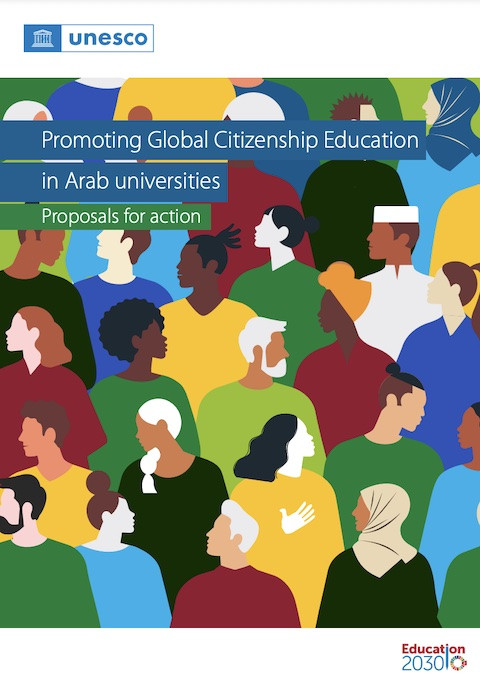 تعزيز التربية على المواطنة العالمية في الجامعات العربية : الإجراءات المقترحة Année de publication: 2022 Auteur: Ellen Middaugh Auteur institutionnel: UNESCO Beirut "يمكن أن يؤدي التعليم العالي دورًا مهما في تعزيز التربية على المواطنة العالمية. فهو يوفر الحافز والفرصة والدعم للشباب ليتعرفوا إلى القضايا العالمية، ويتفاعلوا مع ثقافات متنوعة، ويمارسوا مهارات المواطنة العالمية في سن الاستكشاف الذاتي والاجتماعي والسياسي والمهني. ويمكن للجامعات أن تشجع الطالب على حمل هذه المهارات والقيم معهم عندما يكبرون لمشاركتها مع الآخرين ومواصلة هذه العملية طوال حياتهم. وتلتزم الجامعات العربية بشدة بالتربية على المواطنة العالمية، إلا أن طريقة تنفيذها للمواطنة العالمية بشكل ملموس بين الاجتماعي العاطفي والسلوكي - اللذين تحتاج إلى التحسين. فالمجال المعرفي للتعلم يحظى باهتمام أكبر من المجال يساهمان اكثر في المشاركة التحويلية الفعالة. واستنادًا إلى الممارسات الحالية، توفر هذه الوثيقة مقترحات ملموسة للجامعات واألوساط األكاديمية والطالب حول كيفية تعميم المواطنة العالمية وقيمها بشكل أفضل من خالل التعليم العالي في المنطقة العربية." Promoting Global Citizenship Education in Arab Universities: Proposals for Action Année de publication: 2022 Auteur: Ellen Middaugh Auteur institutionnel: UNESCO Beirut Higher education can play an important role in promoting Global Citizenship Education (GCED). It provides incentive, opportunity and support for young adults to learn about global issues, engage across diverse cultures, and practice the skills of GCED at a time of intensive personal, social, political and career exploration. Furthermore, universities can encourage students to take these skills and values into their adult lives to share with others and continue the lifelong process. Arab universities are very committed to GCED. However, the way GCED in concretely implemented needs improvement. While greater attention is paid to the cognitive domain of learning, the socio-emotional and behavioral domains of learning – which best lead to effective transformative engagement – tend to be left behind. Based on existing practices, this document provides universities, academia and students with concrete proposals on how to better mainstream GCED and its values, through higher education, in the Arab region.
  Sociolinguistic and Intercultural Training for SFL Teachers in the Context of Linguistic Diversity: A Case Study on the Brazil-Bolivia Border(Revista Iberoamericana De Educación; vol.81, no.1) Année de publication: 2019 Auteur: Vivianne Ferreira Martins Sociolinguistically complex contexts, such as border areas with languages in contact, demand language teaching in accordance with their specificities. In this sense, the study is a sociolinguistic and intercultural teacher training proposal for teachers of Spanish as a foreign language (SFL) from the Brazilian-Bolivian border, specifically the Brazilian city of Cáceres. The languages in the area, Portuguese, Spanish, Portuñol and indigenous languages, occupy hierarchical positions that respond to relations of inequality and prejudice between individuals of different ethnic origins or different nationalities. The proposed training can be an important factor for the development of interculturality and multilingualism in the region and, in addition, can serve as a model for the teaching of foreign languages in other contexts of linguistic diversity. Formación sociolingüística e intercultural para profesores de ELE en contexto de diversidad lingüística: un estudio de caso en la frontera Brasil-Bolivia Année de publication: 2019 Auteur: Vivianne Ferreira Martins Los contextos sociolingüísticamente complejos, como son las zonas de frontera con lenguas en contacto, demandan una enseñanza de lenguas acorde con sus especificidades. En este sentido, el estudio es una propuesta de formación docente de base sociolingüística e intercultural para los profesores de español como lengua extranjera (ELE) de la frontera de Brasil con Bolivia, en concreto la ciudad brasileña de Cáceres. Las lenguas en la zona, el portugués, el español, el portuñol y lenguas indígenas, ocupan posiciones jerárquicas que responden a las relaciones de desigualdad y prejuicios entre los individuos de diferentes orígenes étnicos o de diferentes nacionalidades. La formación propuesta puede ser un importante factor para el desarrollo de la interculturalidad y del plurilingüismo en la región y, además, puede servir como modelo para la enseñanza de lenguas extranjeras en otros contextos de diversidad lingüística.
  From Sustainable Development to Integrated Participation: Ecopedagogies as Decolonial Options (Revista Iberoamericana De Educación; vol.73) Année de publication: 2017 Auteur: Elson Santos SilvaCarvalho | Dernival Venâncio Ramos Junior In this article, reflections will be presented on the causes and effects of the incorporation of alternative logics of consumption (which are summarized in sustainability) perceived in propositions of formal education that emphasize the historical relationships of appropriation of nature. Even realigned with an Amerindian perspective of coexistence such as Good Living, the matrix relationship of formal education in modern times - material, predatory and individualistic - prevails in formats, institutional missions and prosperity commitments. The thesis of the possible emergence, through the new dimensions of ecopedagogy, of an integrated participation at the expense of vices and discourses related to sustainable development is sustained, recognizing that formal education requires a complex and adaptive system, not only the intentions of managers for your process.