
Ressources
Explorez une large gamme de ressources sur le GCED afin d’approfondir votre compréhension et de renforcer vos activités de recherche, de plaidoyer, d’enseignement et d’apprentissage.
2,813 résultats trouvés
 Декларация молодежи о трансформации образования Année de publication: 2022 Auteur institutionnel: United Nations (UN) Принята Молодежная декларация о преобразовании образования. Это документ, подготовленный молодыми людьми со всего мира и представленный в пятницу Генеральному секретарю ООН.Эта декларация представляет собой вклад молодежи в Саммит по преобразованию образования 2022 года. В нем подчеркивается коллективная приверженность молодых людей преобразованию образования. 教育变革青年宣言 Année de publication: 2022 Auteur institutionnel: United Nations (UN) 《关于教育转型的青年宣言》已经发布。 这是一份由来自世界各地的年轻人准备的文件,并于周五提交给联合国秘书长。该宣言是青年对 2022 年转型教育峰会的投入。它突出了年轻人对转型教育的集体承诺。
  Some Features of the Gender Orientation of the Social Policy of the Central Asian Countries Année de publication: 2017 Auteur: A.D. Bekebaeva The article examines the gender-oriented social policy of Central Asian countries, its origins, features and disadvantages. Special attention is paid to the common Soviet past of the countries studied, since this period left a major imprint on the current state of gender issues in the region. Некоторые особенности гендерной ориентации социальной политики стран центральной Азии Année de publication: 2017 Auteur: A.D. Bekebaeva В статье рассматривается гендерно ориентированная социальная политика стран Центрльной Азии, ее истоки, особенности и недостатки. особое внимание уделено общему советскому прошлому исследуемых стран, так как этот период наложил основной отпечаток на современное состояние гендерных проблем в регионе.
 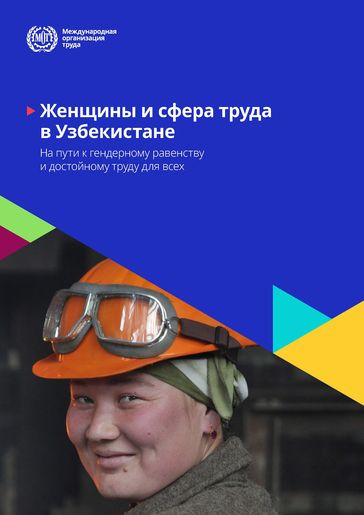 Women and the World of Work in Uzbekistan. Towards Gender Equality and Decent Work for All Année de publication: 2021 Auteur: Mansour Omeira Auteur institutionnel: International Labour Organization (ILO) The report is a response to the need for a comprehensive analysis of the situation of women in the labor sphere of Uzbekistan. The purpose of the report is to provide information for the development of policies, legislation, and initiatives aimed at the development and promotion of decent work for all women and men. Женщины и сфера труда в Узбекистане: На пути к гендерному равенству и достойному труду для всех Année de publication: 2021 Auteur: Mansour Omeira Auteur institutionnel: International Labour Organization (ILO) Доклад является ответом на необходимость всестороннего анализа положения женщин в сфере труда Узбекистана. Цель доклада – предоставление информации для разработки политики, законодательства и инициатив, направленных на развитие и продвижение достойного труда для всех женщин и мужчин.
  Juvenile Justice: Analysis of Legislation and Judicial Practice of the Republic of Uzbekistan Année de publication: 2015 Auteur institutionnel: UNICEF Uzbekistan This publication was prepared within the framework of cooperation between UNICEF, the Supreme Court of the Republic of Uzbekistan, and the Research Center on Democratization and Liberalization of Judicial Legislation and Ensuring the Independence of the Judicial System under the Supreme Court of the Republic of Uzbekistan. This report contains an analysis of the current legislation and judicial practice on the administration of juvenile justice for compliance with international standards and best practices. Правосудие в отношении несовершеннолетних: Анализ законодательства и судебной практики Республики Узбекистан Année de publication: 2015 Auteur institutionnel: UNICEF Uzbekistan Данная публикация подготовлена в рамках сотрудничества между ЮНИСЕФ, Верховным судом Республики Узбекистан и Исследовательским центром по демократизации и либерализации судебного законодательства и обеспечению независимости судебной системы при Верховном суде Республики Узбекистан. Данный отчет содержит анализ действующего законодательства и судебной практики по отправлению правосудия в отношении несовершеннолетних на предмет соответствия международным стандартам и передовой практике.
  Interculturality of Disability Situations: From Designation to Recognition Année de publication: 2021 Auteur: Geneviève Piérart | Mélissa Arneton Auteur institutionnel: Alterstice Alterstice has been offering, for ten years, a unique space for scientific production responding to socially acute questions related to the consideration of inter-individual, social, and societal diversity. This thematic issue is linked to the creation in 2017 of a thematic axis within the International Association for Intercultural Research (ARIC). This network has enabled researchers to organize symposia questioning disability, intersectionality, and how the work carried out in more mainstream currents take into account or not the intercultural dimension to study the paradigm shift of disability. Fifteen years after the launch of the International Convention on the Rights of Persons with Disabilities (CRPD) marks a societal desire to renew living together at the international level as well as at the national level for the countries that have ratified it, as revealed by the work scientific studies carried out from an intercultural perspective. After an introduction to the notions of disability and interculturality, which also refer to designation processes, which may or may not be crossed and compared in scientific analysis. From a multidisciplinary perspective, different angles relating to the diversity of representations of disability and the issues it raises in situations of contact between cultures are discussed. Interculturalité des situations de handicap: De la désignation à la reconnaissance Année de publication: 2021 Auteur: Geneviève Piérart | Mélissa Arneton Auteur institutionnel: Alterstice Alterstice propose depuis dix ans un espace unique de production scientifique répondant à des questions socialement aiguës liées à la prise en compte de la diversité interindividuelle, sociale et sociétale. Ce numéro thématique est lié à la création en 2017 d'un axe thématique au sein de l'Association internationale pour la recherche interculturelle (ARIC). Ce réseau a permis aux chercheurs d'organiser des colloques questionnant le handicap, l'intersectionnalité, et comment les travaux menés dans des courants plus mainstream prennent en compte ou non la dimension interculturelle pour étudier le changement de paradigme du handicap. Quinze ans après le lancement de la Convention Internationale des Droits des Personnes Handicapées (CDPH) marque une volonté sociétale de renouveler le vivre ensemble au niveau international comme au niveau national pour les pays qui l'ont ratifiée, comme le révèle la travaux d'études scientifiques menées dans une perspective interculturelle. Après une introduction aux notions de handicap et d'interculturalité, qui renvoient également à des processus de désignation, qui peuvent ou non être croisés et comparés dans l'analyse scientifique. Dans une perspective pluridisciplinaire, différents angles relatifs à la diversité des représentations du handicap et aux enjeux qu'il soulève dans les situations de contact entre cultures sont abordés.