
Ressources
Explorez une large gamme de ressources sur le GCED afin d’approfondir votre compréhension et de renforcer vos activités de recherche, de plaidoyer, d’enseignement et d’apprentissage.
2,813 résultats trouvés
 The Role of the Palestinian Political Organizations in Developing the Political Awareness of University Students in Gaza Strip Année de publication: 2010 Auteur: الضاني، شيرين حربي جميل Auteur institutionnel: Al-Azhar University (Gaza) The purpose of this study is to investigate the role of the Palestinian political organizations in developing the political awareness of university students in the Gaza Strip using a field study on a sample of university students (Al-Azhar University, The Islamic University, Al- Aqsa University, and Al-Quds Open University). The students answered some questions that explored their political awareness and knowledge of some public issues, events and political figures, as well their relation to the national identity, political organizations, the concepts of democracy, tolerance, pluralism, political participation and the role of regulatory activities at universities in promoting political awareness of their students. The study used two methods of research and analysis: 1) historical research method.. and 2) a descriptive analytical method... A questionnaire was used... (plus) statistical methods to discuss and analyze the results... The population of study (60 male, 112 female) were bachelor students at the main universities in the Gaza Strip. The study sample was 600 of the study population... Main findings of the study: 1) Low level of public political awareness. 2) High level of political awareness by female students compared to male students. 3) High percentage of public political knowledge by students between 28-32 years compared to other age groups. 4) Students at in The Islamic and Al-Quds Open Universities have a higher level of public political knowledge... 5) Students at arts colleges have higher public political knowledge... but education college students showed lower public political knowledge... 12) National affiliation showed a low level and the political organizations showed a decline in promoting political awareness and national affiliation and in developing the national identity.
  التسامح والانتقام وعلاقتهما بسمات الشخصية لدى عينة من طلبة الجامعة Année de publication: 2017 Auteur: نوره، سعد Auteur institutionnel: Islamic University of Gaza هدف البحث إلى التعرف على طبيعة العلاقة بين كل من التسامح والانتقام وسمات الشخصية لدى طلبة الجامعة، كذلك الكشف عن الفروق في التسامح والانتقام بين الذكور والإناث. أجري البحث على عينة مكونة من (324) طالب وطالبة من طلبة جامعة الامام محمد بن سعود الاسلامية، وباستخدام مقياس سمة التسامح (تعريب الباحثة) ومقياس الانتقام (تعريب الباحثة) ومقياس العوامل الخمسة الكبرى للشخصية تعريب جرادات وأبو غزال(2010). أشارت النتائج إلى وجود ارتباط سالب ودال إحصائياً بين التسامح والانتقام، كما ظهرت ارتباطات موجبة ودالة إحصائياً بين التسامح وكل من الانبساطية، والمقبولية، ويقظة الضمير، والانفتاح على الخبرة، في حين كان الارتباط سالباً ودالاً إحصائياً بين التسامح والعصابية، كما وجدت علاقة سالبة ودالة إحصائياً بين الانتقام وكل من الانبساطية، ويقظة الضمير، والانفتاح على الخبرة، والمقبولية، وعلاقة موجبة ودالة إحصائياً بين الانتقام والعصابية. كما ظهرت فروق بين الجنسين في التسامح وكانت الفروق باتجاه الإناث، في حين كانت الفروق في الانتقام بين الجنسين دالة وباتجاه الذكور، وتمت مناقشة النتائج في ضوء الإطار النظري والدراسات السابقة. Forgiveness, Revenge and their Relationship with Personality Traits among Sample of University Students Année de publication: 2017 Auteur: نوره، سعد Auteur institutionnel: Islamic University of Gaza The current study aims to determine the relationship between forgiveness, revenge and personality traits among university students, and the differences regarding forgiveness and vengeance among males and females. The Study Sample consisted of (324) of university students (160 males, 164 female). The researcher used the forgiveness trait scale, vengeance scale and the big five factors of personality inventory.The results showed that there is significant negative correlation between forgiveness and revenge, and positive correlation between forgiveness, agreeableness, openness to experience, extroversion and conscientiousness, and they showed negative correlation with neuroticism. There is a significant negative coloration between revenge and agreeableness, openness to experience, extroversion and conscientiousness, and positive corrolation with neuroticism. The results indicated that there is a significant different between males and females regarding forgiveness and revenge.
  درجة امتلاك طلبة جامعة القصيم لثقافة الحوار، ودورها في تعزيز التسامح : دراسة ميدانية على عينة من طلبة جامعة القصيم Année de publication: 2017 Auteur: الصمادي، هند سمعان Auteur institutionnel: International Group for Consulting and Training (IGCT) هدفت الدراسة إلى التعرف على درجة امتلاك طلبة القصيم لثقافة الحوار ودورها في تعزيز التسامح من وجهة نظر طلبة جامعة القصيم، ولتحقيق هدف الدراسة قامت الباحثة بتصميم استبانة تكونت من (48) فقرة، تم تطبيقها على عينة الدراسة المكونة من (375) طالبا وطالبة تم اختيارهم بالطريقة الطبقية. استخدمت الباحثة المنهج الوصفي التحليلي. أسفرت النتائج عن أن درجة امتلاك طلبة جامعة القصيم لثقافة الحوار جاءت بدرجة متوسطة، وعدم وجود فروق دالة إحصائيا لأثر متغير الجنس، ووجود فروق دالة إحصائيا تعزى لأثر السنة الدراسية ولصالح السنة الرابعة، ولمتغير التخصص ولصالح تخصص العلوم، وأظهرت النتائج أن دور ثقافة الحوار في تعزيز التسامح جاء بدرجة متوسطة، وجاء مجال التسامح الفكري في المرتبة الأولى، بينما جاء مجال التسامح الاجتماعي في المرتبة الأخيرة، وعدم وجود فروق دالة إحصائيا تعزى لأثر متغير الجنس في مجالات الأداة، ووجود فروق دالة إحصائيا تعزى لأثر السنة الدراسية ولصالح السنة الرابعة في مجالي التسامح الديني والسياسي، ولمتغير التخصص ولصالح تخصص العلوم في كل المجالات باستثناء مجال التسامح الاجتماعي، وفي الدرجة الكلية. وأوصت الباحثة بإجراء المزيد من الدراسات في هذا المجال. The Extent to which the Students of Qassim University Posses the Dialogue Culture and Its Role in Promoting Tolerance Année de publication: 2017 Auteur: الصمادي، هند سمعان Auteur institutionnel: International Group for Consulting and Training (IGCT) The current study aimed to identify the extent to which the students of Qassim University possess the dialogue culture and its role in promoting tolerance from their point of view. To achieve the aim of the study, the researcher developed a questionnaire which was applied on a stratified study sample.The researcher adopted the analytical descriptive approach. The outcomes showed that the degree of possessing the culture of dialogue among the students was average with an arithmetic mean،and there were no statistically significant differences attributed to gender variable. In addition, the findings detected that there were statistically significant differences attributed to study year and to the discipline variable and that the role of dialogue culture in promoting tolerance was average with an arithmetic mean.The intellectual tolerance had the highest mean, whereas the social tolerance had the lowest mean. Furthermore, the results revealed that there were no statistically significant differences attributed to gender variable, and that there were statistically significant differences attributed to the study year variable. The researcher recommends that more studies should be conducted in the domain of social tolerance.
  دور التربية الاسلامية في مواجهة العصبية في زمن العولمة الاجتماعية Année de publication: 2012 Auteur: آل جحراف، عايض بن محمد بن عايض Auteur institutionnel: Umm Al-Qura University منهج الدراسة: المنهج الوصفي. الفصل الأول:الإطار العام للدراسة. الثاني: العصبية مفهومها، أنواعها، أسبابها، آثارها السلبية. الثالث: موقف الإسلام من العصبية - لمحة تاريخية لظهور العصبية عند الأمم، موقف القرآن الكريم من العصبية وموقف السنة النبوية. الرابع: موقف العولمة الاجتماعية من العصبية - ظهور العولمة عمومًا والعولمة الاجتماعية خصوصًا، الدعوة إلى الامتزاج الاجتماعي والعوامل المؤثرة على تفعيل مؤسسات العولمة الاجتماعية وآثارها على الدول النامية والفقيرة. الخامس: المبادئ التربوية الإسلامية التي دعت إلى نبذ العصبية ومنها مبدأ المساواة، مبدأ المصير والجزاء الواحد، مبدأ حقوق الإنسان وكرامته، مبدأ التسامح والإحسان، مبدأ العدل وعدم الظلم، مبدأ الوسطية والاعتدال. السادس: دور التربية الإسلامية في مواجهة العصبية من خلال المؤسسات التربوية - الأسرة، المسجد، المدرسة، وسائل الإعلام. السابع: الاستخلاصات العامة والتوصيات والمقترحات. أهم نتائج الدراسة: 1) وجود آثار خطيرة للعصبية تؤثر على التنشئة الصالحة كالجمود وحب التقليد والحقد، والسخرية، والأنانية، وتصنيف الناس على أساس تكبر واحتقار، وما يترتب عليه من خلافات وحروب وتأثر مما يمزق جسد الأمة الإسلامية. 2) قيام مؤسسات العولمة الاجتماعية على هدف خدمة الإنسان، والدفاع عن حقوقه يتطلب احترام ثقافات وعادات وتقاليد كل بلد أو عرق أو قومية وعدم فرض مبدأ القوة والفكرة الواحدة. 3) نشر ثقافة المساواة وحقوق الإنسان والتسامح والعدل والوسطية والاعتدال والمصير والجزاء الواحد بين أفراد المجتمع منذ الصغر لكي يتربى الفرد ويشرب تلك المبادئ. 4) تلعب القدوة الحسنة والحوار الفعال في الأسرة، والمسجد، والمدرسة ووسائل الإعلام دورا فعالا في توجيه نفوس أبناء المجتمع نحو مجتمع مترابط ينبذ العصبية وآثارها السيئة. 5) تعلم مبادئ الاحترام للآخرين وتعزيزها في نفوس الأبناء يولد شخصية متوازنة تفخر بانتمائها لأمتها، وتحترم الآخرين ولا تتعدى عليهم ويمكن للمدرسة القيام بذلك من خلال التنوع في طرائق التدريس والتركيز على الأنشطة الجماعية الطلابية وتفعيلها داخل وخارج المدرسة. أهم توصيات الدراسة: 1) قيام المؤسسات الدينية، والثقافية، والإعلامية، والتربوية بدورها الفعال في تصحيح فكر المجتمع، واستخدام أساليب جذابة وفعالة لمواجهة العصبية. 2) على الدول الإسلامية القيام بعمل منظمات غير حكومية تتابع وتساعد في حل علاج مشكلات العصبية بين أفراد الأمة الإسلامية. 3) على الجامعات في المجتمعات القيام بإنشاء كراس علمية تعنى بالبحوث التي تدرس ظواهر العصبية، وتساهم في تزويد المنظمات والمؤسسات المتابعة لظاهرة العصبية بالوسائل والطرق والحلول. أهم مقترحات الدراسة: يقترح الباحث عمل دراسات عن العصبية ضد المرأة، وفي داخل المدرسة بين المعلمين أو الطلاب، وكذلك دراسة أساليب التربية النبوية في مواجهة العصبية في المجتمع المدني، ودراسة الاختلاف والتنوع البشري وربطه بالتربية الإسلامية، ودراسة لبعض المقررات المدرسة ومدى تناولها لموضوع العصبية من وجهة نظر الخبراء، وعمل دراسة عن القبلية وآثارها داخل المدرسة الثانوية في منطقة عسير باعتبارها منطقة تتميز بالتنوع القبلي. The Role of Islamic Education in Countering Tribalism in the Age of Social Globalization Année de publication: 2012 Auteur: آل جحراف، عايض بن محمد بن عايض Auteur institutionnel: Umm Al-Qura University Methodology: descriptive approach. Chapter I: A general framework. Chapter II: Tribalism: concept, types, causes and negative effects. Chapter III: Islam's position on tribalism - a Historical overview of the emergence of tribalism; Holy Quran’s and Sunnah’s positions; Chapter IV: Social Globalization’s Position on Tribalism - the emergence of Globalization in general and social globalization specifically; social globalization, calls for Social mixing and the factors affecting activation of social globalization institutions; The Effects of Social Globalization on the Developing and Poor Countries.Chapter V: Educational Principles that called for the rejection of tribalism”, including equality, determination and unified penalty, human rights and dignity, tolerance and philanthropy, justice and the rejection of injustice, moderation. Chapter VI: The role of Islamic Education in countering tribalism through educational institutions -the Family, the mosque, the school and the Media. Chapter VII: General conclusions and recommendations and proposals.Following the prime results and recommendations, the researcher proposes the following: “conducting studies on discrimination against women, and within school communities with regard to teachers or students, as well as studying Sunnah educational methods with regard to countering tribalism in the civil society, and studying human differences and diversity in addition to linking it to Islamic education.Also, there should be a study of some school curricula in order to examine the extent to which it addresses the issue of tribalism from the viewpoint of experts, as well as conducting a study of tribalism and its effects within the high school in Asir region as this region is characterized by tribal diversity”.
 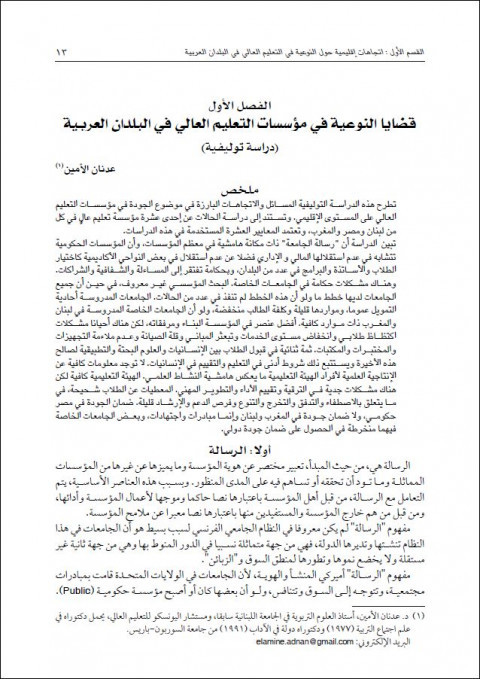 اتجاهات إقليمية حول النوعية في التعليم العالي في البلدان العربية: قضايا النوعية في مؤسسات التعليم العالي في البلدان العربية Année de publication: 2014 Auteur: الأمين،عدنان Auteur institutionnel: Lebanese Association for Educational Studies (LAES) تطرح هذه الدراسة التوليفية المسائل والاتجاهات البارزة في موضوع الجودة في مؤسسات التعليم العالي على المستوى الإقليمي. وتستند إلى دراسة الحالات عن إحدى عشرة مؤسسة تعليم عالٍ في كل من لبنان ومصر والمغرب، وتعتمد المعايير العشرة المستخدمة في هذه الدراسات. تبين الدراسة أن "رسالة الجامعة" ذات مكانة هامشية في معظم المؤسسات، وأن المؤسسات الحكومية تتشابه في عدم استقلالها المالي والإداري فضلا عن عدم استقلال في بعض النواحي الأكاديمية كاختيار الطلاب والأساتذة والبرامج في عدد من البلدان، وبحكامة تفتقر إلى المساءلة والشفافية والشراكات. وهناك مشكلات حكامة في الجامعات الخاصة. البحث المؤسسي غير معروف، في حين أن جميع الجامعات لديها خطط ما ولو أن هذه الخطط لم تنفذ في عدد من الحالات. الجامعات المدروسة أحادية التمويل عموما، ومواردها قليلة وكلفة الطالب منخفضة، ولو أن الجامعات الخاصة المدروسة في لبنان والمغرب ذات موارد كافية. أفضل عنصر في المؤسسة البناء ومرفقاته، لكن هناك أحيانا مشكلات اكتظاظ طلابي وانخفاض مستوى الخدمات وتبعثر المباني وقلة الصيانة وعدم ملاءمة التجهيزات والمختبرات والمكتبات. ثمة ثنائية في قبول الطلاب بين الإنسانيات والعلوم البحتة والتطبيقية لصالح هذه الأخيرة ويستتبع ذلك شروط أدنى في التعليم والتقييم في الإنسانيات. لا توجد معلومات كافية عن الإنتاجية العلمية لأفراد الهيئة التعليمية ما يعكس هامشية النشاط العلمي. الهيئة التعليمية كافية لكن هناك مشكلات جدية في الترقية وتقييم الأداء والتطوير المهني. المعطيات عن الطلاب شحيحة، في ما يتعلق بالاصطفاء والتدفق والتخرج والتنوع وفرص الدعم والإرشاد قليلة. ضمان الجودة في مصر حكومي، ولا ضمان جودة في المغرب ولبنان وإنما مبادرات واجتهادات، وبعض الجامعات الخاصة فيهما منخرطة في الحصول على ضمان جودة دولي. Quality Issues in Higher Education Institutions in Arab Countries: Synthesis Study Année de publication: 2014 Auteur: الأمين،عدنان Auteur institutionnel: Lebanese Association for Educational Studies (LAES) This synthesis study addresses outstanding issues and trends concerning quality in higher education institutions at the regional level. It is based on case studies from eleven higher education institutions in Lebanon, Egypt and Morocco and on the ten standards used in these studies.The study shows that "the mission of the university" has a marginal position in most institutions; that government institutions are similar in their lack of financial and administrative independence; that there is a lack of independence in some academic respects such as the selection of students, faculty and programs in a number of countries; and that governance is lacking accountability, transparency and partnerships. Indeed, there are governance problems in private universities. Institutional research is not evidently known while all universities have some relevant plans even though these plans have not been implemented in a number of cases.The universities that are under study are generally unilaterally funded, their resources are scarce and the cost per student is low, however; private universities that were subject to this study in Lebanon and Morocco have sufficient resources. The most satisfactory element of the institution is the buildings and annexes thereto.However, at times, there are problems in terms of student overpopulation, poor level of services, scattered buildings, lack of maintenance and inadequate equipment, laboratories and libraries. There is a duality in student admission between Humanities and the Physical and Applied Sciences disciplines in favor of the latter which causes lower conditions in the education and assessment of the Humanities discipline.There is not enough information about the scientific productivity of faculty members, which reflects the marginality of scientific activity. The number of faculty staff is sufficient but there are serious problems regarding their promotion, performance assessment and professional development. Data on students are scarce in terms of students’ selection, influx, graduation and diversity; and support and guidance opportunities remain scarce.Quality assurance in Egypt is a governmental responsibility and there is no such thing in Morocco and Lebanon instead there are some initiatives and attempts. Some private universities in Morocco and Lebanon are engaged in obtaining quality assurance from international bodies.
  The State of Global Education in Europe 2018 Année de publication: 2018 Auteur institutionnel: Global Education Network Europe (GENE) The State of Global Education in Europe reports on policy, strategy and funding for Global Education in European countries, based primarily on information submitted by the ministries, agencies and national coordinating bodies that participate in GENE (Global Education Network Europe). This third edition of the report identifies thematic trends and crosscutting issues and explores funding levels for Global Education across Europe. It also includes a chapter outlining some of the work done on evaluation across GENE, and concludes with a selection of highlights from the network. There are examples of national policy and practice throughout the report. This report on the State of Global Education in Europe has been developed to provide an overview of current key issues, policy priorities, funding trends and activities in Global Education in Europe. It draws on the expertise and information provided by organisations that participate in Global Education Network Europe – GENE. These comprise Ministries of Foreign Affairs, Ministries of Education, and their respective national agencies, and other bodies with responsibility for policymaking, support or coordination of Global Education in European countries.