
Ressources
Explorez une large gamme de ressources sur le GCED afin d’approfondir votre compréhension et de renforcer vos activités de recherche, de plaidoyer, d’enseignement et d’apprentissage.
1,951 résultats trouvés
 Integral Education of Sexuality: Concepts, Approaches and Competencies Année de publication: 2014 Auteur institutionnel: UNESCO Santiago The objective of this document is to understand that sexuality is an integral part of people's lives (in their different stages or ages, and in all their diversity), and that it contributes to the development of their identity and, therefore, to their development Social. It is about capacities rather than content, which must be developed in an interdisciplinary way and progressively so that people act responsibly towards themselves and with others. The document explains that the education of sexuality is closely related to understanding, reflection and discernment, and strengthens the bases for lifelong learning, preparing young people for adult life. Thus, the focus is on achieving sustainable human development and well-being.
  Developing Adult Education and Training Policies for Sustainable Development: A Case Study of the State of Kuwait Année de publication: 2017 Auteur: Sabika Hussain Bursli Auteur institutionnel: Tanta University In this article, the author presents the case of Kuwait in relation to adult education. The article analyzes the current Kuwaiti policies related adult education in light of sustainable development requirements. تطوير سياسات التعليم والتدريب لتعليم الكبار من أجل تنمية مستدامة: دراسة حالة دولة الكويت Année de publication: 2017 Auteur: Sabika Hussain Bursli Auteur institutionnel: Tanta University في هذه المقالة ، يعرض المؤلف حالة الكويت فيما يتعلق بتعليم الكبار. يحلل المقال السياسات الكويتية الحالية المتعلقة بتعليم الكبار في ضوء متطلبات التنمية المستدامة.
  일상 사례로 비추어 본 지속가능발전 실천하는 생활 속 행동수칙 7 (지속가능발전 교육자료 2호) Année de publication: 2020 Auteur institutionnel: 지속가능발전포털 | 대한민국 환경부 지속가능발전목표를 위해 우리가 일상 생활 속에서 쉽게 실천할 수 있는 행동에는 어떤 것들이 있는지 7가지 행동수칙으로 정리하였다.행동수칙1. 교통, 2. 에너지 절약, 3. 물 아껴쓰기, 4. 음식물 쓰레기 줄이기, 5. 장바구니 이용하기, 6. 분리수거하기, 7. 나무 심기
 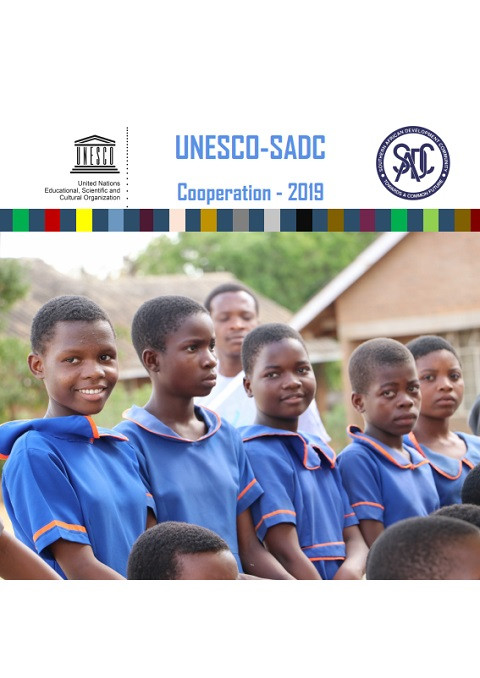 UNESCO-SADC: Cooperation 2019 Année de publication: 2020 Auteur institutionnel: UNESCO Harare UNESCO and SADC have a long standing history that culminated in the signing of a Memorandum of Understanding (MOU) in 1996. In 2017, UNESCO and SADC developed a Joint Programme of Action (JPA) which identifies concrete area of cooperation. These include education; technical and vocational education and training (TVET); youth; HIV and health education; science, technology and innovation (STI); water security, renewable energy and disaster risk management; culture; communication and information (including media for SDGs); and data for development.The purpose of this magazine is to highlight UNESCO’ work to improve education quality in the southern Africa region in partnership with SADC.
 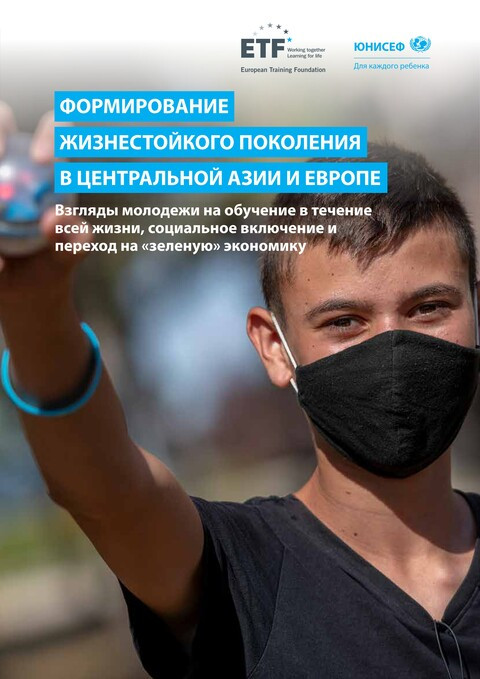 Formation of a Resilient Generation in Central Asia and Europe Année de publication: 2021 Auteur institutionnel: ЮНИСЕФ | Европейский фонд образования In this joint report of the United Nations Children's Fund (UNICEF) and the European Education Foundation (ETF) reflect the views, views and sentiments of young people in Central Asia and Europe, which will be taken into account in regional and international discussions on options for creating more effective lifelong learning systems, more inclusive communities and a more "green" society. Формирование жизнестойкого поколения в Центральной Азии и Европе Année de publication: 2021 Auteur institutionnel: ЮНИСЕФ | Европейский фонд образования В этом совместном отчете Детского фонда ООН (ЮНИСЕФ) и Европейского фонда образования (ЕФО) отражены точки зрения, взгляды и настроения молодежи в регионе ЕЦА, которые будут учитываться в региональных и международных обсуждениях вариантов создания более эффективных систем обучения в течение всей жизни, более инклюзивных сообществ и более «зеленого» общества.
  Le guide qui rend ton évènement plus éco-citoyen Auteur institutionnel: eventecocitoyen Ce guide sert à faciliter le passage à l’action de tous et toutes en proposant des conseils, outils, témoignages et ressources pratiques pour rendre les concerts et/ou festivals de Belgique plus éco-citoyens ! Pour permettre un questionnement, une remise en question en soi, qui implique ensuite des changements de comportements. Ici on vous donne des conseils/trucs et astuces mais aussi des ressources pour vous permettre de réfléchir autrement, d’agrandir notre angle de vue. This guide serves: To help everyone take action by offering advice, tools, testimonials and practical resources to make Belgium's concerts and/or festivals more eco-citizen! To enable questioning, self-questioning, which then implies changes in behavior. Here we give you tips and tricks, but also resources to help you think differently, to widen our angle of vision.
  Calendrier des événements du développement durable 2023-2024 Année de publication: 2023 Auteur: Matthieu Remblière Auteur institutionnel: Académie de Versailles Ce calendrier met en lumières les dates et les journées nationales, européennes et mondiales en rapport avec le développement durable. This calendar highlights national, European and international dates and days related to sustainable development.
 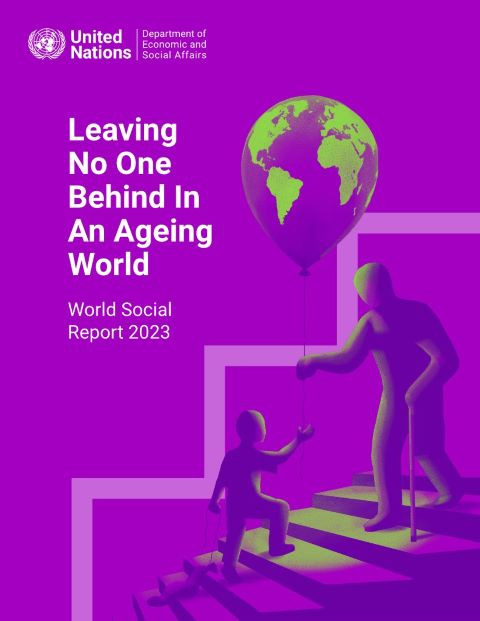 World Social Report 2023 : Leaving No One Behind in an Ageing World Année de publication: 2023 Auteur institutionnel: UN. Department of Economic and Social Affairs (UN. DESA) Population ageing is a defining global trend of our time. People are living longer, and more are older than ever before. Spectacular improvements in health and survival and reductions in fertility have driven this momentous shift, which has begun or is expected to begin soon in all countries and areas. This change brings both challenges and opportunities as countries strive to achieve the Sustainable Development Goals (SDGs). In 2022, the world marked the twentieth anniversary of the adoption of the Madrid International Plan of Action on Ageing. To commemorate this landmark, the World Social Report 2023 explores the economic and social implications of the ageing of the human population. It builds on the Plan of Action’s framework for national policies to create equitable, inclusive societies for people of all ages, providing recommendations to put the rights and well-being of older persons at the centre, across the life course. Population ageing is an inevitable result of the demographic transition towards longer lives and smaller families. While the shift towards older populations is largely irreversible, collective actions and policy decisions shape its path and consequences. Postponing critical measures that allow societies to benefit from and adapt to population ageing would impose high social, economic, fiscal and health-related costs, for both current and future generations. By contrast, with appropriate foresight and planning, Governments can manage the challenges from population ageing while enhancing opportunities for all people to thrive and ensuring that no one is left behind. As elaborated in this report, population ageing needs to be widely understood as more than just a set of discrete concerns mainly for one group of people who have advanced beyond a given age. Ageing touches all parts of economies and societies, from health care and education to employment and taxation. Each stage of life can contribute to or detract from well-being at older ages.