
Ressources
Explorez une large gamme de ressources sur le GCED afin d’approfondir votre compréhension et de renforcer vos activités de recherche, de plaidoyer, d’enseignement et d’apprentissage.
1,951 résultats trouvés
 تقييم فعالية الدبلوماسية الرقمية في بناء العلاقات مع الجمهور من منظور العلاقات العامة الدولية دراسة حالة لاستخدام بعثة المملكة العربية السعودية الدبلوماسية لدى الولايات المتحدة والمملكة المتحدة لموقع تويتر Année de publication: 2023 Auteur: Musab Falih Al-Hasbi في العقد الأخير إزداد استخدام أدوات الدبلوماسية الرقمية ، واقترن ذلك باهتمام بحثي واضح بدراسة كافة الموضوعات المرتبطة بتوصيف وتحليل حدود الاعتماد عليها في التأثير على صورة الدولة والرأي العام الخارجي، وعلى الرغم من ذلك هناك حاجة ماسة إلى مزيد من الدراسات التي تحاول البحث بشكل أعمق في آليات وديناميات هذه المنصات الرقمية وحدود استخداماتها في مجال الدبلوماسية الرقمية. وفي هذا السياق، تسعى الدراسة الحالية إلى تقييم فعالية الدبلوماسية الرقمية في بناء العلاقات مع الجمهور من منظور العلاقات العامة الدولية، وذلك من خلال رصد وتحليل جهود البعثة الدبلوماسية للمملكة العربية السعودية في كل من الولايات المتحدة والمملكة المتحدة عبر تويتر. وقد اعتمدت الدراسة على مدخل نظري يشرح تطور مفهوم الدبلوماسية الرقمية ووظائفها المختلفة، في إطار الرؤية التي طرحها الباحثان Dodd & Collins في شكل نموذج يوضح وظائف الدبلوماسية الرقمية عبر منصات التواصل الاجتماعي، وتعد الدراسة الحالية من الدراسات الوصفية التي اعتمدت على منهج دراسة الحالة وأداة تحليل المضمون، من خلال تحليل مضمون التغريدات والتي بلغ عددها (1181) تغريدة مقسمة إلى (730) تغريدة نشرت عبر الحساب الرسمي لبعثة المملكة العربية السعودية لدى الولايات المتحدة عبر تويتر، وكذلك (451) تغريدة نشرت عبر الحساب الرسمي لبعثة المملكة العربية السعودية لدى المملكة المتحدة. وقد خرجت الدراسة بالعديد من النتائج أهمها ارتباط أهداف الدبلوماسية الرقمية السعودية عبر سياسة نشر التغريدات بعدة أهداف أبرزها الترويج لرؤية المملكة العربية السعودية 2030 في مجالات السياحة والاقتصاد والطاقة، حيث جاء هذا الهدف في الترتيب الأول بين أهداف اتصالات الدبلوماسية الرقمية لبعثة المملكة العربية السعودية لدى كل من الولايات المتحدة والمملكة المتحدة، ثم دعم الصورة الإنسانية للمملكة العربية السعودية"، وكذلك الإقناع بوجهة نظر المملكة في القضايا المختلفة ( الدفاع عن مواقف الدولة) ، هذا بالإضافة إلى مشاركة الأحداث الوطنية المختلفة مع المواطنين المقيمين والأجانب" والتعبير عن الهوية الثقافية والخصوصية الحضارية للمملكة. ومن خلال تحليل تعليقات المستخدمين اتضح ارتباط صورة المملكة العربية السعودية لديهم بأنها دولة قوية وصاحبة رؤية وتخطط للمستقبل، كما أن لديها بعد إنساني في التعامل مع القضايا التي تخص الدول التي يعاني مواطنوها من صراعات وحروب، كما أنها تمتلك خصوصية ثقافية وهي دولة منفتحة على الأخرين ومتصلة بمواطنيها، وقد وظف المستخدمون عدة مفردات للدلالة على هذه الصورة.
  Cartoonothèque Auteur institutionnel: Cartooning for Peace Grâce à la contribution quotidienne de ses 280 membres dessinateurs de presse, originaires de 74 pays à travers le monde, Cartooning for Peace dispose d’une remarquable collection de dessins de presse qui offre une pluralité de perspectives sur les événements internationaux au fil des années.Les 10 galeries thématiques présentent un petit échantillon de cette « cartoonothèque » qui permet à l’association de créer ses expositions, ses outils pédagogiques et de fournir ses partenaires médias, mettant ainsi le dessin de presse à la disposition d’une diversité de publics (grand public, institutions, élèves et étudiants, jeunes sous main de justice, prisonniers, professionnels de l’éducation, journalistes, dessinateurs, etc). Thanks to the daily contribution of its 280 member press cartoonists, from 74 countries around the world, Cartooning for Peace has a remarkable collection of press cartoons that offers a plurality of perspectives on international events over the years.The 10 thematic galleries below present a small sample of this “cartoon library” which allows the organisation to create its exhibitions, its educational tools and to provide its media partners, making press cartoons available for a diversity of audiences (general public, institutions, pupils and students, young people in custody, prisoners, education professionals, journalists, cartoonists etc).
  Parents dans un monde d'écrans. Petit guide à destination des parents pour accompagner leurs enfants sur les écrans Année de publication: 2022 Auteur: Guillaume Jegousse | Sylvain Bedouet-Lallour | Laurent Pommereuil Auteur institutionnel: Associations Douar Nevez et Défis Difficile de gérer les écrans à la maison !Surtout quand ils sont portables etque la chambre est le lieu privilégié de l’enfantou de l’adolescent !A travers ce petit guide, les associations Douar Nevez et DéfiS donnent quelques conseils qui permettrontà chaque parent d’accompagner ses enfantspour un usage responsable des nouvellestechnologies numériques. It's hard to manage screens at home!Especially when they're portable and the bedroom is the place where the child's or teenager's spends most of his/her time.With this little guide, the Douar Nevez and DéfiS ngo's give a few tips to help parents help their children for responsible use of new digital technologies.
  L’éducation aux médias au service de l’éducation à la citoyenneté mondiale Boîte à outils pour les multiplicateurs du travail de jeunesse Année de publication: 2022 Auteur institutionnel: Conseil de l’Europe Ce kit à outils propose une approche intégrée de l’éducation aux médias dans le contexte de l’éducation à la citoyenneté mondiale. Il explore un ensemble d’activités axées sur l’analyse critique et la production de messages médiatiques, l’analyse des algorithmes, la participation active dans les sociétés, le maintien de la vie privée, le maintien du bien-être et la gestion de l’e-identité. cette boîte à outils s’adresse aux éducateurs et aux multiplicateurs du travail de jeunesse. Les activités et fiches d’information proposées, conçues pour des contextes d’apprentissage non formel, peuvent également se prêter à une exploitation dans les environnements scolaires. En effet, la boîte à outils intègre les avancées les plus récentes en matière d’éducation à la citoyenneté mondiale, d’éducation aux médias et d’éducation à la citoyenneté numérique, qui sont susceptibles d’enrichir de façon fort utile les programmes scolaires officiels. Les activités pratiques ici réunies s’inscrivent dans le Cadre des compétences pour une culture de la démocratie et de l’approche des droits humains que défend le Conseil de l’Europe. En élargissant la portée de l’éducation à la citoyenneté mondiale avec des éléments d’éducation aux médias, l’éducation à la citoyenneté mondiale devient un outil plus efficace contribuant à la réalisation des objectifs de développement durable de l’Agenda 2030 des Nations Unies. This toolkit offers an integrated approach to media literacy in the context of global citizenship education. It explores a range of activities focusing on critical analysis and production of media messages, analysis of algorithms, active participation in societies, maintaining privacy, maintaining well-being and managing e-identity. This toolbox is aimed at educators and youth work multipliers. The proposed activities and information sheets, designed for non-formal learning contexts, can also be used in school environments. Indeed, the toolbox incorporates the most recent advances in global citizenship education, Media Literacy and digital citizenship education, which are likely to enrich official school curricula in very useful ways. The practical activities presented here are in line with the Council of Europe's framework of competencies for a culture of democracy and human rights. By broadening the scope of global citizenship education with elements of Media Literacy, global citizenship education becomes a more effective tool contributing to the achievement of the sustainable development goals of the United Nations Agenda 2030.
 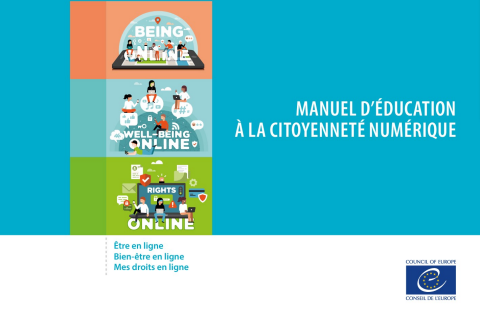 Manuel d'éducation à la citoyenneté Numérique Année de publication: 2020 Auteur: Janice Richardson | Elizabeth Milovidov Auteur institutionnel: Conseil de l'Europe Le manuel se divise en trois chapitres:Chapitre 1: Être en ligne – Quels sont nos modes d’action et d’existence en ligne? Ce chapitre propose une réponse en trois thèmes: accès et inclusion, apprentissage et créativité, éducation aux médias et à l’information.Chapitre 2: Bien-être en ligne – Comment nous sentons-nous en ligne? La réponse se décline là encore en trois thèmes: éthique et empathie, santé et bien-être, présence et communications en ligne.Chapitre 3: Mes droits en ligne – Qui rend compte de quoi sur internet ?Ce chapitre aborde quatre derniers thèmes: participation active, droits etresponsabilités, vie privée et sécurité, sensibilisation des consommateurs. The manual is divided into three chapters: Chapter 1: Being online - How do we act and exist online? This chapter proposes a response in three themes: access and inclusion, learning and creativity, media and information literacy. Chapter 2: Online well-being - How do we feel online? Again, the answer is divided into three themes: ethics and empathy, health and well-being, online presence and communications. Chapter 3: My rights online - Who is accountable for what online? This chapter covers four final themes: active participation, rights and responsibilities, privacy and security, and awareness.
  العنف ضد الأطفال في المجتمع السعودي دراسة اجتماعية من واقع إحصاءات الجمعية الوطنية لحقوق الإنسان Année de publication: 2020 Auteur: Dr. Faisal bin Abdullah Al-Ruwais The study aimed to identify the reality of violence against children in Saudi society by determining the extent of violence against children by region, identifying patterns of violence against children according to the type of abuse they are exposed to, and identifying the children most exposed to violence by gender, in addition to revealing The most common family members commit violence against children, based on statistics from the National Society for Human Rights. This study is a descriptive and analytical study. The qualitative approach was used by using the content analysis method for the total statistical data for the period from 2014-2018 AD. It has become clear from the statistical data: that the highest percentage of violence against children over the five years occurred in the Riyadh region, followed by the Makkah Al-Mukarramah region, then the Medina region, and that the highest types of abuse to which children are exposed is physical abuse, then deprivation of education, then deprivation of Identification documents indicate that the highest degree of violence against children was committed against females, then males, and that the family member who committed the most violence against children was the father, then the mother, then the stepmother.
  جريـــمة اختطـــــاف الأطفال داخل المجتمع الجزائري Année de publication: 2021 Auteur: Abish Samir يشهد المجتمع الجزائري خلال السنوات الأخيرة بروز ظواهر اجتماعية غريبة عن ثقافته وعاداته ودخيلة عن سلوكيات أفراده، أرقت مضجعه وشوهت مظهره وزرعت الشك والحيرة في نفوس أبنائه، ولعل أهمها ظاهرة اختطاف الأطفال الصغار، هذه الجريمة التي مافتئت تشهد تناميا غريبا مهددة حياة الطفولة والأسرة والمجتمع عامة ومخلفة لها انعكاسات وآثار سلبية جدا على الفرد والمجتمع ككل، وهو الأمر الذي جعل مؤسسات المجتمع تستنفر جهودها من أجل مواجهة هذه الظاهرة الهجينة والتصدي لها ومحاولة الوصول إلى آليات من شأنها تقديم حلول ناجعة لها. غير أن الوصول إلى آليات مناسبة يمكنها التصدي لظاهرة اختطاف الأطفال وتقديم حلول ناجعة لها لا يمكن أن يمر إلا عبر معرفة الأسباب والعوامل الحقيقية الكامنة وراء تفشي هذه الظاهرة داخل المجتمع الجزائري والعمل على تشخيصها تشخيصا يسمح بإيجاد هذه الآليات، لأن تقديم الدواء المناسب يتوقف دائما على التشخيص السليم والناجع. وإيمانا منا بأن الواقع هو وحده الكفيل بتقديم الصورة الحقيقية للظاهرة، فقد حاولنا العمل على تقصي أشكال وعوامل تفشي ظاهرة اختطاف الأطفال من خلال تحليل عينة من حالات الاختطاف التي وقعت داخل المجتمع الجزائري والوقوف على الأسباب التي أدت إلى حدوثها. الكلمات المفتاح : الأطفال ؛ جريمة؛ اختطاف الأطفال؛ المجتمع الجزائري. The Crime of Child Kidnapping within the Algerian Society Année de publication: 2021 Auteur: Abish Samir Algerian society has witnessed in recent years the emergence of social phenomena that are alien to its culture and customs, which have left its bed, distorted its appearance and instilled doubt and confusion in the hearts of its children. The most important of these is the phenomenon of kidnapping young children. This crime has witnessed a strange development threatening the life of children, the family and society in general. On the individual and society as a whole, which has made the institutions of the community to intensify their efforts to address this phenomenon hybrid and to address them and try to reach mechanisms that provide effective solutions to them. However, access to appropriate mechanisms that can address the phenomenon of child abduction and provide effective solutions can only go through the knowledge of the real causes and factors underlying the spread of this phenomenon within the Algerian society and work on diagnosing a diagnosis that allows the creation of these mechanisms. Sound and efficient. We believe that reality is the only one that can provide the real picture of the phenomenon. We have tried to investigate the phenomenon of child abduction by analyzing a sample of the cases of kidnapping that took place within Algerian society and to identify the forms and causes that led to them.
  دور العوامل الأسرية في تصور التلميذ لمشروعه المهني Année de publication: 2023 Auteur: Abish Samir | Boukhalfa Rafiqa يمثل المشروع المهني أو مهنة المستقبل التحدي الأبرز الذي يشغل تصور الطالب الجامعي اليوم وذلك مند أن كان تلميذا، حيث نجد أن تخصصه الجامعي في الغالب ليس إلاّ نتاجا للتصور الذي قام بوضعه خلال السنوات التي سبقت الجامعة وخاصة أثناء مرحلة التوجيه المدرسي، ويتعزز هذا الهم المهني لدى الطالب الجامعي أكثر خلال السنوات الأخيرة التي بات الحصول فيها على فرصة مناسبة للعمل أمرا يتطلب تخطيطا كبيرا وتوجيها سليما، غير أن هذا التصور الذي يضعه التلميذ لمستقبله المهني يساهم في تشكيله العديد من العوامل لعل أبرزها العوامل الأسرية التي تلعب دورا مهما إن لم نقل حاسما في بعض الأحيان، أين نجد أن التصور المهني الذي يضعه التلميذ على مشروعه المهني المستقبلي ليس إلاّ انعكاسا صريحا لدور هذه العوامل ويتضح ذلك الدور في شكل تأثير مباشر أثناء عملية توجيه التلاميذ واختيارهم للشعب المدرسية التي سيواصلون دراستهم من خلالها والتي في الغالب هي من تحدد المسار العام للتوجه المهني الذي سيسلكه التلميذ ويتوقف عليه مشروعه المهني. The Role of Family Factors in the Student's Perception of His Professional Project Année de publication: 2023 Auteur: Abish Samir | Boukhalfa Rafiqa The professional project or career of the future represents the main challenge that occupies the perception of the university student today, since he was a student, since his university specialization is mostly a product of the perception that he developed during the years preceding the university, especially during the school guidance stage. The student is more educated in recent years in which a suitable opportunity for work is required, which requires great planning and direction. However, this perception of the student's future for his career contributes to the formation of many factors, perhaps the most important family factors that play an important role if not critical Sometimes, in some cases, where the professional perception that the student puts on his or her future career project is only an explicit reflection of the role of these factors. This role is evident in the form of direct influence during the process of directing the students and their selection to the school people they will continue their studies through. Which determines the general course of the student's professional orientation and depends on his professional project.