
Ressources
Explorez une large gamme de ressources sur le GCED afin d’approfondir votre compréhension et de renforcer vos activités de recherche, de plaidoyer, d’enseignement et d’apprentissage.
1,951 résultats trouvés
 التجربة الليبية في محو الأمية وتعليم الكبار Année de publication: 2017 Auteur institutionnel: Masouda Ali Al Aswad عانت ليبيا شأنها كغيرها من دول العالم الثالث من مشكلة األمية كأحد أهم التحديات التي واجهت والتزال تواجه مسيرة التقدم التي تسعى اليها. وقد مرت البالد بمراحل تخلف واستعمار وانتداب كان لها األثر السيء على المستوى الفردي والمجتمعي أدى الى تأخر التنمية البشرية وإضعاف خطى التطور والبناء. ونظرا ألهمية التعليم في بناء األمم سعت ليبيا منذ فترات بعيدة الى نشر العلم والتعلم بين شرائح المجتمع المختلفة صغارا وكبارا وكان الطموحات كبيرة فيما يخص برنامج محو األمية منذ الخمسينات وحتى يومنا هذا. وقد تنوعت األساليب والطرق التي حوربت بها األمية، فمن األمية األبجدية التي استهدفت شرائح المجتمع التي فقدت فرصتها في التعلم القرائي والكتابي في الوقت المناسب، الى محاولة القضاء على األمية المهنية، والتدريب المهني، واإلعداد الحرفي، والتدريب المنزلي والتثقيف الصحي، من خالل اكساب هذه الفئات المهارات الكافية لتحقيق االستقالل الذاتي، الى محاربة األمية الحضارية والوظيفية والتقنية والتدريبية والتي تستهدف تكوين الكوادر القادرة على سد االحتياجات في سوق العمل. وقد اتبعت الدولة الليبية كل الوسائل والطرق الممكنة للقضاء على األمية من مدارس تعليم الكبار الى المدارس المسائية الى الفصول االستثنائية في أوقات الفراغ، الى المساجد والمنارات والزوايا التي ساهمت في نشر ثقافة حفظ ودراسة القرآن الكريم مما انعكس إيجابا على مستوى التعلم لدى فئات كبيرة ممن لم يتمكنوا من دخول المدارس. هذا باإلضافة الى برنامج الجامعة المفتوحة الذي يعد إنجازا وفر فرصا ذهبية لمن فاتته فرصة التعليم الجامعي كما حققت الدولة من خالله نوعا من التوازن بين القوى العاملة والمستويات العالية للتعليم لهذه القوى. وقد حققت ليبيا مراتب عالية من حيث قدرتها على مواجهة األمية ونشر الوعي والثقافة األبجدية باإلضافة الي تحقيق مراحل ملموسة من ناحية األمية التقنية. وقد أثبتت التقارير أنها تبوأت مراتب متقدمة في سلم الدول التي نجحت في محاربة شبح األمية بأنواعها. غير أنها في الوقت ذاته التزال تواجه تحديات كبيرة ومشاكل جمة تحتاج الى دراسات مستوفية وجهود جبارة للقضاء عليها. Libyan Experience in Literacy and Adult Education Année de publication: 2017 Auteur institutionnel: Masouda Ali Al Aswad Libya, like other Third World countries, has suffered from the illiteracy problem as one of the most important challenges it has faced and continues to face the progress it is seeking. The country has gone through stages of underdevelopment, colonialism and mandate that have had a bad impact on the individual and societal level, which has delayed human development and weakened the pace of development and construction. Given the importance of education in nation-building, Libya has long sought to spread science and learning among different segments of society, young and old, and has had great ambitions for the literacy program from the 1950s to the present day.The methods and methods of illiteracy have been varied, from the alphabetical illiteracy targeted to segments of society that have lost their opportunity to read and write in a timely manner, to try to eradicate vocational illiteracy, vocational training, craft preparation, home training and health education, by acquiring these categories. Adequate skills to achieve autonomy, to combat civilizational, functional, technical and training illiteracy aimed at training cadres capable of meeting the needs in the labor market. The Libyan state has adopted all possible means and methods to eliminate illiteracy, from adult education schools to evening schools to extraordinary classes in leisure time, to mosques, lighthouses and corners that contributed to spreading the culture of memorizing and studying the Holy Qur'an, which reflected positively on the level of learning among large groups of people who were unable to From entering schools.This is in addition to the Open University program, which is an achievement that provided golden opportunities for those who missed the opportunity of university education. The State also achieved a balance between the workforce and the high levels of education for these forces. Libya has achieved high levels in terms of its ability to cope with illiteracy, spread awareness and alphabet culture, as well as achieve tangible stages in terms of technical illiteracy. Reports have proved to be high on the list of countries that have succeeded in fighting illiteracy. At the same time, however, they continue to face significant challenges and problems that require thorough studies and efforts to eliminate them.
  INTRAC in Central Asia 1994-2018: A Story of the Past, the Present and the Future; Special Series Paper Année de publication: 2019 Auteur: Charles Buxton | Anne Garbutt | Janice Giffen | Chynara Irisova | Konstantin Kovtunets | Anara Moldosheva | Brian Pratt | Medet Tiulegenov | Chris Wardle | Nazgul Zakiriaeva Auteur institutionnel: International Non-Governmental Organisation Training and Research Centre (INTRAC) This publication is a special newsletter which marks the next phase of support provided by INTRAC to civil society in Central Asia. The articles in this special bulletin describe the history of INTRAC in Central Asia from the very first days to the present, and also provide a glimpse into the future. ИНТРАК в Центральной Азии с 1994 по 2018 годы: прошлое, настоящее и будущее; Специальный выпуск Année de publication: 2019 Auteur: Charles Buxton | Anne Garbutt | Janice Giffen | Chynara Irisova | Konstantin Kovtunets | Anara Moldosheva | Brian Pratt | Medet Tiulegenov | Chris Wardle | Nazgul Zakiriaeva Auteur institutionnel: International Non-Governmental Organisation Training and Research Centre (INTRAC) Это издание является специальным бюллетенем, который ознаменует следующий этап поддержки, оказываемой ИНТРАК гражданскому обществу в Центральной Азии. Статьи в этом специальном бюллетене описывают историю ИНТРАК в Центральной Азии с самых первых дней и до настоящего времени, а также позволяют заглянуть в будущее.
  Achieving gender equality in and through education Année de publication: 2019 Auteur institutionnel: GPE The purpose of this paper is to describe the current landscape in gender equality in education and spark discussion and debate around potential areas for Knowledge and Innovation Exchange (KIX) investment. The paper is part of a series of discussion papers, drafted to support the engagement and consultation of developing country partners and technical experts in the initial design of the GPE Knowledge and Innovation Exchange. Réaliser l’égalité entre les sexes, dans et par l’éducation Année de publication: 2019 Auteur institutionnel: GPE Le présent document a pour objet de décrire la situation actuelle de l’égalité entre les sexes dans l’éducation et d’encourager l’examen des domaines dans lesquels le KIX pourrait investir. Il fait partie d’une série de documents de travail établis pour soutenir la consultation des pays en développement partenaires et des experts techniques, et les faire participer à la conception initiale du Mécanisme de partage de connaissances et d’innovations du PME. Les idées qu’il présente doivent servir de point de départ aux discussions et pourraient sensiblement évoluer au fil du processus de consultation.
  FramerSpace Auteur institutionnel: Mahatma Gandhi Institute of Education for Peace and Sustainable Development (MGIEP) FramerSpace is an AI-powered digital platform where the curriculum’s content can be implemented in a multi-modal environment, data collected in an open and transparent manner and analysis done with ease and the highest data analytics capabilities in the pursuit of implementing personalised learning plans in a teacher driven setting. From the Content creator’s point of view, FramerSpace offers rich content creation abilities including embedding Audio, Rich Text, Video, Journaling, Games (developed using Unity/Phaser) to name a few. The platform framework design has been made extremely intuitive and powerful to help reduce the learning curve for creators significantly and make it look significantly different than any existing learning system out there. Creators are further armed with the real-time Emotion Analysis insights related to course reviews and related discussions and facilitated dialogues. These insights would help creators identify the emotion shift on pertinent topics and identify influencers by studying context-specific trends. FramerSpace has embedded analytics that helps creators always be mindful of what is working and what is not in terms of the learning outcomes of the respective courses. Predictive analytics within FramerSpace can potentially help creators take pro-active actions, especially in the case of at-risk learners who may be on the verge of dropping out. URL: https://framerspace.com/
 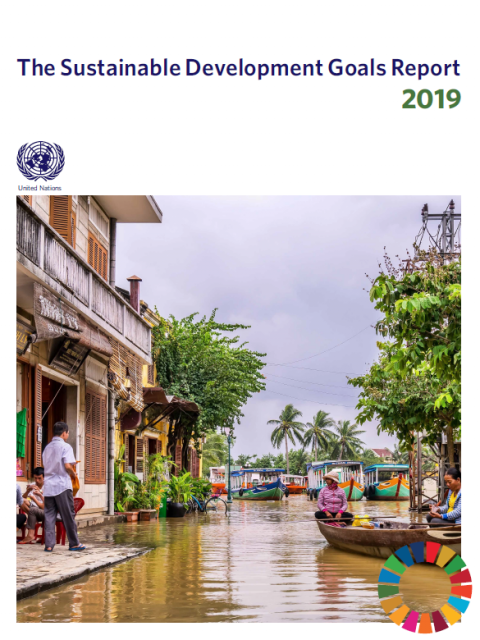 The Sustainable Development Goals Report 2019 Année de publication: 2019 Auteur institutionnel: United Nations (UN) Four years after signing the 2030 Agenda for Sustainable Development, countries have taken action to integrate the Goals and targets into their national development plans and to align policies and institutions behind them. The Sustainable Development Goals Report 2019 uses the latest available data to track global progress on the SDGs and to take stock of how far we have come in realizing our commitments. The report shows that, while advances have been made in some areas, monumental challenges remain. The evidence and data spotlight areas that require urgent attention and more rapid progress to realize the 2030 Agenda’s far-reaching vision. Member States agree that these challenges and commitments are interrelated and call for integrated solutions. It is therefore imperative to take a holistic view of the 2030 Agenda and to identify the highest impact areas in order to target interventions. The most urgent area for action is climate change. If we do not cut record-high greenhouse gas emissions now, global warming is projected to reach 1.5°C in the coming decades. As we are already seeing, the compounded effects will be catastrophic and irreversible: increasing ocean acidification, coastal erosion, extreme weather conditions, the frequency and severity of natural disasters, continuing land degradation, loss of vital species and the collapse of ecosystems. These effects, which will render many parts of the globe uninhabitable, will affect the poor the most. They will put food production at risk, leading to widespread food shortages and hunger, and potentially displace up to 140 million people by 2050. The clock for taking decisive actions on climate change is ticking. The other defining issue of our time is increasing inequality among and within countries. Poverty, hunger and disease continue to be concentrated in the poorest and most vulnerable groups of people and countries. Over 90 per cent of maternal deaths occur in low- and middle-income countries. Three quarters of all stunted children live in Southern Asia and sub-Saharan Africa. People living in fragile States are twice as likely to lack basic sanitation, and about four times as likely to lack basic drinking water services as people in non-fragile situations. Youth are three times more likely to be unemployed than adults. Women and girls perform a disproportionate share of unpaid domestic work and lack autonomy in decision-making. Just as problems are interrelated, the solutions to poverty, inequality, climate change and other global challenges are also interlinked. Valuable opportunities exist to accelerate progress by examining interlinkages across Goals. For example, tackling climate change requires a shift to clean energy, reversing the trend in forest loss, and changing our production and consumption patterns. Promoting sustainable agriculture can help reduce both hunger and poverty, since close to 80 per cent of those who are extremely poor live in rural areas. Increasing access to safe drinking water, sanitation and hygiene can save millions of lives per year and improve school attendance. Improving proficiency in reading and mathematics of some 200 million children who are falling behind in sub-Saharan Africa will help them climb out of poverty and ultimately enable the region to better compete in the global marketplace. This report also highlights the importance of investing in data for the full implementation of the 2030 Agenda. Most countries do not regularly collect data for more than half of the global indicators. The lack of accurate and timely data on many marginalized groups and individuals makes them “invisible” and exacerbates their vulnerability. While considerable effort has been made to address these data gaps over the past four years, progress has been limited. Increased investment is urgently needed to ensure that adequate data are available to inform decision-making on all aspects of the 2030 Agenda. Towards that end, the Dubai Declaration, launched at the second World Data Forum in October 2018, outlines a demand-driven funding mechanism under Member States’ oversight that will respond quickly and efficiently to the priorities of national statistical systems.
 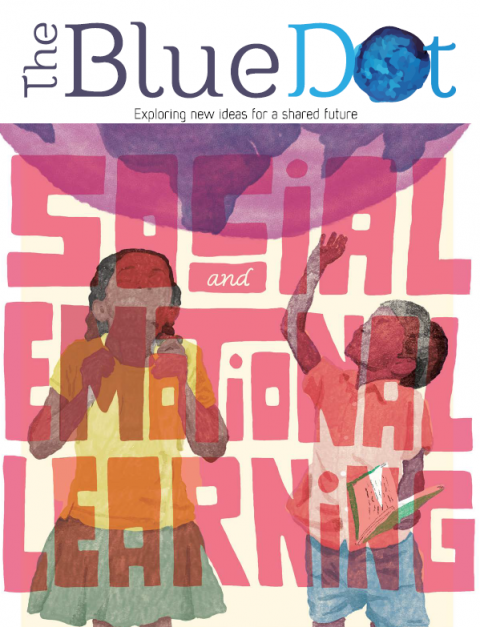 Social and emotional learning (The Blue Dot Issue 10, 2019) Année de publication: 2019 Auteur institutionnel: Mahatma Gandhi Institute of Education for Peace and Sustainable Development (MGIEP) The tenth edition of The Blue DOT focuses on different aspects of social and emotional learning, including the neurosciences, teacher training, frameworks such as CASEL and SEE Learning and systemic SEL, amongst others. The issue includes a Foreword by Dr. Richard Davidson, William James and Vilas Professor of Psychology and Psychiatry at the University of Wisconsin–Madison and the Founder and Director of the Center for Healthy Minds, and our Cover Story that focuses on how SEL can help to achieve the United Nations Sustainable Development Goals (SDGs). Additionally, it features interviews and opinions from some of the world’s most prominent SEL experts on the importance of integrating SEL in our education systems. Amongst various experts, we hear from Kimberly Schonert-Reichl on her journey in SEL, Robert W. Roeser on “Educating the Head, the Heart and the Hand in the 21st Century” as well as Roger P. Weissberg and Joseph L. Mahoney on “What is Systemic Social and Emotional Learning and Why Does it Matter”? Further, a featured article with responses to a survey by teachers from 4 countries (Bhutan, India, South Africa and Sri Lanka), following the launch of the Institute’s SEL modules on Global Citizenship in a workshop conducted in New Delhi, India in April 2019 is presented. The modules have been rendered on MGIEP’s in house Artificial Intelligence (AI) driven digital platform now called FramerSpace (formerly CHI) and allow the student to have an interactive, instantaneous feedback and immersive experience while addressing contemporary issues such as migration, nationalism and violence.
  Right to Education Handbook Année de publication: 2019 Auteur institutionnel: Right to Education Initiative (UK) The ultimate aim of this handbook is to facilitate the realization and universal enjoyment of the right to education. Its objective is not to present the right to education as an abstract, conceptual, or purely legal concept, but rather to be action-oriented. Where possible, practical guidance is given on how to implement and monitor the right to education along with recommendations to overcome persistent barriers. It seeks to do this by: Increasing awareness and knowledge of the right to education. This includes the normative content of the right to education, states’ legal obligations, the various sources of law regarding the right to education, what states must do to domestically implement the right to education, how to monitor the right to education, and how to increase accountability of the right to education. Providing a summary of current debates and issues regarding education and what human rights law says about them, including on forced migration, education in emergencies, the privatization of education, and the challenge of reaching the most marginalized. Providing an overview of the UN landscape and its mechanisms, including a clear understanding of the role of UNESCO and more generally the UN, as well as all relevant stakeholders in education, particularly civil society. UNESCO’s Strategy on standard-setting instruments in the field of education (2016-2021) encourages Member States of the Organization to use normative action in relation with the right to education as a strategic tool to implement and achieve SDG4. In line with this, this handbook – specifically foreseen by the Strategy– will also serve as a reference tool for the design and organization of training modules and workshops in the field of right to education. Finally, the handbook will also be an important reference for those working towards the achievement of SDG4, by offering guidance on how to leverage legal commitment to the right to education as a strategic way to achieve this goal.